



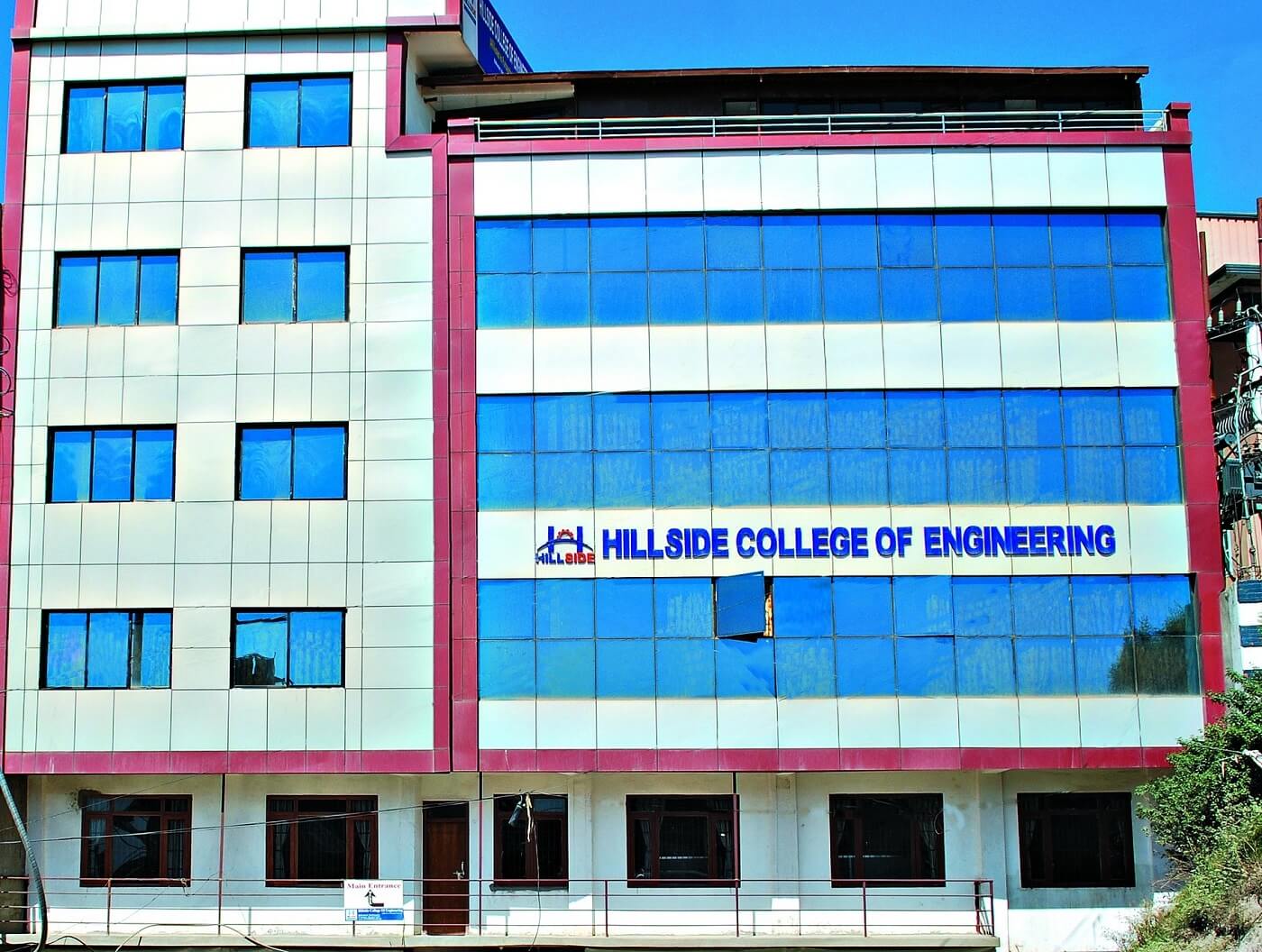
Bachelor in Information Technology (BIT) at Hillside College of Engineering, Balkumari, Kathmandu, is a bachelor's-level program affiliated with Purbanchal University. The curriculum is organized across four academic years and eight semesters, with 141 credits in total. It combines computing, programming, mathematics, electronics, communication, management, databases, networking, web technologies, software engineering, research, and project work.
Hillside College of Engineering has 48 seats for BIT. The course structure includes a project component throughout the program, beginning with Project-I in the first semester and continuing through Project-VII before the Application Project in the eighth semester.
Course: Bachelor in Information Technology (BIT)
Level: Bachelor's
Affiliation: Purbanchal University
College: Hillside College of Engineering
Location: Balkumari, Kathmandu
Academic Structure: Four academic years, eight semesters
Total Credits: 141
Seats: 48
BIT has a broad academic mix rather than concentrating only on programming. The first year establishes foundations in information technology, mathematics, electrical and electronic concepts, programming, communication, management, and digital systems. Later semesters move into databases, web technologies, networking, operating systems, data mining, software engineering, management information systems, and advanced project work.
| Semester | Main Subjects | Credits |
|---|---|---|
| I | Mathematics-I, Fundamentals of Information Technology, Technical Communication, Basic Electrical System & Circuit, Principles of Management, Computer Programming-I, Project-I | 19 |
| II | Mathematics-II, Electronics Devices & Circuits, Digital Logic, Object Oriented Programming in C++, Project-II, Financial Management & Accounting | 17 |
| III | System Analysis & Design, Microprocessor & Assembly Language, Data Structure & Algorithm, User Interface Design, Project-III, Numerical Methods | 17 |
| IV | Communication System, Computer Organization, Web Technology-I, Database Management System, Project-IV, Discrete Mathematics, Marketing Management | 19 |
| V | Probability & Statistics, Society & Ethics in IT, Data Communication, Web Technology-II, Computer Graphics, Operating System, Project-V | 18 |
| VI | Embedded System Programming, Computer Network, Data Mining & Data Warehousing, Advance Object-Oriented Programming, Project-VI, Research Methodology | 17 |
| VII | Artificial Intelligence, Network Programming, Software Engineering, MIS, Elective I, Project-VII | 18 |
| VIII | E-commerce, Wireless Communication System, Software Project Management, Elective II, Application Project | 16 |
The first two semesters establish the mathematical, technical, programming, and organizational base of the program. Project-II, for example, involves software development using object-oriented programming in C++, together with documentation and an oral presentation.
The middle semesters shift toward system analysis, data structures, computer organization, database systems, web technologies, communication systems, operating systems, computer graphics, and networking. Semester V includes Web Technology-II and Project-V, where project work is connected with web-based application development.
In Semester VI, students study Embedded System Programming, Computer Network, Data Mining & Data Warehousing, Advance Object-Oriented Programming, and Research Methodology alongside Project-VI.
The final year introduces Artificial Intelligence, Network Programming, Software Engineering, Management Information System, E-commerce, Wireless Communication System, Software Project Management, electives, and higher-level application projects.
Project work appears in every semester of the BIT curriculum. This creates a continuous practical strand alongside theory, tutorials, and laboratory subjects.
Project-II requires students to work on an object-oriented software project, prepare written documentation, and present their work. Project-V focuses on a web-based application using server-side scripting. Project-VI and Project-VII continue application development with software engineering practices, relational database concepts, object-oriented programming, reports, presentations, and project evaluation.
The eighth semester concludes with an Application Project carrying four credits.
Laboratory components are also built into subjects such as programming, digital logic, electronics, web technology, database management, computer graphics, operating systems, computer networks, embedded programming, artificial intelligence, and network programming.
BIT students encounter elective study in the final year.
Semester VII elective options include GIS, Multimedia System, Cloud Computing, Distributed Processing, Theory of Computation, Internet and Intranet, and Simulation and Modeling.
Semester VIII elective options include Remote Sensing, Multimedia Communication, E-Governance, System Administration, Design and Analysis of Algorithm, Network Security and Cryptography, and Image Processing and Pattern Recognition.
These electives allow the final-year curriculum to extend into different areas of computing, networks, systems, multimedia, governance, security, and information processing.
Across eight semesters, students work through several connected areas of information technology:
Computer programming and object-oriented programming
Information technology fundamentals
Data structures and algorithms
Database management
Web technologies
Computer organization and microprocessors
Computer networks and data communication
Operating systems
Software engineering
Data mining and data warehousing
Artificial intelligence
Network programming
Management information systems
E-commerce
Software project management
Research methodology
The curriculum also includes mathematics, statistics, electronics, communication systems, management, accounting, marketing, ethics, and technical communication, giving BIT a mix of computing and supporting academic subjects.
BIT students study within the broader technical academic setting of Hillside College of Engineering. The college uses laboratory work, projects, presentations, seminars, group discussions, and interactive academic activities as part of its teaching environment.
The college also has online and offline library resources and a Research and Development Academy supporting research-related academic activity. These facilities align with a BIT curriculum that includes laboratory courses, research methodology, software projects, documentation, and presentations.
The course is suited to students whose academic interests include programming, computer systems, web development, databases, networking, software development, information systems, and related technical study.
Its structure also requires engagement with mathematics, electronics, communication systems, management subjects, research, teamwork, documentation, and repeated project assignments. Students comparing BIT with other computing programs can therefore consider the full eight-semester subject structure rather than looking at programming subjects alone.
Hillside College of Engineering has 48 seats for the Bachelor in Information Technology program.
BIT at Hillside College of Engineering is affiliated with Purbanchal University.
The curriculum is arranged across four academic years and eight semesters, carrying 141 credits in total.
Yes. Project work runs from Project-I through Project-VII, followed by an Application Project in Semester VIII.
Yes. Practical components appear across programming, electronics, digital logic, web technology, databases, computer graphics, operating systems, networking, embedded systems, and other technical subjects.
The final year includes Artificial Intelligence, Network Programming, Software Engineering, MIS, E-commerce, Wireless Communication System, Software Project Management, electives, Project-VII, and an Application Project.





-9075.jpg)




