Bachelor of Architecture (B.Arch.) at Acme Engineering College is an undergraduate architecture program affiliated with Purbanchal University. The college is located in Basundhara, Kathmandu. B.Arch. has 48 seats and is offered in the morning shift.
The academic structure runs across ten semesters. It combines architectural design studios with building construction, materials, graphics, structural subjects, building science, architectural history, computer-aided drafting, landscape architecture, urban studies, professional practice, research, practical training, and a final thesis project.
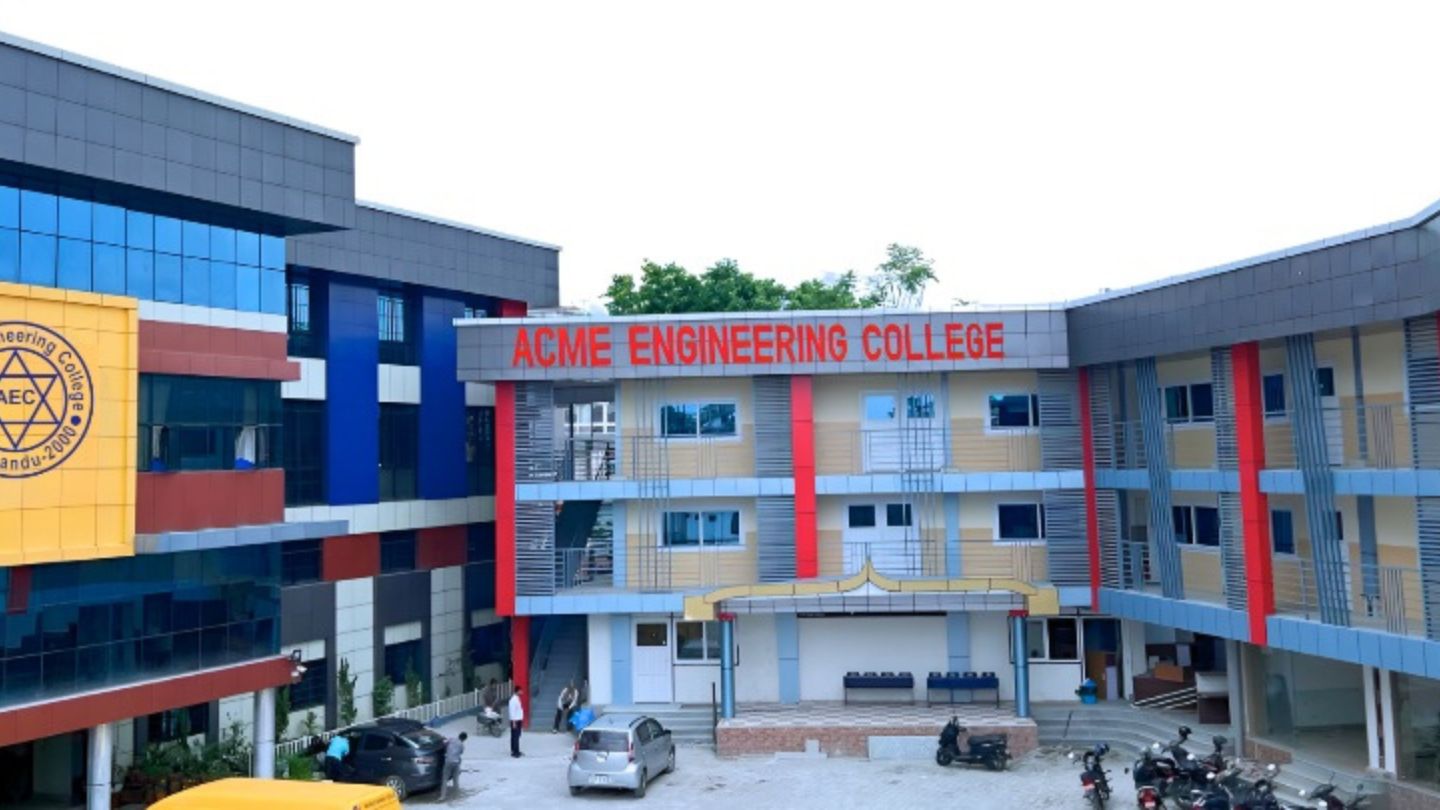
Course: Bachelor of Architecture (B.Arch.)
College: Acme Engineering College
Location: Basundhara, Kathmandu, Nepal
Affiliation: Purbanchal University
Level: Bachelor’s
Academic Structure: 10 semesters
Seats: 48
Shift: Morning
Design Component: Design studios from the early semesters through Semester VIII
Practical Component: Workshops, model and sculpture work, carpentry and masonry, drafting, design studios, and professional practicum
Semester IX: Professional Tranning Practice (Practicum), 10 credits
Semester X: Thesis Project, 8 credits
The opening semesters establish both the technical and visual foundations of architectural study.
Semester I includes Building Material-I, Building Construction-I, Mathematics-I, Applied Mechanics, An Introduction to Architecture, Workshop-I, Model and Sculpture, Art & Graphics-I, and Basic Design-I.
Semester II continues with Building Material-II, Building Construction-II, Communication English, Mathematics-II, Strength of Materials, Building Science-I, Workshop-II, Carpentry, Mason, Art & Graphics-II, and Basic Design-II.
This combination places drawing, design, construction, materials, mathematics, mechanics, workshop activity, and building science within the first year rather than separating design from technical study.
From Semester III, Design Studio becomes a continuing part of the curriculum.
Semester III covers Building Construction-III, Nepalese Architecture, Arts & Graphics-III, Design Studio-III, Building Science-II, Surveying & leveling, and Theory of Structure-I. Semester IV adds Sociology of Architecture, Building Services-I, Building Construction-IV, Eastern Architecture, Design Studio-IV, Theory of Structure-II, and Computer Aided Design & Drafting (CADD).
The fifth semester continues the design sequence through Design Studio-V while adding Building Services-II, Building Science-III, Design of Steel, Wood & Masonry Structure, Design Theory-I, Interior Design, and Western Architecture.
The curriculum therefore develops architectural study through more than studio work alone. Students also encounter construction systems, structures, building services, architectural history, surveying, interior design, graphics, and digital drafting.
Semester VI includes Working Dwgs. & Detailing, Design Theory II, Landscape Architecture, Design Studio-VI, Design of Reinforced Concrete Structure (RCC), and Specifications, Quantity, Surveying & Estimation. Elective I includes Low Cost Housing or Vernacular Architecture.
Semester VII moves into Building Construction-V, Architecturel Conservation, Urban Settelment Planning, Engineering Economics, Design Studio-VII, Modern Architecture, and Elective II. The elective choices shown in the syllabus are Nepalese Architecture in Kathmandu Valley and Energy Efficient Building Design.
Semester VIII brings together Construction Project Management, Professional Pratice, Urban Design, Built Environment (Research), Disaster Risk Management, Design Studio-VIII, and Seminar.
By this stage, design studio work is being studied alongside urban issues, professional practice, project management, research, risk management, conservation, economics, and construction-related subjects.
The final two semesters have a different structure from the earlier classroom and studio semesters.
Semester IX consists of Professional Tranning Practice (Practicum), carrying 10 credits. Semester X consists of the Thesis Project, carrying 8 credits.
The sequence places professional training before the final thesis and follows eight semesters of progressively developed studio, construction, technical, historical, urban, and research-based coursework.
The curriculum may suit students interested in studying architecture through both design and technical subjects. A student entering the program should expect sustained work in architectural studios as well as construction, structures, building science, graphics, history, urban studies, research, workshops, and professional training.
The course structure also shows a gradual movement from Basic Design-I and II into Design Studio-III through Design Studio-VIII before professional practicum and thesis work.
Purbanchal University’s Faculty of Engineering entrance criteria cover Bachelor in Architecture together with its bachelor-level engineering programs.
For 10+2 or equivalent applicants, the eligibility provisions include Mathematics, Physics, and Chemistry/Computer under the university’s stated subject and minimum-grade conditions. The criteria also include routes for qualifying engineering diploma or National Examination Board Technical applicants and A Level students under their respective academic requirements.
Candidates seeking admission to the BE/B.Arch. programs are required to pass the entrance examination conducted by Purbanchal University.
Undergraduate teaching at Acme Engineering College uses lectures together with tutorials, seminars, laboratory work, and field study according to course requirements. Audiovisual media is used in lectures, and guest lecturers are included in semester activities.
The college library has more than 20,000 books, with textbooks provided at a stated 1:1 ratio. Students also have opportunities to participate in exhibitions, tours, seminars, workshops, and internships.
For architecture students, these college-level activities accompany a syllabus that already contains workshops, design studios, CADD, surveying, seminar work, professional practicum, and a thesis.
Scholarship provisions include merit-based and classified categories. The top 5% of admitted students in each faculty based on entrance examination performance are included under the merit scholarship provision, while another 5% of admitted students receive classified scholarships.
Bachelor of Architecture at Acme Engineering College is affiliated with Purbanchal University.
The program has 48 seats.
B.Arch. is offered in the morning shift.
The syllabus is organized across ten semesters. The first eight semesters contain design, construction, technical, historical, research, and related subjects, followed by professional practicum in Semester IX and thesis work in Semester X.
Yes. Basic Design-I and Basic Design-II are taught in the first two semesters, followed by Design Studio-III through Design Studio-VIII in later semesters.
Yes. Computer Aided Design & Drafting (CADD) is included in Semester IV.
Yes. Semester IX contains the 10-credit Professional Tranning Practice (Practicum).
Yes. Semester X consists of an 8-credit Thesis Project.
Yes. Applicants seeking admission to the BE/B.Arch. programs are required to pass the entrance examination conducted by Purbanchal University.