



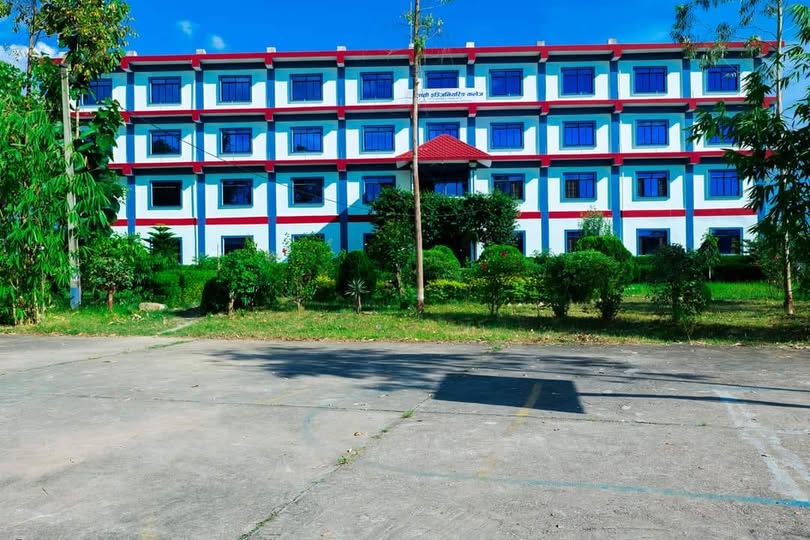
The Bachelor of Electronics and Communication Engineering (BE in Electronics and Communication) at Rapti Engineering College is a bachelor-level engineering program affiliated with Pokhara University. REC has offered the program since 2011 and has 48 seats. The college is located at Ghorahi-16, Saniambapur Sarra, Dang, Nepal.
The curriculum extends across four academic years and eight semesters. It combines mathematics and physical science with electrical engineering, electronics, programming, communication systems, embedded systems, signal processing, computer networking, antennas, telecommunications, projects, electives, and engineering management-related subjects.
| Particular | Details |
|---|---|
| Course | Bachelor of Electronics and Communication Engineering |
| College | Rapti Engineering College |
| Affiliation | Pokhara University |
| Location | Ghorahi-16, Saniambapur Sarra, Dang |
| Academic level | Bachelor’s degree in engineering |
| Academic structure | 4 years / 8 semesters |
| Seats | 48 |
| Started at REC | 2011 |
| Main academic areas | Electronics, communication systems, embedded systems, signal processing and networking |
Electronics and Communication Engineering deals with electronic devices and circuits together with systems used to process, transmit, receive, and manage signals and information. The curriculum at REC starts with mathematics, physics, chemistry, electrical engineering, programming, mechanics, and communication techniques before moving into specialized electronics and communication subjects.
Students later encounter electronic devices, network theory, electromagnetic fields and waves, logic circuits, instrumentation, microprocessors, control systems, embedded systems, integrated digital electronics, signals and systems, analog and digital communication, antennas, digital signal processing, computer networks, mobile and wireless communication, and telecommunications.
This subject mix makes the degree relevant to students interested in both electronic systems and communication technology rather than a curriculum centered only on computer programming or electrical power systems.
The course may suit students who are comfortable with mathematics and science and are interested in how electronic devices, communication signals, processors, networks, embedded systems, antennas, and telecommunications work together.
Students should expect to work across several types of technical study, including:
mathematical analysis;
circuit and electronic system concepts;
computer programming;
microprocessor-based systems;
signals and communication;
electromagnetic principles;
embedded systems;
computer networking;
engineering projects; and
technical and professional subjects.
The curriculum requires students to move between theory, numerical work, electronics, programming, and project-based study rather than remain within a single technical area.
Pokhara University’s undergraduate engineering requirements apply to science and technology engineering programs.
Eligibility:
Completion of Grade 12 in the Science stream or an equivalent qualification from a recognized institution.
Study of Physics, Chemistry, and Mathematics.
At least one course of a minimum of 100 full marks or 5 credits in Physics, Chemistry, and Mathematics.
A minimum C grade or 45 percent in each of Physics, Chemistry, and Mathematics.
An overall GPA of at least 2.0 on a 4.0 scale or equivalent.
Mathematics of at least 100 marks in Grade 11 or Grade 12.
These subjects form the academic base for the mathematics, electronics, electrical engineering, electromagnetic, signal, and communication courses that appear later in the program.
Pokhara University undergraduate admission includes an application process followed by an entrance examination. Applicants provide personal and academic information and submit required documents such as academic transcripts, a citizenship certificate, and passport-sized photographs.
Admission is based on merit and seat availability, with ranking linked to entrance examination performance. Engineering admission places particular importance on mathematics and physics.
Rapti Engineering College has 48 seats for the BE in Electronics and Communication program.
The academic sequence moves from general engineering foundations into electronics and communication subjects and concludes with advanced communication study, electives, professional coursework, and a major project.
| Semester | Main courses | Academic focus |
|---|---|---|
| I | Chemistry, Basic Electrical Engineering, Communication Technique, Engineering Mathematics I, Mechanical Workshop, Programming in C | Engineering foundation |
| II | Applied Mechanics I, Engineering Mathematics II, Object Oriented Programming in C++, Thermal Science, Physics | Science, mathematics and programming |
| III | Electronic Device, Network Theory, Electrical Engineering Materials, Electromagnetic Field and Waves, Engineering Mathematics III, Logic Circuit | Electronics and electrical fundamentals |
| IV | Instrumentation, Engineering Mathematics IV, Electronic Circuits, Microprocessor, Numerical Methods, Project I | Electronic systems and project work |
| V | Computer Graphics, Control Systems, Embedded Systems, Integrated Digital Electronics, Probability and Statistics, Signals and Systems | System-level electronics |
| VI | Analog Communication, Computer Organization, Elective I, Engineering Economics, Filter Design, Industrial Electronics and Drives | Communication and applied electronics |
| VII | Project II, Electromagnetic Propagation & Antenna, Elective II, Digital Communication, Computer Network, Research Methodology, Digital Signal Processing | Communication, networking and research |
| VIII | Elective III, Mobile and Wireless Communication, Organization and Management, Professional Ethics in Engineering, Project III, Telecommunications | Advanced communication and professional study |
The first year establishes the science, mathematics, electrical, programming, and engineering base. Electronics becomes central from the third semester, with Electronic Device, Network Theory, Electromagnetic Field and Waves, and Logic Circuit.
The fourth and fifth semesters move further into electronic circuits, instrumentation, microprocessors, embedded systems, control systems, integrated digital electronics, signals, and system analysis. Project I also appears in Semester IV.
Communication engineering becomes increasingly prominent in the later semesters.
Analog Communication appears in Semester VI, while Semester VII includes Electromagnetic Propagation & Antenna, Digital Communication, Digital Signal Processing, and Computer Network. The final semester includes Mobile and Wireless Communication and Telecommunications.
This progression connects the earlier study of electronic circuits, electromagnetic fields, signals, and microprocessors with communication-oriented subjects in the final part of the degree.
The curriculum also includes a substantial computing component. Programming in C and Object Oriented Programming in C++ appear in the first year, followed later by Computer Graphics, Embedded Systems, Computer Organization, and Computer Network.
Embedded Systems is particularly relevant to the connection between electronics and computing because it sits alongside subjects such as microprocessors, integrated digital electronics, electronic circuits, and control systems.
The degree therefore combines communication engineering with electronic hardware and selected computing subjects rather than treating these areas separately.
Project work is distributed across the program rather than being reserved for the final semester.
The curriculum includes:
Project I in Semester IV;
Project II in Semester VII; and
Project III in Semester VIII.
Project III carries five credit hours. Research Methodology is included in Semester VII, while elective courses appear in Semesters VI, VII, and VIII.
This arrangement allows students to encounter project work at different stages while later semesters provide room for elective study and a larger final project.
The subjects and project sequence may help students develop abilities related to:
electronic circuit concepts;
digital logic and integrated electronics;
microprocessor systems;
embedded systems;
signal and system analysis;
analog and digital communication;
antenna and electromagnetic concepts;
digital signal processing;
computer networking;
programming;
control systems;
technical research; and
engineering project work.
The extent to which students develop these abilities depends on their academic performance, laboratory and project participation, and continued technical practice.
Graduates may explore work in sectors that use electronics, communication systems, telecommunications, computer networks, embedded systems, and related technical services.
Career sectors identified for the program include:
Nepal Electricity Authority;
Nepal Telecom;
private-sector organizations;
computer software companies;
NGOs and INGOs; and
mobile communication companies.
The curriculum may also support technical work connected with electronic circuits, communication equipment, networking, embedded systems, signal processing, and telecommunications. Actual career options depend on the graduate’s skills, experience, professional requirements, employer needs, and available positions.
REC has offered Bachelor of Electronics and Communication Engineering since 2011 under Pokhara University. Within the college’s current undergraduate portfolio, it sits alongside BE Civil, BE Computer, BCA, and BBA.
For a student comparing engineering options, this program is distinguished by its concentration on electronics and communication systems. Its curriculum combines mathematics and science with electronic devices, circuits, microprocessors, embedded systems, signals, analog and digital communication, antennas, networking, wireless communication, telecommunications, and projects.
A student considering the degree should therefore look at their interest in mathematics, electronics, communication technology, programming, and technical project work together rather than focusing on only one part of the course.
The Bachelor of Electronics and Communication Engineering at Rapti Engineering College is affiliated with Pokhara University.
The program has 48 seats.
Rapti Engineering College began offering Bachelor of Electronics and Communication Engineering in 2011.
The curriculum runs across four academic years and eight semesters, from Year I Semester I through Year IV Semester VIII.
Major subjects include electronic devices, network theory, electromagnetic fields and waves, electronic circuits, microprocessors, embedded systems, control systems, signals and systems, analog communication, digital communication, antennas, digital signal processing, computer networks, mobile and wireless communication, and telecommunications.
Yes. Project I is included in Semester IV, Project II in Semester VII, and Project III in Semester VIII.
Yes. Pokhara University undergraduate admission includes an entrance examination, with admission based on merit and available seats.
Graduates may consider opportunities in telecommunications, electronics, networking, software-related organizations, mobile communication companies, and other technical sectors. REC also identifies Nepal Telecom, Nepal Electricity Authority, private organizations, NGOs, and INGOs among possible employment sectors.






