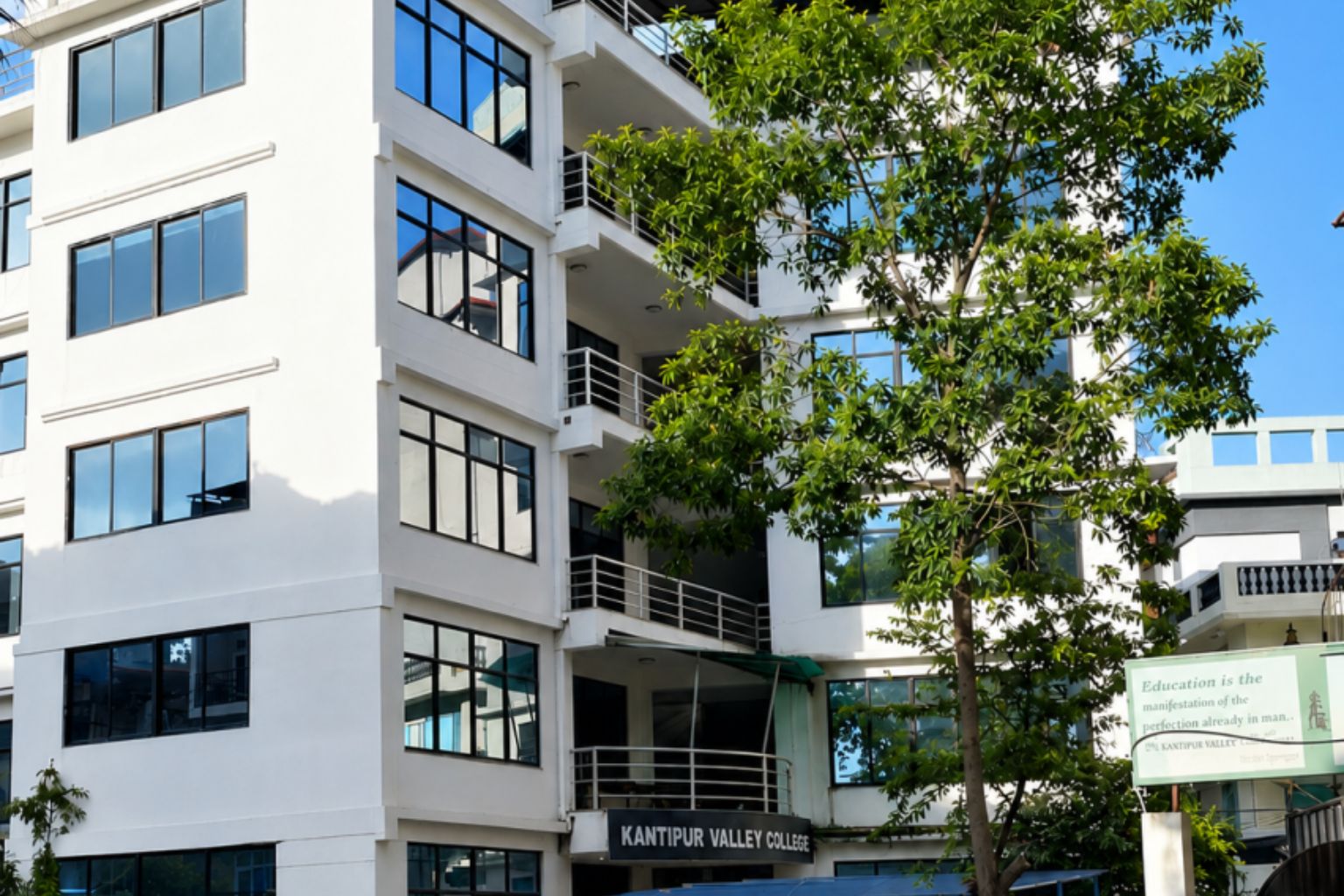
The Bachelor in Information Technology (BIT) at Kantipur Valley College is a four-year undergraduate program structured across eight semesters. The course is offered by Kantipur Valley College in Kumaripati, Lalitpur, under Purbanchal University.
It combines programming, computer systems, electronics, databases, web technologies, networking, software engineering, artificial intelligence, research, and management subjects. Practical classes and a project in every semester allow students to apply technical concepts through coding, system development, documentation, presentation, and application-building tasks.
Course: Bachelor in Information Technology (BIT)
College: Kantipur Valley College
Location: Kumaripati, Lalitpur
Affiliation: Purbanchal University
Duration: Four years
Academic Structure: Eight semesters
Seats: 48
Learning Format: Theory, tutorials, laboratory work, projects, presentations, and application development
Major Areas: Programming, databases, web technology, networking, operating systems, software engineering, artificial intelligence, data mining, and information systems
BIT is designed for students who want to study both the technical and organisational sides of information technology. The early semesters build foundations in mathematics, programming, electronics, digital logic, communication, and management.
The middle semesters move into data structures, system analysis, user interface design, computer organisation, databases, web development, computer graphics, operating systems, data communication, and discrete mathematics.
The final stages cover embedded systems, computer networks, data mining and data warehousing, research methodology, artificial intelligence, network programming, software engineering, management information systems, e-commerce, wireless communication, and software project management. Students also select electives from areas such as cloud computing, GIS, multimedia systems, distributed processing, network security, system administration, image processing, and e-governance.
Applicants must have passed +2 or an equivalent qualification with a minimum D grade or an aggregate GPA of at least 2.0.
The eligibility criteria also refer to intermediate-level study with at least 45 percent and 100 marks in Mathematics or Computer Science, or a three-year diploma in any stream.
| Semester | Subjects | Credits |
|---|---|---|
| First | Mathematics I, Fundamentals of Information Technology, Technical Communication, Basic Electrical System and Circuit, Principles of Management, Computer Programming I, Project I | 19 |
| Second | Mathematics II, Electronic Devices and Circuits, Digital Logic, Object-Oriented Programming in C++, Project II, Financial Management and Accounting | 17 |
| Third | System Analysis and Design, Microprocessor and Assembly Language, Data Structure and Algorithm, User Interface Design, Project III, Numerical Methods | 17 |
| Fourth | Communication System, Computer Organization, Web Technology I, Database Management System, Project IV, Discrete Mathematics, Marketing Management | 19 |
| Fifth | Probability and Statistics, Society and Ethics in IT, Data Communication, Web Technology II, Computer Graphics, Operating System, Project V | 18 |
| Sixth | Embedded System Programming, Computer Network, Data Mining and Data Warehousing, Advanced Object-Oriented Programming, Project VI, Research Methodology | 17 |
| Seventh | Artificial Intelligence, Network Programming, Software Engineering, Management Information System, Elective I, Project VII | 18 |
| Eighth | E-commerce, Wireless Communication System, Software Project Management, Elective II, Application Project | 16 |
Project work begins in the first semester. Project I uses C programming and involves information gathering, requirement identification, algorithms, flowcharts, coding, testing, documentation, and oral presentation.
Project II moves into object-oriented software development using C++. Later projects involve visual programming, web-based applications, relational databases, software engineering practices, and professional application development. The final semester includes an Application Project carrying four credits.
Several technical subjects also contain laboratory components. These include programming, electronic circuits, digital logic, databases, web technology, operating systems, networking, data mining, artificial intelligence, and system administration.
The program supports the gradual development of skills in:
Programming and software application development
Data structures and problem-solving methods
Database design and management
Web application development
Computer networking and communication systems
Operating systems and embedded programming
Software analysis, engineering, and project management
Artificial intelligence and data-related applications
Technical writing, documentation, and presentation
Research methods, teamwork, and professional responsibility
The curriculum also introduces management, accounting, marketing, e-commerce, and management information systems, giving students a working understanding of how technology is used within organisations.
BIT-related facilities at KVC include computer programming, networking and cybersecurity, database and cloud computing, AI and data analytics, and multimedia and web design laboratories.
Students also have access to internet and research facilities, smart classrooms, library and digital learning resources, seminar and presentation spaces, and career counselling and mentorship services.
Graduates may explore work related to software development, web and mobile applications, network administration, cybersecurity, database administration, cloud computing, user interface design, systems analysis, IT consulting, and technical support.
Other possible directions include data-related work, technology entrepreneurship, research, and postgraduate study. Employment possibilities may exist in software companies, banks and financial institutions, telecommunications, government organisations, NGOs and INGOs, educational institutions, research organisations, and technology-based start-ups.
Career outcomes depend on technical ability, project experience, communication skills, continued learning, work experience, and available opportunities.
BIT may suit students who are interested in programming, computers, mathematics, electronics, networks, databases, and practical problem-solving. The course requires regular coding practice, laboratory participation, project documentation, group work, presentations, and independent study.
Students should consider their comfort with technical subjects, readiness for a four-year academic commitment, eligibility, and interest in learning technologies that change over time.
The program runs for four years and is divided into eight semesters.
The BIT program at Kantipur Valley College is affiliated with Purbanchal University.
The program has 48 seats.
Applicants must have passed +2 or an equivalent qualification with at least a D grade or an aggregate GPA of 2.0. Other stated routes include qualifying intermediate-level study or a three-year diploma.
Yes. Each semester includes a project course or application project. The projects progress from C programming and C++ to web applications, databases, software engineering, and professional application development.
Yes. Artificial Intelligence is included in the seventh semester. Its syllabus covers search methods, knowledge representation, reasoning, machine learning concepts, neural networks, expert systems, and natural language processing.
Elective options include Cloud Computing, GIS, Multimedia System, Distributed Processing, Theory of Computation, Internet and Intranet, Simulation and Modeling, Remote Sensing, E-Governance, System Administration, Network Security and Cryptography, and Image Processing and Pattern Recognition.