Ten Plus Two Law at Kathmandu Model Secondary School, Bagbazar, is a Grade XI and XII program for students who want to begin formal study in legal subjects after SEE. Kathmandu Model Secondary School is also known as KMC Bagbazar and KMSS. It is a privately owned institution located in Bagbazar, Kathmandu, and operates under the KMC Educational Network.
The Law stream has its own eligibility requirement, entrance exam pattern, subject structure, class timing, assessment format, and scholarship scheme. The program follows the Grade XI and XII examination pathway associated with the National Examinations Board NEB. Students comparing streams at KMC Bagbazar may also review Ten Plus Two Science and Ten Plus Two Management.
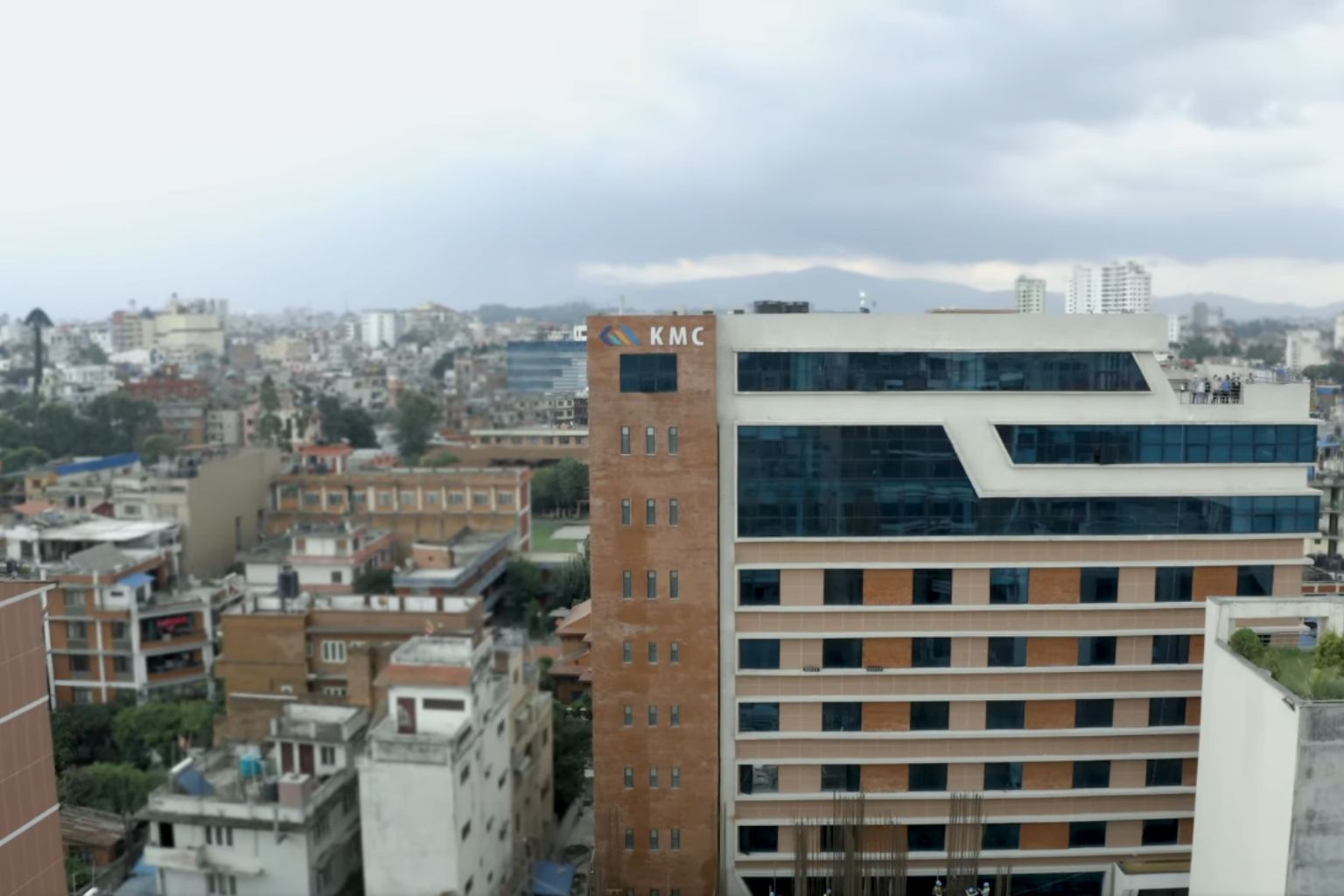
Course Name: Ten Plus Two (+2) Law
College: Kathmandu Model Secondary School
Also Known As: KMC Bagbazar, KMSS
Location: Bagbazar, Kathmandu
Academic Level: Grade XI and Grade XII
Stream: Law
Eligibility: At least 1.6 GPA in SEE or an equivalent recognized board
Required Grades: D+ in Compulsory English and Social Studies
Entrance Exam: Maths 15 marks, English 45 marks, General Knowledge 15 marks
Class Time: Morning shift
Morning Shift: 6:20 AM to 11:00 AM
Assessment Format: 75 marks theory and 25 marks practical in all subjects
Scholarship Basis: SEE marks and KMC entrance performance
Application Mode: Online form through the school website
The +2 Law program at KMC Bagbazar combines compulsory language and social studies subjects with law-specific subjects. The subject structure introduces students to legal systems, legal drafting, civil and criminal law, jurisprudence, procedural law, and constitutional law across Grade XI and Grade XII.
Grade XI Subjects:
English
Nepali
Social Studies and Life Skill Education
Nepalese Legal System
Legal Drafting
Civil and Criminal Law
Grade XII Subjects:
English
Nepali
Social Studies and Life Skill Education
Jurisprudence
Procedural Law
Constitutional Law
Theory and Practical Format:
All subjects follow 75 marks theory and 25 marks practical.
The curriculum is useful for students who want early exposure to legal terms, legal writing, court-related procedures, constitutional ideas, and the basic structure of Nepal’s legal system before entering bachelor-level study.
To offer a Grade XI and XII Law stream for students who want to begin legal studies after SEE.
To introduce students to Nepalese Legal System, Legal Drafting, Civil and Criminal Law, Jurisprudence, Procedural Law, and Constitutional Law.
To combine law-specific subjects with English, Nepali, and Social Studies and Life Skill Education.
To select applicants through a Law-specific entrance exam.
To run the program in the morning shift.
To assess all subjects through a 75 marks theory and 25 marks practical structure.
The Law stream is relevant for students who want a higher secondary route connected with legal study. Unlike general streams that focus mainly on science, management, or humanities combinations, this program introduces legal subjects from Grade XI.
The Grade XI structure gives students an entry point into Nepalese Legal System, Legal Drafting, and Civil and Criminal Law. Grade XII continues with Jurisprudence, Procedural Law, and Constitutional Law. This sequence helps students understand legal concepts before moving into bachelor-level legal education or related academic areas.
The program should be understood as a higher secondary academic base. It does not guarantee admission into a future law degree, professional license, legal career, scholarship, or employment outcome.
Students completing the Law stream are expected to have studied:
Basic concepts of the Nepalese legal system.
Introductory legal drafting through the Grade XI subject structure.
Civil and criminal law at the higher secondary level.
Jurisprudence, procedural law, and constitutional law in Grade XII.
English, Nepali, and Social Studies and Life Skill Education as part of the compulsory subject structure.
Theory and practical components across all listed subjects.
Entrance and examination routines connected with Grade XI and XII study.
The Law stream supports skill development through its subject choices and school activities. The strongest skill areas are connected with legal reading, writing, discussion, and structured academic participation.
Legal subject awareness through Nepalese Legal System, Civil and Criminal Law, Jurisprudence, Procedural Law, and Constitutional Law.
Legal writing practice through Legal Drafting.
Reading and communication through English and Nepali.
Social understanding through Social Studies and Life Skill Education.
Presentation and speaking practice through school-level presentation, debate, and student activities.
Group participation through ECA, CCA, clubs, and KMC Students’ Committee activities.
The Law program uses classroom teaching, subject-wise assessment, and a fixed morning schedule. All subjects follow a 75 marks theory and 25 marks practical format, so students need to prepare for both written study and practical components.
KMC Bagbazar also provides counselling and motivation support. These services cover academic planning, career planning, decision-making, problem-solving, self-awareness, and transition support for students entering higher secondary study after SEE.
The school’s psycho-social support services include individual and group sessions, mental health awareness, crisis intervention, and referral support where required.
The +2 Law program is a higher secondary foundation for students interested in legal education. Students should connect their subject choice with the academic route they want after Grade XII.
Possible directions after further study and required qualifications include:
Bachelor-level law study
Legal studies and legal research
Constitutional and governance-related study
Public administration-related study
Legal drafting and documentation-related academic preparation
Court, legal office, or administrative support roles after further education or training
These directions depend on future study, institutional requirements, and professional rules. The +2 Law program alone should not be treated as a direct professional qualification.
Scholarships for Law students in Grade XI during admission are based on cumulative marks calculated from SEE and KMC entrance performance.
Scholarship Calculation Basis:
SEE: 25%
KMC Entrance: 75%
Law Scholarship Scheme During Admission:
85 and above cumulative marks: 75% annual fee and 100% tuition fee, 20 scholars
80–84 cumulative marks: 75% annual fee and 75% tuition fee, 20 scholars
75–79 cumulative marks: 50% annual fee and 50% tuition fee, 20 scholars
70–74 cumulative marks: 50% annual fee and 25% tuition fee, 20 scholars
65–69 cumulative marks: 25% annual fee and 25% tuition fee, 20 scholars
60–64 cumulative marks: 25% annual fee, 20 scholars
Scholarship quotas during admission are limited. Scholarship continuation and adjustment are linked with examination performance and the conditions set for each scheme.
Admission to +2 Law at Kathmandu Model Secondary School is entrance-based.
Applicants must have completed SEE or an equivalent recognized board.
Applicants must have secured at least 1.6 GPA.
Applicants need D+ in Compulsory English and Social Studies.
The Law entrance exam includes Maths 15 marks, English 45 marks, and General Knowledge 15 marks.
Students can fill out the online form through the school website.
Entrance center, entrance symbol number, model question, and fee structure are sent to the registered email ID.
Entrance results are published through email or SMS.
Admission must be completed within the admission deadline or before the quota is filled.
Only meritorious students are enlisted for admission.
The Law stream follows a theory and practical assessment structure. All listed subjects carry 75 marks theory and 25 marks practical.
Entrance results are communicated through email or SMS. For scholarship purposes, KMC Bagbazar uses cumulative marks based on SEE and entrance performance during admission. Scholarship adjustment and continuation depend on examination performance and the conditions of the scholarship scheme.
Law students use the school’s general academic and student support facilities.
Classrooms with audio-visual technology
Library resources and quiet study areas
Computer labs with software, technologies, and internet access
Seminar halls for presentations, interaction programs, training sessions, and workshops
Hostel facilities for girls and boys
Cafeteria for students and staff
Basketball, table tennis, chess, and badminton during recess
Medical room for first aid
Full-time nurse
Separate sickrooms for girls and boys
Regular health camps
Transportation facility on multiple routes in Kathmandu and Bhaktapur
Day-boarder facility for students who need extra classes from 7 AM to 5:30 PM
Law students can take part in ECA and CCA programs at KMC Bagbazar. These include debate, quiz, presentation competitions, cultural programs, sports, writing and publishing activities, social awareness activities, community service projects, seminars, and workshops.
The KMC Students’ Committee works through clubs and student-led teams. Club areas include research and presentation, speech and debate, literature, art and culture, music, dance, event management, computer, media, social service, legal activities, ECO activities, and corporate outreach.
Ten Plus Two (+2) Law at Kathmandu Model Secondary School is structured for students who want to study legal subjects after SEE. The program has a defined eligibility requirement, entrance exam pattern, subject structure, morning class timing, assessment format, and scholarship scheme.
For students and parents, the key decision points are the 1.6 GPA requirement, D+ requirement in Compulsory English and Social Studies, entrance marks distribution, Grade XI and Grade XII subject structure, morning shift, scholarship calculation, and access to counselling, library, seminar, transport, hostel, health, and student activity support.
Students need at least 1.6 GPA in SEE or an equivalent recognized board. They also need D+ in Compulsory English and Social Studies.
The Law entrance exam includes Maths 15 marks, English 45 marks, and General Knowledge 15 marks.
Grade XI Law includes English, Nepali, Social Studies and Life Skill Education, Nepalese Legal System, Legal Drafting, and Civil and Criminal Law.
Grade XII Law includes English, Nepali, Social Studies and Life Skill Education, Jurisprudence, Procedural Law, and Constitutional Law.
Law classes are offered in the morning shift from 6:20 AM to 11:00 AM.
Law scholarships during admission are calculated using SEE marks and KMC entrance performance. SEE carries 25% and the KMC entrance carries 75% in the cumulative calculation.