Lumbini Academic College (LAC), Chuchchepati–Chabahil, runs the BBM (Bachelor of Business Management) under Tribhuvan University, Faculty of Management. The program spans four years (eight semesters, 120 credits) and builds steady, practice-linked management skills for Nepal’s business context and wider regional markets. The campus location and institutional context help students connect study with Kathmandu’s business services and entrepreneurship networks.
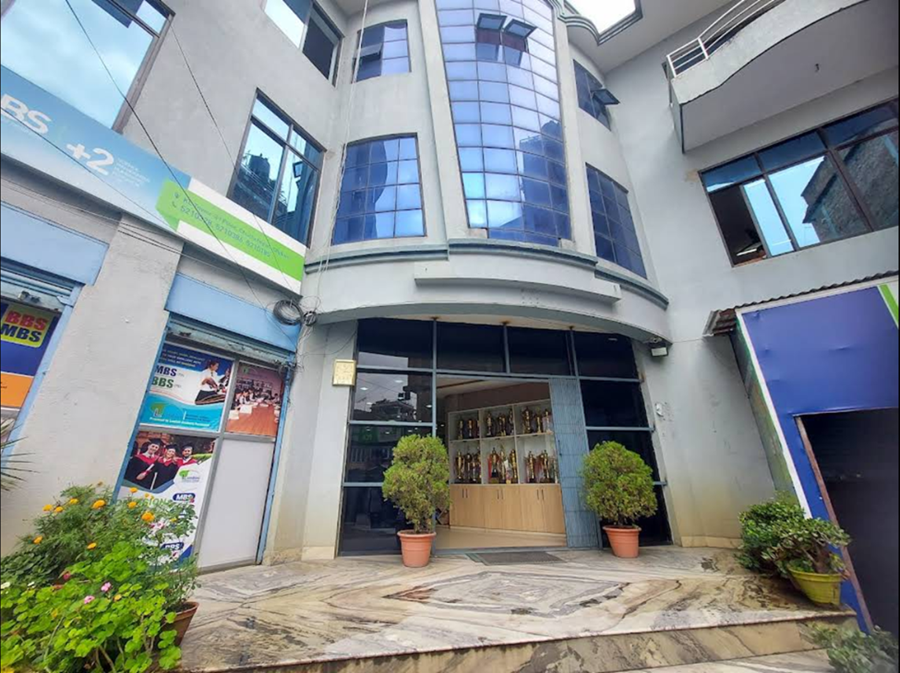
BBM at LAC gives you a clear pathway from fundamentals to applied subjects. Early semesters focus on economics, communication, mathematics, and principles of management. Mid to later semesters move into accounting, finance, HRM, research, operations, law, information systems, e-commerce, banking, international business, strategy, and a project or internship. This staged approach helps students grow from basic concepts to workplace-ready tasks.
LAC delivers this TU program in Chuchchepati, Chabahil, Kathmandu, which makes commuting manageable for many students from the valley and nearby districts.
Affiliation: Tribhuvan University, Faculty of Management (FoM).
Length/Load: 4 years, 8 semesters, 120 credits.
Entry route: CMAT entrance exam conducted by FoM TU, followed by an interview for shortlisted candidates.
Syllabi availability: FoM publishes semester syllabi (e.g., 2nd, 3rd, 6th, 7th semesters) on its official portals.
Year 1, Sem 1–2: Microeconomics; English I–II; Principles of Management; Business Mathematics I–II; Sociology/Psychology; Financial Accounting; Macroeconomics.
Year 2, Sem 3–4: Computer-based Financial Accounting; Business Communication; Basic Finance; Nepalese Society & Politics; Business Statistics; Accounting for Decision Making; Financial Management; HRM; Taxation in Nepal; Business Research Methods.
Year 3, Sem 5–6: Operations; Legal Environment; Database Management; Business Environment in Nepal; International Business; Commercial Banking Operations; focus-area courses.
Year 4, Sem 7–8: E-Commerce; Business Ethics & Social Responsibility; Business Strategy; electives; Project Report or Internship.
TU FoM posts current semester syllabi and course outlines online; students should consult the latest PDFs for unit-wise learning goals and assessment patterns.
Build a solid base in economic reasoning, quantitative tools, and business communication.
Help students interpret markets, policies, and organizational processes in Nepal.
Develop applied understanding of finance, HRM, operations, banking, taxation, and law through case tasks and projects.
Encourage responsible practice through ethics and social responsibility modules.
Graduates enter banking and financial services, consumer goods, service firms, start-ups, NGOs/INGOs, local government projects, or move into master’s-level management study. The curriculum sequence and the final-semester project/internship support smoother entry into junior roles such as management trainee, credit/operations assistant, HR assistant, sales analyst, or project associate.
By graduation, students should be able to:
Read economic and business data and form clear arguments for decisions.
Prepare and interpret basic financial statements; apply financial concepts to common business cases.
Use research methods to plan small studies, collect data, and present findings.
Draft concise business documents and deliver short presentations.
Explain business law, taxation basics, and ethical responsibilities in Nepali settings.
Work in teams to plan, monitor, and close a semester project or internship assignment.
Quantitative skills: Business Mathematics I–II, Business Statistics.
Accounting & Finance: Financial Accounting; Accounting for Decision Making; Financial Management; Basic Finance.
People & Process: HRM; Operations; Business Environment in Nepal.
Regulation & Policy: Legal Environment of Business; Taxation in Nepal.
Markets & Strategy: Marketing focus courses; International Business; Business Strategy.
Information & Digital: Database Management; E-Commerce.
Professional practice: Business Research Methods; Project/Internship; Ethics & Social Responsibility.
LAC runs BBM classes in a semester system set by TU FoM. Faculty members typically combine lectures, guided discussions, case write-ups, problem sets, short presentations, and project supervision aligned to the published syllabi. Assessment follows TU-approved internal and end-semester formats. Students should track the official semester syllabi and notices posted by FoM for any updates to assessment weightage or content coverage.
Minimum qualification: 10+2 or equivalent with at least 45% or CGPA 1.8 (C), recognized by Tribhuvan University.
Entrance: CMAT conducted by TU FoM; interview for those who meet the cut-off. Final merit follows TU/college rules.
Official CMAT notices and dates: FoM publishes CMAT notices, eligibility criteria, application windows, and test schedules on its website each admission cycle. Refer to current notices for the exact window (e.g., 2082/2025 re-entrance schedule and criteria).
What to prepare for submission (typical):
Recent photographs.
Copy of citizenship (or passport for international applicants).
Academic transcripts and character certificate.
Migration certificate if required for TU registration.
Check the current year’s checklist at the LAC office and FoM portal before submission, as formats and timelines may change with official circulars.
Early roles may include:
Banking/Finance: branch operations assistant, credit assistant, customer service associate.
Corporate services: HR assistant, sales/marketing trainee, supply/operations associate.
Consulting/Projects: project coordinator, research assistant on donor or private projects.
Entrepreneurial path: small venture initiation supported by coursework in strategy, e-commerce, and research.
The project/internship requirement helps students demonstrate applied skills to employers at graduation.
Institution-level scholarships often reflect merit (entrance rank/board scores) and need. Students should ask the college office for the latest BBM-specific provisions, any quotas, and renewal rules tied to semester performance or attendance. If external schemes apply (municipal/provincial support), keep copies of eligibility proof and submission timelines.
TU recognition and structure: A clear semester plan with 120 credits and updated syllabi available on FoM sites.
Balanced content: Quantitative tools, finance/accounting, operations/HRM, and law/taxation relevant to Nepal.
Applied exit: Project or internship builds a work sample that students can discuss during hiring.
Location: Chuchchepati–Chabahil access supports commuting students and working learners.
BBM at Lumbini Academic College offers a steady route to learn how Nepal’s organizations function, how decisions are made, and how markets respond. The TU-approved syllabus keeps the course map transparent. Students who plan well—checking CMAT timelines, organizing documents, and tracking semester notices—find the pathway clearer and the workload manageable. LAC’s setting in Kathmandu adds day-to-day relevance during projects and placements.
1) Is BBM at LAC affiliated to TU?
Yes. The program runs under Tribhuvan University, Faculty of Management, following FoM’s structure and syllabi.
2) How long is the course and how many credits?
Four years, eight semesters, 120 credits.
3) What is the entry requirement?
10+2 or equivalent with at least 45% or CGPA 1.8 (C), recognized by TU, plus CMAT and an interview.
4) Where do I find official syllabi and test windows?
On FoM TU portals; see current BBM semester syllabi and CMAT notices for dates and formats.
5) Does the program include internship or project work?
Yes. The final stage includes Project Report Writing or Internship, guided within TU rules.
6) What subjects will I study?
From economics, management, and math to finance, HRM, research, operations, law, information systems, banking, international business, e-commerce, ethics, and strategy. Consult the semester PDFs for detailed unit lists.
7) Where is the college located?
Chuchchepati, Chabahil, Kathmandu.