Lumbini Academic College (LAC) in Chuchchepati, Chabahil, Kathmandu offers Secondary School to university-level study, including +2 streams (Management, Science, Humanities, Law) and Tribhuvan University (TU) programs—BBM, BCA, BBS, and MBS.
Lumbini Academic College (LAC) was established in 2006 in Chuchchepati, Chabahil, Kathmandu. It operates under the Lumbini Academic Foundation (LAF) and runs education from pre-school to high school and university level for a limited number of students. The college highlights qualified faculty and a practice-oriented teaching approach.
LAC’s undergraduate and graduate courses are affiliated with Tribhuvan University (TU), and the campus hosts a range of co-curricular and extra-curricular activities, labs, courts/grounds, and student support initiatives that create an active campus life.
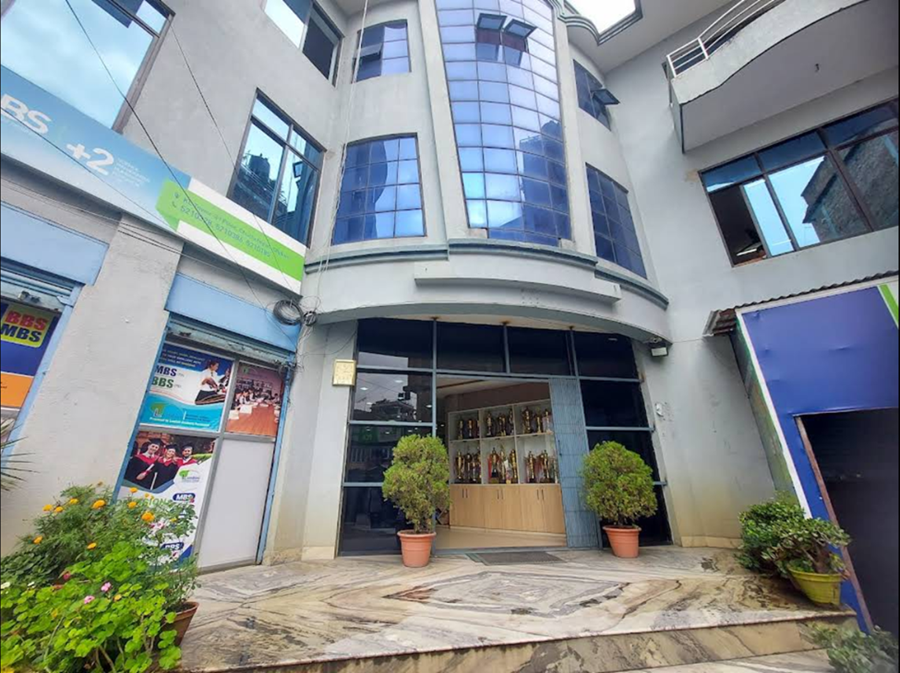
Location: Chuchchepati, Chabahil, Kathmandu, Nepal.
Year of establishment: 2006.
Institutional umbrella: Lumbini Academic Foundation (LAF).
Academic scope: Pre-school to high school and university level.
+2 streams: Management, Science, Humanities, Law (subject clusters listed below).
TU programs: BBM (8 semesters/120 credits), BCA (8 semesters/126 credits), BBS (4 years/yearly), MBS (2 years/4 semesters/60 credits).
Learning approach: Practical work, presentations, case exposure, field/industry visits.
Facilities & campus life: Science and computer labs, sports courts/grounds, futsal league, basketball, cricket, badminton, table tennis, community outreach, personality development, leadership, and robotics workshops.
LAC runs +2 with three major streams. Subject groupings below come from the college’s official information.
Grade XI core: English, Nepali, Social Studies & Life Skill Education / Mathematics (elective group), Accounting; electives include Business Studies or Computer Science; Economics / Tourism & Mountaineering Studies / Marketing; Business Mathematics / Finance / Hotel Management / Co-operative Management.
Grade XII core: English, Nepali, Social Studies & Life Skill Education / Mathematics (elective group), Accounting; electives similar to Grade XI with progression in the same streams.
Grade XI–XII: English, Nepali, Social Studies & Life Skill Education; science core: Physics, Chemistry; with one or more of Mathematics / Biology/ Computer Science (standard combinations: PCM, PCB, PC–CS). Includes practicals and scheduled lab work as per NEB syllabus.
Grade XI core: English, Nepali, Social Studies & Life Skill Education / Mathematics; electives include Rural Development, Psychology, Gender Studies, Hospitality Management, Sociology, Political Science, Mass Communication, Fashion Designing, Nepali, English, Human Rights, Beautician & Hair Dressing.
Grade XII: Continuation with progression in the above subject clusters.
Grade XI–XII: English, Nepali, Social Studies & Life Skill Education / Mathematics with law-focused subjects: Jurisprudence & Legal Theories, Procedural Law, Constitutional Law, General Law.
Note: For +2 streams, confirm the current examination board and annual updates (e.g., any NEB circulars on curriculum or assessment) at the time of admission since boards update codes, optional clusters, and weighting from time to time.
This four-year program (eight semesters, 120 credits) is for students who want a steady start in business and management. You learn how firms work, how markets change, and how decisions are taken across finance, people, and operations—with examples from Nepal and abroad.
You can apply with 10+2 or equivalent and at least 45% or CGPA 1.8 (C) recognized by Tribhuvan University. Admission is through TU’s CMAT. Those who qualify are called for an interview before the final list.
The syllabus begins with microeconomics, macroeconomics, English communication, principles of management, and business mathematics. It then moves into financial and managerial accounting, finance, human resource management, taxation in Nepal, research methods, operations, business law and policy, databases for business, the Nepal business environment, international business, commercial banking operations, e-commerce, ethics and social responsibility, and business strategy. You complete approved electives and finish with a project or internship.
BCA runs for four years (eight semesters, 126 credits). It builds steady skills in programming, networking, databases, and web and mobile development. You work on staged projects and complete an internship.
You can apply with 10+2 or equivalent and at least 45% or CGPA 1.8 (C) recognized by Tribhuvan University. Admission is through TU’s BCA entrance test, followed by an interview for shortlisted candidates.
Study starts with computer fundamentals, society and technology, English, mathematics, digital logic, and C programming. It then covers data structures and algorithms, system analysis and design, object-oriented Java, web technologies, operating systems, numerical methods, software engineering, scripting, and database management. Later semesters include MIS and e-business, .NET, computer networking and network programming, graphics and animation, mobile programming, distributed systems, and cyber law with professional ethics. Multi-stage projects, electives, and an internship bring the learning together.
BBS is a four-year program with yearly evaluation (total 2000 marks). It suits students who want wide exposure to business before choosing a focus.
You can apply with 10+2 or equivalent and at least 40% or CGPA 1.8 (C) recognized by Tribhuvan University. Admission is through the college entrance test, with selection based on merit and available seats.
The course includes business English and communication, statistics, microeconomics and macroeconomics, accounting for financial analysis, and principles of management. You then study cost and management accounting, marketing, foundations of human resource management, business law, financial management, business environment and strategy, taxation and auditing, organizational behavior, and entrepreneurship and enterprise development. Three concentration courses complete the track in areas such as accounting, finance, marketing, human resource management, or management science.
MBS runs for two years (four semesters, 60 credits). It is aimed at graduates who want deeper study in management for roles in business, industry, or the public sector.
Applicants need a bachelor’s degree recognized by Tribhuvan University. The college material also notes a minimum 45% or a ‘C’ grade at 10+2. Admission is through TU’s MBS-AT, followed by an interview for shortlisted candidates.
The program covers managerial core subjects, research methods, finance, organization and leadership, and strategy, with options to go deeper through functional concentrations. Semester offerings, available concentrations, and any project or seminar requirements are confirmed at admission.
+2 streams (Management/Humanities/Law): Submit application within the intake window. Provide previous academic transcripts, character certificate, and any board-mandated documents. Short orientation/interaction may apply at the college level. (Check the current year’s notice for exact dates and any board updates.)
BBM: Meet minimum academic eligibility; register and sit for TU’s CMAT; after results, appear at the college interview; final merit list published as per college/TU rules.
BCA: Meet eligibility; take TU’s BCA entrance; shortlisted candidates attend an interview; final selection follows TU/college rules.
BBS: Meet eligibility; take the college’s entrance test; selection follows merit and seat availability.
MBS: Hold a recognized bachelor’s degree; sit for TU’s MBS-AT; attend interview; final list as per TU/college rules.
Required items typically include recent photos, citizenship copy (or passport for international applicants), academic transcripts/certificates, and migration certificate for TU admission. Always verify the current year’s checklist with the college office before submission.
LAC reports a team of well-trained and qualified teachers backed by administrative and technical staff. Instruction blends classroom theory with applied tasks such as presentations, projects, case exposure, field visits, and regular evaluative activities. The college notes a focus on “practical way of teaching and learning,” with synchronized academic study, applied knowledge, and discipline.
Leadership messages also point to personality development, public speaking, leadership programs, and activities that build confidence, communication, and teamwork—important for early career outcomes across business, computing, humanities, and law.
Laboratories: Computer science labs; science labs (physics, chemistry, biology); IT and hotel management practical labs.
Sports & fitness: College futsal ground, fitness club, basketball ground; tournaments and leagues engage students during the year.
Learning spaces & tools: Classrooms, presentation facilities, and access to field/industry sites for applied learning.
Campus environment: Located in Chuchchepati, with a stated emphasis on a focused learning atmosphere.
Where applicable, check current lab inventories (hardware/software versions, internet bandwidth, safety provisions), library holdings, and student commons through the college office during admission week.
Students participate in academic presentations, case discussions, and peer learning. Beyond class, a wide range of activities build social, cultural, health, and leadership outcomes:
Sports: Intra-college basketball (large participation from boys’ and girls’ teams), badminton (singles and doubles), knockout cricket (plus two and bachelor teams), table tennis, volleyball, and the long-running Lumbini Futsal Premier League.
Community & health: Blood donation, dental and eye check-up programs around Saraswati Puja; regular city cleaning campaigns focusing on heritage/public spaces.
Skill & leadership: Personality development and effective leadership programs; banking orientation on digital safety and basic operations; one-day share market workshop; robotics training for STEM cohorts; frequent student presentations.
Cultural & exposure visits: Educational tours (Mustang, Pokhara, Chitwan, Ghandruk, Ilam, Darjeeling, Kalinchowk); industry visit (e.g., Sitaram Milk Industry); media house visit (Gorkhapatra Sansthan); district court visit for law students; hospitality exposure at Gokarna Forest Resort; month-long hotel management practicals.
These activities help students connect classroom learning with field realities and develop teamwork and communication.
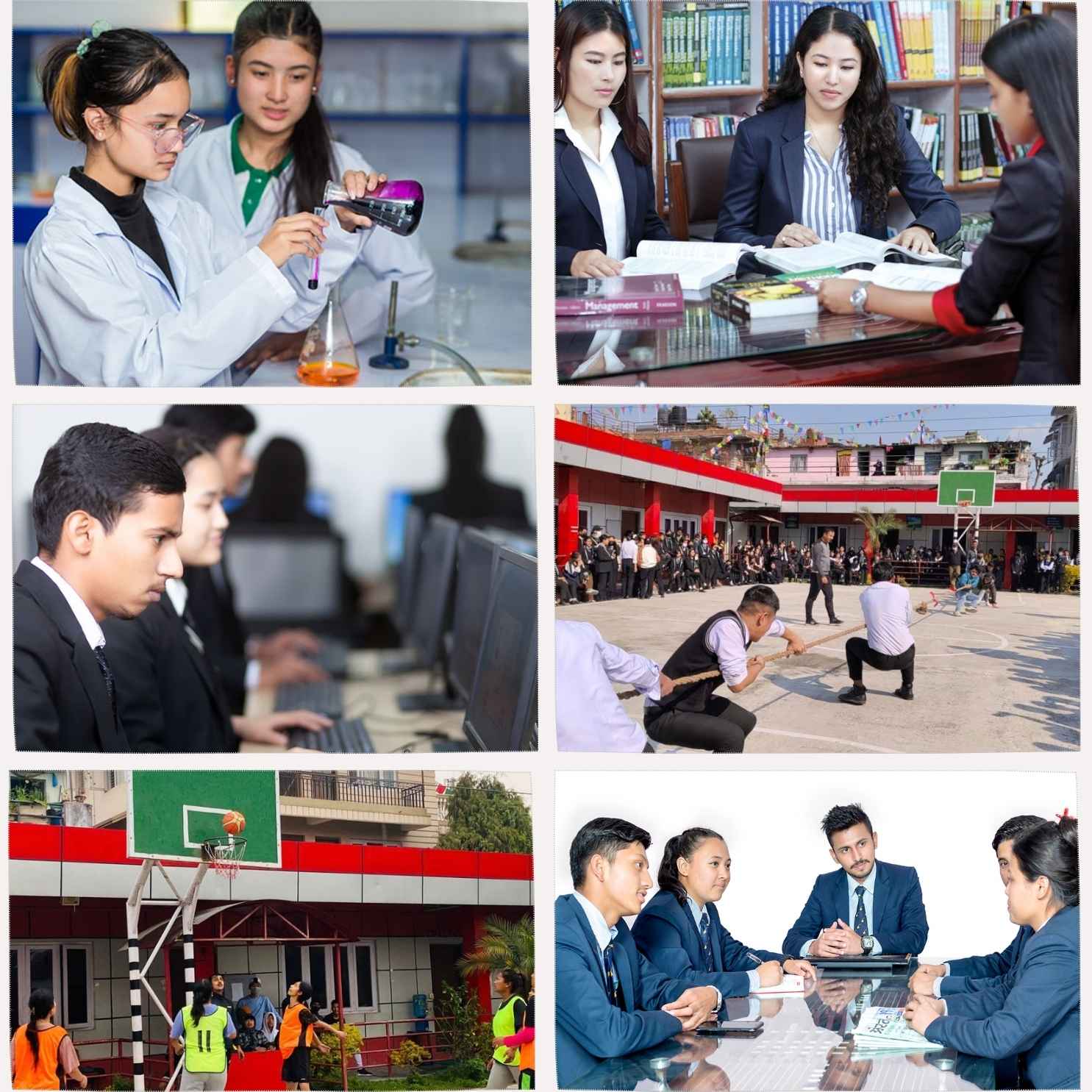
Competitions: Mr. & Ms. Lumbini Talent Hunt; Singing and Dancing Star; quiz competitions across current affairs, geography, science, history, sports, and technology.
Outdoor learning: Rafting and hiking at Trishuli and Sukute; wall-climbing practice for travel/tourism/mountaineering group.
On-campus leagues: Futsal league seasons with large participation numbers from grades IX–XII and bachelor/master cohorts.
The uploaded material does not specify scholarship schemes, fee waivers, or assistantships. Students commonly seek:
Merit-based support: Based on entrance or board results.
Need-based support: Based on family income and special circumstances.
Targeted waivers: For under-represented groups as per institutional policies.
External grants: Government or NGO/INGO schemes where applicable.
For accurate and current figures (tuition, admission fees, exam fees, hostel/transport if available, and any scholarship quotas), request the official fee and scholarship sheet from the college office during the admission window.
Program expansion: The college added master’s level (MBS), with further additions of BBM and BCA in subsequent intakes as per official messaging.
Alumni footprint: Leadership notes a graduate count in the thousands and alumni working in multiple fields; validate current totals during admission week for the latest figure.
Ambassador & mentor network: Engagements with national-level sportspersons and public figures for motivation, sports mentoring, and personality development sessions.
Program breadth in one campus: +2 streams and TU programs (BBM, BCA, BBS, MBS) allow a multi-stage academic journey without changing location.
Practice-oriented learning: Classroom study paired with projects, presentations, field and industry exposure.
Sports and wellness culture: Futsal league, basketball ground, cricket, badminton, table tennis, and fitness activities.
Leadership and soft skills: Personality development, public speaking, leadership programs, and workshops on finance/banking and capital markets.
Location advantage: Chuchchepati, Chabahil—accessible area within Kathmandu’s urban network.
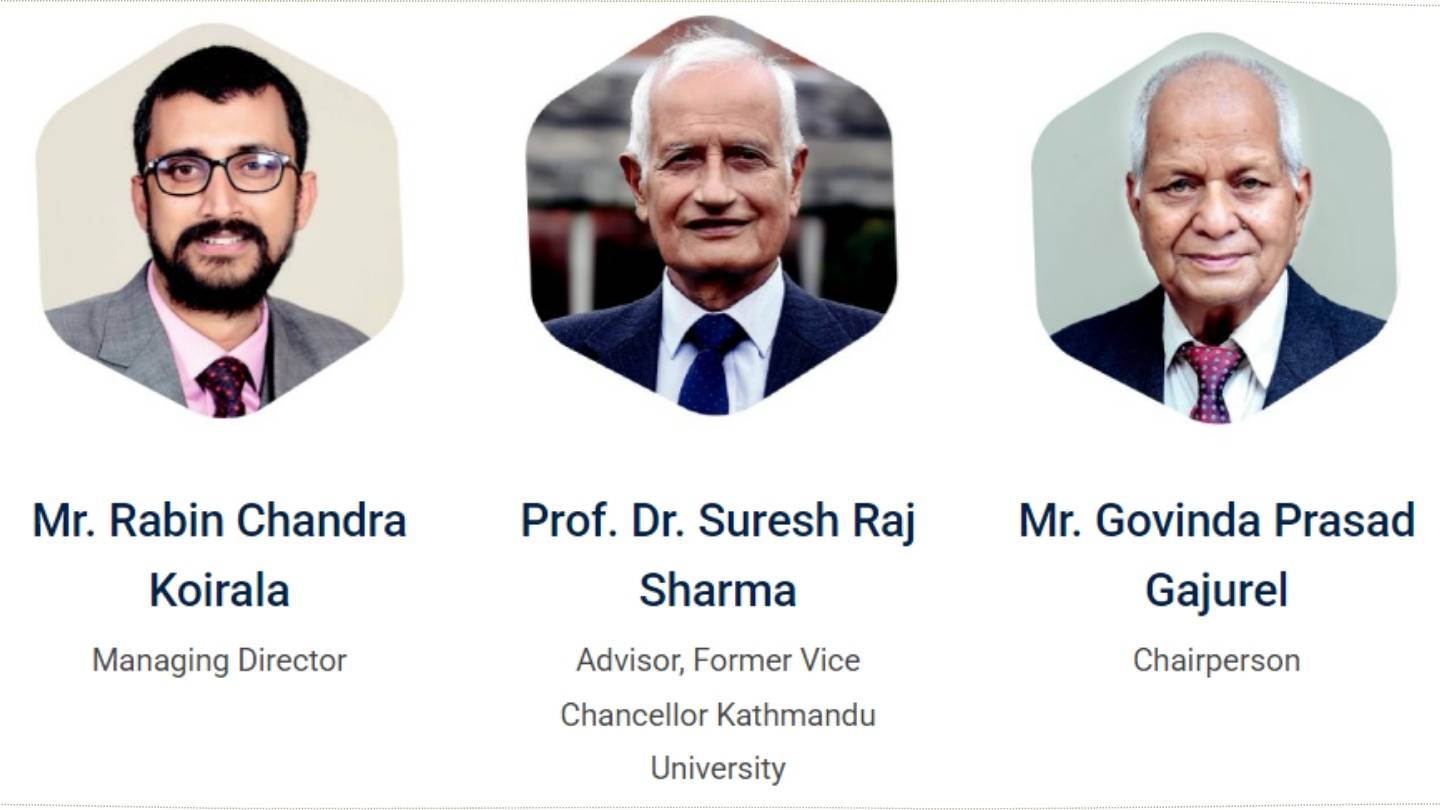
Thank you for considering Lumbini Academic College in Chuchchepati. My work is simple: keep teaching clear, schedules steady, and communication open. We follow national guidelines and Tribhuvan University rules across +2, BBM, BCA, BBS, and MBS. Teachers share plans, labs run safely, and sports and clubs are part of campus routine. Field visits and presentations connect lessons with real workplaces and community life. Fees, scholarships, and calendars are posted and reviewed each year. If you have a question, visit the office or call during working hours. Together, we keep daily learning steady, fair, and useful.
Each visit to Lumbini Academic College reminds me that steady habits shape learning. Course plans follow approved frameworks, and teachers prepare materials suited to level and purpose. I ask students to read daily, write clearly, and practice numeracy. Respect lab safety and proper citation. Links with media, industry, and community groups should continue; they connect study with real work. Keep attendance honest, feedback timely, and records neat. Update libraries, support faculty growth, and invite alumni to share experience. With patient work, students grow into reliable professionals and responsible community members today.
Our board’s duty is to protect standards and keep systems clear. We approve policies, budgets, and calendars, and we track compliance with national rules and Tribhuvan University procedures. Admission follows merit, records are handled with care, and classrooms, labs, and play areas stay orderly. We support inclusion, zero tolerance for harassment, and careful use of digital tools. Scholarship decisions follow written criteria and documents. Meetings with stakeholders are announced in advance, and minutes are kept at the office. Parents and students may use the grievance register. Good governance allows fair learning to continue every day.
My day begins with classrooms and ends with student support. Timetables run on time, labs are booked in advance, and teachers share unit plans. Attendance, assignments, and practical work are recorded and reviewed. We use presentations, field visits, and small projects to connect study with local settings. Safety rules apply in every lab and on tours. Sports and clubs run after class with staff oversight. Parents receive term updates and may meet teachers by appointment. If you need forms, letters, or admission guidance, the office counter is open. Our aim is steady learning and clear communication.
Lumbini Academic College provides a structured pathway from +2 to undergraduate and graduate study under Tribhuvan University affiliation. The campus blends classroom learning with practical activities, sports, leadership programs, field visits, and community work. Applicants should review the latest admission notices and confirm current fee/scholarship details directly with the college before applying.
Q1. Where is Lumbini Academic College located?
Chuchchepati, Chabahil, Kathmandu, Nepal.
Q2. Which +2 streams are offered?
Management, Science, Humanities, and Law, each with defined subject clusters for Grade XI and XII.
Q3. Which bachelor’s and master’s programs are available?
BBM, BCA, BBS, and MBS under Tribhuvan University.
Q4. What is the BBM admission pathway?
Meet eligibility; sit for TU’s CMAT; attend interview; final merit list is published thereafter.
Q5. What is the BCA admission pathway?
Meet eligibility; sit for TU’s BCA entrance; shortlisted candidates attend interview; final selection follows TU/college rules.
Q6. What is the BBS admission pathway?
Meet eligibility; take the college’s entrance test; selection is merit-based within seat limits.
Q7. What is the MBS admission pathway?
Hold a recognized bachelor’s degree; sit for TU’s MBS-AT; attend interview; final list is issued accordingly.
Q8. What facilities are available for practical learning?
Computer and science labs (physics, chemistry, biology), IT and hotel management labs, presentation spaces, and field/industry visit opportunities.
Q9. What about sports and ECA?
Futsal league, basketball, cricket, badminton, table tennis, volleyball; talent hunts, quizzes, tours, and community/health programs.