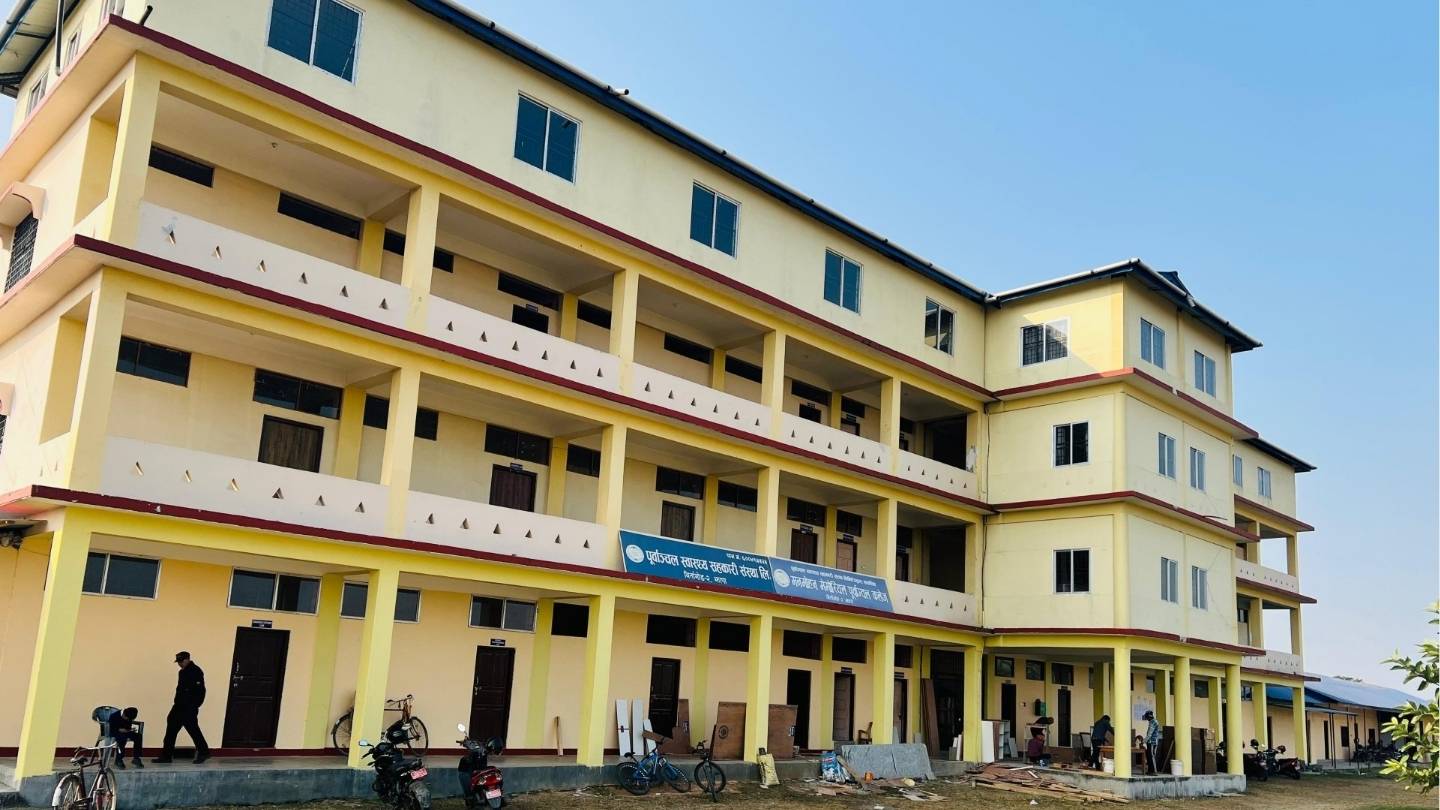
Diploma in Pharmacy at Manmohan Memorial Purwanchal College (MMPC), Birtamode–02, Jhapa, is a three-year CTEVT diploma program that prepares Students for pharmacy work in hospital, community, and supply-chain settings. MMPC is located in Birtamode–02, Jhapa.
Diploma-level pharmacy study fits Students who want a structured path into medication management, dispensing practice, basic pharmaceutical science, and patient communication. Students often ask one practical question first: “What will I be able to do on day one of work?” This program addresses that concern through lab work, supervised practical exposure, and graded assessments across three academic years.
Program duration: 3 years (yearly system), 35 instructional weeks per year
Entry requirement: SEE (or equivalent) with minimum GPA and subject-grade conditions set by CTEVT for the intake year
Attendance requirement: minimum 90% in theory and 90% in practical (as stated in the CTEVT curriculum)
Seat quota at MMPC (as shared): 40 seats
CTEVT’s Diploma in Pharmacy curriculum is structured year-wise. The curriculum document also notes that the first-year curriculum is shared across several health science diploma programs, and later years focus on pharmacy-specific subjects.
Diploma in Pharmacy at MMPC starts with a health-science base that supports later pharmacy practice. CTEVT lists foundational subjects that cover communication, basic sciences, and human body systems, then moves into pharmacy-specific learning in later years.
Students should treat this year seriously because it builds the vocabulary and concepts used in pharmacology, dosage calculations, and patient counseling.
Diploma in Pharmacy at MMPC continues with subjects such as pharmacology, biochemistry, pharmaceutical analysis, pharmaceutics, pharmacognosy, and pharmacy practice components. CTEVT’s course structure lists pharmacy subjects across the second and third years, along with practical components tied to those subjects.
Students usually notice a shift here: theory starts connecting to real tasks like label reading, prescription interpretation under scope, dosage-form preparation, stock handling, and patient instructions.
Diploma in Pharmacy at MMPC aims to produce mid-level pharmacy human resources who can work under Nepal’s health system and regulatory requirements. The curriculum frames the program around safe handling of medicines, rational use of drugs, and practical service delivery in pharmacy settings.
Diploma in Pharmacy at MMPC supports work roles that sit between basic support staff and pharmacist-level roles. Students typically work in:
Hospital pharmacy support and dispensing counters
Community pharmacy service points
Medical stores and supply-chain roles (procurement, inventory, basic quality checks)
Pharmaceutical sales and distribution roles (within legal scope and employer policy)
Scope depends on workplace policy and the applicable council/regulatory rules for registration and practice.
Diploma in Pharmacy at MMPC expects Students to demonstrate outcomes that combine knowledge and practice, such as:
Reading and processing medicine-related information accurately
Performing basic pharmaceutical calculations used in routine dispensing
Supporting safe storage, stock rotation, and record keeping
Communicating medicine-use instructions in clear, patient-friendly language
Following infection prevention and workplace safety rules in pharmacy settings
Diploma in Pharmacy at MMPC builds job-facing skills through lab and practical exposure. Students typically develop skills in:
Dosage forms and basic compounding practice (as required by curriculum tasks)
Prescription screening at a basic level and referral of unclear cases to seniors
Dispensing workflow: labeling, counseling points, storage advice
Inventory: receiving, shelving, expiry tracking, batch records
Basic pharmaceutical analysis and identification tasks introduced in curriculum labs
A realistic student scenario: Your first internship day might involve checking stock, arranging medicines by category, and learning how to communicate common instructions (timing, food relation, missed dose advice) in simple Nepali/English as required by the workplace.
Diploma in Pharmacy at MMPC follows CTEVT’s curriculum delivery expectations. The CTEVT curriculum specifies teaching-learning patterns including theory, practical demonstrations, guided practice, and workplace exposure as part of the learning process.
Students benefit most when they keep a practical notebook from the start—dosage calculations, common dosage forms, and counseling points become easier when you rewrite them in your own words.
Diploma in Pharmacy at MMPC follows CTEVT entry conditions for the intake year. The CTEVT curriculum states SEE (or equivalent) with a minimum GPA requirement and minimum subject grades (including science and mathematics-related subjects) for eligibility.
Students should confirm the current year’s entrance notice and application steps through CTEVT’s official notice cycle and MMPC’s notice section.
Diploma in Pharmacy at MMPC can lead to early employment in pharmacy-related roles after meeting registration requirements where applicable. Career directions often include:
Pharmacy assistant roles in hospitals and private clinics
Community pharmacy staff roles
Medical store operations and inventory roles
Pharma distribution and logistics roles
Support roles in health programs that need medicine handling and record keeping
Diploma in Pharmacy at MMPC follows CTEVT scholarship rules where applicable. CTEVT publishes scholarship categories (such as merit and inclusion-based quotas) and seat-based scholarship numbers. For a 40-seat program, CTEVT’s published scholarship seat count indicates 3 scholarship seats.
Students should check the current CTEVT scholarship notice for category definitions, documents, deadlines, and whether the scholarship is applied at admission or after enrollment.
Diploma in Pharmacy at MMPC suits Students who:
Prefer structured science learning and careful record work
Can follow hygiene, labeling accuracy, and safety rules consistently
Want a health-sector role that combines science with daily service work
Feel comfortable communicating instructions clearly to patients and caregivers
Diploma in Pharmacy at MMPC follows CTEVT’s internal assessment and final examination system described in the curriculum. CTEVT requires internal assessments in both theory and practical, and Students can sit final exams only after meeting internal assessment requirements.
CTEVT also sets pass marks standards (minimum 40% in theory and 50% in practical) and allows back papers, with a time limit for clearing all subjects from the enrollment date as per CTEVT rules.
Diploma in Pharmacy at MMPC gives Students a CTEVT-structured path into pharmacy service roles. Students should verify the current intake notice, entrance schedule, and any curriculum updates through official CTEVT channels and MMPC’s notice system before applying.
What is the duration of Diploma in Pharmacy at MMPC?
CTEVT lists the program as a three-year yearly system with 35 instructional weeks per year.
What attendance level should Students maintain?
CTEVT specifies minimum 90% attendance in theory and 90% in practical.
What pass marks are required in exams?
CTEVT sets minimum 40% in theory and 50% in practical, along with internal assessment requirements.
Are scholarships available?
CTEVT publishes scholarship categories and seat-based scholarship numbers; for 40 seats, the listed scholarship seats are 3.