The Bachelor of Arts (BA) at Rapti Babai Campus is a Tribhuvan University-affiliated four-year bachelor’s program under the Faculty of Humanities and Social Sciences. The program is offered at the campus located in Tulsipur Sub-Metropolitan City-12, Kapadadevi, Dang, Lumbini Province.
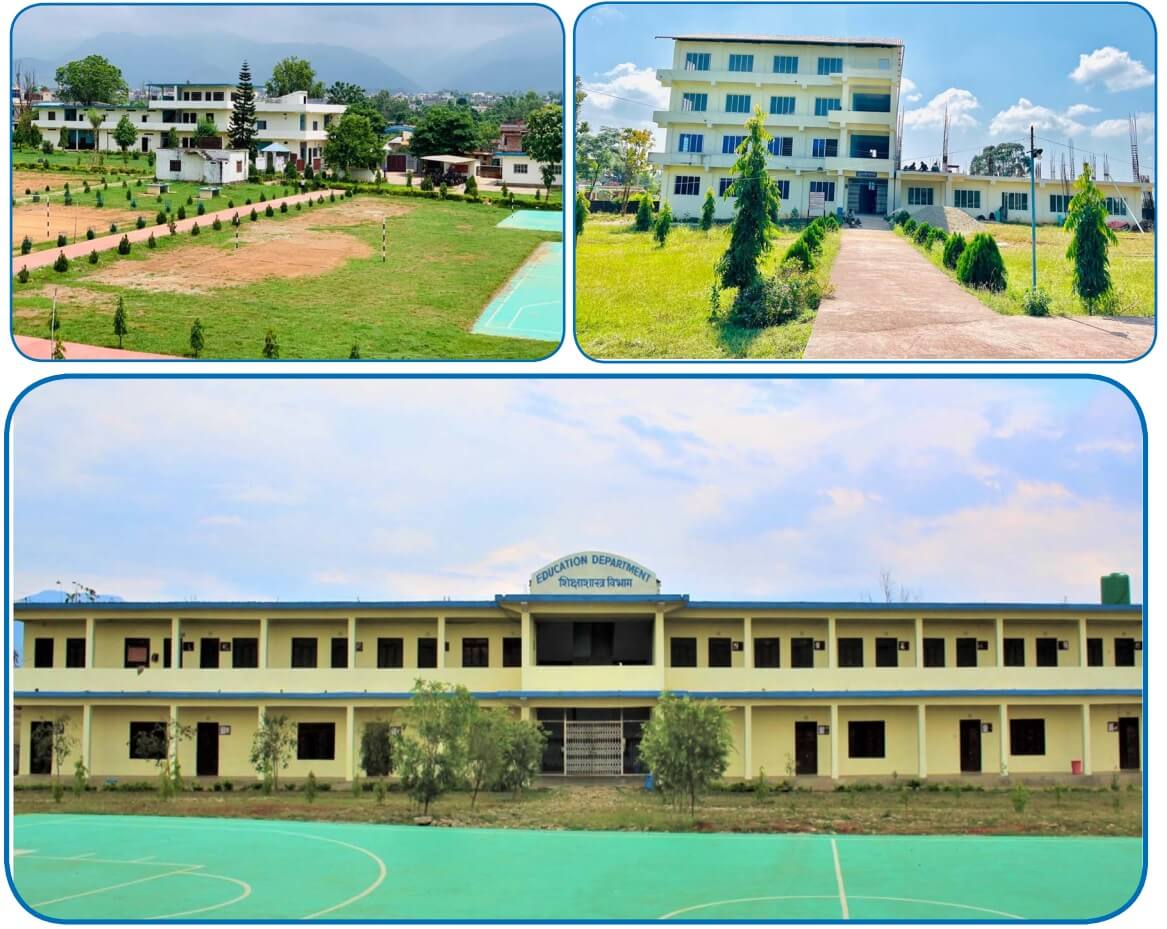
Rapti Babai Campus is a community-owned campus established in 1990 AD (2047 BS). The campus began its academic service through Humanities at the Proficiency Certificate Level and has continued to offer Humanities alongside Education and Management at different academic levels. For students from Tulsipur, western Dang, and neighboring districts, the BA program provides a TU humanities pathway within a community campus that has developed its own academic buildings, library, administration building, canteen, and learning facilities.
The campus received QAA certification from the University Grants Commission, Nepal, in 2022 AD. Its bachelor-level academic activities include entrance examinations for new students, regular class tests, assignments, and internal examinations.
Program: Bachelor of Arts (BA)
College: Rapti Babai Campus
Location: Tulsipur Sub-Metropolitan City-12, Kapadadevi, Dang
Affiliation: Tribhuvan University
Faculty: Humanities and Social Sciences
Duration: 4 years
Academic system: Annual system
Total marks: 2,000 marks
Examination: Annual examination conducted by Tribhuvan University through the Office of the Controller of Examinations
Campus type: Community-owned campus
Recognition: QAA Certified Campus by UGC Nepal in 2022 AD
Facilities include classrooms, library, administration building, canteen, drinking water facilities, and sports spaces
The BA curriculum under Tribhuvan University is an interdisciplinary humanities and social sciences program. It combines compulsory subjects, major subjects, and elective subjects across four academic years.
The four-year BA program carries 2,000 marks, with 500 marks in each year.
Students choose two major subjects of 700 marks each.
Students choose two elective subjects of 100 marks each.
Compulsory subjects include English, Nepali, and Nepal Studies.
Compulsory English carries 200 marks.
Compulsory Nepali carries 100 marks.
Nepal Studies carries 100 marks.
English is compulsory in the first and third years.
Nepali is compulsory in the second year.
BA subject areas include Anthropology, Geography, History, Sociology, Psychology, Economics, Culture, Rural Development, Social Work, Film Studies, Hindi, Nepali Linguistics, and Population Studies.
Evaluation includes written examinations of 70 marks and internal assessment of 30 marks for each subject.
Provide students with an interdisciplinary foundation in humanities and social sciences.
Develop academic understanding of society, culture, language, history, economy, and human behavior.
Strengthen reading, writing, analysis, and presentation skills.
Prepare students for further study in humanities and social science disciplines.
Support academic preparation for public service, research, teaching, and community-based work.
The BA program is suitable for students interested in social sciences, language, society, culture, development, and public issues. At Rapti Babai Campus, the program is connected to the campus’s long association with Humanities, which was the area through which the campus began its academic service.
The program supports students who want to continue toward master’s level study in related fields. Depending on the subjects completed at bachelor level, graduates may pursue further study in areas such as Sociology, Anthropology, Rural Development, Political Science, History, Geography, Culture, Population Studies, Nepali, English, and other humanities-related disciplines.
Understand major concepts in humanities and social sciences.
Analyze social, cultural, historical, economic, and community issues.
Develop academic writing and presentation ability.
Build subject knowledge in selected major and elective areas.
Apply social science perspectives to local and national contexts.
Prepare for higher education in humanities and related fields.
Academic reading and writing
Critical thinking
Social and cultural analysis
Communication and presentation
Research-oriented study habits
Community and development awareness
Subject-specific analytical skills
Teamwork through internal assessment activities
Rapti Babai Campus conducts bachelor-level academic activities through regular classes, assignments, class tests, and internal examinations. The campus has also emphasized lesson-plan-based teaching, multimedia use, project work, and exposure visits where applicable.
Lecture-based classroom instruction
Assignments and class tests
Internal examinations
Classroom presentation and teamwork
Mini project and internal assessment activities
Use of projectors and multimedia in teaching-learning activities
Teaching-related pathways after further qualification
Social work and community development roles
Research assistant roles
Administrative support roles
NGO and INGO-related entry-level roles
Journalism, communication, and writing-related pathways, depending on subject background
Public service preparation
Higher studies in humanities and social sciences
Campus scholarship fund of NRs. 170000.00
Intelligence Scholarship for students scoring the highest marks in diploma level in each faculty
Monthly fee discounts based on SEE GPA criteria
Full monthly fee discount for visually impaired and physically disabled students
Scholarship support referred by HSEB for Grade 11 students
Disable and Intelligence Scholarship from the Campus Level Professor’s Association
Basu-Damu Lamichhane Scholarship for poor and intelligent students
Late Bishnudevi Shrestha Scholarship for poor and intelligent students
Late Bhupendreshwor Shrestha Scholarship for poor and intelligent students
Late Tulsi Ram Upadhaya Memorial support for students
Admission follows Tribhuvan University rules and the regulations of the concerned faculty and campus.
Applicants submit the prescribed application form with required academic documents.
The process may include an entrance examination, merit-based selection, or both.
Selected students complete admission by submitting documents and paying the prescribed fees.
Academic registration, examinations, and results follow TU rules, guidelines, and the applicable academic calendar.
Academic Transcript or Grade Sheet of Class 12, +2, or equivalent
Character Certificate from the previous institution
Migration Certificate, if the previous board or university is different
Transfer Certificate from the previous school or college
Citizenship Certificate or Birth Certificate copy
Passport-size photographs
Entrance Examination Scorecard, if required by the program or campus
Completed Admission or Application Form of the campus
Admission Fee Payment Receipt
Equivalence Certificate, only if the qualification is from a foreign board or university
The BA program follows the annual examination system of Tribhuvan University. Final examinations are conducted by Tribhuvan University through the Office of the Controller of Examinations.
Assessment includes written examinations and internal assessment. Internal assessment may include mini projects, classroom presentations, and teamwork. Rapti Babai Campus also conducts bachelor-level class tests, assignments, and internal examinations as part of academic monitoring.
BA at Rapti Babai Campus offers a TU-affiliated humanities and social sciences degree in Tulsipur, Dang. The program is connected to the campus’s institutional history, as Rapti Babai Campus began its academic service through Humanities before expanding into Education and Management.
For students seeking a humanities degree in western Dang, the BA program provides a structured academic route into social sciences, language, culture, development studies, research-oriented learning, and higher education.
The BA program at Rapti Babai Campus is a four-year program under Tribhuvan University.
The BA program is offered under the Faculty of Humanities and Social Sciences, Tribhuvan University.
The BA curriculum includes compulsory English, Nepali, Nepal Studies, major subjects, and elective subjects from humanities and social sciences areas such as Sociology, Economics, History, Geography, Psychology, Rural Development, Social Work, and related disciplines.
Evaluation includes written examinations of 70 marks and internal assessment of 30 marks for each subject.
Yes. Rapti Babai Campus began its academic service through the Humanities faculty at the Proficiency Certificate Level and continues to offer Humanities programs.
The campus has classrooms, a library, administration building, canteen, drinking water facilities, multimedia equipment, and sports spaces.