Rapti Babai Campus is a community-owned campus located at Tulsipur Sub-Metropolitan City-12, Kapadadevi, Dang, Lumbini Province, Nepal. Established in 1990 AD (2047 BS), the campus is affiliated with Tribhuvan University and the National Examinations Board.
The campus offers +2, bachelor’s, and master’s level programs in Humanities, Education, and Management. It has grown from a community-led beginning into an institution with its own land, academic buildings, library, administrative facilities, science lab, canteen, sports spaces, and student support systems.
Rapti Babai Campus received QAA certification from the University Grants Commission, Nepal, in 2022 AD. Its academic and institutional work is closely linked with the educational needs of Tulsipur, western Dang, and nearby districts including Salyan, Rolpa, Rukum, Pyuthan, Banke, and Jajarkot.
Established in 1990 AD (2047 BS) as a community-owned campus
Located at Tulsipur Sub-Metropolitan City-12, Kapadadevi, Dang, Lumbini Province
Affiliated with Tribhuvan University and the National Examinations Board
QAA Certified Campus by UGC Nepal in 2022 AD
Offers +2, bachelor’s, and master’s level programs
Academic areas include Humanities, Education, and Management
Offers BA, B.Ed., BBS, MA in Sociology, MBS, M.Ed., and +2 programs
Running on its own land with teaching buildings, administration building, library, canteen, science lab, drinking water facilities, and sports spaces
More than 3226 students in bachelor’s and master’s level in academic year 081/082
60 teaching and non-teaching staff in academic year 081/082
Campus Chief: Ganesh Pardhe
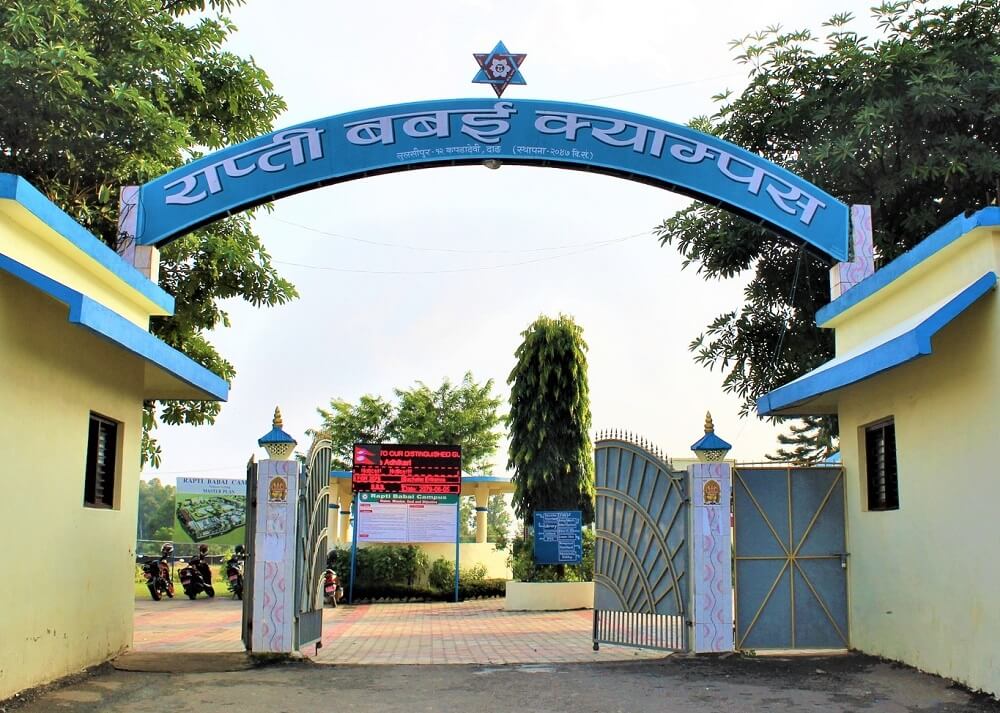
Rapti Babai Campus was established after the restoration of democracy in 2047 BS. It began as a community-based campus in the western part of Dang district, with the goal of expanding access to higher education for students of Tulsipur and surrounding areas.
The campus started its academic service through the Humanities faculty at the Proficiency Certificate Level under Tribhuvan University affiliation. In the beginning, classes were conducted at Mahendra Madhyamik Vidhyalaya with 9 teaching and non-teaching staff and 211 students. The campus did not have its own physical infrastructure during its initial phase.
In 2055 BS, the campus constructed its first small building with funds raised through Bhailo and Lottery programs. Later, support from the District Development Committee, Tulsipur Municipality, Tulsipur Chamber of Commerce and Industry, and local donors helped the campus build essential infrastructure.
The campus has developed through direct community participation. Its stakeholders include guardians, students, the management committee, teachers, campus staff, local donors, local government bodies, Tribhuvan University, and UGC. Community involvement remains central to its governance and institutional identity.
Rapti Babai Campus is situated about 1.5 kilometers southeast from Birendra Chok toward Gumnaha Chok. Its location makes it accessible to students from Dang, Salyan, Rukum, and Rolpa. The campus area is described as safe from flood and landslide, and bridges across nearby small streams have supported local access.
The surrounding social context is also reflected in the student body. About 35 percent of students are from the Tharu community, more than half are girls, and around 60 percent come from middle-class families. Tulsipur also provides part-time job opportunities for many students, supporting those who combine study with work.
Rapti Babai Campus operates under a community-based governance structure. The Campus General Assembly is the highest body, with 112 members. The Campus Management Committee is formed by the General Assembly every four years.
The Campus Management Committee includes elected members, ex-officio representatives, nominated members, and the Campus Chief as member secretary. The total committee size is 15 members. Representation is drawn from Tulsipur Sub-Metropolis, Mahendra Secondary School, Tulsipur Chamber of Commerce and Industry, the Teachers’ Association, the Free Student Union, local guardians, social workers, and political parties.
The Campus Chief is appointed for a four-year term. The administrative structure includes assistant campus chiefs, faculty heads, and sections for administration, accounts, examination, and library services. Reception and store functions are also included within the administrative arrangement.
The campus also has functioning bodies such as the Free Student Union, University Teachers Association, and Officials Association. A Students Quality Control Circle has been formed as a student representative body to report classroom conditions, ECA activities, and social activities.
Rapti Babai Campus works with the vision of producing responsible, disciplined, and competitive human resources for society, the nation, and the wider world.
Its mission focuses on accessible and standard education, academic discipline, student-friendly service delivery, physical facility development, research-oriented study opportunities, and access for poor, disadvantaged, and marginalized students.
The campus also aims to strengthen its relationship with the community, develop physical infrastructure, maintain financial sustainability, and increase student participation in academic and extracurricular activities. Its institutional objectives include increasing student enrollment, improving pass-out rates, maintaining a well-managed library, applying information technology in teaching and administration, and supporting skill development for teachers, officials, and the Campus Management Committee.
Rapti Babai Campus offers programs under NEB and TU affiliation. Its academic structure covers +2, bachelor’s, and master’s levels across Humanities, Education, and Management.
The campus offers NEB-affiliated +2 programs in:
The +2 programs follow the NEB framework for Class 11 and Class 12. Admission, subject registration, annual examinations, and final results follow NEB rules, guidelines, and the NEB annual calendar.
The campus offers TU-affiliated bachelor’s level programs in Humanities, Education, and Management:
TU bachelor-level programs generally run as four-year full-time programs. Annual-system examinations are conducted by Tribhuvan University through the Office of the Controller of Examinations.
The B.Ed. program follows the annual system and includes communication skills, professional core courses, specialization major courses, specialization minor courses, and teaching internship or practicum. The BBS program includes foundation courses, core management courses, concentration courses, and final project work. The BA program is structured as a four-year bachelor’s program under the Faculty of Humanities and Social Sciences.
The campus offers master’s level programs in Education, Management, and Humanities:
The campus also offers M.Ed. areas including Nepali, EPM, and Health. Master’s level classes are offered in Education, Management, and Humanities. Entrance, admission, curriculum, examinations, and results follow TU rules, guidelines, and the academic calendar of the concerned faculty or Dean’s Office.
Admission to NEB Class 11 usually begins after SEE results are published.
Class 11 applicants submit the application form, academic documents, photographs, and required records.
Depending on the stream and campus procedure, selection may include an entrance examination, interview, merit-based selection, or a combination of these.
Selected Class 11 students complete enrollment after document submission and fee payment.
NEB subject registration is completed through the campus under the NEB system.
Admission to TU bachelor’s programs follows the rules of the concerned faculty, Dean’s Office, and campus.
Bachelor-level applicants submit the prescribed application form with required academic documents.
The admission process may include entrance examination, merit-based selection, or both, depending on the program and campus procedure.
Selected bachelor-level students complete admission by submitting documents and paying prescribed fees.
Admission to TU master’s programs is completed according to the notice, rules, and schedule of the concerned campus, department, institute, or Dean’s Office.
Master’s level admission may include an entrance examination and merit-based selection.
Final enrollment, academic registration, examinations, and results follow TU rules and the applicable academic calendar.
SEE Marksheet or Grade Sheet
SEE Character Certificate or School Leaving Certificate
Transfer Certificate from the previous school
Migration Certificate, if applicable
Citizenship Certificate or Birth Certificate copy
Passport-size photographs
NEB Class 11 Registration or Subject Registration Form
Academic Transcript or Grade Sheet of Class 12, +2, or equivalent
Character Certificate from the previous institution
Migration Certificate, if the previous board or university is different
Transfer Certificate from the previous school or college
Citizenship Certificate or Birth Certificate copy
Passport-size photographs
Entrance Examination Scorecard, if required by the program or campus
Completed Admission or Application Form of the campus
Admission Fee Payment Receipt
Equivalence Certificate, only if the qualification is from a foreign board or university
Bachelor’s Degree Transcript or Marksheet
Bachelor’s Degree Certificate or Provisional Certificate
Character Certificate from the bachelor-level institution
Migration Certificate, if the bachelor’s degree is from another university
Transfer Certificate from the previous campus or college
Citizenship Certificate or Birth Certificate copy
Passport-size photographs
Entrance Examination Scorecard, if required by the program or faculty
Completed Admission or Application Form
Admission Fee Payment Receipt
Equivalence Certificate, if the bachelor’s degree is from a foreign university
Rapti Babai Campus has 60 teaching and non-teaching staff in academic year 081/082. Its academic management includes assistant campus chiefs, faculty chiefs, a practice teaching head, and department heads.
The campus conducts classes in morning, day, and evening shifts. Diploma-level classes and +2 Humanities run in the morning shift, +2 Management and Education run in the day shift, and master’s level classes run in the evening shift.
The campus conducts entrance examinations for new bachelor-level students. It also runs regular class tests and assignments. At bachelor level, two internal examinations are conducted annually in each faculty. Terminal examinations are also used to assess student performance across levels and faculties.
Teaching practices include lesson-plan-based delivery, projectors, multimedia use, assignments, research and project work, and exposure visits. The campus has also emphasized research-oriented study opportunities and has worked to connect academic activity with UGC-supported initiatives.
Uniform is compulsory for maintaining academic discipline. Classroom and institutional monitoring is supported through CCTV cameras, and attendance of faculty and administrative staff is managed through biometric attendance machines.
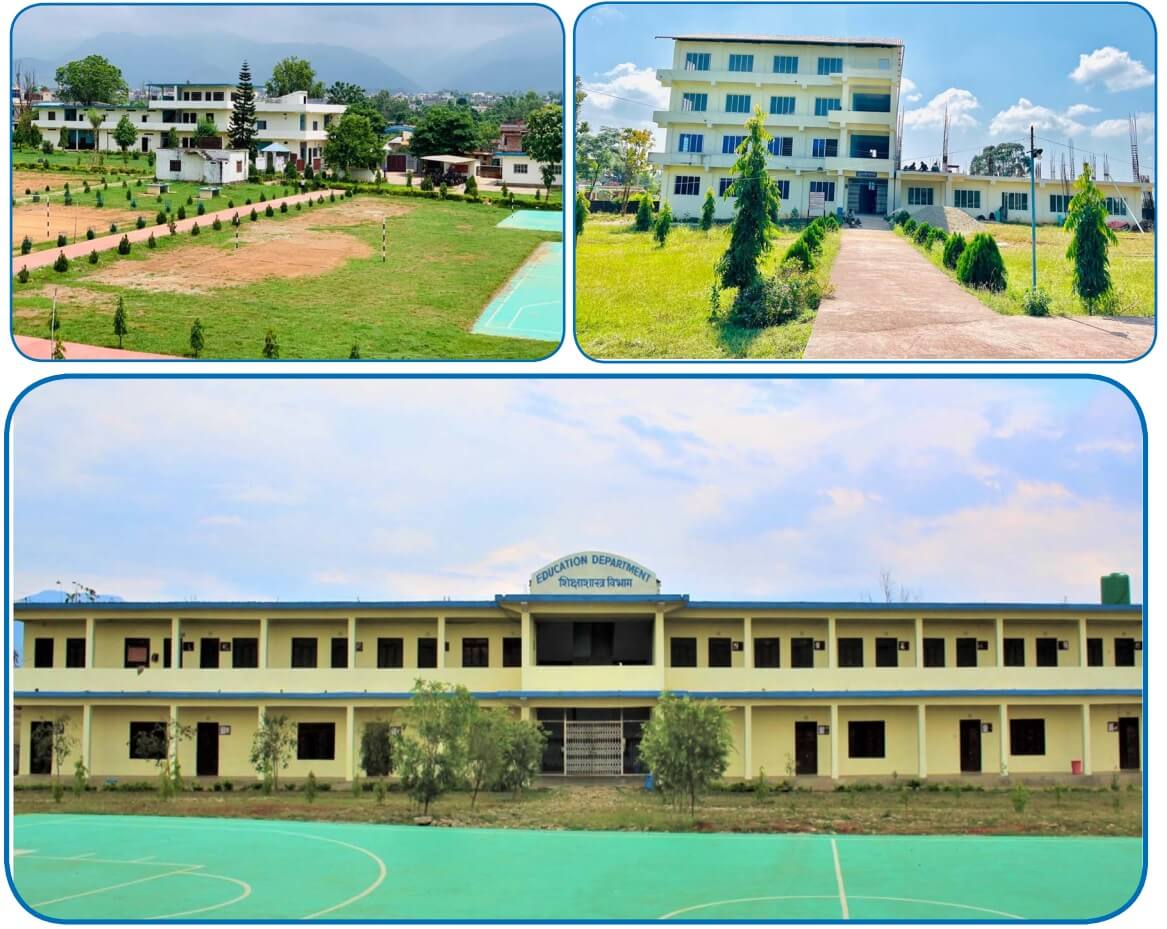
10 cemented buildings on 50 katha of land
67 rooms used for academic and administrative purposes
44 teaching rooms
Library room or hall
RMC room
Science lab
Meeting hall
11 administration rooms
Store room
Free Student Union room
Girls’ common room
Guard room
CFPC room
3 canteen rooms
Temple of Goddess Saraswati
Outdoor playground
Basketball court
Library with 19,034 textbooks and reference books
Reference texts, journals, and newspapers in the library
Library service operated by three staff members
Open access system in the library for students and teachers
Classrooms with whiteboards, rostrum, and podium
770 desks and benches
75 tables and chairs
Regular water supply through two pipelines
Reserve tank with 12,000-liter capacity
Three overhead tanks with 1,000-liter capacity each
Euro-guard machines, water filters, and water purifier plant
Ten lavatories for boys, girls, and staff
Cemented basketball court
Badminton court
Table tennis court
Volleyball court
Football ground
54 computers and laptops
19 laser printers and colour printer
Fax machine
4 scanners
4 photocopiers
2 inverters
Electric generator
4 water pumps
3 digital attendance machines
11 multimedia projectors
Camera
43 CCTV cameras
2 water purifier plants
Rapti Babai Campus has a community-based student environment shaped by students from Tulsipur, western Dang, and neighboring districts. Its student body includes students from Tharu, Dalit, women, disadvantaged, and marginalized communities.
The campus has more than 3226 students in bachelor’s and master’s level in academic year 081/082. More than half of the students are girls. Many students come from middle-class families, and Tulsipur offers part-time job opportunities for students who need to support their studies.
The campus has a Free Student Union, student clubs, and a Students Quality Control Circle. These bodies support student representation, classroom feedback, extracurricular activities, and campus-community connection.
Health counseling is also part of student support. Rapti Babai Campus has a health counseling service through an MoU with City Hospital, Tulsipur, Dang. The service is provided every Friday from 8:30 a.m. to 11:00 noon by qualified MBBS and MD doctors for students, faculty members, and administrative staff.
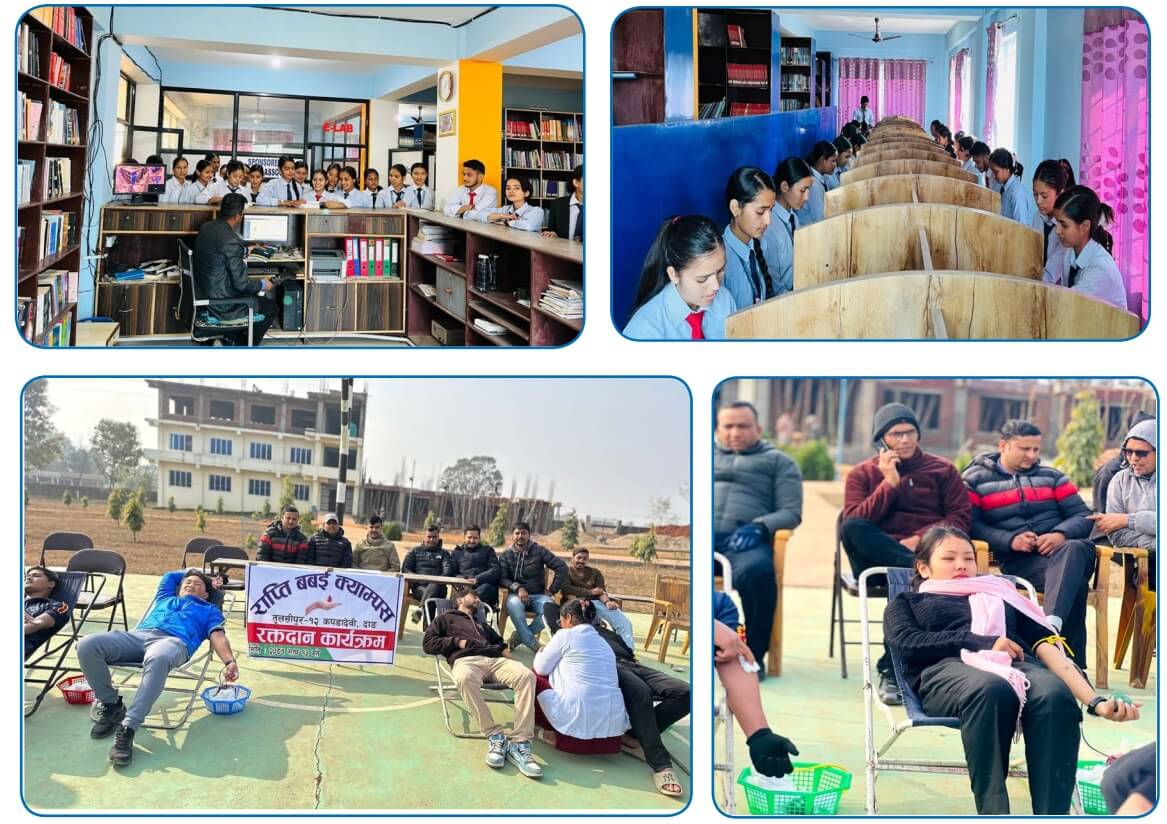
Student participation in literary activities
Sports activities
Cultural programs
Educational programs
Volunteerism and leadership activities
Social activities through the Students Quality Control Circle
Exposure visits across levels and faculties
Workshops and seminars on academic and social topics
Sports supported by playgrounds and courts for basketball, badminton, table tennis, volleyball, and football
Campus scholarship fund of NRs. 170000.00
Intelligence Scholarship of NRs. 1500.00 for students scoring the highest marks in diploma level in each faculty
Intelligence Scholarship of NRs. 1000.00 for one girl and one boy scoring the highest marks in Grade 11 and 12 in each faculty, Management, and Education group
50 percent monthly fee discount for one girl and one boy scoring the highest marks in Grade 11, Grade 12, and diploma level in each faculty
Full monthly fee discount for visually impaired and physically disabled students
Full monthly fee discount for students from private or community schools scoring 3.4 to 3.6 GPA in SEE
50 percent monthly fee discount for students securing 3.2 to 3.6 GPA in SEE
25 percent monthly fee discount for students securing 2.8 to 3.2 GPA in SEE
Full monthly fee discount under the scholarship referred by NEB for 10 percent of total Grade 11 students
Disable and Intelligence Scholarship of NRs. 1100.00 from the Campus Level Professor’s Association
Basu-Damu Lamichhane Scholarship for 3 poor and intelligent students
Late Bishnudevi Shrestha Scholarship for 3 poor and intelligent students
Late Bhupendreshwor Shrestha Scholarship for 6 poor and intelligent students
Late Tulsi Ram Upadhaya Memorial support for 2 students
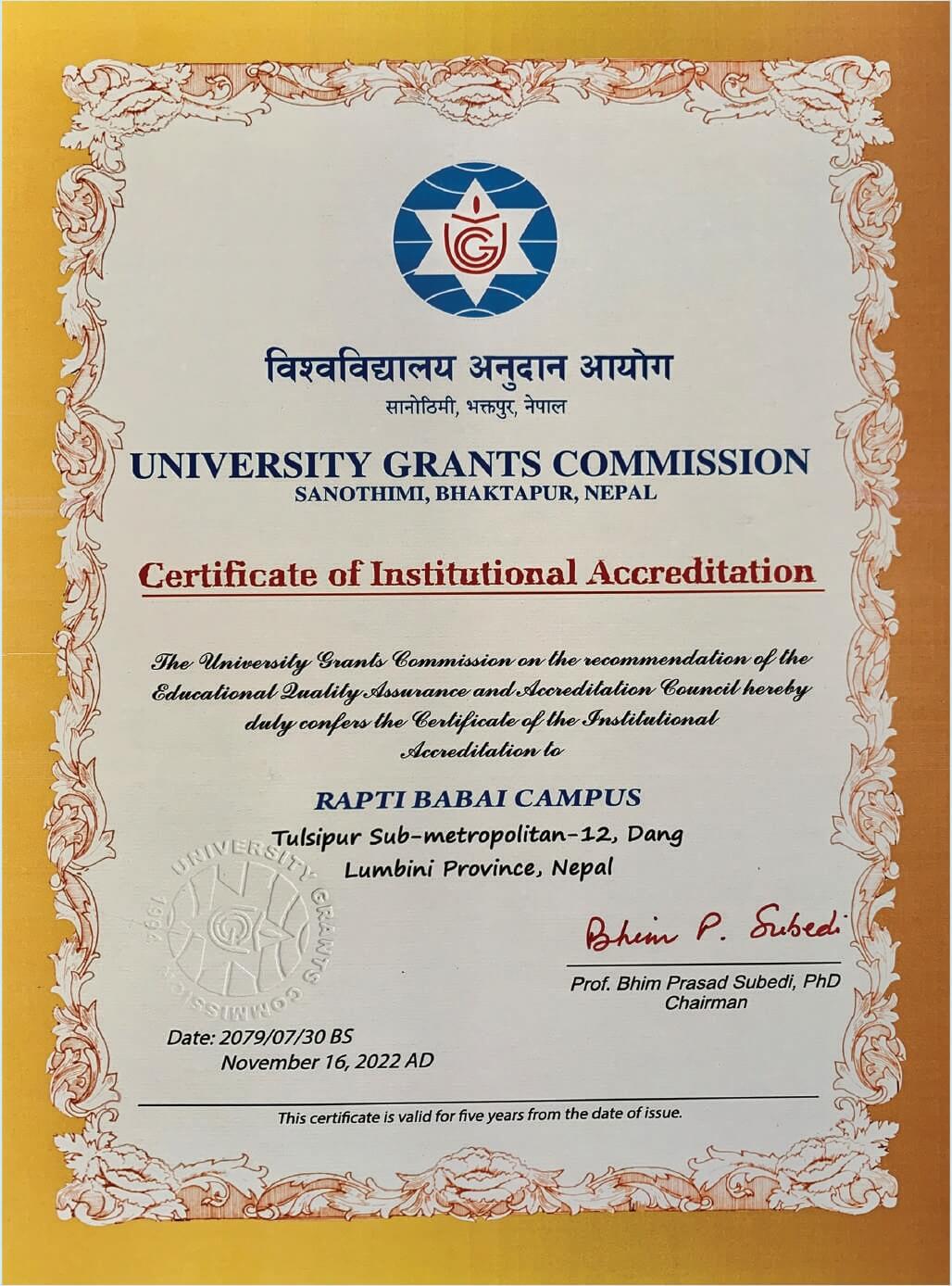
Established in 1990 AD (2047 BS) as a community-owned campus
Started with 211 students and 9 teaching and non-teaching staff
First classes operated from Mahendra Madhyamik Vidhyalaya
Constructed an early campus building in 2055 BS through funds raised from Bhailo and Lottery programs
Expanded infrastructure with support from DDC, Tulsipur Municipality, Tulsipur Chamber of Commerce and Industry, and local donors
Added NEB, bachelor’s, and master’s level programs in Humanities, Management, and Education
Developed its own land, teaching buildings, administration building, library, canteen, drinking water facilities, and sports spaces
QAA Certified Campus by UGC Nepal in 2022 AD
Formed an Internal Quality Assurance Committee under the chairmanship of the Campus Chief
Established the EMIS Unit for educational data, institutional information, student files, academic records, and planning support
Introduced student quality reporting through the Students Quality Control Circle
Began Friday health counseling service through MoU with City Hospital, Tulsipur, Dang
Ganesh Pardhe serves as Campus Chief of Rapti Babai Campus. The institutional direction under campus leadership centers on community-based higher education, student access, academic discipline, facility development, research-oriented study, information technology in service delivery, and access for poor, disadvantaged, and marginalized students.
The campus mission also gives attention to financial sustainability, teacher and staff development, extracurricular participation, and the link between the campus and the surrounding community.
Rapti Babai Campus has developed through community participation, local support, and gradual academic expansion. From its beginning in borrowed school space, it has built its own institutional base in Tulsipur-12, Kapadadevi, Dang.
Its academic scope now includes +2, bachelor’s, and master’s programs under NEB and TU affiliation. The campus serves students from Tulsipur, western Dang, and nearby districts while maintaining a community-based governance structure.
For students seeking Humanities, Education, and Management programs in a community campus setting, Rapti Babai Campus provides an option with established academic programs, local accessibility, scholarship provisions, learning facilities, and UGC QAA certification.
College Name: Rapti Babai Campus
Location: Tulsipur Sub-Metropolitan City-12, Kapadadevi, Dang, Lumbini Province, Nepal
Affiliation: Tribhuvan University and National Examinations Board
Recognition: QAA Certified Campus by UGC Nepal, 2022 AD
Campus Chief: Ganesh Pardhe
Website: www.rbc.edu.np
Email: rbcdang@gmail.com
Contact: 082-520316 / 082-522726
Rapti Babai Campus is located at Tulsipur Sub-Metropolitan City-12, Kapadadevi, Dang, Lumbini Province, Nepal.
Rapti Babai Campus was established in 1990 AD (2047 BS) as a community-owned campus.
Rapti Babai Campus is affiliated with Tribhuvan University and the National Examinations Board.
Yes. Rapti Babai Campus received QAA certification from UGC Nepal in 2022 AD.
Rapti Babai Campus offers Ten Plus Two in Education, Ten Plus Two in Humanities, Ten Plus Two in Management, BA, B.Ed., BBS, MA in Sociology, MBS, and M.Ed. General.
Yes. The campus offers master’s level programs in Education, Management, and Humanities, including M.Ed., MBS, and MA in Sociology.
The campus has teaching buildings, administration building, library, science lab, meeting hall, canteen, drinking water facilities, lavatories, computer and multimedia equipment, CCTV cameras, and sports spaces.
Yes. The campus has scholarship and award provisions including intelligence scholarships, disability scholarships, fee discounts based on SEE GPA, NEB-referred scholarship support, and memorial trust awards.
Yes. The campus has a Free Student Union, Students Quality Control Circle, extracurricular activities, exposure visits, workshops, seminars, and Friday health counseling service through City Hospital, Tulsipur, Dang.
Ganesh Pardhe is the Campus Chief of Rapti Babai Campus.