If you’re planning a teaching career in Nepal, the B.Ed at Sauntha Multiple Campus, Sijuwa, Ratuwamai, Morang offers a clear path under Tribhuvan University. Worried about admission or subject choices?
This guide answers those early questions using updated, factual details. Keywords: B.Ed, Sauntha Multiple Campus, Morang, Sijuwa, Ratuwamai, Tribhuvan University, curriculum, eligibility, admission.
Sauntha Multiple Campus is a community campus in Sijuwa, Morang, established in 2008 and affiliated with Tribhuvan University (TU). The B.Ed is a four-year, full-time bachelor’s degree under TU’s annual system, recognized in Nepal for secondary-level teaching and related roles.
Four academic years under TU annual system
One subject as a major and another as a minor (two-subject teaching focus)
Teaching Practice in the final year at partner schools
ICT option in the professional core (as per TU course list)
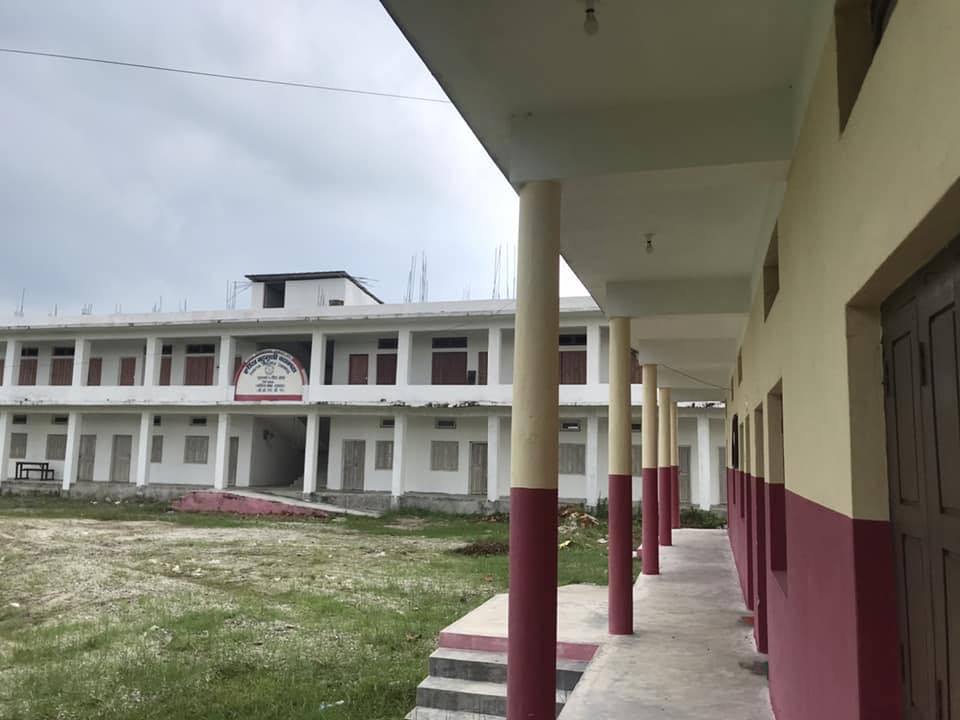
Community setting in Ratuwamai, Morang, with local access for students
Here’s what you’ll study over four years.
TU structures B.Ed into: Communication Skills (General Nepali, General English), Professional Core (Educational Psychology, Curriculum & Evaluation, plus an elective such as ICT), Specialization Major, Specialization Minor, and Teaching Practice.
Students choose a major (e.g., Nepali, English, Mathematics, Science, Population, Geography, Economics, History, Political Science) and a different minor.
The fourth year includes Teaching Practice and an ICT/Instructional Technology option per TU.
Build subject knowledge in a chosen major and minor
Strengthen classroom practice through school-based teaching
Develop assessment, lesson planning, and classroom management skills
Support ethical, student-centered teaching in Nepali school contexts
Graduates commonly work in secondary schools, community schools, and private institutions. Some move into educational NGOs, local learning centers, or further study (M.Ed).
Plan clear lessons linked to the school curricula
Teach two subjects confidently at the secondary level
Use assessment tools to track learning progress
Apply basic ICT tools in teaching and record-keeping
Work with students from diverse backgrounds in Nepal
Educational Psychology and Classroom Practice
Curriculum and evaluation methods
ICT/Instructional Technology (as per TU elective)
Subject-specific pedagogy for major and minor
School practicum and reflective reporting
Students learn through lectures, workshops, micro-teaching, peer observation, and school placements. The final-year Teaching Practice builds real classroom confidence and feedback habits.
Students who have passed Grade 12 (or PCL/equivalent) can apply under TU rules. Subject-wise conditions may apply for some majors (e.g., Mathematics or Science backgrounds for those strands; English may require set marks or an entrance test as per TU guidance).
Check the campus notice for current seat plans, subject combinations, and any entrance procedures.
Secondary-level teacher (based on major/minor)
Community educator or facilitator
Educational NGO projects and training roles
Private tutoring and remedial support
Pathway to M.Ed and teacher licensing processes in Nepal
The campus provides scholarships for deserving and financially deprived students. Seats and criteria follow campus policy and applicable national guidelines. Students should keep transcripts and supporting documents ready during the application.
TU affiliation and community-based learning environment in Morang
Two-subject teaching focus that fits Nepali school hiring needs
Local access that reduces travel and living costs for families
Teaching Practice that connects coursework to real classrooms
If you aim to teach in Nepal, this B.Ed. offers a structured, local route from classroom theory to school practice. Not sure where this degree can lead you? Map your major and minor to the subject needs of nearby schools and plan early for the teaching license pathway.