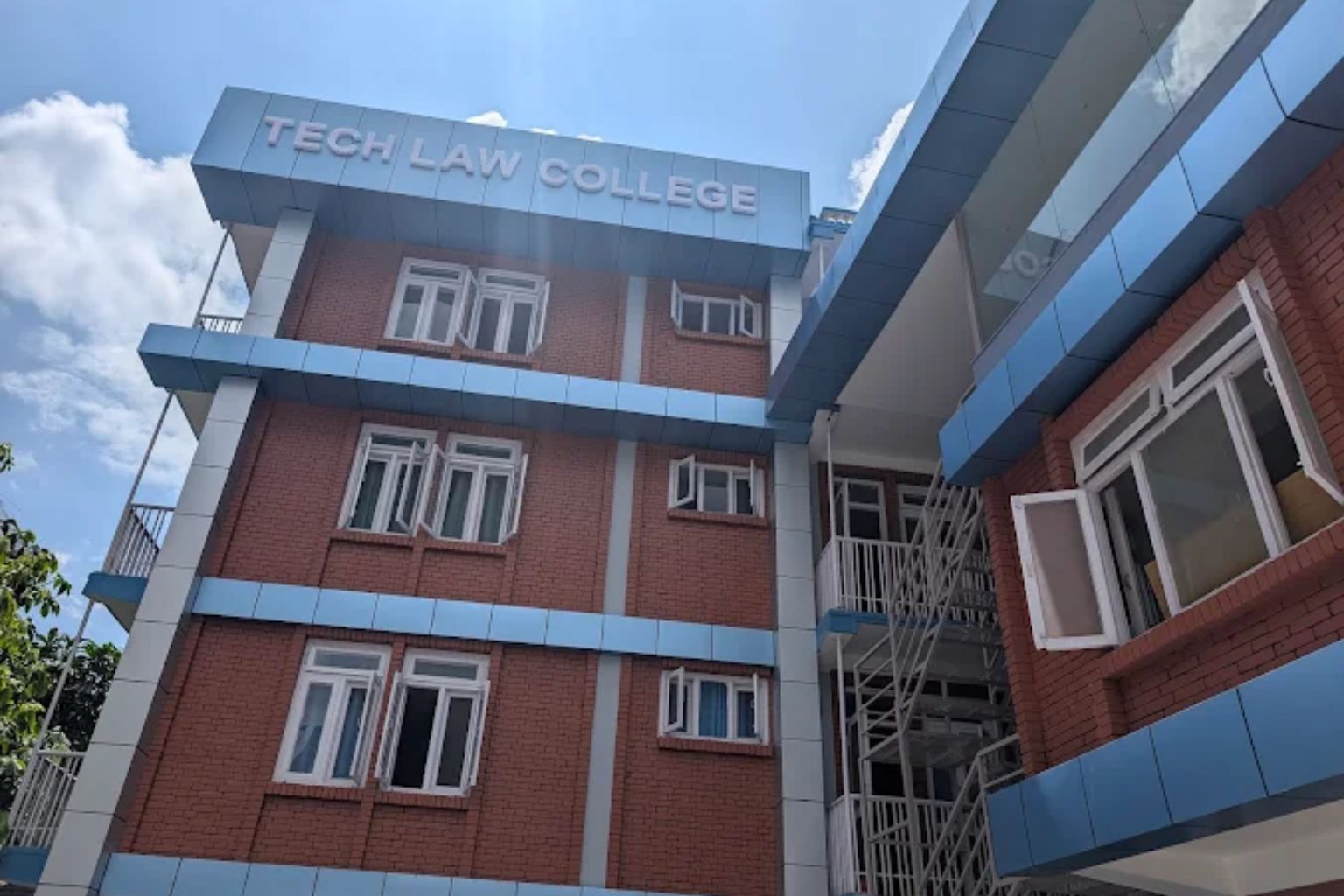
BSc CSIT (Bachelor of Science in Computer Science and Information Technology) at Tech Law College, Subidhanagar–Tinkune, Kathmandu, is a four-year undergraduate program delivered in eight semesters under the affiliation of Rajarshi Janak University (RJU), Janakpurdham.
Students usually consider this course when they want a stronger computer science base than short training courses provide, but also want skills that map to real IT work. You learn programming, data structures, databases, operating systems, networking, and software engineering, then apply them through lab work, group projects, and internship exposure.
Duration: 4 years (8 semesters).
University affiliation: Rajarshi Janak University (RJU).
College location: Subidhanagar, Tinkune, Kathmandu.
Campus facilities named by the college: classrooms, laboratories, library, dedicated academic building.
Practical learning elements: lab work, projects, internships, research-focused coursework.
Core study areas listed for the program include programming (C, C++, Java, Python), data structures and algorithms, DBMS, networking and internet technologies, operating systems and system administration, software engineering and project management, and web/mobile application development.
RJU publishes a course-structure document that shows semester-wise subjects and evaluation distribution (internal and external). The structure includes topics such as Computer Graphics, Operating Systems, System Analysis and Design, Java Programming, Web Technology, Programming in Python, Theory of Computation, Computer Network, and project work, along with elective options.
RJU also publishes subject-wise syllabi for BSc CSIT first and second semesters (examples include Digital Logic, Computer Concept and Programming, and Statistics).
The program overview presented at the college level frames the degree as a route to IT capability grounded in computer science concepts and practical application.
A practical way to read this objective as a student is simple: your semester work should produce outcomes you can show—code, project reports, ups, and documented troubleshooting—rather than only exam notes.
This degree can suit students aiming for roles in software development, networking, database work, data analysis, and web/mobile development. Students also use CSIT degrees as preparation for further study in computing, especially when they build a strong base in algorithms, systemsb market often tests practical ability. Interview tasks frequently involve building a small feature, fixing a bug, writing a query, or explaining a past project clearly. Lab practice and project documentation often decide who performs well in these tests.
Students completing this course are expected to be able to:
Write programs across multiple languages used in the curriculum.
Apply data structures and algorithms to solve problems beyond textbook exercises.
Build database-backed ats.
Work with operating systems and basic system admi
Build web and mobile applications and oncepts.
s hands-on lab work and coding exercises, real-world projects and group assignmen research-focused coursework with innovation-oriented projects.
A common student scenario is the jump from “I can write code” to “I can build a working system.” Your first major hurdle often comes when youa frontend form, a backend logic layer, and a database. Labs and group projects are where you repeat that connection until it becomes normal work.
The college describes practical training, research-based learning, and community engagement across its programs, including hands-on coding in IT labs, industry internships, and social projects.
Facilities listed by the college include classrooms, laboratories, a library, and a dedicated academic building.
RJU publishes intake notices that include entrance exam schedules and application steps through its official admission notice page and application portal.
Career prospects listed include software developer/engineer, IT infrastructure manager, database administrator, network engineer, data analyst, and mobile/web app developer.
Career direction becomes clearer when you match your coursework to a track. Students who prefer systems often focus more on OS, networks, and security-related work. Students who prefer building products spend more time on programming, databases, and application develoancial aid
Scholarship and financial aid rules for this course at the college level need the official notice used for the current intake (seat numbers, eligibility, renewal rules, and fee coverage). RJU’s scholarship information is hosted under its admissions section, but college-level terms can differ by campus.
RJU publishes exam and result updates through its official notices area. Recent result posts include BSc CSIT results and semester-wise updates.
This program at Tech Law College follows an RJU-affiliated semester structure and covers programming, algorithms, databases, operating systems, networking, software engineering, and web/mobile development, supported by lab work, projects, internships, and research-focused coursework.
A practical decision rule helps. Your fit improves when you are ready to spend steady time on labs and projects, not only on exam reading.
The duration is 4 years (8 semesters).
The program is affiliated with Rajarshi Janak University (R
The core areas include programming, data structures and algorithms, DBMS, networking, operating systems/system administration, software engineering/project management, and web/mobile
Lab work, projects and group assignmentsesearch-focused coursework are part of the learning approach.
RJU states science-stream +2 (or equivalent) with minimum marks/GPA and entrance-