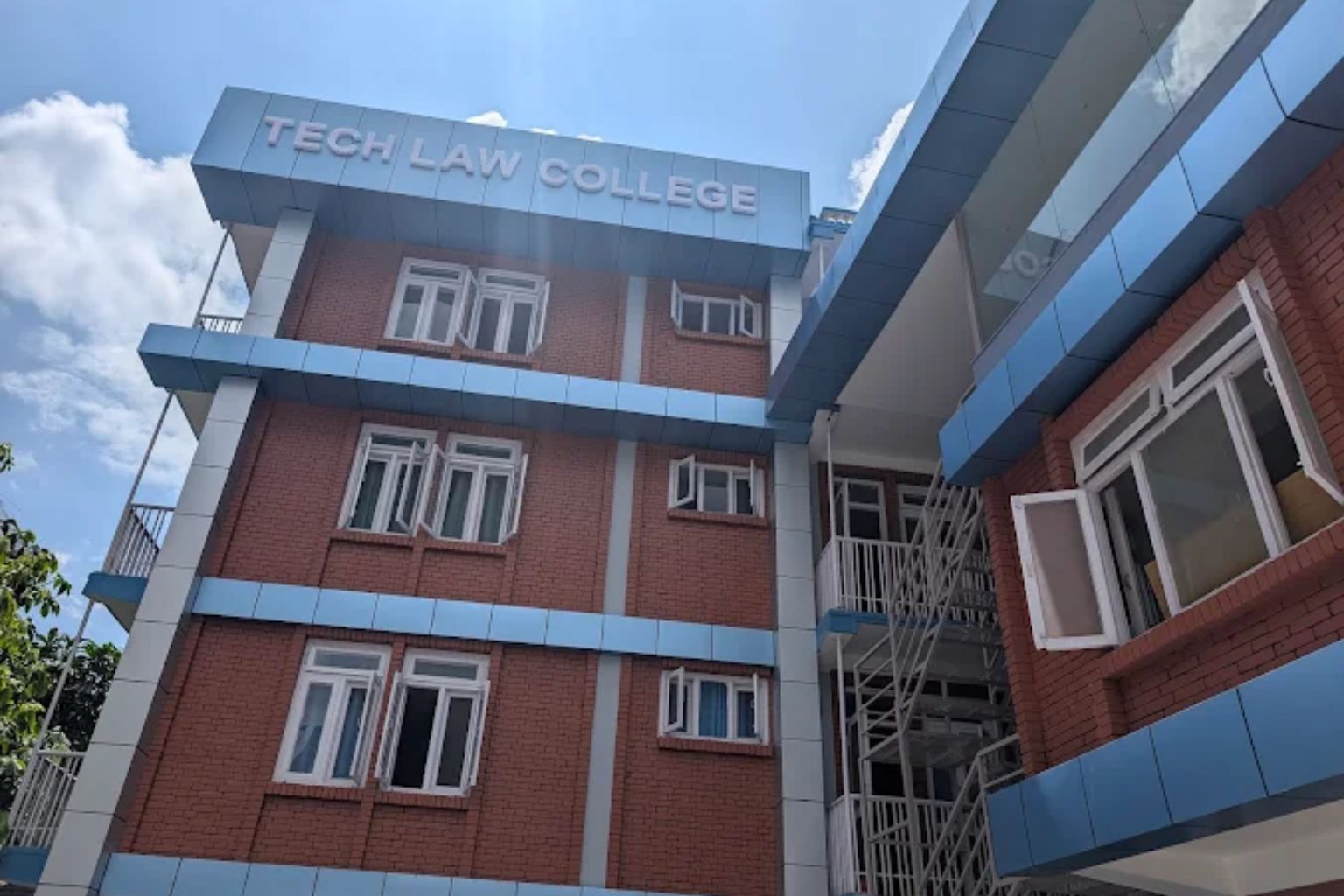
Tech Law College (also written as TechLaw College) is a higher education institution established in 2024 and located in Subidhanagar, Tinkune, Kathmandu, Nepal.
The college is affiliated with Rajarshi Janak University (RJU), Janakpur, Nepal, and offers undergraduate programs in Law and Information Technology. The academic approach combines classroom learning with practical exposure through activities such as moot court practice, IT lab work, internships, and social projects.
Established: 2024
Location: Subidhanagar, Tinkune, Kathmandu, Nepal
University affiliation: Rajarshi Janak University (RJU), Janakpur, Nepal
Programs: BALLB, BCA, BSc CSIT
Facilities: classrooms, laboratories, a library, and a dedicated academic building
Practice components: moot court, coding lab work, internships, and social projects
Placement support: placement facilities for outstanding students (details not specified)
Three undergraduate programs are available under Rajarshi Janak University affiliation.
Affiliation: Rajarshi Janak University
Duration: 4 years (8 semesters)
Core study areas include:
Programming (C, Java, Python)
Web design and development (HTML, CSS, JavaScript, PHP)
Database management systems (MySQL, Oracle)
Software engineering and application design
Mobile app development
Computer networks and cybersecurity basics
Project management and IT entrepreneurship
Learning activities include:
Lab sessions and coding workshops
Live projects and industry assignments
Internship programs in IT companies
Final-year project
Common career paths include:
Software/application developer
Web developer / UI designer
Database administrator
IT support / technical support roles
Note: “AI, Cloud, and Cybersecurity” are referenced as emerging areas. This profile does not add claims about specific labs, tools, or course modules.
Affiliation: Rajarshi Janak University
Duration: 4 years (8 semesters)
Core study areas include:
Programming (C, C++, Java, Python)
Data structures and algorithms
Database management systems (DBMS)
Networking and internet technologies
Operating systems and system administration
Software engineering and project management
Web and mobile application development
Learning activities include:
Lab work and coding exercises
Projects and group assignments
Industry internships
Research-focused coursework and innovation projects
Common career paths include:
Software developer/engineer
Network engineer
Database administrator
Data analyst
Affiliation: Rajarshi Janak University
Duration: 5 years (10 semesters)
Core areas include:
Constitutional law
Criminal law and procedure
Civil law and property law
Corporate and business law
International law and human rights
Legal ethics and professional responsibility
Legal research, writing, and drafting
Liberal arts subjects such as political science, sociology, and economics
Learning activities include:
Lectures and seminar discussions
Moot court competitions and legal debates
Case studies and simulated trials
Internships with law firms, NGOs, and courts
Research projects on legal and policy issues
Common career paths include:
Advocate/legal practitioner
Corporate legal advisor
Judicial service officer
Policy researcher/analyst
Human rights and NGO legal consultant
Formal admission criteria, fee structures, eligibility rules, deadlines, entrance exam details, and application steps should be confirmed directly with the college and the university affiliation office where applicable.
Prospective students can:
Confirm current intake schedules and application requirements with Tech Law College’s administrative office.
Review Rajarshi Janak University notices or guidance for affiliated programs.
Request a written admission document (prospectus or official notice) covering eligibility, required documents, fees, and refund rules.
Teaching faculty include:
Ashwin Neupane
Sr. Adv. Bijaya Kanta Mainali
Dr. Dipesh Ghimire
Kapil Gyawali
Manish Dhakal
Dr. Tara Nath Ghimire
Dr. Sarita Khanal
Dr. Hem Bhandari
Matrika Prasad Khatiwada
Dr. Hem Bhandari holds a PhD in Nepali and Master’s degrees in Nepali, Political Science, and Sociology.
Learning methods emphasize practice-based work across law and IT, including:
Moot court practice and legal exercises
Coding work in IT labs
Internships and project work
For applicants comparing law colleges and IT colleges in Kathmandu, these practices indicate that learning extends beyond lectures into drafting, argumentation, lab work, and supervised projects.
Key infrastructure and learning facilities include:
Spacious classrooms
Laboratories
A library
A dedicated academic building with modern facilities
The campus environment is described as inclusive and respectful, welcoming students from diverse cultural, racial, and ethnic backgrounds and treating them with dignity and respect.
Core student experience elements include:
A practice component in law (moot court and debate-style activities)
Lab-centered study routines for IT programs
Internship exposure across programs
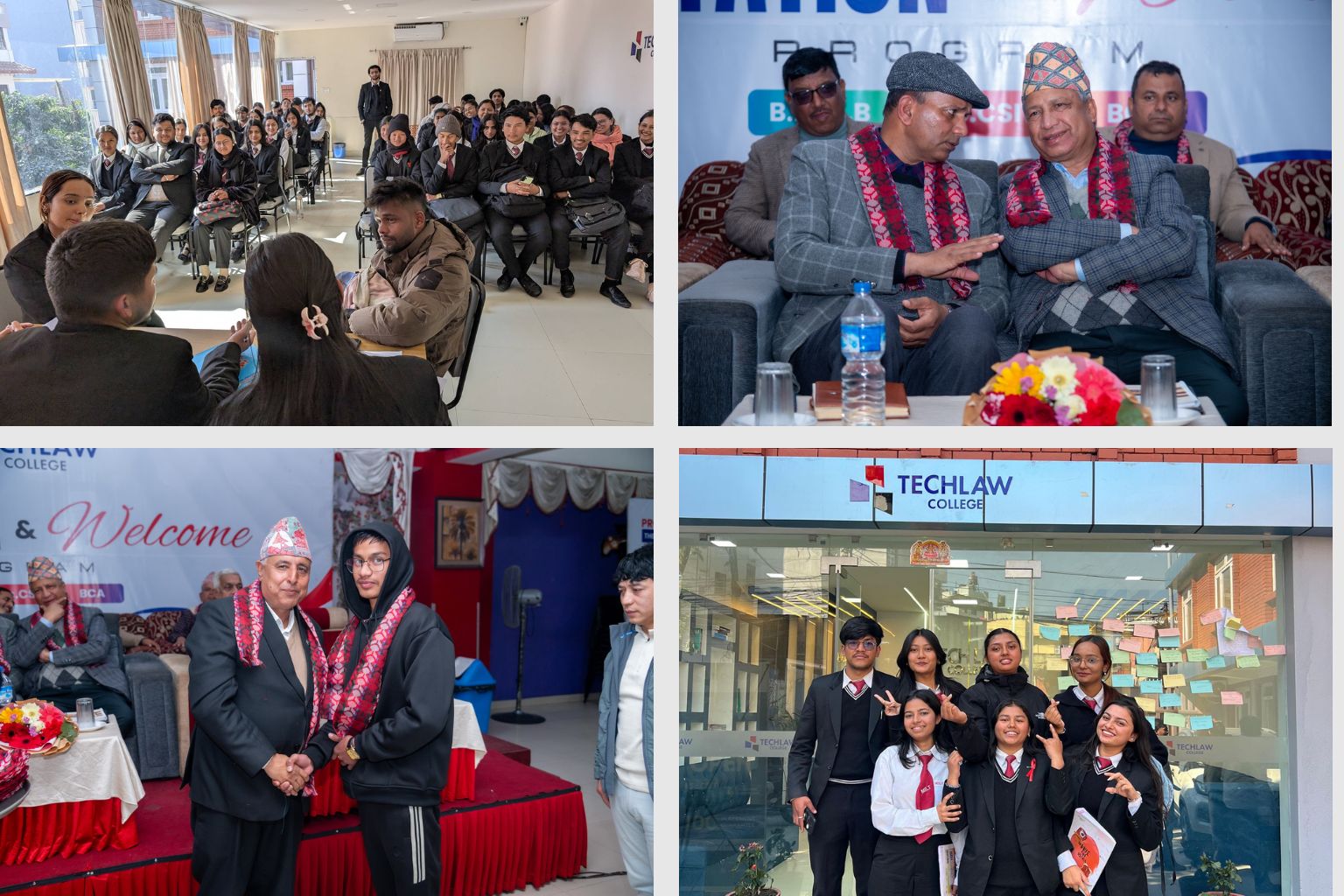
Structured sports, clubs, or annual festivals are not specified. Co-curricular activities connected to academic practice include:
Moot court competitions and legal debates (BALLB)
Workshops and seminars on emerging technologies (BCA)
Group projects and innovation-oriented coursework (BSc CSIT)
Key milestones include:
Establishment in 2024
Affiliation with Rajarshi Janak University
Operation of the listed undergraduate programs (BALLB, BCA, BSc CSIT)
This institution may suit students who:
Want a law degree with structured practice such as moot court, debate, and internships.
Want an IT program where lab sessions, projects, and internships are part of the learning approach.
Prefer studying in Kathmandu, in the Subidhanagar–Tinkune area, while enrolled in programs affiliated with Rajarshi Janak University.
Narayan Kafle (CEO) highlights academic learning alongside practical exposure, ethical values, and a broad perspective for students in law and information technology.
Tech Law College is a recently established institution (2024) in Kathmandu that runs RJU-affiliated undergraduate programs in law and computing: BALLB, BCA, and BSc CSIT. The profile highlights classroom learning supported by moot court practice, lab work, internships, and project-based study, along with basic academic facilities such as classrooms, laboratories, and a library.
It is located in Subidhanagar, Tinkune, Kathmandu, Nepal.
It is affiliated with Rajarshi Janak University (RJU), Janakpur, Nepal.
BALLB, BCA, and BSc CSIT.
Both are 4 years (8 semesters).
It is 5 years (10 semesters).
Admission criteria, eligibility rules, deadlines, and fees should be confirmed through official college and university channels.
For law: moot court competitions and legal debates. For IT: lab work, projects, and internships.