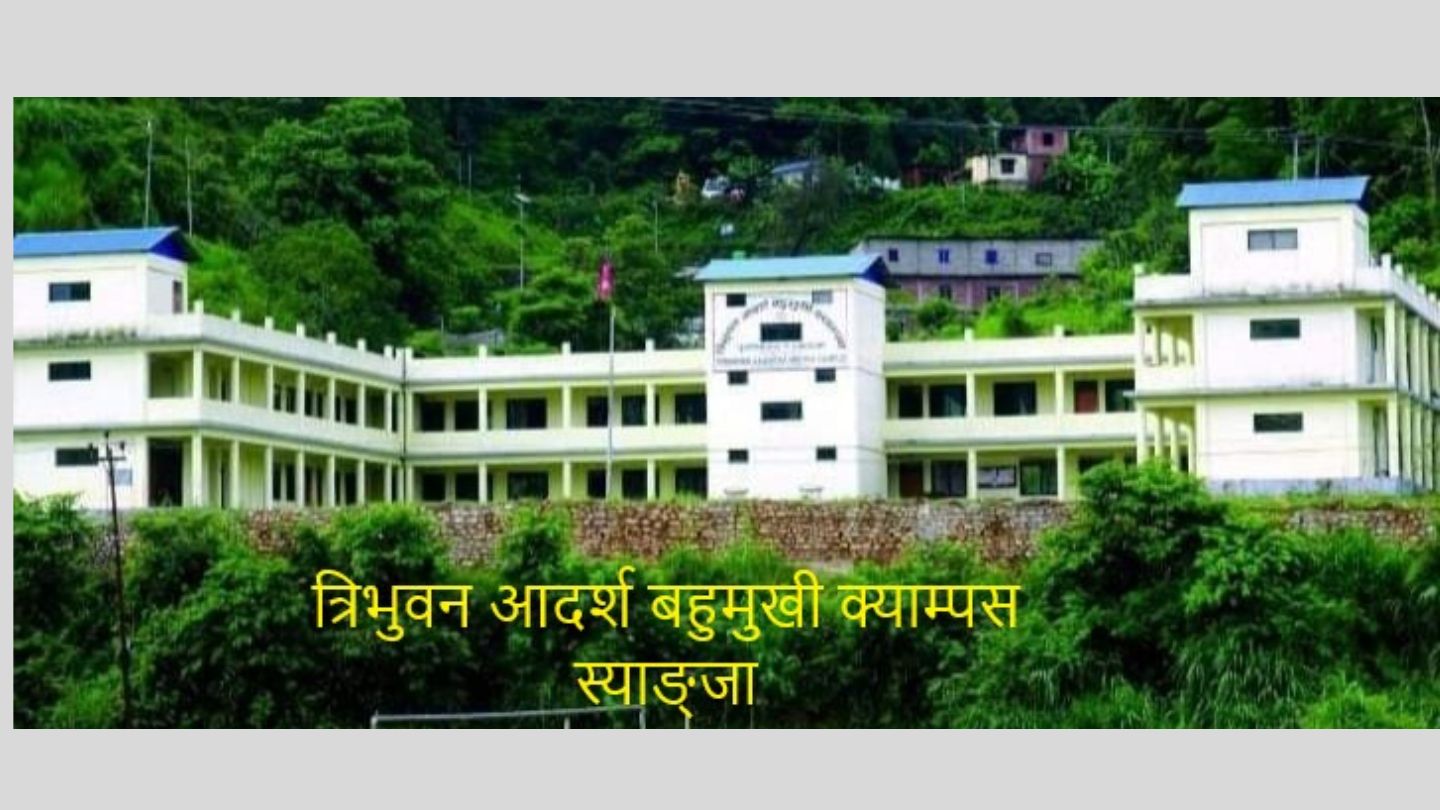
The Master of Education (M.Ed.) at Tribhuvan Aadarsha Multiple Campus is a postgraduate program under the Faculty of Education of Tribhuvan University. The campus is a community-based institution in Putalibazar Municipality, Syangja, where M.Ed. is offered alongside BA, BBS, B.Ed., and MBS.
The program follows the semester system and brings together core education courses, specialization study, teaching practice or practicum, and thesis writing. At the campus level, the program is supported by library access, classrooms, computer facilities, multimedia support, counseling, scholarships, sports, and extracurricular activities.
Program: Master of Education (M.Ed.)
Institution: Tribhuvan Aadarsha Multiple Campus
Location: Putalibazar Municipality, Putalibazar, Syangja, Gandaki Province, Nepal
Affiliation: Tribhuvan University
Faculty: Faculty of Education
Academic system: Semester
Duration: 24 months (4 semesters)
Maximum completion period: 5 years
Total credit hours: 69
Course structure: 21 core credits, 39 specialization credits, 3 teaching practice credits, and 6 thesis credits
Program components include teaching practice or practicum and thesis writing
Campus support includes library, science lab, computer lab, multimedia, counseling, scholarships, classrooms, conference hall, sports, tours, and ECA activities
The M.Ed. program follows TU’s four-semester structure and combines compulsory education courses with one specialization area, teaching practice or practicum, and thesis writing.
Total duration: 24 months
Total semesters: 4
Total credit hours: 69
Core professional courses: 21 credit hours
Specialization courses: 39 credit hours
Teaching Practice: 3 credit hours
Thesis Writing: 6 credit hours
Core courses include Foundations of Education, Advanced Educational Psychology, Curriculum Practices, Education and Development, Research Methodology in Education, Measurement and Evaluation in Education, and Contemporary Educational Issues.
The specialization areas listed in the semester curriculum include Curriculum and Evaluation, Educational Planning and Management, English Education, Nepali Education, Science Education, Mathematics Education, Health Education, Physical Education, Economics Education, Geography Education, History Education, Political Science Education, Special Needs or Inclusive Education, and Information and Communication Technology Education.
Prepare qualified and competent teachers for upper high schools
Prepare educational planners, administrators, managers, supervisors, and related education professionals
Strengthen educational leadership and transformation-oriented academic work
Support advanced knowledge and skills in the selected specialization area
Connect theory and research with professional practice in education
Promote research and academic writing in education
The M.Ed. program covers advanced study in pedagogy, curriculum, educational psychology, research methodology, measurement and evaluation, and specialization-based subject study. Its structure is designed for students who want postgraduate education study within the TU system and who plan to continue in teaching, educational administration, academic work, or further research-related study.
At Tribhuvan Aadarsha Multiple Campus, the scope of the program is shaped by the campus setting in Putalibazar. Students study in an environment supported by library resources, classrooms with teaching aids, computer facilities, counseling, and student activities linked with campus life. This places the program within a local academic setting while keeping it aligned with the TU semester framework.
Understand advanced concepts in education, pedagogy, and educational development
Complete structured study in one specialization area
Apply research methodology in educational inquiry
Develop competence in measurement and evaluation
Undertake teaching practice or practicum in the fourth semester
Complete proposal development, thesis writing, presentation, and defense
Educational research
Academic writing
Curriculum understanding
Measurement and evaluation
Classroom-based teaching practice
Seminar participation
Case study and field study work
Thesis proposal preparation and defense
At Tribhuvan Aadarsha Multiple Campus, the M.Ed. program is supported by faculty-led teaching and campus facilities such as library access, classrooms, multimedia support, and computer facilities. The semester curriculum also identifies a delivery pattern that combines classroom teaching with applied academic work.
Lecture sessions
Project works
Assignments
Seminars
Case studies
Field studies
Teaching practice or practicum
Thesis supervision and presentation work
Upper secondary or school-level teaching
Educational planning and administration
Curriculum and academic support roles
Education-related supervisory work
Further academic and research engagement in education
Scholarship support is available at the campus
Counseling is part of the student support system
Applicants must have B.Ed. or a Post-Graduate Diploma in Education from Tribhuvan University or a recognized university
Admission also requires subject-specific eligibility for the selected specialization area
Applicants must submit the application with personal information and past academic records
Selection is based on marks obtained in the entrance examination
The entrance examination is based on educational aptitude and knowledge related to the specialization subject area
The M.Ed. program follows the semester system. Each subject carries internal and external evaluation. Internal evaluation accounts for 40 percent and external evaluation accounts for 60 percent of the total weightage, and students must pass separately in both.
Internal evaluation includes attendance, participation in learning activities, assignments, and final assessment work during the semester. Attendance for internal evaluation requires 80 percent participation. Semester-end examinations are conducted by the Office of the Dean. Teaching Practice or Practicum and Thesis are practical components, and their final examination is conducted through the Dean’s Office of the Faculty of Education.
The grading system uses a four-point scale. The passing grade for an individual paper in the semester-end examination is B minus or GPA 2.7. To pass the semester examination, a student must secure a minimum Grade B or CGPA 3.0.
The M.Ed. program at Tribhuvan Aadarsha Multiple Campus brings TU’s semester-based postgraduate education structure to students in Putalibazar, Syangja. Its academic design combines core education study, specialization courses, fourth-semester teaching practice or practicum, and thesis writing. For students seeking advanced study in education within a community-based campus, the program offers a defined postgraduate route connected with campus facilities and student support systems already in place.
The program is affiliated with Tribhuvan University under the Faculty of Education.
The normal duration is 24 months across four semesters. The maximum completion period is 5 years.
The M.Ed. program carries 69 credit hours in total.
Yes. The fourth semester includes Teaching Practice. In Educational Planning and Management and Special Needs or Inclusive Education, this is conducted as Practicum.
Yes. Thesis Writing carries 6 credit hours and is completed in the fourth semester.
Students are evaluated through internal assessment and external examination. Internal evaluation carries 40 percent and external evaluation carries 60 percent, and students must pass both separately.