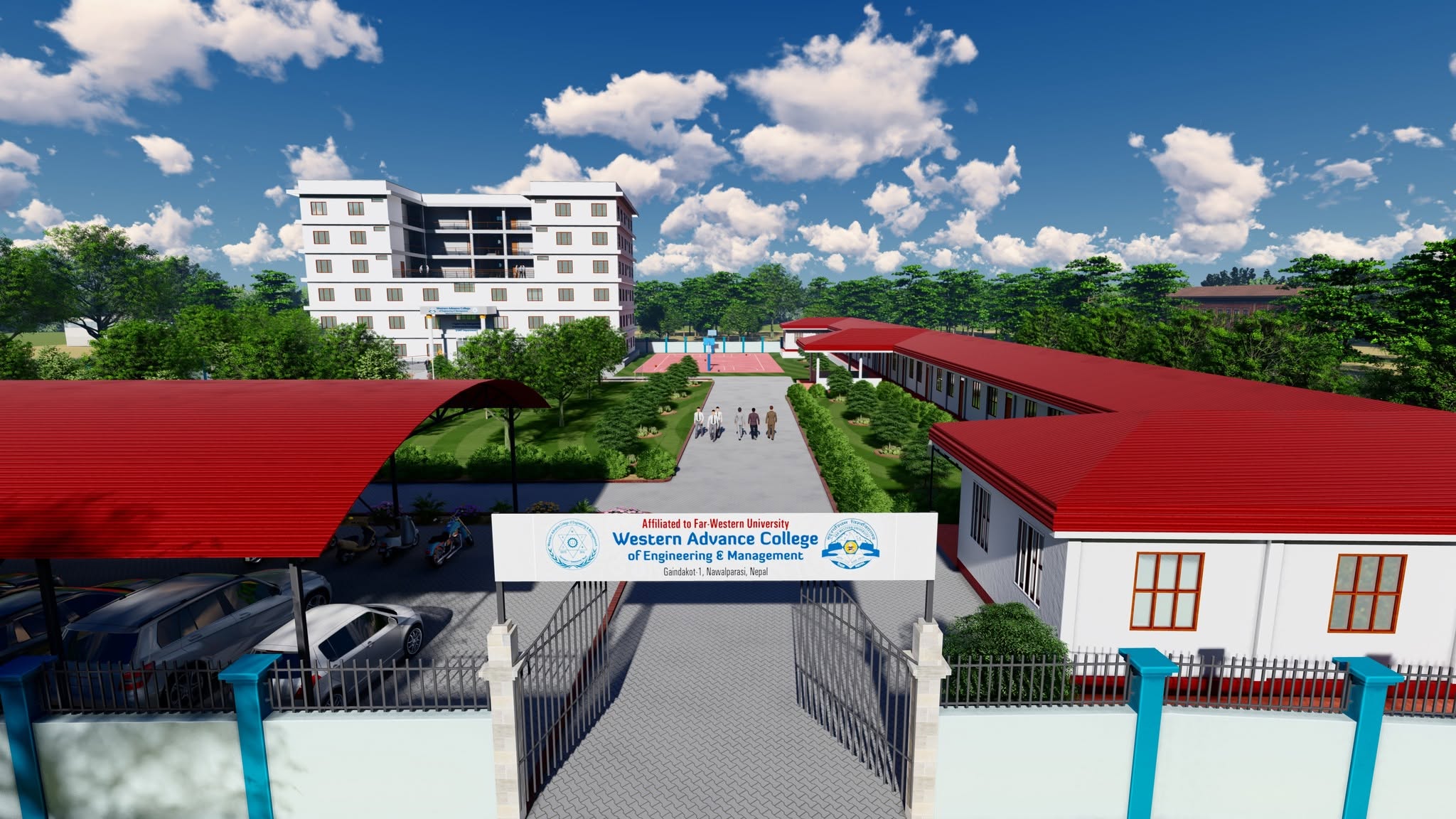
The Bachelor of Science in Computer Science and Information Technology (B.Sc. CSIT) at Western Advance College of Engineering and Management (WACEM) is a four-year undergraduate program affiliated with Far Western University. It is administered under the university’s Faculty of Science and Technology.
Offered in Gaindakot-1, Nawalparasi (East), the program combines computer science theory, programming, information technology, mathematics, electronics, networking, database systems, software engineering, web technology, research, projects, electives, and internship work. Students complete 137 credit hours across eight semesters.
| Field | Details |
|---|---|
| Course | Bachelor of Science in Computer Science and Information Technology |
| Abbreviation | B.Sc. CSIT |
| College | Western Advance College of Engineering and Management |
| Affiliation | Far Western University |
| Faculty | Faculty of Science and Technology |
| Academic Level | Bachelor’s degree |
| Duration | Four years |
| Structure | Eight semesters |
| Total Credits | 137 |
| Location | Gaindakot-1, Nawalparasi (East), Gandaki Province |
| Entrance | Far Western University entrance examination |
B.Sc. CSIT covers the principles and applications of computer science and information technology. The curriculum begins with programming, mathematics, electronics, computer fundamentals, and communication before progressing to algorithms, operating systems, databases, networks, software engineering, cryptography, web technology, and advanced computing subjects.
Management and research subjects are also included. Introduction to Management gives students an organizational perspective, while Research Methodology for Computer Science prepares them for structured investigation and project work.
The later semesters include two minor projects, elective courses, and an internship. This structure allows students to apply technical knowledge through programming tasks, system development, research activities, and workplace-based learning.
The course may suit students interested in programming, computer systems, software, mathematics, data, networking, and problem-solving.
Students should be prepared for both conceptual and practical study. The curriculum includes mathematical courses such as calculus, linear algebra, statistics, probability, and numerical methods alongside programming, hardware, databases, networking, and software development.
Regular assignments, laboratory tasks, presentations, group work, projects, internal examinations, and independent study form part of the academic process.
Applicants must have completed higher secondary education in 10+2 Science, a Diploma in Computer, or an equivalent qualification from a recognized board. A minimum overall grade of ‘C’ is required.
Candidates must also pass the entrance examination conducted by Far Western University.
The program is completed over four academic years and divided into eight semesters. Students must complete 137 credit hours.
| Academic Stage | Semesters | Credits |
|---|---|---|
| First Year | First and Second | 32 |
| Second Year | Third and Fourth | 36 |
| Third Year | Fifth and Sixth | 35 |
| Fourth Year | Seventh and Eighth | 34 |
The credit distribution includes compulsory subjects, theoretical and practical components, minor projects, elective courses, and an internship.
The first year establishes a base in computing, mathematics, electronics, communication, and programming.
Subjects include:
English Grammar and Composition
Information Technology Fundamentals
Calculus and Analytical Geometry
Electronic Principles
Programming Fundamentals and C Programming
Data Structure and Algorithms
Digital Logic Design
Linear Algebra
Mechanics and Electrodynamics
Microprocessor System
The Electronic Principles and Mechanics and Electrodynamics courses contain separate theory and practical credit components.
The second year develops knowledge of computer architecture, programming, operating systems, statistics, networks, databases, system analysis, and computation theory.
Major subjects include:
Computer Organization and Architecture
Discrete Structures
Introduction to Management
Object Oriented Programming with C++
Operating System
Statistics and Probability
Applied Statistics
Data Communication and Network
Database Management System
Numerical Methods
System Analysis and Design
Theory of Computation
The third year moves into algorithm design, artificial intelligence, compilers, graphics, web systems, cryptography, software engineering, and research.
Students study:
Design and Analysis of Algorithm
Artificial Intelligence
Compiler Design
Simulation and Modelling
Graphics and Visual Computing
Web Technology I
Introduction to Cryptography
Java Programming I
Research Methodology for Computer Science
Software Engineering
Web Technology II
Minor Project I
Minor Project I introduces structured project development within the academic program.
The final year combines advanced programming, system design, e-commerce, electives, project work, parallel computing, and internship.
Subjects include:
E-commerce
Advanced Java Programming
Object Oriented Analysis and Design
Minor Project II
Parallel Computing
Internship
Five elective courses
Minor Project II continues the project-based component, while the internship gives students an opportunity to work in an organizational setting connected with computing or information technology.
The curriculum recommends four elective tracks:
Programming
Database
Networking
Algorithmic computing
Students select elective subjects according to the available combinations. The elective pool includes:
Net Centric Computing
Database Administration
System Administration
Digital Image Processing
Data Mining and Warehousing
Geographical Information System
Management Information Systems
Neural Networks
Enterprise Application Development with Java
Advanced Database Design
Network Administration
Real-time Systems
Mobile Application Development
Distributed Database Management Systems
Wireless Networks
Cloud Computing
Information Retrieval
E-business and E-governance
Embedded System Programming
Human Computer Interaction
These choices allow students to give greater attention to programming, databases, networks, information systems, or algorithm-related subjects during the final stage of the degree.
Practical learning appears throughout the curriculum in programming, electronics, physics, databases, networks, web technology, software engineering, and other application-based courses.
The teaching methods include lectures, discussion, individual and group work, self-study, assignments, student presentations, term papers, quizzes, and guest lectures. Course-specific laboratory activities are used where practical work forms part of the subject.
Minor Project I and Minor Project II require students to apply their learning to defined computing problems. The eighth-semester internship adds a workplace-based component carrying four credits.
Assessment combines internal evaluation and end-semester examinations. Theory-based courses generally allocate 60 marks to the end-semester examination and 40 marks to internal evaluation.
Internal assessment may include:
Assignments
Quizzes
Attendance
Presentations
Term papers
Mid-term examinations
Group work
Courses with practical components divide assessment among written examination, internal work, laboratory performance, practical reports, viva, and practical examination.
Students must secure at least 50 percent in internal evaluation to qualify for the end-semester examination.
Through academic and practical work, students may develop skills in:
C, C++, and Java programming
Data structures and algorithm design
Database design and administration
Web application development
Computer networks and communication
Operating systems and computer architecture
Software analysis, design, and development
Research and technical reporting
Information-system analysis
Project planning and implementation
Teamwork and technical presentation
Data analysis and numerical problem-solving
The level of skill developed depends on academic effort, laboratory participation, project quality, internship experience, and continued practice.
Graduates may consider work related to:
Software development
Data analysis
Cybersecurity
Cloud systems
Database administration
IT management
The curriculum may also support work involving programming, web systems, networks, information systems, software projects, and technical support. Career outcomes depend on individual ability, practical experience, specialization, location, and available employment conditions.
The program takes four years and is divided into eight semesters.
Students must complete 137 credit hours.
The program is affiliated with Far Western University and administered under the Faculty of Science and Technology.
Applicants need 10+2 Science, a Diploma in Computer, or an equivalent qualification from a recognized board, with a minimum overall ‘C’ grade.
Yes. Candidates must pass the entrance examination conducted by Far Western University.
Yes. Practical components appear in relevant subjects, and the program includes laboratory work, two minor projects, and an internship.
Yes. Students select five electives from programming, database, networking, algorithmic, and related computing areas.
Yes. The eighth-semester internship carries four credits.