



Shri Panchami Mahagrantha: The Classical Authority, Philosophical Depth, Scientific Relevance, and Complete Ritual Method of Saraswati Puja
As the cold of Magh slowly begins to fade and nature starts changing its skin, a certain kind of gentle intoxication fills the atmosphere. Tender shoots begin to sprout, mustard fields turn yellow, and the cuckoo’s call begins to echo.
At this very time, we worship Goddess Saraswati—the presiding deity of knowledge, music, art, and science. But have we ever truly asked ourselves: is this worship only an annual ritual, or is there a deeper philosophy of life hidden behind it?
Many of our young brothers and sisters now understand Saraswati Puja only as “a fun day” or “the day you get tika at school.” Some consider it superstition, while others perform the worship mechanically without understanding its essence.
The purpose of this detailed article is to break that confusion. Here, we will not limit Saraswati to an idol; we will analyze her as a symbol of consciousness, discernment, and creativity.
Saraswati Puja, or Shri Panchami, is not only about religion. It is a celebration of the learning process.
Let us dive into the depth of this great festival.
Historical and Scriptural Background
The concept of Saraswati is found existing since the Vedic era. To speak authoritatively about any subject, we must go back to its original sources.
Vedic Evidence
In the Rigveda, Saraswati is described both as a river and as a goddess. In Rigveda 2.41.16, it is said:
'Ambitame Naditame Devitame Saraswati. Aprashasta Iva Smasi Prashastim Amba Naskridhi.'
Meaning: “O Saraswati—best among mothers, best among rivers, and best among goddesses! We are ignorant; grant us knowledge (praise and excellence).”
Here, Saraswati is understood as “flow” or “stream.” Just as a river never stops, knowledge too must continue to flow. If knowledge stops in one place, it begins to rot (it becomes dogma). But if it keeps flowing, it remains pure.
Puranic References
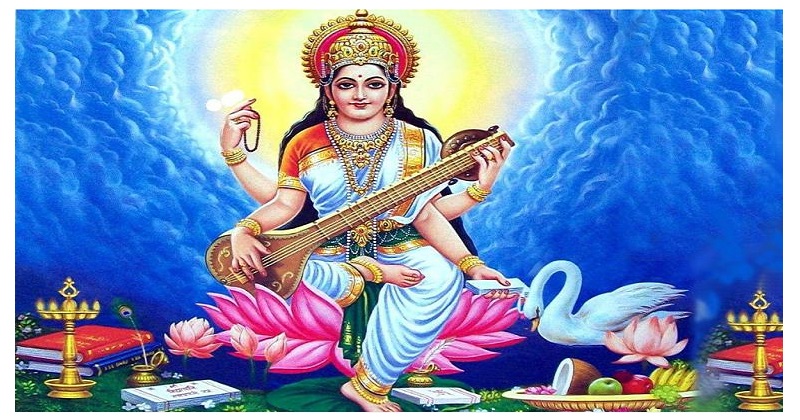
According to the Brahmavaivarta Purana and Matsya Purana, when Brahma created the universe in the beginning, there was silence everywhere. When he sprinkled water from his kamandalu, a four-armed goddess appeared, holding a veena.
When she struck the strings of the veena, “sound” was born in the world. That is why she is also called “Vagdevi” (the goddess of speech).
What does this story teach us?
It teaches the importance of communication and expression in life. Knowledge remains incomplete until it can be expressed.
The Form of Saraswati: Philosophical Meaning and Symbolism
Every element shown in Saraswati’s picture or idol has a deep psychological and practical meaning. Young readers must understand this so they realize that idol worship is, in essence, worship of an ideology.
The White Color (White Clothes)
Saraswati is always shown wearing white. Lakshmi (wealth) is often associated with red or pink. Power, like Kali, is associated with black or red.
But the color of knowledge is white. Why?
Sattva quality: White represents peace, purity, and simplicity. To gain knowledge, the mind must be calm and free from distortions.
Impartiality: White contains all seven colors within it. A truly wise person does not discriminate; they see everyone equally.
The Veena (Music and Art)
The veena represents balance in life. If its strings are tightened too much, they break. If they are too loose, no melody emerges.
Practical lesson: Our life should be the same—neither too harsh discipline nor too much carelessness. The middle path is the path of knowledge.
It also suggests that science (books) and art (veena) must go together. Knowledge without emotion makes a person mechanical.
The Book (Vedas/Scriptures)
The book in one hand highlights the importance of theoretical knowledge. It carries the message that we must learn from history and the experiences of our ancestors.
The Crystal Rosary (Discipline and Focus)
In another hand, there is a rosary. It represents consistency and focus.
Problem-solving: Today’s students face a major issue of concentration. Saraswati’s rosary teaches that to gain knowledge, “tapasya” or continuous practice is necessary (not rote learning, but practice).
The Swan (Rajhans)
Saraswati’s vehicle is a swan. It is said that a swan has a special ability called “neer-kshir vivek.”
If milk and water are mixed, the swan drinks only the milk and leaves the water.
Real-life application: In today’s internet and information age, there is fake news, misinformation, and useless content everywhere (water). A true learner must absorb only the right information (milk). This is real education.
Basant Panchami: Nature and Agriculture Connection
Saraswati Puja is also called Basant Panchami or Shri Panchami. “Shri” also means beauty and prosperity.
The Science of Seasonal Change
From this day, the sluggishness of winter (Hemant/Shishir) ends, and the energy of spring begins.
According to Ayurveda, the “kapha” accumulated in the body during winter starts melting due to spring sunlight. That is why, during this period, the body becomes more ready for cleansing, and the mind becomes more prepared to learn new things.
The time when old leaves fall and new shoots sprout carries the message of “Unlearn and Relearn” (leave false old beliefs and learn new truths).
Link with Agriculture
Nepal is an agriculture-based country. Around this time, wheat and barley ears begin to bend, and mustard blooms. In some communities, there is also a tradition of worshipping the earth as a preparation for bringing in new harvest.
The yellow color (mustard flowers) represents joy and intellect.
Saraswati Puja in Nepal: Original Tradition and Culture
In Nepal, the style of celebrating Saraswati Puja is distinct and deeply original compared to many other places. Here, we see a remarkable blend of Shaiva, Shakta, Vaishnav, and Buddhist traditions.
The Fusion of Manjushree and Saraswati
On Saraswati Puja day, a special fair takes place at Swayambhu in the Kathmandu Valley.
Interestingly, Hindus worship the temple there as Saraswati, while Buddhists worship it as Manjushree.
According to Buddhist belief, Manjushree cut the Kathmandu Valley’s waters through Chobhar and made settlement possible. Manjushree is also a bodhisattva of wisdom, holding a sword that cuts ignorance.
Social message: This is one of the world’s best examples of religious tolerance. It confirms that knowledge has no religion, and truth is one.
Writing “Shri” and the Vidyarambha Sanskar
In Nepal, this day is considered the most suitable for introducing young children to letters (e-i, ka-kha). This is called “Vidyarambha Sanskar” or “Akshararambha.”
The sight of children writing letters on temple walls with chalk or pencil shows how highly our society values education.
This is not just a ritual—it is a powerful psychological method (psychological priming) that imprints in a child’s mind: “Now I am beginning to learn.”
Basant Shravan at Hanuman Dhoka
There is a tradition at the state level of observing “Basant Shravan” at Hanuman Dhoka Palace in the presence of the Head of State.
This reflects that even governance requires knowledge and season-appropriate conduct.
The Relevance of Saraswati Puja in the Modern Era
In the 21st century, when we talk about AI (artificial intelligence), what is the meaning of worshipping a stone idol?
Many young people may ask this. Let us look at it logically.
Information vs Knowledge vs Wisdom
Google and ChatGPT provide information. Books provide knowledge. But Saraswati Puja motivates us to seek wisdom.
The current problem is not a lack of information, but information overload. In such a time, we need a “swan-like vision” to separate right from wrong.
Saraswati practice strengthens concentration, which awakens wisdom.
Mental Health and Music
The veena in Saraswati’s hand represents the importance of mental peace. Modern science also confirms that classical music and “Nada Yoga” reduce stress and anxiety.
On Saraswati Puja day, musicians worship their instruments as a way of renewing their dedication to their art.
Education Without Ethics
Today, we have produced many doctors, engineers, and scientists, yet corruption and crime have not decreased. Why?
Because we provided “education” but failed to provide “values.”
Saraswati Puja teaches the core mantra: “Vidya Dadati Vinayam” (knowledge gives humility). Ravana was highly learned, but he had no Saraswati (wisdom). He had only information, and thus he fell.
Society today does not need Ravanas. It needs humble scholars.
Saraswati Puja Method (Practical and Scriptural Guide)
Now let us move to the practical side.
If you are a student, parent, or teacher, how can Saraswati Puja be performed in a scripturally correct and heartfelt way?
Here is the complete method.
Preparation and Materials
From the day before the puja, it is best to eat sattvic food (it is better to avoid meat, garlic, and onion). This keeps the mind calm.
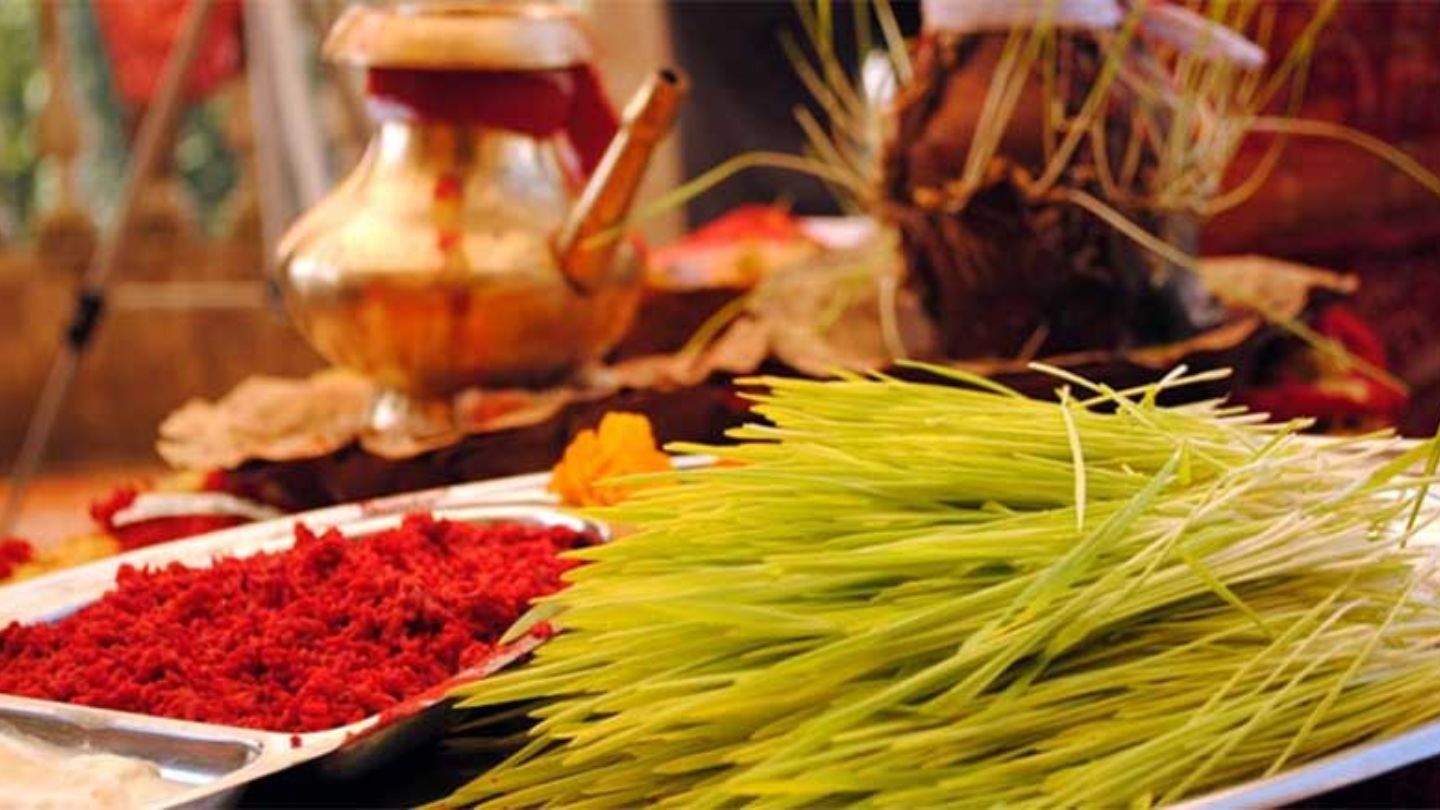
Materials: Saraswati idol or picture, kalash, Ganesha idol, white or yellow flowers (marigold/godavari), white sandal paste, akshata, incense, oil lamp, naivedya (bayar, oranges, laddoo), pen, notebook, and books.
Sankalpa (The Intent)
At the beginning of the puja, take water, akshata, and a flower in your hand and make the sankalpa. Sankalpa means a pledge.
Mantra: “I (your name) am worshipping Bhagwati Saraswati today to remove my ignorance, increase my memory power, and gain true knowledge.”
Kalash and Ganesha Worship
In Hindu tradition, every auspicious work begins with the worship of Ganesha (the remover of obstacles). After that, the kalash (Varun Dev) is worshipped, which invokes all cosmic energies.
Pran Pratishtha and Meditation
While sprinkling akshata on the idol or picture, feel that the living energy of knowledge is now present there.
Then recite Saraswati’s meditation mantra:
'Ya Kundendu Tusharahara Dhavala Ya Shubhravashtravrita, Ya Veenavaradandamanditakara Ya Shvetapadmasana.'
Meaning: “May Saraswati, who is as fair as jasmine, the moon, and snow; who wears white clothes; who holds a veena; and who sits on a white lotus—protect me.”
Shodashopachar Puja
This includes 16 steps of welcoming the deity like an honored guest:
-
Padya: Offer water to wash the feet.
-
Arghya: Offer water to wash the hands.
-
Snan: (If it is an idol) Bathe with water.
-
Vastra: Offer clothes.
-
Gandha: Apply white sandal paste.
-
Pushpa: Offer flowers (Saraswati likes white or yellow flowers).
-
Dhoop: Offer fragrant incense.
-
Deep: Light a lamp (symbol of the light of knowledge).
-
Naivedya: Offer fruits and sweets (bayar is considered a special fruit for Saraswati Puja).
-
Tambul: Offer paan/spices.
… and finally offer dakshina and perform aarti.
Worship of Books and Writing Tools (Important)
Place your textbooks, pen, and notebook in front of the goddess and worship them.
Special practice: On this day, there is a tradition of writing "Om Shree Saraswatyai Namah" or "Om" with a new pen to begin the year’s study. This builds confidence in students: “I have started fresh from today.”
Visarjan (Closing)
After the puja, offer akshata and request: “O Goddess, please reside in the temple of my mind forever,” and perform the closing.
Distribute prasad to everyone.
Special Suggestions for Students
No one passes exams only by doing puja. Puja builds the environment, but the actual effort (study) must be done by the student.
-
Habit of waking up at Brahma Muhurta: From Saraswati Puja day, take a pledge to wake up at 4–5 AM and study. The atmosphere is quiet, and the brain’s grasping power becomes 100%.
-
Sattvic diet: Junk food and tamasic food make the mind dull. Students should eat light and sattvic food as much as possible.
-
Technology discipline (Digital Detox): Saraswati does not hold a mobile; she holds a book. Start the discipline today—keep your phone away during study time.
-
Respect: Respect your teachers, books, and learning institutions. A person who does not respect the source of knowledge can never gain complete knowledge.
Conclusion
In the end,
Saraswati Puja is not only our cultural heritage; it is proof of the highest place human civilization has given to knowledge.
Worshipping a stone idol means awakening the “consciousness” hidden within that stone.
Young friends, let us worship this Shri Panchami not only for fun, but for self-awakening. May the education we gain solve society’s problems, cause no harm to anyone, and keep alive the “swan” (wisdom) within us.
As long as we respect books, art, and knowledge, our society will not fall into darkness.
On this sacred occasion of Saraswati Puja, may good sense, creativity, and positive energy spread within all of us.
(Note: The facts used in this article are based on various Vedas, Puranas, Nepali social life, and educational psychology. It carries no political, gender-based, or communal bias of any kind. It is purely research-based and grounded in positive thinking.)

.png)


Comments 0
No comments yet. Be the first to start the conversation.