



Dyslexia in Children: Signs, Causes, and Support
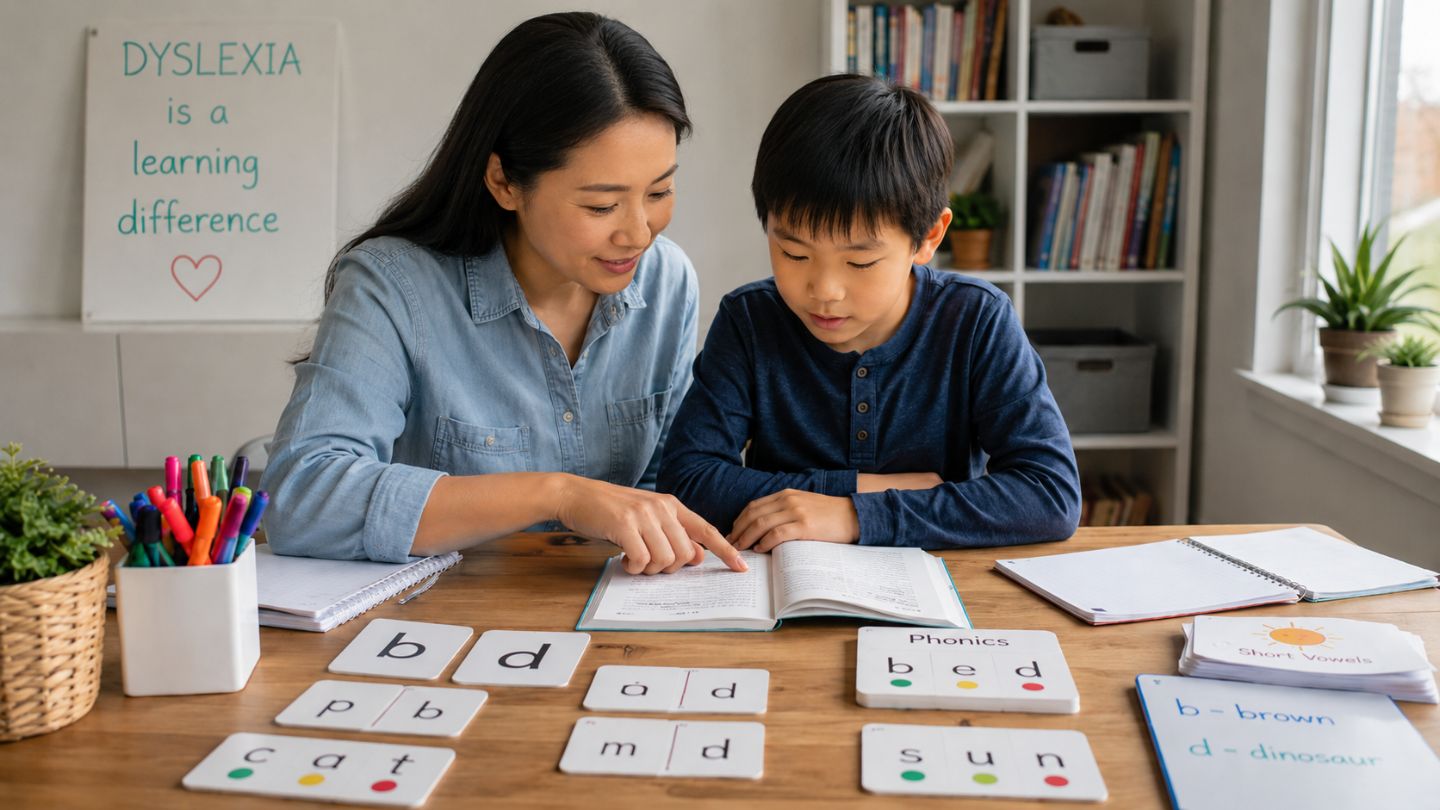
Dyslexia is a specific learning difficulty that mainly affects reading, spelling, and writing. It is not a disease, and it does not mean that a child is careless, lazy, or less intelligent. Children with dyslexia may find it difficult to connect letters with sounds, read words accurately, spell correctly, or read fluently.
Dyslexia often becomes noticeable when a child starts school and begins formal reading and writing activities. Some signs can appear earlier, but the difficulty is usually clearer once the child is expected to recognize letters, read simple words, write sentences, and follow written instructions.
Common Signs of Dyslexia
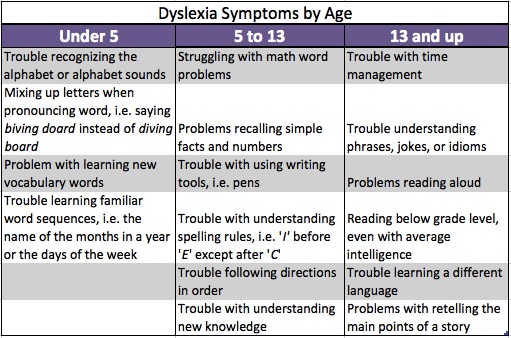
Signs of dyslexia can vary from child to child. A child may:
-
read more slowly than other children of the same age
-
struggle to recognize letters or match letters with sounds
-
find spelling difficult, even with familiar words
-
confuse the order of letters in words
-
have difficulty remembering written instructions
-
struggle with rhyming words or learning the alphabet
-
find it hard to remember sequences such as days of the week or months of the year
-
have difficulty telling time, organizing schoolwork, or completing written tasks
-
avoid reading aloud because it feels stressful or embarrassing
Some children may reverse letters or numbers, such as confusing b and d or 6 and 9. However, this alone does not prove that a child has dyslexia. Letter and number reversals can also happen in young children while they are still learning to read and write. Dyslexia should be assessed by looking at the child’s overall reading, spelling, language, memory, and learning pattern.
What Causes Dyslexia?
Dyslexia is linked to differences in how the brain processes language. It often runs in families and can affect children and adults of any intelligence level. It is not caused by poor eyesight, lack of effort, or poor parenting.
Dyslexia is usually lifelong, but its impact can change over time. With early identification, structured teaching, and consistent support, children with dyslexia can improve their reading skills and become more confident learners.
When Parents Should Seek Help
Parents should speak with the child’s teacher, school counselor, pediatrician, educational psychologist, or speech-language specialist if reading and writing difficulties continue despite regular practice and classroom support.
A child may need further assessment if they:
-
read far below the expected level for their age
-
make repeated spelling mistakes even after practice
-
understand spoken information better than written information
-
become unusually anxious, frustrated, or withdrawn during reading tasks
-
take much longer than classmates to complete written work
There is no single test for dyslexia. Assessment usually considers the child’s development, school performance, reading ability, language skills, family history, and whether other issues, such as vision or hearing problems, may also be affecting learning.
How to Support a Child with Dyslexia
Children with dyslexia need patient, structured, and repeated teaching. They usually learn better when lessons involve more than one sense, such as seeing, hearing, saying, and writing the same word or sound.
Helpful support may include:
-
teaching letters and sounds step by step
-
using short reading sessions instead of long, tiring ones
-
reading stories aloud while the child follows the text
-
using pictures, flashcards, audio books, and letter cards
-
giving extra time for reading and writing tasks
-
breaking instructions into small steps
-
allowing the child to answer orally when writing is not the main goal
-
praising effort, progress, and problem-solving rather than reading speed
A child with dyslexia should not be punished or shamed for slow reading, spelling mistakes, or difficulty copying from the board. Support works better when parents and teachers focus on clear instruction, regular practice, and confidence-building.
Key Point
Dyslexia is not a disease and does not need a “cure.” It is a learning difficulty that requires the right teaching approach. Early support can help children improve reading and writing skills, reduce school-related stress, and continue learning with confidence.






Comments 0
No comments yet. Be the first to start the conversation.