



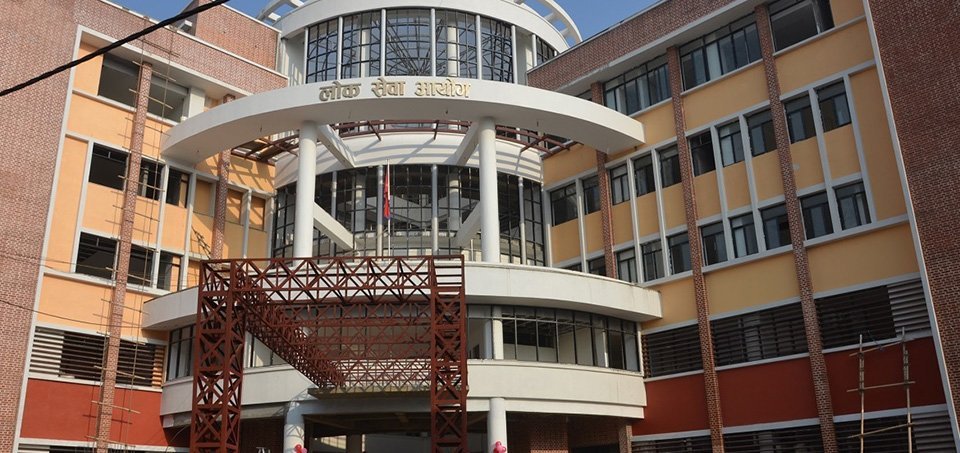
Lok Sewa Aayog’s 75-Year Journey: Technological Leap, Expanded Jurisdiction, and Transparency
The Public Service Commission (Lok Sewa Aayog) has completed 75 years since its establishment. Established on Asar 1, 2008 BS, under the Interim Government Act, this constitutional body has played an important role in producing Nepal’s administrative leadership and protecting the merit system. Led in the past by former Chief Justices and distinguished personalities such as Bishwanath Upadhyay and Gauri Shankar Lal Das, the Commission has, to date, successfully fulfilled the responsibility of recruitment not only for the civil service but also for security bodies and organized institutions.
Key Aspects of the Commission’s Performance
As mentioned in the source material, the main features related to the Commission’s current status and working system are as follows:
The Commission has made the “double coding” system the main basis for preserving its reputation and confidentiality.
Despite managing 1 million online applications annually, the Commission has received the “Governance Award-2072.”
The annual calendar published on Shrawan 1 is the main formula of the Public Service Commission’s transparency.
The absence of the Federal Civil Service Act has created problems in employees’ career development and coordination with provinces.
The government has fully implemented the Commission’s recommendations in employee promotion and departmental action.
Expanded Responsibility and Technology-Friendly Practices
The current constitution has given the Commission, which was previously limited only to the civil service, the responsibility of recruitment for organized institutions and security bodies as well. So far, the Commission has conducted examinations for 74 organized institutions and provided consultation in the formulation of 108 regulations. In addition, Commission representatives are working in 107 institutions.
Through the practice of conducting university examinations and appointing professors and employees, human resources recommended by the Commission have reached Nepal’s overall administration. Although the workload has increased, the Commission’s staffing positions remain the same as before, with only 391 personnel. The formation of provincial public service commissions has reduced some workload, but human resource management is being carried out through the use of the latest technology.
At present, the Commission has fully implemented the online application system. By removing the earlier compulsion of standing in line to fill out forms and submitting vouchers at banks, arrangements have been made to pay fees through Connect IPS, Khalti, and other online platforms. This system, in which “one candidate has only one ID,” has been continuously used and upgraded through software to make it more secure and effective.
For data security, the Commission has used GIDC. After a data problem occurred two years ago, the backup system has also been properly managed. At present, the Commission screens around 1 million applications annually through online means.
Calendar System, Syllabus, and Examination Management
The main basis of the Commission’s transparency and credibility is the “annual calendar” published every year on Shrawan 1. All processes, from advertisements to result publication for the civil service, security bodies, and organized institutions, move forward according to this calendar. However, result publication is sometimes delayed due to cases filed in court and interim orders issued by the court. The Commission has clarified that examinations and results have not been delayed due to its internal reasons.
As university syllabuses change over time, the Commission has also been revising syllabuses with the participation of the concerned ministries and experts. However, the lack of required staffing positions and skilled human resources has created challenges in revising syllabuses immediately as desired by the ministries.
Lack of Federal Law and the Commission’s Autonomy
Even 11 years after the promulgation of the constitution, the failure to introduce the “Federal Civil Service Act” has become a major problem in the field of public administration. Since the Act has not been enacted, confusion has been created over issues such as the management, career development, and post-retirement pension of employees deployed at the provincial and local levels. This has also caused difficulties in coordination with provincial public service commissions.
On the other hand, according to Article 243 of the Constitution, the government is required to consult the Commission on laws related to the conditions of civil service. Since Asar 10, 2078 BS, the government has been implementing 100 percent of the consultations provided by the Commission.
The Commission has clarified that there is no political pressure or interference in its work. The Commission claims that political or any other external influence is zero because it works by remaining firm on principles such as the “double coding” system, confidentiality, and fairness. The system is operated confidentially in such a way that employees of one branch do not know the work of another branch.
Competition and Suggestions for Youth
In recent times, both attraction and competition in the Lok Sewa examination have increased sharply. Every year, nearly 1 million candidates compete for a total of 32,000 positions, including 2,100 to 2,200 positions in the civil service, around 20,000 in security bodies, and 10,000 in organized institutions. At a time when 3 million youths are in foreign employment, the fact that 1 million candidates fill out forms also indicates the severe lack of employment within the country.
To maintain “quality” in this large competition, the Commission has implemented a “preliminary qualification examination” for the posts of Kharidar and Nayab Subba. Last year, around 60,000 examinees participated only in the preliminary qualification examination for the Kharidar group. At present, examinations are being conducted from 14 offices.
Finally, the Commission has appealed to youths who consider this a path of life to remain always updated and prepare with patience. Since it is possible to succeed even on the first attempt in an examination conducted through a fully transparent and confidential system, the younger generation has been called upon to prove themselves capable and join national service.


Comments 0
No comments yet. Be the first to start the conversation.