- DurationYear
About Nepal Police Exam Details
Nepal Police Examination System: Full Process, Syllabus, and Success Strategy
The recruitment process for Nepal Police (Nepal Prahari) is not only a physical test; it is a multi-dimensional selection system that examines a candidate’s physical fitness, mental alertness, legal knowledge, and character integrity. With the direct involvement of the Public Service Commission, this examination has now become highly reliable and competitive.
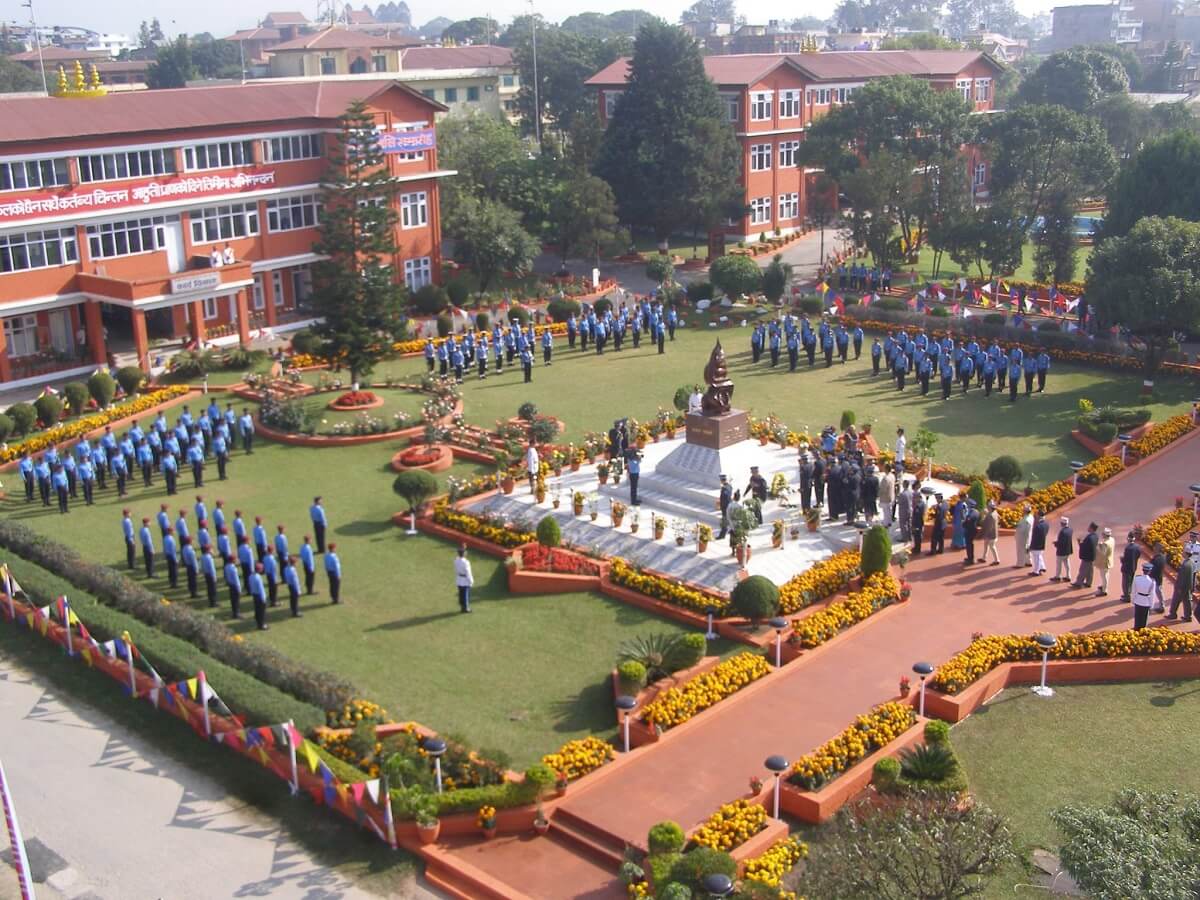
Examination Structure and Stepwise Process
Nepal Police’s selection process is based on the Elimination Method. This means a candidate must pass every stage; anyone who fails at a stage automatically becomes ineligible for the next stage.
Stage 1: Application Registration and Document Verification
In the first stage, documents submitted through the online system are verified.
-
What is checked: Citizenship, academic qualification documents (marksheets and character certificate), and recommendation for inclusive groups.
-
Caution: Even a small error in name, surname, or date of birth can cause the application to be canceled.
Stage 2: Initial Medical and Bearing
This is the first physical screening for police service. The candidate’s external physical condition is examined.
-
Bearing test: Height, weight, and chest measurement are taken. It is also checked whether the candidate has tattoos, whether limbs are crooked, whether fingers are complete, and whether there are large visible scars on the body.
-
Health screening: Basic eye vision (color blindness), dental structure, and flat foot are tested.
Stage 3: Physical Fitness Test
This is considered a test with “weightage/marks.” Marks are awarded based on how quickly a candidate completes the tasks.
-
300-meter sprint (Sprint): Tests immediate speed.
-
3-kilometer (2-mile) run: Tests lung capacity and endurance.
-
Chin-up (for men): Measures arm strength.
-
Sit-ups and push-ups: Measures core and upper-body strength.
-
High jump and long jump: Tests flexibility and strength.
Stage 4: Detailed Medical Examination
This examination is conducted by specialist doctors at Nepal Police Hospital. It includes the following tests:
-
Blood and urine tests: To check for infectious or long-term diseases.
-
Chest X-ray and ECG: To assess the condition of the heart and lungs.
-
Drug test: If the candidate is found to have used any type of narcotic drug, the candidate is declared immediately ineligible.
Written Examination: In-Depth Syllabus Analysis
The written examination is conducted by the Public Service Commission. The difficulty level differs by post. As an academic, I have divided the syllabus into three main parts:
a) For Police Inspector (Inspector) and Assistant Inspector (ASI)
First Paper: General Knowledge (GK) and Intelligence Test (IQ)
-
General knowledge: Nepal’s geography, history, culture, sustainable development, international relations (especially SAARC and the United Nations), and the Constitution of Nepal.
-
IQ: Verbal and non-verbal reasoning, coding-decoding, sequencing, and classification. This tests the candidate’s quick decision-making ability.
Second Paper: Nepali and English Language
-
English: Grammar, essay writing, and report writing. Police may also need to write incident reports in English, so it is important.
-
Nepali: Nepali grammar, accurate writing, summary writing, and essays on contemporary topics.
Third Paper: Professional Practical Knowledge and Legal System
This paper is the most important. The following subjects must be studied:
-
Nepal Police Act, 2012 and Police Regulations, 2071.
-
Muluki Criminal Code and Criminal Procedure Code.
-
Human rights and police conduct.
-
Fundamental principles of crime investigation.
b) For Police Constable
The constable written exam is comparatively simpler but equally competitive.
-
Nepali: Basic grammar and composition.
-
English: Simple word meanings and sentence formation.
-
Mathematics: Grade 8–10 level addition, subtraction, multiplication, division, percentage, and profit-loss.
-
General knowledge: Introduction to Nepal and basic information related to police service.
Personality Test and Interview
This is the final step for those who pass the written examination.
-
Special medical tests: Serious tests such as HIV and Hepatitis B are repeated.
-
Merit order and interview: The candidate’s confidence, speaking style, and problem-solving ability are assessed. The interview committee includes members of the Public Service Commission, representatives of the Ministry of Home Affairs, and senior police officers.
Preparation Strategy
As a PhD scholar and teacher, I suggest candidates adopt the following strategies:
a) Physical Preparation
-
Continuity: Begin daily running practice at least 4 months before the exam.
-
Time management: Practice running 3 kilometers using a stopwatch.
-
Balanced diet: During preparation, eat protein-rich food and drink plenty of water.
b) Written and Intellectual Preparation
-
Habit of making notes: Create your own notes for general knowledge. Use memory tricks to remember dates and places.
-
Study key legal provisions: Memorize the key points of the Police Act and the Criminal Code.
-
Solve old question papers: Solve at least 10 sets of questions previously asked by the Public Service Commission. This teaches the exam pattern and time management.
-
Improve writing style: When writing essays or reports, use clear, factual, and impartial language.
Common Mistakes to Avoid
Many capable candidates get eliminated due to small mistakes:
-
Carelessness in documents: Differences in details between certificates and citizenship.
-
Overconfidence: Not practicing by assuming “I can run anyway.”
-
Lack of time management: Not being able to answer all questions in the written exam.
-
False information: Hiding something in medical tests or personal details (this can lead to being placed on a blacklist in the future).
-
Negative influence: Leaving studies due to the false belief that “a job is possible with money.”
Ethics and Transparency of the Examination
Nepal Police recruitment is now fully based on merit.
-
OMR sheet: Written exam answer sheets are checked by machine, with no human interference.
-
CCTV monitoring: Both physical and written examinations are conducted under CCTV monitoring.
-
Departmental and legal action: If anyone attempts irregularities in the recruitment process, strict legal action is taken.
Suggestions for Parents and Students
Parents should motivate their children not only for a job, but to become responsible national servants. Police service is a field of sacrifice and dedication. Students should also maintain a balance between their studies and their physical and mental health.
Conclusion
Passing the Nepal Police examination is challenging, but not impossible. The right guidance, hard work, and honest preparation can make you part of this honorable organization. This exam is not only a selection process; it is also a test of your discipline and patience.
This information is based on the latest Nepal Police recruitment guidelines and the procedures of the Public Service Commission. Candidates are also advised to follow the specific instructions stated in the official advertisement.
Service Details
- Service TypeCareer
- DurationYear
- RecognitionMinistry of Home Affairs
-
Offered At
Nepal Police (Nepal Prahari)
Naxal, Kathmandu
Other Services at Nepal Police (Nepal Prahari) 4
Latest Updates & Notices
- 17 Aug 26 Nepal Prahari Technical Police Constable Exam Centers Dhankuta 2083
- 17 Jul 26 Nepal Police Technical Posts Written Exam Schedule 2083
- 28 May 26 Nepal Police ASI Written Exam Centers Kathmandu 2083
- 28 May 26 Nepal Police ASI Written Exam Centers Jaleshwor 2083
- 28 May 26 Nepal Police Technical Police Medical Exam Schedule 2083
- 24 May 26 Nepal Police ASI Written Exam Centers Butwal 2083
- 22 May 26 Nepal Police Pokhara ASI Written Exam Centers 2083
- 21 May 26 Nepal Police ASI Exam Building Hetauda Notice 2083
Reviews
Questions & Discussions
Contact Nepal Police (Nepal Prahari), Kathmandu
- AddressNaxal, Kathmandu, Bagmati Pradesh, Nepal
- Phone+977-1-5719900
- Email111@nepalpolice.gov.np
- Websitenepalpolice.gov.np
- Contact personNepal Police (Nepal Prahari), Headquater