- DurationYear
About Nepal Police Vacancy Details
Nepal Police Recruitment and Career Guide
Joining Nepal Police (Nepal Prahari) is not only a choice of livelihood; it is the start of a dignified journey to uphold national integrity, public security, and the rule of law. In recent years, Nepal Police’s recruitment and selection system has become significantly improved, transparent, and technology-friendly.
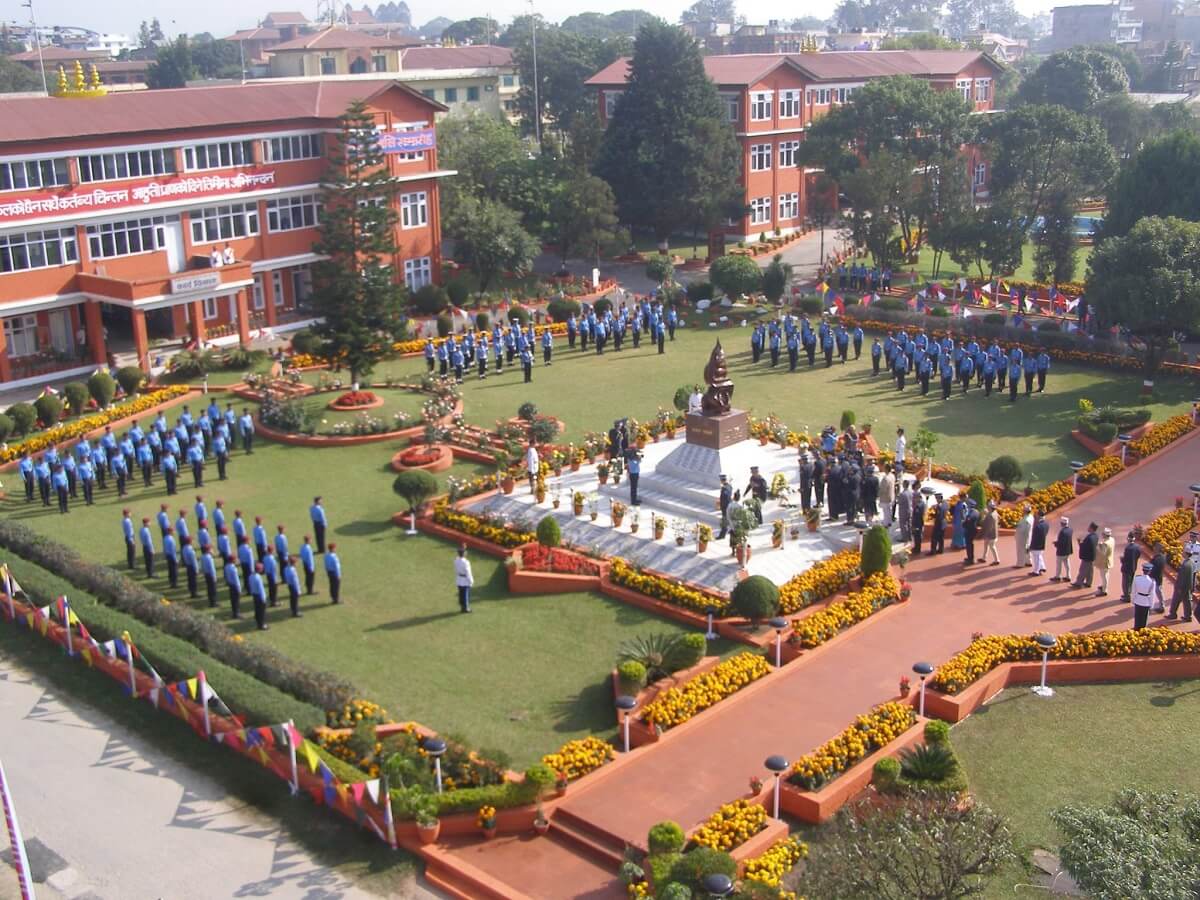
Entry Points
Career development pathways in Nepal Police are well-structured and diversified. From my observation, Nepal Police recruits human resources through two main entry points, giving equal importance to both physical strength and intellectual capacity. These entry points include individuals with different competencies to strengthen the state’s peace and security.
These diverse entry points clearly show that Nepal Police is a multi-dimensional institution. Whether you have higher academic qualifications, specialized technical skills, or strong physical dedication to national service, Nepal Police provides equal opportunity and a defined career pathway for all. For a conscious applicant, selecting the right entry point based on interest and eligibility is the first step toward a successful career.
a) General/Administrative Group: The Backbone of Security and Administration
The general group is the aspect of policing that we always see in the field. Personnel recruited under this group work directly in law enforcement, crime prevention, and coordination with citizens. Entry is mainly through open competition at three levels:
Police Inspector: The Start of Leadership and Investigation
The Police Inspector post is considered a “prestigious entry point” in police service. It is a Gazetted Officer (Third Class) position. From a researcher’s perspective, the inspector post is not merely a job; it is the initial level where one uses legal authority as an Investigating Officer.
A person recruited as an inspector can later have the opportunity to reach the organization’s top leadership (up to IGP). To qualify for this post, one must have completed a bachelor’s degree, which attracts youths with strong intellectual and logical capacity.
Assistant Sub-Inspector (ASI): Field Command and Coordination
The Assistant Sub-Inspector (Non-Gazetted First Class) is referred to as a “junior officer” in the command structure. This post serves as a bridge between higher-level officers and lower-level personnel.
It offers opportunities to lead smaller police posts and work directly with communities. For energetic youths who have completed +2 (Intermediate), this is an excellent entry point from which they can elevate their professional career to the officer level.
Police Constable: The Foundation of the Organization
The Police Constable post represents the largest and most dynamic workforce of Nepal Police. This is the basic operational level of the organization. Constables perform demanding duties such as patrolling, securing incident scenes, and crowd control.
For youths who have completed Grade 8 or SEE, this is the gateway to national service. Those who enter at this level can progress through promotions based on performance and departmental examinations.
Office Support Staff: Institutional Support Role
To provide technical and managerial support for day-to-day office operations, non-classified office support staff are recruited. This includes posts such as cook, gardener, washer, and barber. These posts play an important role in keeping barrack and mess management efficient.
b) Technical Group: The Basis of Modern Policing
In today’s modern era, crime investigation is not limited to sticks and guns. Without science and technology, modern police service is not possible. Therefore, Nepal Police recruits specialists from various fields under the technical group.
Medical Services
Doctors, nurses, and lab technicians working in Nepal Police Hospital for the treatment of police personnel and their families fall under this category. This has developed an autonomous health system within the police organization.
Information Technology and Communication (IT & Communication)
With the growing challenge of cybercrime, the role of computer engineers and IT experts has become indispensable. Such skilled personnel work in the Cyber Bureau and the Communication Directorate of the police. They support internal database management and digital evidence collection.
Forensics
Forensic experts play a major role in bringing offenders to the legal dock based on scientific evidence. Technicians who conduct DNA testing, fingerprint analysis, and ballistic examination are selected through this group. As an academic, I consider this the “brain” of the police.
Engineering and Vehicle Management
Civil engineers are recruited for construction of police physical infrastructure, and automobile mechanics and skilled drivers are recruited for maintenance and management of hundreds of police vehicles.
Music (Police Band)
Music has significant importance in the police’s cultural dignity and formal ceremonies. There is a separate entry opportunity in the police band for youths with interest and skills in music.
Minimum Qualifications and Standards
Educational and physical requirements vary by post. Details of key posts are presented below:
a) Educational Qualification
-
Police Inspector: Must have passed at least a Bachelor’s Degree or equivalent from a recognized university.
-
Assistant Sub-Inspector (ASI): Must have passed Proficiency Certificate Level (Intermediate/+2) or equivalent from a recognized institution.
-
Police Constable: Must have passed at least Grade 8 from a recognized institution (under newer provisions, SEE may have been made mandatory for some technical and specialized posts).
b) Age Limit
-
Police Inspector: Must have completed 20 years and not exceeded 25 years by the last date of application.
-
Assistant Sub-Inspector (ASI): Must have completed 18 years and not exceeded 24 years.
-
Police Constable: Must have completed 18 years and not exceeded 23 years.
(Note: There is special age-limit provision for currently serving police personnel.)
c) Physical Requirements
This stage is extremely important, because even a minor shortfall can result in direct disqualification.
-
Height: Minimum 5 feet 2 inches for men; minimum 5 feet for women.
-
Chest (men only): 31 inches unexpanded and 33 inches expanded.
-
Weight: Minimum 50 kg for men; minimum 42 kg for women.
-
Eyes: Vision not weaker than -2 or +2 (no color blindness).
Reservation and Inclusive Provision
As per the Constitution of Nepal and Police Regulations, 45 percent of total vacant posts are allocated for inclusive groups. Taking this as 100 percent, the division is as follows:
-
Women: 20 percent
-
Indigenous/Janajati: 32 percent
-
Madhesi: 28 percent
-
Dalit: 15 percent
-
Backward Region: 5 percent
Application Process: How to Fill the Form?
Nepal Police has implemented an Online Application System.
-
Website: Go to career.nepalpolice.gov.np.
-
Registration: Create an account by entering your personal details and mobile number.
-
Document upload: Upload scanned copies of citizenship, academic certificates, character certificate, and inclusive-group recommendation (if applicable).
-
Revenue payment: Pay the examination fee online (eSewa, ConnectIPS, etc.) or deposit it at the designated bank.
-
Admit card: After the form is approved, the admit card can be printed online.
Stages of Selection
This is a multi-stage process, and each stage is an elimination round (failing one stage prevents proceeding to the next).
Stage 1: Initial Medical and Bearing
This examines the candidate’s external physical condition. Aspects checked include crooked limbs, large scars on the body, tattoos, decayed or misaligned teeth, and similar factors.
Stage 2: Physical Fitness Test
This includes multiple events, with separate weightage/marks:
-
300-meter sprint (Sprint): Speed test over a short distance.
-
3-kilometer run (Long Run): Endurance test.
-
Chin-up: For men (upper-body strength).
-
Sit-ups and push-ups: Physical flexibility.
-
High jump and long jump: Lower-body strength.
Stage 3: Detailed Medical Check-up
Specialist doctors at Nepal Police Hospital conduct tests of blood, urine, chest X-ray, ECG, and other internal organs. A drug test (whether narcotics have been used or not) is also conducted at this stage.
Stage 4: Written Examination
This is conducted by the Public Service Commission. Its standard is very high and impartial.
-
General Knowledge (GK) and Intelligence Test (IQ): Current affairs, geography, history, and reasoning ability.
-
Language (Nepali and English): Essay writing, grammar, and letter writing.
-
Professional Knowledge: Police Act, the Constitution, basics of crime investigation, and service-related rules.
Stage 5: Special Medical and Interview
In the final stage, an interview is conducted to assess the candidate’s confidence, decision-making ability, and perspective toward police service.
Syllabus Deep Dive
As an academic, I emphasize that candidates should understand the syllabus.
Written syllabus for Police Inspector (Inspector)
-
First Paper (GK & IQ): 100 marks. Includes the Constitution of Nepal, federalism, the structure of security agencies, and major global events.
-
Second Paper (English & Nepali): 100 marks. Report writing and comprehension are important in English; in Nepali, note-writing and drafting.
-
Third Paper (Professional & Legal): 100 marks. Topics include the Muluki Criminal Code, Police Act 2012, and human rights.
Written syllabus for Police Constable (Jawan)
This includes general Nepali, general mathematics, and general knowledge. Most questions are objective.
How to Prepare?
My suggestions for candidates who want to join:
-
Regular exercise: For physical tests, develop a habit of running and workouts at least 3–6 months in advance.
-
Stay updated: Read national daily newspapers every day, with special attention to security and law-related news.
-
Understand the Public Service Commission style: Practice solving old question papers (old questions).
-
Positive mindset: Police service is a service of strict discipline, so show a disciplined and service-oriented character in the interview.
-
Avoid misleading rumors: Do not follow brokers who claim “jobs are possible by paying money.” After the involvement of the Public Service Commission, this is completely impossible. Only your qualifications can make you succeed.
Service, Facilities, and Career Development
Facilities received after joining Nepal Police:
-
Salary and grade: As per the official scale set by the Government of Nepal.
-
Ration and uniform: Ration allowance by work area and uniforms provided twice a year.
-
Free treatment: Free treatment for employees and their dependent family members at Nepal Police Hospital.
-
Pension and gratuity: Attractive pension facility after completing a specified service period.
-
Peacekeeping mission (UN Mission): Opportunity to work abroad upon United Nations call and earn foreign currency.
-
Welfare fund: Loans at concessional rates and scholarships for children.
What Not to Do?
A candidate is declared ineligible in the following situations:
-
Convicted by a court in a criminal case involving moral turpitude.
-
Holding permanent residency permission of a foreign country (DV/PR).
-
Being a member of any political party.
-
Being dismissed from service in a way that results in disqualification for future government service.
Official Contacts and Information Sources
For any recruitment-related queries:
-
Police Headquarters, Recruitment and Selection Division: Naxal, Kathmandu.
-
Phone Number: 01-4414904
-
Website: www.nepalpolice.gov.np
-
Facebook Page: Nepal Police Headquarters
Conclusion
The recruitment process in Nepal Police is scientific and transparent. If you have a firm desire to serve the country, physical fitness, and intellectual capacity, this can be the most suitable career for you. There is no alternative to hard work and integrity. One right decision by you will not only brighten your and your family’s future, but will also add a strong brick to the nation’s security.
This material is fully based on facts and has been prepared on the basis of Nepal Police’s current recruitment guidelines. At the time of recruitment, the conditions stated in the official advertisement will be final.
Service Details
- Service TypeCareer
- DurationYear
- RecognitionMinistry of Home Affairs
-
Offered At
Nepal Police (Nepal Prahari)
Naxal, Kathmandu
Other Services at Nepal Police (Nepal Prahari) 4
Latest Updates & Notices
- 18 Sep 26 Nepal Police Vacancy for ASI and Office Assistant Posts 2083
- 24 Jul 26 Nepal Police Increases Police Inspector Vacancies to 29
- 03 Apr 26 Nepal Police Prahari Jawan Posts Raised to 2,928
- 03 Apr 26 Nepal Police Technical Positions Vacancy Notice 2082
- 08 Jan 26 Myadi Prahari Vacancy 2082
- 12 Dec 25 Nepal Police Inspector & Assistant Sub Inspector Vacancy 2082
- 26 Sep 25 Nepal Police Prahari Jawan and Karyalaya Sahayogi Vacancy 2082
- 20 Jun 25 Nepal Police Vacancy Update for Police Jawan 2082
Reviews
Questions & Discussions
Contact Nepal Police (Nepal Prahari), Kathmandu
- AddressNaxal, Kathmandu, Bagmati Pradesh, Nepal
- Phone+977-1-5719900
- Email111@nepalpolice.gov.np
- Websitenepalpolice.gov.np
- Contact personNepal Police (Nepal Prahari), Headquater