




Table of Content
- ## Why flashcards work better than you'd expect
- ## The tools
- ## How to use AI flashcards without fooling yourself
- ## What actually changes your grades
If you're reading this, you probably already know that university is a lot. I started using AI study tools about a year ago during my third semester, mostly because I was drowning in pharmacology notes and couldn't keep up with the volume of material. What surprised me wasn't that these tools existed. It was how much time I'd been wasting on study methods that barely worked.
Most of us grew up highlighting textbooks and rereading notes the night before an exam. It feels productive. You look at the page, the words seem familiar, and you convince yourself you know it. Then the exam arrives and your mind goes blank. A 2013 review by Dunlosky et al. looked at ten common study techniques and rated highlighting and rereading as low utility. The two methods that actually scored highest were practice testing and distributed practice, which means spreading your study sessions out over days or weeks instead of cramming.
Flashcards and spaced repetition fit squarely into those two categories. And in 2026, AI has made both of them a lot more practical than they used to be.
## Why flashcards work better than you'd expect
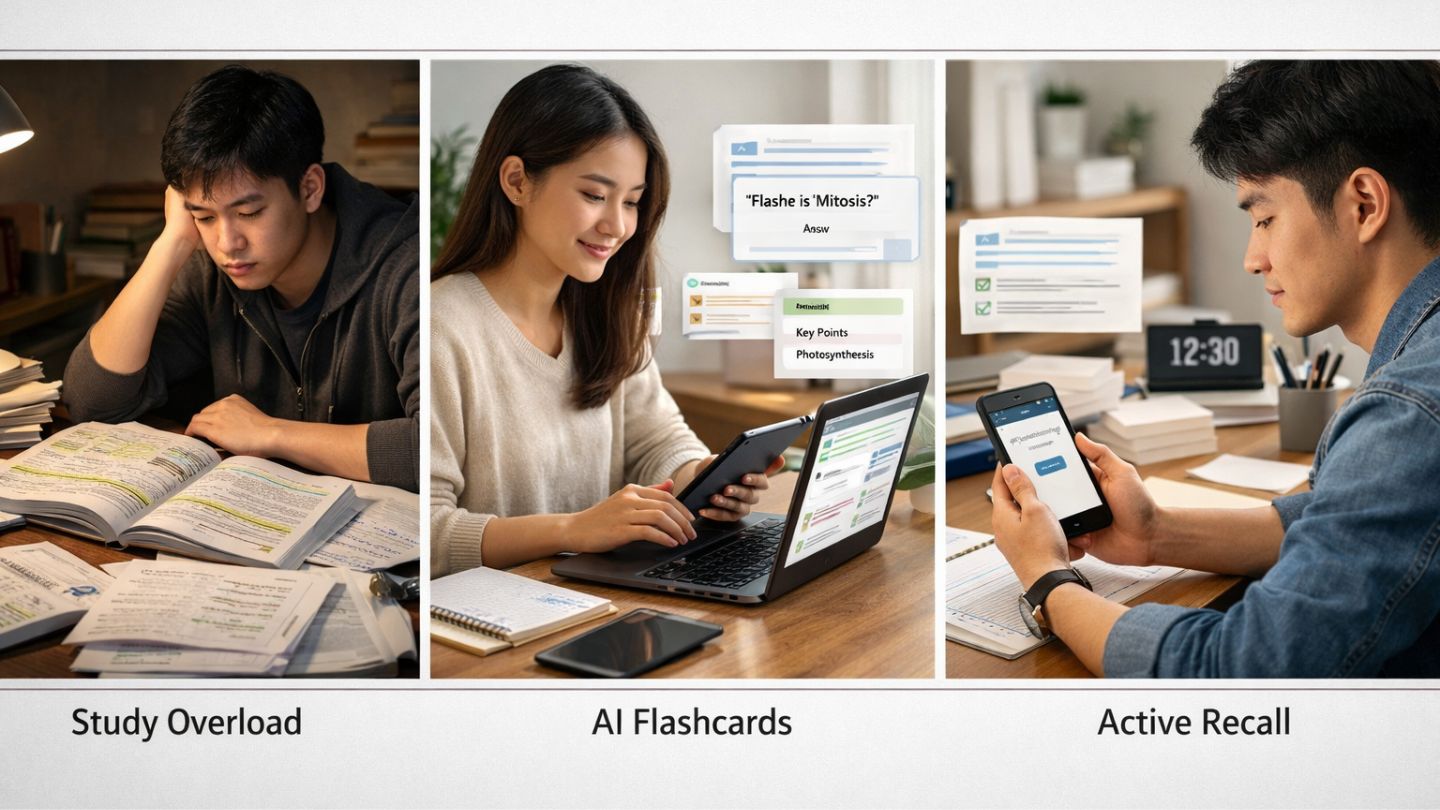
Flashcards force you to do something that passive reading doesn't: retrieve the answer from memory before you see it. Psychologists call this active recall, and the research behind it is pretty solid. A 2024 systematic review found that active recall strategies were significantly tied to higher academic performance among young adults. Flashcards specifically correlated with higher GPA and test scores.
The second piece is spacing. Hermann Ebbinghaus showed back in the 1880s that we forget roughly two thirds of new information within 24 hours if we don't review it. A 2015 replication study confirmed his original findings still hold up. Spaced repetition systems work by showing you cards right before you're about to forget them, which strengthens the memory each time.
The problem was always the effort of making the cards. If you're studying anatomy, biochemistry, or constitutional law, you might need hundreds of flashcards for a single unit. Most students give up before they finish making the deck. That's the bottleneck AI removes.
## The tools

Here's what I've been using, and what friends in my program keep recommending. All of these are free to start with, which matters when you're a student.
Google Scholar and Perplexity for research. Before you study anything, you need to find it. Google Scholar is still the best free way to access academic papers. Perplexity is useful for getting sourced answers quickly when you're trying to understand a concept before reading the full paper.
Notion or Google Docs for notes. I keep my lecture notes in Google Docs because it syncs everywhere and I don't have to think about it. A few friends prefer Notion for how it handles databases and linked pages. Either works fine. The point is to have one place where your raw material lives before it becomes study material.
An AI flashcard generator changed my workflow more than anything else on this list. With Quizgecko, I paste in a section from my notes or upload a PDF of lecture slides, and it builds a full set of flashcards in under a minute. For subjects like anatomy, accounting, or law where you're dealing with large amounts of factual content, that saves hours compared to writing each card by hand. I still edit the cards afterward (more on that below), but having a first draft done for me means I actually use flashcards now instead of just planning to someday.
Anki for spaced repetition review. Once I have my flashcards, I move them into Anki for daily review. Anki is free, open source, and has been around since 2006. Its algorithm schedules each card based on how well you remembered it last time. The interface isn't pretty and the learning curve is real, but nothing else does spaced repetition as well for free. Medical students have been using it for years, and there are shared decks for almost every subject.
YouTube for visual explanations. When a topic doesn't click from reading alone, I search for it on YouTube. Khan Academy covers most foundational subjects well.
MIT OpenCourseWare has full lecture series for engineering and science courses. Sometimes a ten minute video beats an hour of staring at your notes.
Grammarly for assignments. More about writing than studying, but it catches grammar mistakes and awkward phrasing that I'd otherwise miss at midnight before a deadline.
Pomofocus for time management. A free Pomodoro timer that runs in your browser. 25 minutes of focused work, 5 minute break, repeat. I resisted trying this for months because it sounded too simple, but it genuinely helped me stop reaching for my phone during study sessions.
## How to use AI flashcards without fooling yourself
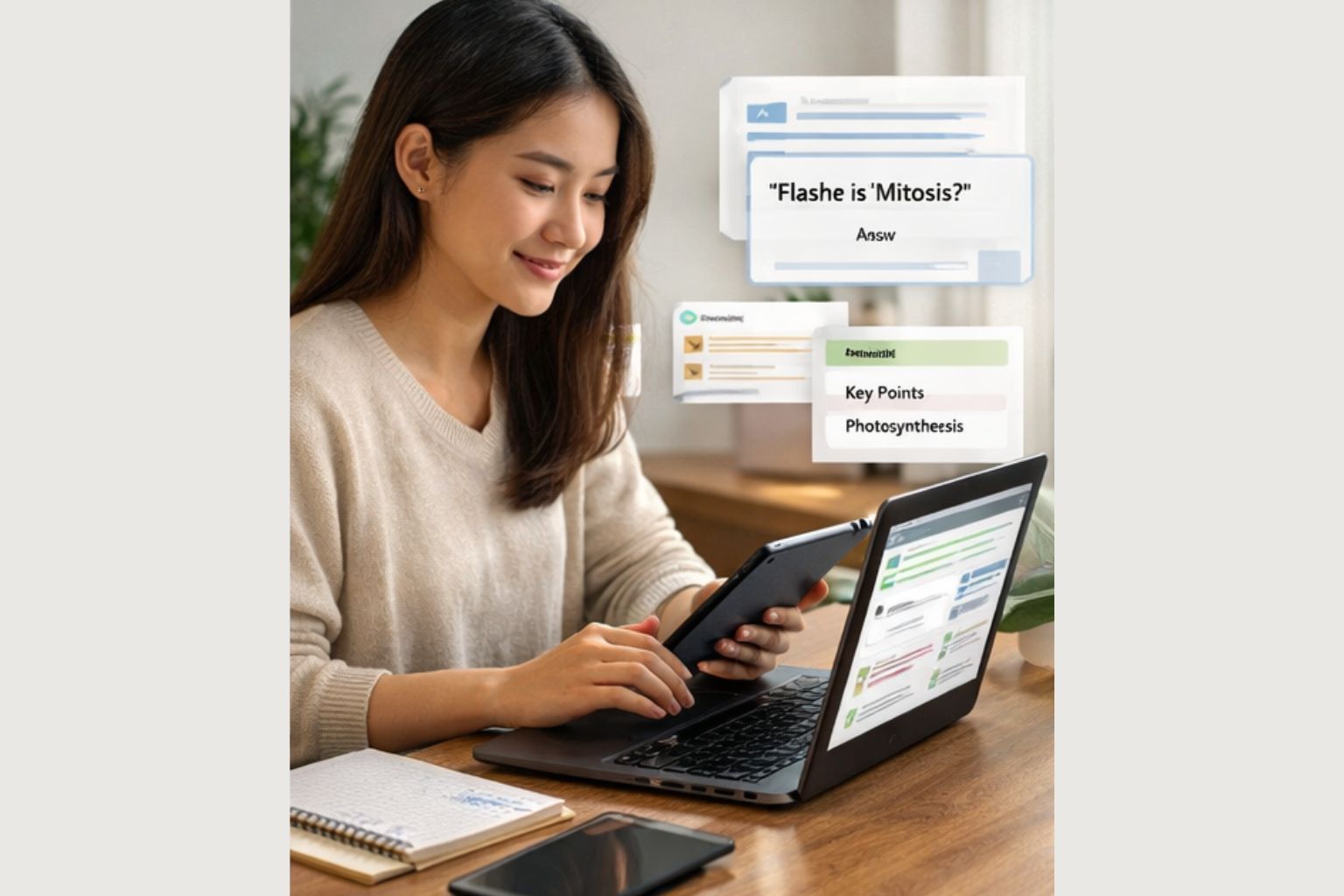
This is the part most people skip, and it matters. AI-generated flashcards are a starting point, not a finished product.
When I first started using generated cards, I'd just tap through them passively, almost like rereading notes in a different format. Same trap. The cards only help if you actually try to recall the answer before flipping.
What changed things for me: I started editing the generated cards. Sometimes the AI makes a card that's too vague or only tests surface-level recall. I rewrite those to ask about relationships between concepts or clinical applications instead. I also add my own cards for anything confusing from lectures that the generator might miss. And I broke the habit of reviewing everything in one long session. Shorter sessions spread across the week work better.
Here's the weekly rhythm I've settled into. Monday and Tuesday, I go through new material and generate flashcards. Wednesday through Friday, I do 15 to 20 minutes of Anki review each morning before class. Saturday, I run through a practice test on the week's topics. Sunday off.
## What actually changes your grades
I used to think the students who scored highest were just putting in more hours. Some are. But a lot of people I know who do well are actually studying less total time and spending it on retrieval and spacing instead of rereading.
None of these tools are going to pass your exams for you. What they do is cut the busywork out of study methods that research says actually work. Instead of spending three hours writing flashcards by hand, you generate them in minutes and spend your time actually reviewing. Anki handles when to show you each card again, and a simple timer keeps you honest during those sessions.
Try generating flashcards from your next lecture and reviewing them over three days instead of the night before. Once you feel the difference in what you actually remember, it's hard to go back to highlighting.



Comments 0
No comments yet. Be the first to start the conversation.