




Why future skills matter now
If you’re studying, job hunting, or already working, you can feel it: many tasks are changing faster than job titles. A role that looked stable five years ago may now involve new tools, new ways of working, and new expectations.
The World Economic Forum reports that about two-fifths (39%) of workers’ existing skills may change or become outdated during the 2025–2030 period (World Economic Forum, Future of Jobs Report 2025). That number is a warning sign, yet it’s not a reason to panic. It’s a reason to plan.
Here’s the shift in plain terms:
-
Some routine tasks take less time now
-
New tasks appear inside the same job
-
Quality control, communication, and good judgment matter more
So the goal is not to chase every tool. The goal is to build skills that stay useful even when tools change.
What “future skills” means in the age of AI
Future skills are the abilities that help you stay useful across jobs, industries, and workplaces. They combine two areas:
-
Digital comfort (working with modern tools and information)
-
Human strengths (thinking clearly, communicating well, acting responsibly)
A simple way to understand it is this: tools can speed up work, yet humans still carry the responsibility. Your skills decide whether the outcome is accurate, fair, and useful.
Skill 1: AI literacy for everyday work
AI literacy means understanding what AI tools can do, what they struggle with, and how to use them responsibly.
LinkedIn lists AI literacy among the fastest-growing skills across job functions (LinkedIn, Skills on the Rise in 2025). Microsoft’s Work Trend Index reports that 75% of global knowledge workers use AI at work (Microsoft, Work Trend Index 2024). That level of adoption means AI literacy is no longer limited to technical careers.
What AI literacy looks like in real life
AI literacy means you can:
-
use AI tools to draft and organize ideas
-
spot common errors like missing context or incorrect facts
-
decide what needs human review (grades, public information, official documents, sensitive topics)
A real workplace example
A college administration staff member prepares a notice for students. An AI tool can draft the structure fast. The staff member still needs to verify dates, eligibility, and official language. One wrong detail can create confusion for hundreds of students.
What to focus on first
Start with three practical habits:
-
write clear instructions when you use AI tools
-
check facts with reliable sources
-
rewrite outputs in your own words and tone
A safe routine for using AI tools
This keeps your work fast and trustworthy.
Draft → Check → Improve
-
Draft: use the tool for a first version
-
Check: verify facts, names, dates, and claims
-
Improve: rewrite for clarity, audience, and purpose
Skill 2: Critical thinking and verification
AI tools can produce confident answers. Confidence is not proof. Critical thinking helps you separate helpful content from risky content.
NACE lists Critical Thinking as a key career readiness competency (NACE, Competencies for a Career-Ready Workforce, 2024).
A simple three-step verification method
Use this for AI outputs, social media posts, and even human advice:
1) Source check
-
Is there a trustworthy source behind this claim?
-
Is it a primary source (official report, university, government)?
2) Logic check
-
Does the explanation make sense step by step?
-
Are major steps missing?
3) Context check
-
Does it fit your country, year, and real situation?
-
Does it ignore local rules, costs, language, or access issues?
This skill protects your reputation. It protects your readers too.
Skill 3: Problem framing and systems thinking
Many people rush into solving. Skilled professionals define the problem clearly first.
Problem framing means you can explain:
-
what is happening
-
who is affected
-
what outcome is needed
-
what limits exist (time, budget, rules, ethics)
Why this matters more now
AI tools give many possible answers. If your question is unclear, your result will be unclear too. Clear problem framing makes the output useful.
A student example
“Which course should I study?” is broad.
A stronger question is: “Which course matches my strengths, fits my budget, supports my long-term career goals, and has real job pathways?”
A clearer question leads to a clearer plan.
Skill 4: Communication that builds trust
Work still runs on clear communication: messages, reports, presentations, feedback, and teamwork.
NACE includes Communication among its core competencies, and employers continue to value written and verbal clarity (NACE, 2024). The NACE Job Outlook 2025 survey shows that employers often look for skills like problem-solving, teamwork, and written communication when reviewing candidates (NACE, Job Outlook 2025).
Strong communication is simple, not fancy
Good communication means:
-
your message is easy to understand
-
your point is clear
-
your next step is obvious
A quick structure for writing at work
Use this format for emails, reports, and messages:
-
What happened
-
What it means
-
What happens next
A practical Nepal example
A teacher reports exam attendance issues.
Weak message: “Attendance is low. Fix it.”
Clear message: “Attendance dropped in Grade 12 Section B today. Please confirm class timing and notify students by 5 PM.”
Short messages can still be complete.
Speaking skill that helps in every career
When you speak in meetings or interviews, focus on this:
-
one clear point
-
one short example
-
one next step
That’s easier to follow than long explanations.
Skill 5: Collaboration and teamwork across roles
Most work is team work: offices, schools, hospitals, media teams, startups, government units, NGOs, and remote projects.
NACE lists Teamwork as a major competency (NACE, 2024). Employers often look for teamwork skills in candidates (NACE, Job Outlook 2025).
Collaboration has changed
Many teams now include people with different skill levels:
-
one person understands tech tools
-
another understands customers
-
another handles operations
-
another supports quality and compliance
If you can work across these gaps, you become valuable in many settings.
A simple teamwork habit
When a mistake happens, ask:
-
“What part of the process allowed this mistake?”
This moves the team from blame to improvement.
Skill 6: Data literacy for daily decisions
Data literacy is the ability to understand numbers, trends, and basic evidence. You don’t need advanced math. You need comfort with facts.
The World Economic Forum highlights fast-growing demand for skills linked to AI and big data (World Economic Forum, Future of Jobs Report 2025). OECD research reports that many workers exposed to AI will not need specialized AI skills, yet their tasks and skill needs may change (OECD, How is AI changing the way workers perform their jobs and the skills they require?, 2024).
What data literacy looks like in real life
It means you can:
-
read a chart without guessing
-
compare two options using evidence
-
track progress over time
A simple practice for students
Track one thing for two weeks:
-
study hours
-
practice tests
-
distractions (phone time)
-
sleep hours
Then compare results. If marks improve with better sleep, that’s evidence you can act on.
This habit works in business too: track errors, delays, quality checks, or customer feedback.
Skill 7: Cybersecurity basics and privacy habits
Cybersecurity is not only for IT teams. Everyone uses accounts, devices, email, and shared files.
The World Economic Forum lists networks and cybersecurity as a fast-growing skill area (World Economic Forum, 2025). ISC2 reported a global cybersecurity workforce gap of 4,763,963 people in 2024 (ISC2, Cybersecurity Workforce Study 2024). That gap shows how common security pressure has become.
Simple cybersecurity habits that help immediately
Start with:
-
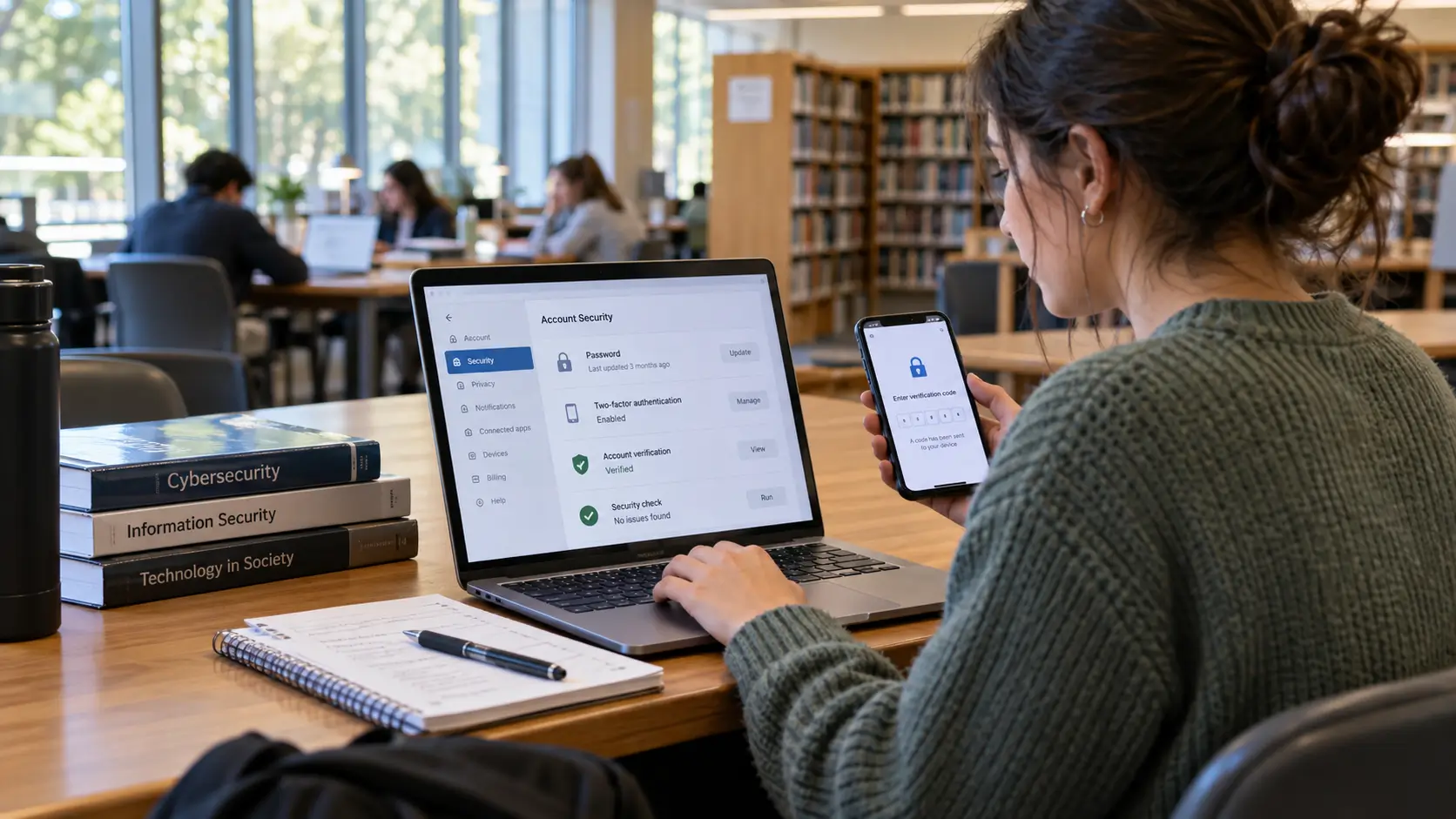
strong, unique passwords
-
two-factor authentication
-
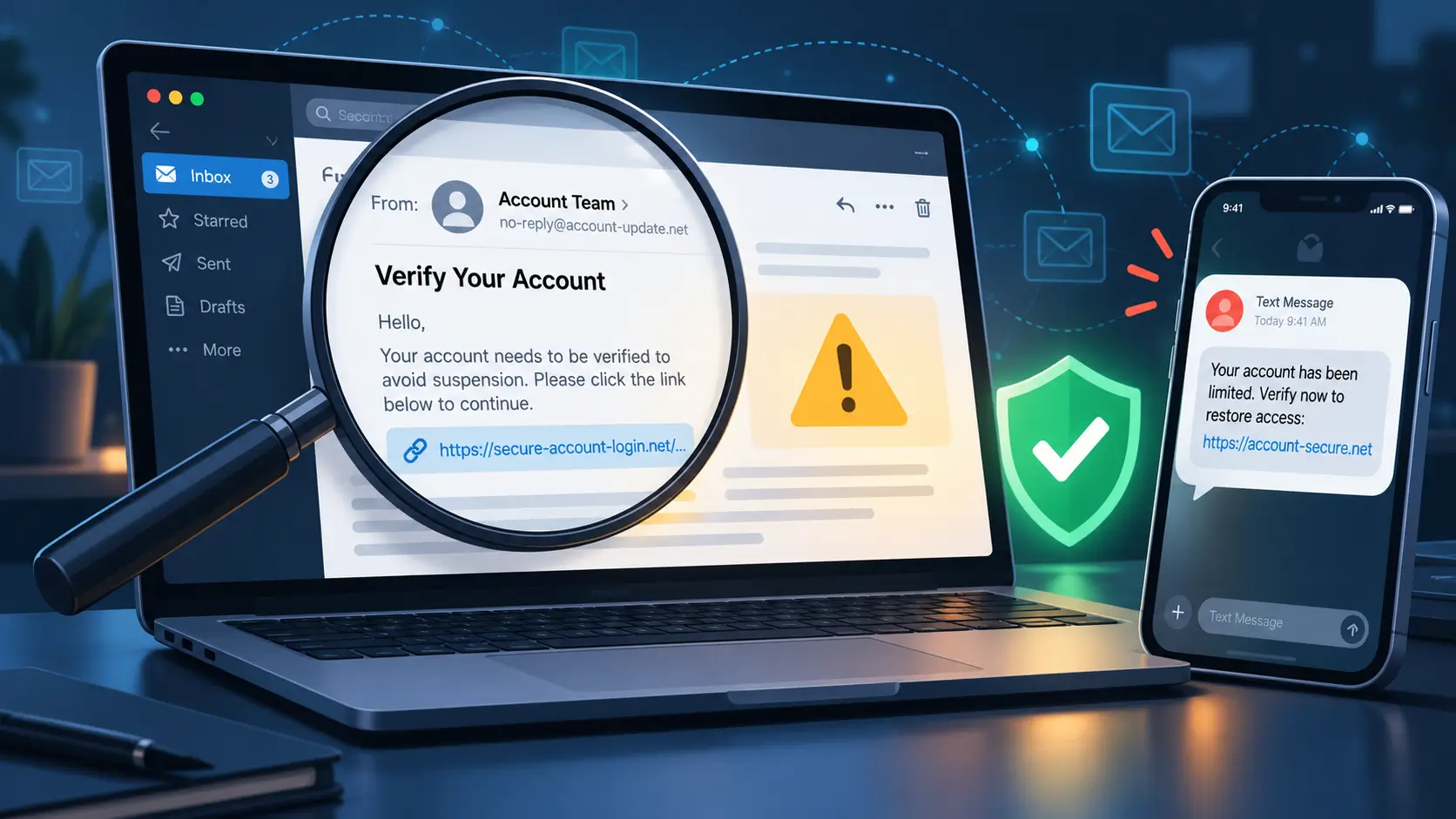
caution with unknown links and attachments
-
separating personal and work accounts when possible
A real risk example
A single phishing message can expose student records, client files, exam papers, or office data. Basic habits reduce avoidable harm.
Skill 8: Ethics, responsibility, and accountability
As AI tools become common, ethics becomes practical. It shows up in small choices every day: what you publish, what you share, and what you claim as your own.
UNESCO’s AI competency framework highlights ethics, human agency, and professional learning as core themes for education and responsible use (UNESCO, AI Competency Framework for Teachers).
Responsible use means simple rules
-
verify facts before sharing
-
avoid using private data carelessly
-
write in your own voice and words
-
admit limits when certainty is low
This is not about fear. It’s about trust.
Skill 9: Learning habits that last
Tools change. Learning habits keep your career stable.
The World Economic Forum highlights growing demand for curiosity and continuous learning (World Economic Forum, 2025). Learning stays valuable across roles: students, teachers, nurses, managers, writers, and technical workers.
A learning plan that fits real life
Many plans fail for one reason: they demand too much time. A realistic plan wins.
Try this weekly rhythm:
-
3 days learning (25–30 minutes)
-
2 days practice (25–30 minutes)
-
1 day review (15–20 minutes)
-
1 day rest
Progress comes from repeating the basics.
Skill 10: Work quality, judgment, and standards
As AI tools speed up drafting and formatting, human judgment matters more.
Stanford’s AI Index reports that a growing body of research links AI use with productivity gains and, in many cases, narrowing skill gaps (Stanford HAI, AI Index Report 2025). This points to a practical reality: tools can support work, yet quality still needs a human hand.
A simple quality checklist
Before you submit work, check:
-
accuracy (facts, names, dates)
-
clarity (simple words, short sentences)
-
usefulness (answers the real question)
-
originality (your own thinking and voice)
This habit improves your work across careers.
Building your personal skill stack
A smart plan is stacking skills that support each other. You don’t need all skills at once. You need the right mix for your stage.
For students
Focus on:
-
future skills in the age of AI (big picture)
-
AI literacy (safe use and limits)
-
communication skills
-
critical thinking skills
-
teamwork through small projects
For fresh graduates
Add:
-
problem framing
-
data literacy
-
interview communication
-
a portfolio of proof (projects, writing samples, internships)
For working adults
Add:
-
decision-making
-
process improvement
-
ethical judgment
-
mentoring and team communication
This approach fits both Nepal and global job markets, since the core expectations overlap across many workplaces.
A practical 30-day plan to build future skills
You can start small and still build real progress.
Days 1–7: AI literacy and verification
-
practice drafting and rewriting
-
verify three facts per day using reliable sources
-
build a habit of checking names, dates, and numbers
Days 8–14: problem framing and clearer thinking
-
write one problem statement each day
-
list two options
-
choose one and explain your reason in five lines
Days 15–21: communication and collaboration
-
rewrite one message daily to be clearer
-
practice a short explanation of your work
-
ask for feedback from a teacher, senior, or colleague
Days 22–30: data literacy and security habits
-
track one metric daily (study time, errors, output)
-
review weekly patterns
-
improve password and privacy habits
After 30 days, you’ll have visible improvement and proof of effort.
Common mistakes that slow skill growth
Many smart people get stuck in predictable ways:
-
collecting courses without practice
-
trusting outputs without verification
-
copying answers without understanding
-
avoiding writing practice
-
trying too many skills at once
-
skipping rest and consistency
The fix is simple: choose fewer skills, practice weekly, measure progress.
Conclusion
Future skills in the age of AI are not about chasing every new tool. They are about becoming someone who can learn steadily, think clearly, communicate well, work with others, protect trust, and use technology responsibly.
The World Economic Forum expects major changes in skill needs through 2030. LinkedIn and Microsoft show that AI tools are already part of daily work for many people. NACE research shows employers still value human strengths like teamwork, written communication, and problem-solving.
If you focus on AI literacy, critical thinking skills, communication skills, data literacy, cybersecurity basics, ethical judgment, and consistent learning habits, you’ll be better prepared for changes in work and study without losing your identity or standards.
FAQs
1) What are the most important future skills in the age of AI?
A strong mix includes AI literacy, critical thinking skills, communication skills, teamwork, data literacy, cybersecurity basics, ethical judgment, and learning habits that last (World Economic Forum, NACE, LinkedIn).
2) Do I need coding skills to stay relevant?
Coding helps in technical careers. Many roles still benefit more from AI literacy, verification habits, communication, and problem framing (OECD policy brief, Microsoft Work Trend Index).
3) How can students build future skills without spending a lot of money?
Use free learning resources, practice small weekly projects, improve writing clarity, and ask for feedback from teachers or seniors. Proof of skill matters more than expensive certificates.
4) What is a safe way to use AI tools for study or work?
Use AI tools for drafts and structure, then verify facts through reliable sources, and rewrite in your own words. Keep responsibility for accuracy and originality with the writer.
5) Why does cybersecurity matter for non-technical students?
Most students use online accounts, email, shared files, and digital payments. Basic security habits lower avoidable risk. The ISC2 workforce gap highlights how common security needs have become in many sectors.




Comments 0
No comments yet. Be the first to start the conversation.