



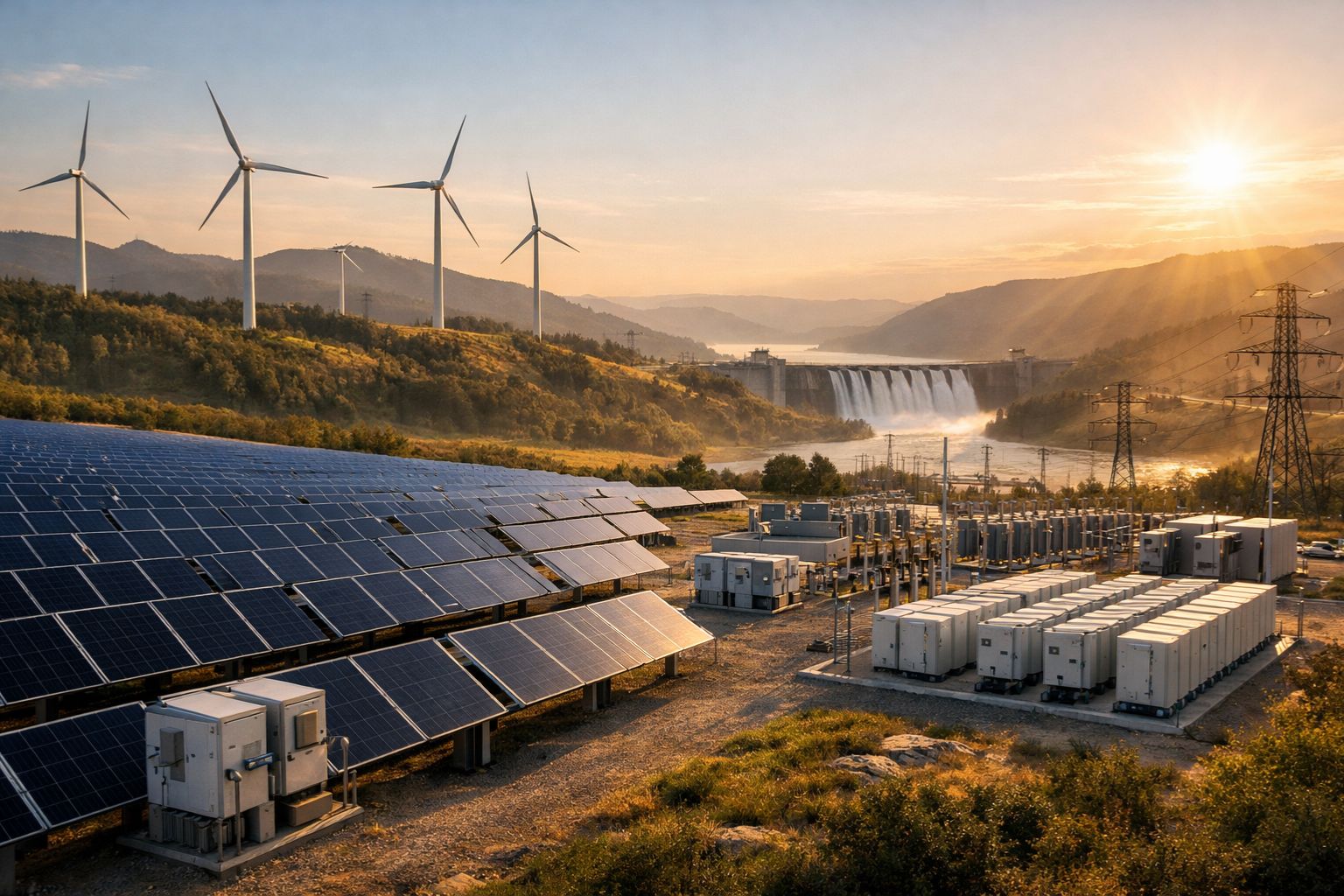
The Science of Renewable Energy Tech: Solar, Wind, and Beyond
Renewable energy sounds simple: use sunlight, wind, water, heat from Earth, and organic material to make power. The real story is tighter and more interesting. Each “renewable” resource arrives as a flow—photons, moving air, moving water, heat, chemical energy—then gets reshaped by physics and engineering into electricity that must match the grid’s rules every second.
That grid-level challenge matters because climate science points to a narrow window for sharp emissions cuts. The IPCC links human-caused greenhouse gas emissions to measured warming and frames deep, sustained reductions as central to limiting future risks. Renewable technologies are already scaling fast, and energy-system trackers note that solar PV is leading growth while other renewables need faster progress.
Let’s break down how the main technologies work, what sets their limits, and what pushes performance forward.
Table of Content
- The Science of Renewable Energy Tech: Solar, Wind, and Beyond
- Renewable energy tech is a chain of conversions
- Solar: turning light into electricity
- Wind: aerodynamics, torque, and control
- Beyond solar and wind: the rest of the renewable toolbox
- The missing piece: grids, inverters, storage, and flexibility
- Sustainability: materials, waste, and circular design
- Where innovation is heading
- Key takeaways
- FAQs
- Reference
Renewable energy tech is a chain of conversions
Every renewable power plant follows the same pattern:
-
Capture energy from a natural flow
-
Convert it into a controllable form (rotation, heat, DC electricity)
-
Condition it into grid-quality AC electricity (voltage, frequency, timing)
-
Deliver it when people need it (with forecasting, storage, flexible demand, and grid controls)
Steps 3 and 4 are where modern renewables have evolved the most. Solar panels and wind turbines are only part of the system. Power electronics, control software, forecasting, and storage now sit at the center of reliability.
Solar: turning light into electricity
Solar power comes in two main forms:
-
Photovoltaics (PV): convert light directly into electricity
-
Concentrating solar-thermal (CSP): use mirrors to make heat, then run a turbine
PV in one idea: the photovoltaic effect
A PV cell is a semiconductor device that converts sunlight into electrical energy. When photons hit the cell, they can free electrons, creating an electric current. You can think of the cell as a “one-way ramp” for charges: light knocks electrons loose, and the material’s internal electric field pushes them into a circuit.
PV cells are thin, engineered layers—DOE notes a PV cell can be thin, and that even small cells can produce usable power. Silicon is the dominant material in mainstream PV, mainly because it is stable, manufacturable, and well understood.
From cells to a solar power system
A single PV cell outputs a small voltage, so cells are wired into modules (panels), modules into strings, and strings into arrays. The raw output is direct current (DC). Homes and power grids use alternating current (AC), which is where the inverter enters.
DOE describes inverters as the device that converts a panel’s DC electricity into AC electricity usable by the grid. Modern inverters also do much more than conversion:
-
monitor performance
-
support safety functions
-
help the grid handle voltage and frequency events
-
coordinate with batteries in solar-plus-storage systems
This “power electronics layer” is a big reason solar farms today behave more like controllable power plants than passive generators.
PV scale is huge because sunlight is huge
DOE highlights how vast the solar resource is, noting that a small slice of sunlight reaching Earth contains an enormous amount of energy relative to human use. The constraint is not resource size—it is conversion efficiency, land and siting, materials supply chains, and grid integration.
CSP: solar heat with built-in thermal storage potential
CSP uses mirrors to concentrate sunlight to heat a working fluid and run a turbine. Many CSP designs can pair naturally with thermal storage (like molten salt), which can shift output into evening hours. CSP is more site-limited than PV, but it remains valuable as a “firming” tool where direct sunlight is strong and land is available.
Wind: aerodynamics, torque, and control
Wind turbines convert the kinetic energy of moving air into mechanical rotation, then into electricity. The key is lift—like an airplane wing. DOE explains that rotor blades create lift and drag from pressure differences, and the stronger lift force spins the rotor.
The power of wind rises fast with speed
Wind energy availability is highly sensitive to wind speed. Small changes in wind speed can mean large changes in output, which is why turbines are tall, why siting matters, and why forecasting is a core part of wind operations.
What’s inside a modern turbine
A utility-scale turbine is a controlled machine, not a free-spinning pinwheel. Core elements include:
-
rotor blades and hub
-
nacelle (houses drivetrain and controls)
-
generator (direct-drive or geared designs)
-
yaw system (turns the turbine to face wind direction)
-
pitch control (twists blades to manage lift and power)
Control systems keep turbines in a safe “operating envelope.” At low wind speeds, turbines may not produce much. At high wind speeds, they feather blades and can shut down to protect the structure.
Onshore vs offshore
Offshore wind often sees stronger, steadier winds, but it faces tougher engineering conditions: corrosion, waves, deep-water foundations, and more complex maintenance logistics. The physics is the same; the engineering and costs shift.
Limits and tradeoffs
DOE summarizes major wind advantages and challenges, including the fact that wind produces electricity without fuel combustion while also raising siting, permitting, and integration issues that vary by location. The best sites can produce lots of energy, but new transmission and community acceptance can become the bottleneck.
Beyond solar and wind: the rest of the renewable toolbox
A clean grid rarely runs on one technology. Different renewables complement each other through “resource diversity.”
Hydropower: energy from flowing water
Hydropower generates electricity by using a dam or diversion structure to alter river flow, converting the kinetic energy of water into rotation in a turbine, which spins a generator.
Hydro shines in flexibility:
-
fast ramping and grid support
-
long lifetimes for major assets
-
potential for pumped storage (water moved uphill when electricity is cheap, released downhill when electricity is valuable)
Pumped storage is also central in global storage discussions.
Geothermal: steady heat from Earth
Geothermal energy uses heat inside Earth for electricity and for direct heating and cooling.
Two big branches:
-
geothermal electricity generation: tap naturally hot reservoirs (or engineered ones) to run turbines
-
geothermal heat pumps: use the stable temperature of shallow ground for efficient heating and cooling
Enhanced geothermal systems (EGS) aim to expand geothermal potential by creating or opening pathways in hot rock, circulating fluid to bring heat to the surface for power generation.
Bioenergy: renewable carbon, with sustainability rules
Bioenergy comes from biomass—organic material from plants, residues, and wastes—converted into heat, electricity, or fuels.
Conversion routes include:
-
fermentation to make ethanol
-
anaerobic digestion to make biogas (renewable natural gas after treatment)
Energy system tracking highlights that modern bioenergy is a large share of renewable energy use globally, while also treating “traditional biomass” separately because it can involve inefficient burning and health harms. For climate benefits, bioenergy depends on feedstock sourcing, land impacts, and air pollution controls.
Marine energy: waves, tides, and currents
Marine and hydrokinetic technologies convert waves, tides, and ocean or river currents into electricity. The resource can be predictable in some settings (tides), but devices face harsh operating environments. Marine energy remains earlier-stage than wind or solar, yet it can fit niche roles for coastal and remote power needs.
The missing piece: grids, inverters, storage, and flexibility
Solar and wind are variable—output changes with weather and time of day. A reliable power system needs flexibility. That flexibility can come from several places:
1) Smarter inverters and grid services
As inverter-based generation grows, grids need inverters that can support stability functions once provided by large spinning generators. DOE describes how advanced inverters can help with “ride through” behavior, frequency response, reactive power, and even grid-forming functions that can support restoration after outages.
2) Grid-scale storage
The IEA describes grid-scale storage as a provider of services ranging from short-term balancing and operating reserves to deferring grid investments and supporting long-duration needs. It also notes pumped-storage hydropower is widely used, while batteries are highly scalable and growing fast.
3) Demand response
Demand response shifts or sheds electricity use during tight grid conditions, using incentives and pricing structures to balance supply and demand. This turns flexible demand into a grid asset, which pairs well with variable renewables.
4) Transmission and planning
Many of the best wind and solar resources sit far from cities. New transmission, upgraded distribution systems, and faster interconnection processes often decide the pace of renewable growth.
Sustainability: materials, waste, and circular design
Renewables reduce operational emissions, but they still use materials and create end-of-life challenges. Two high-profile issues are PV modules and wind turbine blades.
Solar PV end-of-life
Solar panels last a long time. DOE notes typical PV module lifetimes in the multi-decade range. That long life is good for energy payoff, but mass deployment also means a future wave of retired modules.
IRENA points to projections of large PV waste volumes by mid-century and the potential value in recovered materials if recycling systems scale. The engineering challenge is separation and purification at low cost, plus policies that make collection and recycling routine.
Wind blade recyclability
Many blades use thermoset resins that are hard to recycle. Research is pushing toward materials and methods that support reuse. NREL reports progress on recyclable blade approaches, including new resins that aim to keep performance while enabling recycling pathways.
The broader shift is “design for circularity”: choose materials and joints that can come apart, then build supply chains that can use recovered fibers, resins, glass, and metals.
Where innovation is heading
Renewable energy progress now looks like a systems upgrade, not a single breakthrough:
-
faster clean buildouts plus stronger grids
-
more storage and flexible demand on the grid
-
better power electronics and controls as inverters become grid-critical
-
cleaner fuels for hard-to-electrify sectors
Hydrogen is part of that last piece. Electrolysers use electricity to split water into hydrogen and oxygen, creating low-emissions hydrogen when powered by clean electricity. The IEA reports electrolyser capacity for dedicated hydrogen production has been rising from a low base, with installed capacity and manufacturing capacity both growing.
Some places will lean on geothermal and hydro for steady supply, some will build huge solar-plus-storage fleets, and some will add offshore wind. The “best” mix depends on local resources, land, economics, and grid limits.
Key takeaways
-
Solar and wind are capture devices plus a control layer (inverters, software, forecasting).
-
A reliable renewable grid needs flexibility: storage, demand response, and transmission.
-
“Beyond” technologies—hydro, geothermal, bioenergy, marine—fill gaps that solar and wind can’t cover everywhere.
-
End-of-life planning is part of scaling: PV recycling and blade recyclability are active engineering areas.
FAQs
How does a solar panel make electricity?
Sunlight excites electrons in a semiconductor PV cell, creating an electric current. The system uses an inverter to convert DC electricity from the panel into AC electricity used by homes and the grid.
Why do wind turbines need to face the wind?
Blades generate lift from airflow like wings. Aligning the rotor with wind direction increases lift and power output, which is why turbines use yaw control systems.
What makes renewables “variable,” and why does it matter?
Solar output changes with daylight and clouds; wind output changes with weather. Variability matters because electricity supply and demand must match at all times, which pushes the need for storage, flexible demand, and grid controls.
What renewable sources can provide steadier power?
Hydropower and geothermal can provide steadier output in many locations, depending on water availability and geothermal resources.
What happens to old solar panels?
Panels can last decades, then enter end-of-life pathways that include reuse, recycling, or disposal. Scaling recycling can recover valuable materials, and forecasts show large future PV waste volumes if systems are not built early.
Is green hydrogen part of renewable energy?
Hydrogen made via electrolysis can be low-emissions when the electricity comes from renewable or nuclear sources. Electrolyser deployment is growing, with major scale-up targets discussed in energy system tracking.
Reference
-
Intergovernmental Panel on Climate Change (IPCC), AR6 Synthesis Report resources: Summary for Policymakers headline statements (2023).
-
International Energy Agency (IEA), Renewables tracking overview (page updated with recent tracking details).
-
U.S. Department of Energy (DOE), Solar: PV cell and PV technology basics; Solar integration inverters and grid services basics.
-
U.S. Department of Energy (DOE), Wind: how wind turbines work; wind advantages and challenges.
-
International Energy Agency (IEA), Grid-scale storage tracking overview.
-
International Energy Agency (IEA), Demand response tracking overview.
-
International Renewable Energy Agency (IRENA), Solar PV waste and end-of-life projections article.
-
U.S. Department of Energy (DOE), End-of-life management for solar photovoltaics.
-
National Renewable Energy Laboratory (NREL), recyclable wind turbine blade research update.
-
U.S. Department of Energy (DOE), Hydropower basics: how hydropower works.
-
U.S. Department of Energy (DOE), Geothermal basics and enhanced geothermal systems.
-
U.S. Energy Information Administration (EIA), Biomass explained.
-
International Energy Agency (IEA), Bioenergy tracking overview.
-
U.S. Department of Energy (DOE), Marine energy role overview.
-
International Energy Agency (IEA), Electrolysers tracking overview.






Comments 0
No comments yet. Be the first to start the conversation.