



The National Academy of Medical Sciences (NAMS) is a public medical-sciences academy based at Bir Hospital in Mahaboudha, Kathmandu. Its institutional role brings together higher medical education, clinical training, nursing and allied health education, research, and health-service responsibilities.
NAMS grew from the long teaching and clinical history of Bir Hospital rather than from a newly created standalone medical campus. Bir Hospital was established in 1889 and later became an important site for training health workers, nurses, doctors, and postgraduate medical trainees. Postgraduate education through the Post Graduate Medical Education Coordination Committee (PGMECC) began in 1994, creating the academic foundation from which NAMS developed.
The Government of Nepal issued an ordinance in 2059 BS to develop Bir Hospital into the National Academy of Medical Sciences. The National Academy of Medical Sciences Act, 2063 later established its legal structure. The Act defines NAMS as an autonomous and organized institution established for higher study and research in medical sciences, production of skilled health human resources, and health-service development.
NAMS is a medical-sciences academy centered at Bir Hospital in Kathmandu. It developed from Bir Hospital's long history of medical service and clinical education and received its statutory basis through the National Academy of Medical Sciences Act, 2063. Its academic work covers postgraduate medical and dental education, super-specialty training, nursing and midwifery, allied health sciences, fellowships, research, and professional training. Bir Hospital remains central to its clinical and academic identity.
Institution: National Academy of Medical Sciences (NAMS)
Location: Bir Hospital, Mahaboudha, Kathmandu, Nepal
Institutional Development: Developed from Bir Hospital following a Government of Nepal ordinance in 2059 BS
Legal Framework: National Academy of Medical Sciences Act, 2063
Institution Type: Autonomous medical-sciences academy
Clinical Base: Bir Hospital
Bir Hospital Established: 1889 AD
Postgraduate Education Foundation: MD/MS education through the Post Graduate Medical Education Coordination Committee began in 1994
Academic Areas: Postgraduate medicine, surgery, dentistry, super-specialty education, nursing, midwifery, allied health sciences, fellowships, and professional training
Major Postgraduate Qualifications: MD, MS, and MDS
Super-Specialty Qualifications: DM and MCh
Other Academic Fields: Nursing, midwifery, medical imaging technology, optometry, medical electives, and clinical training
Core Functions: Higher medical education, clinical training, research, health human-resource development, and health-related academic activities
Academic Model: Hospital-based teaching combining formal education, supervised clinical practice, research, and assessment
Key Takeaways:
NAMS is based at Bir Hospital in Mahaboudha, Kathmandu.
Bir Hospital was established in 1889 and has a long history of clinical teaching.
Postgraduate MD/MS education through PGMECC began in 1994.
Bir Hospital was developed into NAMS following a government ordinance in 2059 BS.
The National Academy of Medical Sciences Act, 2063 provides the academy's statutory framework.
NAMS's academic role includes postgraduate medicine, surgery, dentistry, super-specialty education, nursing, midwifery, allied health sciences, research, and professional training.
Clinical education at NAMS is closely connected with hospital-based teaching and specialty services.
The National Academy of Medical Sciences is an autonomous medical-sciences institution created under Nepalese law to conduct higher-level education and research and contribute to the development of skilled health professionals and health services.
-Bir-Hospital.jpg)
The National Academy of Medical Sciences Act, 2063 states that the academy was established for higher study and research in medical sciences. The law also identifies the production of skilled human resources needed for quality health services as one of its functions. NAMS may maintain academic relationships with universities, hospitals, educational institutions, and health-related organizations for the development of its programs.
Its institutional character differs from that of a conventional university organized mainly around classroom-based faculties. NAMS developed within a major government hospital environment. Clinical service, patient care, postgraduate education, specialist training, research, and academic assessment are closely connected within its model.
This hospital-based structure is especially relevant to medical education because advanced clinical training depends on supervised exposure to patients, specialty departments, diagnostic services, operating environments, case discussions, research, and structured assessment.
NAMS is based at Bir Hospital in Mahaboudha, Kathmandu. The academy's connection with Bir Hospital reflects both institutional history and the development of postgraduate medical education in Nepal.
NAMS developed through several stages of medical education at Bir Hospital: early health-worker training, nursing education, university-linked clinical teaching, postgraduate medical education, and later the creation of a separate medical academy.
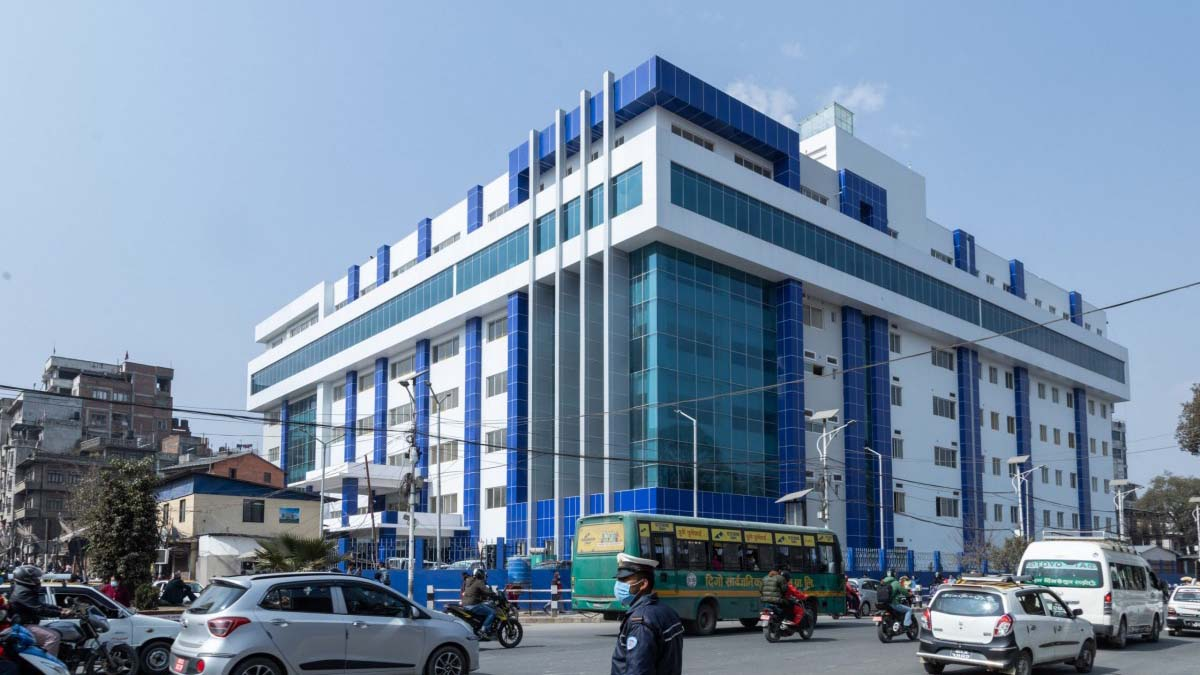
Bir Hospital was established in 1889 and is identified by its official institutional history as Nepal's oldest hospital. Its role soon extended beyond treatment to health-professional education.
The Civil Medical School was established at Bir Hospital in 1933. It trained personnel such as dressers and compounders at a time when Nepal had limited formal infrastructure for health-professional education. Nursing education later became another part of the hospital's teaching role.
Bir Hospital also contributed to university medical education. Its clinical environment was used for teaching as Nepal expanded formal medical training, connecting hospital service with the education of doctors and other health professionals.
The hospital's official history records the expansion of super-specialty medical services in 1979 and its role in postgraduate training associated with professional medical qualifications. These developments placed Bir Hospital within the early institutional history of specialist medical education in Nepal.
A major academic transition occurred in 1994 with the introduction of postgraduate medical education through the Post Graduate Medical Education Coordination Committee.
The PGMECC system involved Bir Hospital and other hospitals in Kathmandu Valley and provided a structured route to MD and MS education. NAMS's institutional history identifies this stage as an important predecessor of the academy.
This arrangement addressed a practical feature of postgraduate medical education: specialist training requires clinical departments, experienced faculty, patient exposure, diagnostic support, operating facilities, academic discussion, and supervised practice. A hospital network could provide clinical settings for disciplines that were not concentrated within a single institution.
The PGMECC period established a foundation for the later development of NAMS as a medical academy with its own academic and legal structure.
The Government of Nepal issued an ordinance in 2059 BS that developed Bir Hospital into the National Academy of Medical Sciences. NAMS and Bir Hospital institutional histories associate this development with 2002.
The legal structure was later formalized through the National Academy of Medical Sciences Act, 2063. The Nepal Law Commission records that the Act is deemed to have come into force from 23 Baishakh 2063.
These milestones are best treated separately. The institutional development of NAMS followed the 2059 BS ordinance, while the 2063 BS Act provided its statutory framework.
This distinction also resolves a common date problem in older institutional descriptions, where 2060 BS and 2002 AD are sometimes presented as equivalent dates. The official institutional history instead links the government ordinance to 2059 BS and the development of NAMS to 2002.
Bir Hospital is central to the identity and development of NAMS. The academy grew from Bir Hospital's clinical and teaching functions, and the hospital continues to represent the principal institutional setting associated with NAMS.
This connection works at several levels.
First, Bir Hospital supplied the historical base. Medical education and health-worker training at the hospital existed decades before NAMS was formed.
Second, the hospital provided the clinical setting needed for postgraduate education. Advanced medical education depends on real clinical practice under supervision. Bir Hospital's specialist departments, diagnostic services, surgical services, inpatient care, and teaching activities created an environment where postgraduate training could develop.
Third, Bir Hospital provided the organizational setting from which NAMS emerged. The government did not create the academy without an existing clinical institution; it developed Bir Hospital into NAMS after years of postgraduate teaching experience.
The relationship is also visible in NAMS's academic model. Residents receive education through clinical work, academic sessions, supervised practice, case-based learning, examinations, research, and rotations. Hospital-based education is therefore not an additional activity around the academy. It is part of how medical training is structured.
Bir Hospital's role should still be distinguished from NAMS itself. Bir Hospital is a healthcare institution, while NAMS is the academic institution responsible for medical-sciences education, research, academic structures, degrees, and related institutional functions under its governing law.
The National Academy of Medical Sciences Act defines NAMS around higher medical education, research, health human-resource development, and health services.
The preamble to the Act links the establishment of the academy with high-level study and research in medical sciences, production of skilled human resources, and provision of quality health services to the public.
The law gives NAMS functions that include:
conducting higher study and research in medical sciences;
producing skilled health human resources;
developing academic and health-related programs;
coordinating with universities, hospitals, and educational institutions;
establishing and strengthening relationships with health-related institutions;
organizing academic activities such as seminars and conferences; and
publishing health-related academic material.
These responsibilities show that NAMS was created for more than degree administration. Its statutory role combines education, research, institutional cooperation, professional development, and healthcare-related academic work.
The Act also allows NAMS to establish educational institutions for teaching different subjects. It specifically recognizes the nursing campus that was operating under the hospital when the Act came into effect as an educational institution of the academy.
NAMS's academic structure is built around several levels and forms of health-sciences education rather than a single degree.
Its established academic areas include postgraduate medical and dental education, super-specialty medical education, nursing and midwifery, medical imaging, optometry, fellowship education, medical electives, and professional training.
The academic model combines theoretical instruction with clinical teaching. Depending on the field, learning may include ward work, outpatient exposure, operating-room experience, diagnostic interpretation, seminars, case presentations, journal discussions, research work, thesis preparation, assessment, and rotations across clinical units.
This model is especially suited to postgraduate medicine because competence is developed through repeated supervised clinical practice as well as formal academic study.
Rather than treating all programs as identical, NAMS organizes teaching according to the needs of each discipline. Medical, surgical, dental, nursing, imaging, optometry, and super-specialty programs require different clinical environments and academic methods.
MD, MS, and MDS programs form a major part of NAMS's postgraduate medical and dental education.
Doctor of Medicine programs cover medical and diagnostic specialties. Master of Surgery programs cover surgical disciplines, while Master of Dental Surgery programs provide postgraduate dental education. NAMS identifies these programs as residency education, reflecting their combination of formal academic study with supervised clinical practice.
The academy's MD disciplines have included fields such as internal medicine, anaesthesiology, dermatology, family medicine/general practice, obstetrics and gynaecology, ophthalmology, pathology, paediatrics, psychiatry, radiodiagnosis, and radiotherapy. Its surgical postgraduate education has included general surgery, otorhinolaryngology and head-and-neck surgery, and orthopaedics and trauma surgery. Dental postgraduate education has also formed part of the residency structure.
The academic significance of residency training lies in its integration of knowledge and clinical responsibility. Residents do not learn through lectures alone. Their education is linked with clinical departments, patient assessment, diagnostic reasoning, supervised procedures, case management, academic presentation, assessment, and research.
NAMS developed this model from the postgraduate teaching experience that began under PGMECC in 1994. The creation of the academy placed postgraduate medical education within a dedicated national medical-sciences institution.
Super-specialty education extends postgraduate training into narrower areas of advanced medicine and surgery.
NAMS conducts Doctorate of Medicine (DM) and Master of Chirurgiae (MCh) education in advanced clinical disciplines. Its academic structure has included DM fields within medicine and MCh fields within surgery, including areas such as gastroenterology, neurology, medical oncology, endocrinology, hepatology, neurosurgery, urology, gastrointestinal surgery, and cardiovascular surgery.
These programs represent a level of training beyond broad postgraduate specialization. A doctor entering a super-specialty pathway builds on prior postgraduate medical or surgical education and develops deeper clinical competence within a defined specialty.
The hospital-based character of NAMS is significant at this level. Advanced specialty education depends on appropriate patient cases, specialist faculty, diagnostic and procedural resources, structured academic work, and clinical supervision.
Super-specialty education also reflects the wider development of Bir Hospital from a general hospital into an institution associated with specialist and advanced medical services. Bir Hospital's institutional history records the expansion of super-specialty medical services before NAMS was established, providing part of the clinical background for later advanced academic programs.
Nursing education associated with Bir Hospital predates the creation of NAMS and forms an important part of the academy's educational history.
Bir Hospital Nursing Campus traces its establishment to 1956 in Mahaboudha, Kathmandu. Before becoming part of NAMS, the nursing institution operated within earlier government and university-linked arrangements. After NAMS was established, the nursing campus became part of the academy's academic structure.
The National Academy of Medical Sciences Act gives this relationship a legal basis. Section 15 recognizes the nursing campus operating under the hospital at the time the Act came into force as an educational institution established under NAMS.
Over time, nursing education within the academy developed across certificate, post-basic, bachelor's, master's, and specialized nursing pathways. Midwifery education also became part of the campus's academic scope.
The nursing campus follows the same broad clinical-education principle seen elsewhere in NAMS: classroom learning is connected with hospital practice, community exposure, clinical placements, research, and professional development.
Its educational role also illustrates an important aspect of NAMS as an institution. Although postgraduate medical education is a major part of its identity, the academy is not limited to doctors. Nursing, midwifery, and other health-sciences programs form part of its wider human-resource development mandate.
NAMS also supports academic work in allied health sciences and professional clinical training.
Its academic structure has included medical imaging technology and optometry alongside nursing, medical, surgical, dental, and super-specialty programs. The institution also provides fellowship education, medical electives, and short professional training programs.
Allied health sciences occupy an important place in modern clinical systems. Medical imaging professionals, optometry professionals, nurses, midwives, laboratory personnel, and other clinical workers contribute to diagnosis, treatment, patient monitoring, rehabilitation, prevention, and continuity of care.
Including these disciplines within a medical academy creates opportunities for education to occur in the same clinical environment where different health professions work together.
Professional short courses serve a different purpose from degree programs. They focus on defined areas of clinical or academic competence rather than a full academic qualification. NAMS academic materials have included training in research methodology, medical education, cardiac life support, basic surgical skills, trauma-related clinical skills, and palliative care within its broader teaching activities.
Such training supports the practical and academic components of medical education without replacing formal residency or degree requirements.
Clinical training at NAMS is based on supervised learning within hospitals and specialty departments.
Bir Hospital provides the central clinical setting, while NAMS has also used other hospitals and specialist institutions for program-specific training. This approach developed from the earlier PGMECC model, in which several hospitals participated in postgraduate education.
The reason for using more than one clinical setting is educational rather than administrative. A single hospital may not provide the same volume or variety of cases across every specialty. Paediatrics, obstetrics, ophthalmology, cardiovascular care, mental health, cancer care, trauma, and other fields require different patient populations, services, equipment, and specialist teams.
Program-specific clinical placements allow trainees to gain experience in environments relevant to their discipline.
The nursing campus follows a similar model. Its academic information describes clinical placements across hospital and community settings, linking classroom study with patient care, specialty services, public health, and field experience.
Clinical education also involves more than physical attendance at a hospital. Postgraduate learning commonly includes supervised patient assessment, case presentation, clinical discussion, departmental teaching, research work, logbooks or other academic records, and formal assessment.
This structure helps explain why Bir Hospital's service role and NAMS's academic role remain closely connected.
Research is part of NAMS's legal and academic purpose.
The National Academy of Medical Sciences Act identifies higher study and research in medical sciences as a central reason for establishing the academy. Research is therefore connected with the institution's statutory identity rather than treated solely as an optional activity.
Within postgraduate education, research helps residents learn how to formulate clinical questions, examine evidence, collect and interpret data, prepare academic work, and communicate findings.
NAMS academic structures also connect research with curriculum development and academic oversight. The Academic Council is responsible for educational, academic, and research-related operations, while subject committees contribute to curriculum planning and revision within individual disciplines.
Research activity is especially relevant in a large clinical institution because routine patient care produces questions about diagnosis, treatment, health systems, disease patterns, service delivery, and clinical outcomes. Structured research allows those questions to be examined using academic methods.
For students and residents, research training also supports critical reading of medical literature and evidence-based clinical reasoning.
NAMS operates through statutory academic and administrative bodies rather than through hospital administration alone.
The National Academy of Medical Sciences Act provides the academy with an institutional structure for policy, academic management, executive administration, educational institutions, and related functions. The Academy Assembly has responsibilities that include approving policies, plans, programs, rules, and budgets and awarding academic qualifications based on recommendations from the Academic Council.
The Academic Council oversees academic and research functions. NAMS describes it as the body responsible for educational, academic, and research operations, including academic levels, degrees, and awards.
Subject committees operate closer to individual academic disciplines. Their role includes planning academic activities, reviewing curricula, and coordinating subject-level academic work.
This division of responsibilities matters because a medical academy must manage several different functions at once: curriculum, examinations, faculty responsibilities, clinical teaching, research, institutional policy, academic standards, and degree administration.
The legal separation between these functions also distinguishes NAMS as an academic institution from Bir Hospital as a healthcare delivery institution, even though the two are closely connected.
Bir Hospital's importance to Nepalese medical education comes from the combination of its age, early training activities, clinical teaching history, and role in the development of postgraduate education.
Established in 1889, the hospital became a site for health-worker training well before Nepal had a large network of medical schools. The Civil Medical School opened there in 1933, followed by nursing education and wider clinical teaching.
Bir Hospital also contributed to university-linked clinical teaching and postgraduate education. The establishment of PGMECC postgraduate training in 1994 created a more structured pathway for MD and MS education within Bir Hospital and participating hospitals.
The creation of NAMS built on this accumulated institutional experience.
For that reason, Bir Hospital's significance is not limited to being the physical location associated with NAMS. It represents the clinical base from which a substantial part of Nepal's hospital-based medical education developed.
Its history also shows how medical education in Nepal evolved through stages: training auxiliary health personnel, educating nurses, supporting undergraduate clinical teaching, developing postgraduate residency, and establishing an autonomous academy for higher medical sciences.
The National Academy of Medical Sciences grew from the clinical and educational history of Bir Hospital and developed into a statutory institution for higher medical education, research, health human-resource development, and related health services.
Bir Hospital was established in 1889 and became an early center for health-worker training, nursing education, clinical teaching, and postgraduate medical education. The introduction of MD/MS education through PGMECC in 1994 provided an important academic foundation. Bir Hospital was later developed into NAMS following a government ordinance in 2059 BS, and the National Academy of Medical Sciences Act, 2063 established the academy's legal framework.
NAMS's academic identity extends across postgraduate medicine and surgery, dentistry, super-specialty training, nursing, midwifery, allied health sciences, fellowships, research, and professional education. Its hospital-based model connects formal academic study with clinical practice and specialty training.
The relationship between NAMS and Bir Hospital remains the defining feature of the institution's history: Bir Hospital provides the clinical heritage and teaching environment from which the academy developed, while NAMS supplies the academic, research, and statutory framework for higher medical-sciences education.
Readers seeking broader background on Nepal's medical-education system can refer to Collegenp's CEE in Nepal medical entrance exam guide and its resource on nursing courses in Nepal. These internal resources are listed in Collegenp's active internal-link index.
The National Academy of Medical Sciences is an autonomous medical-sciences institution in Nepal established for higher medical education, research, development of skilled health human resources, and health-related academic activities. It is based at Bir Hospital in Mahaboudha, Kathmandu.
The Government of Nepal issued an ordinance in 2059 BS to develop Bir Hospital into the National Academy of Medical Sciences, and NAMS's institutional history associates its development with 2002. The National Academy of Medical Sciences Act, 2063 later provided the statutory framework for the academy.
NAMS developed from Bir Hospital's long clinical and medical-education history. Bir Hospital serves as the principal institutional and clinical setting associated with the academy, while NAMS functions as the academic institution responsible for higher medical-sciences education, research, and related academic responsibilities.
NAMS's academic work includes postgraduate medical and surgical education, postgraduate dental education, DM/MCh super-specialty training, nursing and midwifery, medical imaging technology, optometry, fellowships, medical electives, research, and professional training.
Yes. Bir Hospital Nursing Campus is part of NAMS. The nursing institution traces its history to 1956, and the National Academy of Medical Sciences Act recognizes the nursing campus operating under the hospital as an educational institution of the academy.
