



Nilai University is a private higher-education institution in Putra Nilai, Negeri Sembilan, Malaysia. It operates under Nilai Education Sdn Bhd, Company Registration No. 307215-P, and uses the institutional registration identifier DU032(N). The Malaysian Qualifications Register records the institution as “Nilai University (Previously Known As: Nilai University College)” at No. 1, Persiaran Universiti, Putra Nilai, 71800 Nilai, Negeri Sembilan.
The university developed from Nilai College through university-college status to its present university identity. Its academic activity covers foundation study, diploma and advanced diploma qualifications, bachelor’s degrees, postgraduate study, selected Open and Distance Learning programmes, and micro-credentials. Subject areas represented across the institution include business, computing and data science, education, healthcare, nursing, biotechnology, aviation engineering, hospitality and tourism.
For students assessing Nilai University, institutional status and programme recognition need to be considered separately. Malaysian accreditation is recorded for individual qualifications in the Malaysian Qualifications Register rather than applied automatically to every programme associated with a university.
| Field | Details |
|---|---|
| Institution Type: | Private higher-education institution |
| Location: | Putra Nilai, Negeri Sembilan, Malaysia |
| Registered Address: | No. 1, Persiaran Universiti, Putra Nilai, 71800 Nilai, Negeri Sembilan |
| Operating Entity: | Nilai Education Sdn Bhd |
| Institutional Identifier: | DU032(N) |
| Former Name: | Nilai University College |
| University Status: | Nilai University name effective from 9 May 2012 in the Malaysian Qualifications Register |
| Campus: | Approximately 105 acres in Putra Nilai, about 50 kilometres south of Kuala Lumpur |
| Academic Levels: | Foundation, diploma, advanced diploma, bachelor’s, master’s and doctoral study |
| Major Academic Areas: | Business, education and humanities, computing and data science, healthcare, nursing, aviation engineering, hospitality and tourism |
| Study Modes: | Conventional campus-based study with selected Open and Distance Learning programmes |
| Academic Structure: | Six faculties plus the Centre for Foundation Studies |
| Accreditation: | Individual qualifications are recorded and accredited programme by programme through the Malaysian Qualifications Agency and Malaysian Qualifications Register |
| Professional Recognition: | Certain regulated programmes involve professional bodies such as the Board of Engineers Malaysia and Nursing Board Malaysia |
| Academic Resources: | Learning Resource Centre, teaching laboratories and specialist programme facilities |
| Student Facilities: | On-campus accommodation, sports and recreation facilities, campus transportation and career-information services |
| International Study: | International applicants follow Malaysia’s student-pass process through Education Malaysia Global Services in addition to university admission requirements |
Nilai University is registered as a private higher-education institution in Malaysia. Its principal address in the Malaysian Qualifications Register is No. 1, Persiaran Universiti, Putra Nilai, 71800 Nilai, Negeri Sembilan, Malaysia. The institutional register reviewed for the university identifies this Putra Nilai location and does not show a second Malaysian campus address.
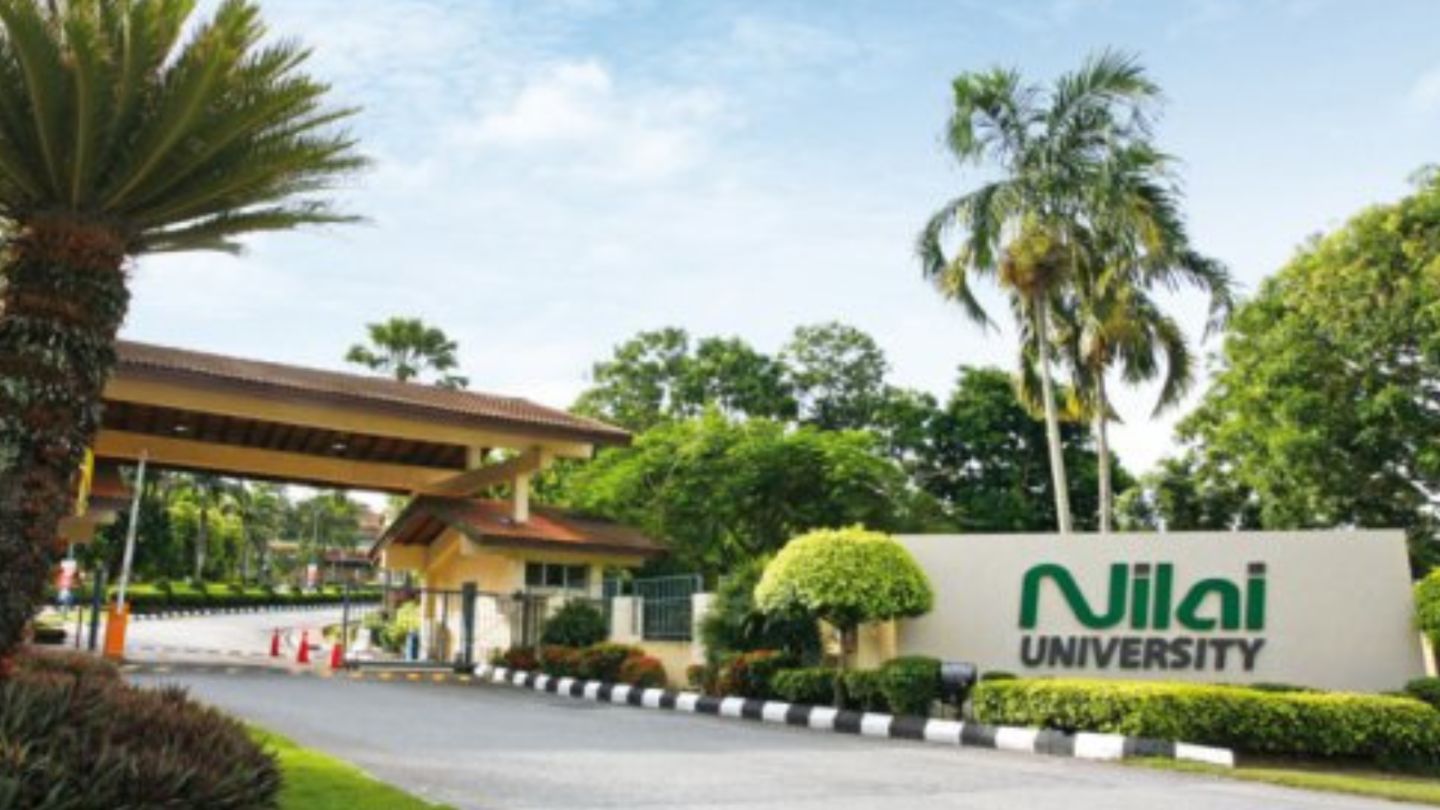
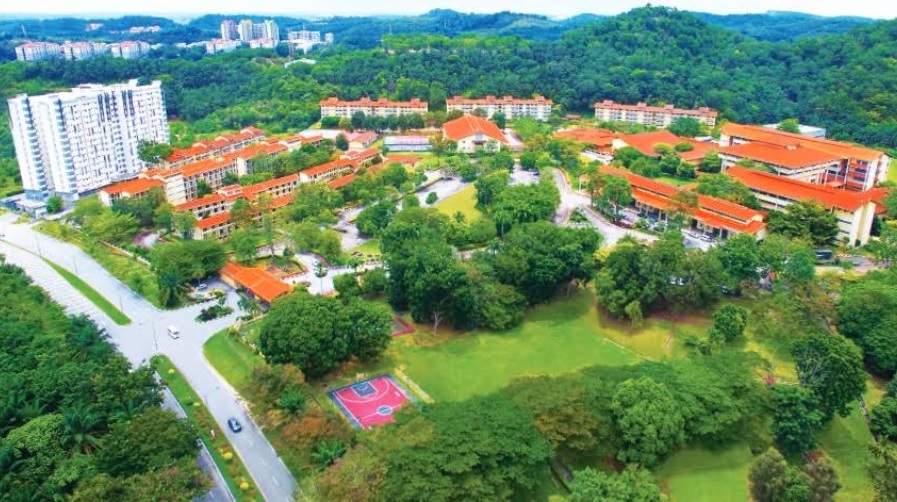
The Putra Nilai campus is approximately 105 acres and is situated about 50 kilometres south of Kuala Lumpur. Academic buildings, laboratories, residential accommodation, a Learning Resource Centre, recreation facilities and campus transportation are located within the university site.
The university is operated by Nilai Education Sdn Bhd. Its company registration number and DU032(N) institutional identifier are useful administrative markers because the institution has operated under different names during its history and has also participated in collaborative academic arrangements.
The modern university should therefore be distinguished both from its former institutional names and from external partner institutions that appear in older programme records. Historical collaborative qualifications do not establish the structure or awarding arrangements of programmes offered under the current Nilai University name.
Nilai University’s early chronology cannot be reduced to one uncontested founding year. The institutional history records groundwork for the Putra Nilai institution beginning in 1996. One university overview uses 1997 as the founding year, while the 2026–2027 Student Handbook and other institutional material use 1998 as the establishment or inception year.
A firmer point in the chronology is the opening of Nilai College in 1998. Its early academic provision included locally developed diplomas in business, information technology, engineering and hospitality together with 3+0 foreign-degree arrangements. The university’s historical timeline also records the admission of its first international-student cohort in 1999.
The institution later moved to university-college status. The university’s own historical material is inconsistent on the exact year of that intermediate change, referring separately to 2007 and 2008. Because those records do not agree, assigning a single year to the university-college transition would give greater certainty than the evidence supports.
The transition to the present institutional identity is better documented. The Malaysian Qualifications Register records Nilai University College as the former higher-education-provider name and Nilai University as the new name effective 9 May 2012. Nilai’s institutional chronology also places its move to full university status in 2012.
This sequence matters for historical qualifications. Academic records issued in earlier periods may legitimately carry the names Nilai College or Nilai University College rather than Nilai University. The institutional name on an older qualification should therefore be read in relation to the date on which it was awarded.
Nilai’s history also explains the presence of older franchise, transfer and collaborative qualifications in the Malaysian Qualifications Register. Those entries form part of the institution’s academic record, but they do not demonstrate that the same arrangements remain open or that an overseas partner awards present-day Nilai University qualifications.
Nilai University has a governance structure that includes a Board of Directors alongside university offices such as the Chancellor, Vice Chancellor, deputy vice chancellors and Registrar. Academic administration is distributed across faculties, the Centre for Foundation Studies, departments and designated academic leadership roles.
The academic organisation includes:
Faculty of Business
Faculty of Education and Humanities
Faculty of Robotics and Data Sciences
Faculty of Intelligent Healthcare Technologies
Faculty of Aviation Engineering
Faculty of Hospitality & Tourism Management
Centre for Foundation Studies
Departmental responsibilities represented within the university include Research and Innovation, Management and Marketing, Business Graduate Studies, Education, Computing and Data Science, Nursing, Aircraft Maintenance and Flight Simulation, Hospitality and Tourism, and Foundation Studies and English Language.
This structure shows that Nilai University is organised across several distinct academic areas rather than around one professional field. Business and management sit alongside computing, education, healthcare, aviation and hospitality, while foundation and English-language study support preparatory routes into higher education.
The distinction between faculty and departmental naming is important because the university’s organisational labels have changed over time. Older brochures and archived programme material may use names that no longer match the later faculty structure.
Nilai University’s academic provision extends across pre-degree, undergraduate and postgraduate levels. Its programme catalogue includes foundation programmes, diplomas and advanced diplomas, bachelor’s degrees, master’s and doctoral study, selected Open and Distance Learning programmes, and micro-credentials.
Foundation study includes business and science pathways. The university also provides an Intensive English Programme through its preparatory provision.
At undergraduate level, academic areas include business administration, finance, accounting, logistics, digital marketing, business analytics, computer science, information technology, software engineering, cybersecurity, data science, biotechnology, nursing, hospitality management and aviation-related study.
The purpose of these subject examples is to describe the breadth of the institution rather than reproduce its programme catalogue. Programme titles, availability, duration, delivery method and accreditation need to be considered individually.
Postgraduate study includes business and management, education, information technology, applied sciences and research degrees. The Malaysian Qualifications Register also contains doctoral-level records associated with Nilai University, including the Doctor of Business Administration, while the postgraduate catalogue includes doctoral provision in management and education.
Malaysia classifies recognised qualifications through the Malaysian Qualifications Framework. Within Nilai University records reviewed for this profile, diploma qualifications can appear at MQF Level 4, bachelor’s degrees at MQF Level 6 and master’s degrees at MQF Level 7. Doctoral qualifications occupy MQF Level 8.
An MQF level identifies the academic level of a qualification. It does not establish that every programme at the same level has identical accreditation, professional recognition or delivery arrangements.
Nilai University combines conventional campus-based study with selected Open and Distance Learning, or ODL, provision.
ODL is restricted to particular programmes rather than functioning as a university-wide delivery method. Programmes identified within the university’s ODL provision include nursing, business administration, software engineering and international business.
Other programmes remain conventional. The Malaysian Qualifications Register record for the Master of Information Technology, for example, identifies conventional delivery and records both full-time and part-time study.
This distinction is important for applicants comparing programmes within the same university. Two qualifications may be offered by Nilai University at similar academic levels while differing substantially in delivery mode, attendance expectations and programme structure.
The university’s academic calendar also demonstrates that one intake pattern cannot be applied to every programme. General undergraduate, ODL, nursing, postgraduate and micro-credential provision can follow different academic schedules. Programme-specific information is therefore more reliable than treating the institution as operating one uniform academic cycle.
Nilai University operates within Malaysia’s national higher-education quality-assurance system. The Malaysian Qualifications Agency, commonly known as MQA, maintains the Malaysian Qualifications Register, or MQR.
The MQR is the principal national source for checking the accreditation record of a Nilai University qualification. Accreditation is attached to specific programmes rather than functioning as a single institutional label that automatically applies to every course.
An accreditation check should match the exact qualification title and MQA reference number. The individual record can contain the MQF level, credit value, study mode, accreditation dates, professional-body information and remarks relating to the qualification.
The MQR institution page for Nilai University contains both current and historical qualifications. Some older entries record franchise, collaboration or transfer arrangements, and some professional qualifications carry defined accreditation periods. The appearance of a programme in a search result must therefore be read together with the dates and remarks attached to that exact record.
The Bachelor of Business Administration (Hons) in Finance, reference A9107, illustrates the structure of a continuing programme record. It is listed at MQF Level 6 with 120 credits and full-time study. The MQR also records that Full Accreditation was maintained following an Accreditation Committee decision in December 2023. The same record contains the formal note that the institutional name changed from Nilai University College to Nilai University effective 9 May 2012.
The Master of Information Technology, reference MQA/FA15051, provides another example. Its record places the qualification at MQF Level 7 and identifies conventional delivery with both full-time and part-time modes.
These examples establish the status of the named qualifications only. They should not be extended to programmes that have not been checked individually.
Professional recognition requires particular care in fields such as nursing, engineering and aviation-related study.
The Malaysian Qualifications Register identifies the Board of Engineers Malaysia in the record for the Diploma in Aircraft Maintenance Engineering. Nursing qualification records identify the Nursing Board Malaysia as the relevant professional body.
Professional-body information can include accreditation periods that differ from the treatment of other academic qualifications. A student considering a regulated profession should therefore read the professional-body field and any validity dates attached to the exact programme.
Malaysian accreditation also does not create automatic professional recognition in another country. Acceptance for professional registration, public-sector equivalence, immigration purposes, further study or credit transfer is determined by the authority, employer, professional council or institution making that decision.
This distinction is especially important for international applicants. MQA/MQR accreditation establishes Malaysian qualification status, while professional or academic recognition elsewhere remains subject to the rules of the destination jurisdiction.
Current qualification records cited in the Malaysian Qualifications Register name Nilai University as the higher-education institution. This distinguishes current university qualifications from earlier records involving franchise, transfer or collaborative arrangements with external institutions.
The presence of historical partner qualifications in the register should not be used to infer that a foreign university remains the awarding institution for current Nilai programmes. Each qualification needs to be read according to the institution, title and remarks recorded for that specific award.
For global readers, this is a more useful way to understand degree status than relying on broad phrases such as “internationally recognised.” Recognition is not a single worldwide designation. It depends on the qualification, its Malaysian accreditation record and the requirements of the organisation evaluating it.
Teaching methods vary across Nilai University according to discipline and programme design.
The Bachelor of Science (Hons) in Nursing provides a documented example of an applied programme. Its teaching includes lectures, laboratory classes and practical sessions undertaken in public and private healthcare institutions.
The Bachelor of Commerce (Honours) (International Business) offered through ODL includes an internship within its published module structure.
These examples demonstrate that practical activity is present in specific programmes, but they do not support a claim that every Nilai University qualification follows the same teaching model.
Laboratory-intensive healthcare study, computing, aviation-related training, business education and distance learning involve different academic requirements. Programme-level curriculum information is therefore more meaningful than assigning one teaching description to the university as a whole.
Research is represented within Nilai University through its Research and Innovation function and its postgraduate academic provision.
Research-oriented study appears in education, management, applied sciences and related postgraduate areas. Master’s and doctoral programmes provide routes for work based on supervised research as well as postgraduate coursework, depending on the qualification.
A Faculty of Education and Humanities postgraduate research colloquium held in February 2026 provides a documented example of formal research review within that faculty. The event involved students from doctoral and master’s education programmes and included stages associated with prospectus work, proposal defence and pre-viva preparation.
That evidence confirms organised postgraduate research activity within a defined part of the university. It does not establish an institution-wide publication rate, citation performance, research-income level or comparative research standing.
No broad research-performance claim is necessary to describe Nilai University accurately. The clearer institutional fact is that research responsibilities exist within the academic organisation and that research-oriented postgraduate study forms part of the university’s provision.
The Putra Nilai campus contains teaching spaces and laboratories serving different academic areas.
A central Learning Resource Centre provides physical and online learning resources. Its role extends across the institution rather than being tied to a single faculty.
The university also has facilities associated with specialist academic areas. Its organisational structure includes aircraft maintenance and flight simulation responsibilities, while nursing education uses laboratory teaching and clinical practical sessions outside the campus at healthcare institutions.
These facilities should be understood in relation to the programmes that use them. The presence of a specialist resource does not imply that every student has the same access requirements or academic use.
Sports and recreation facilities on the campus include an indoor sports complex, outdoor game courts and an Olympic-sized swimming pool. A campus transportation service is also part of the Putra Nilai facilities.
Nilai University provides residential accommodation within the Putra Nilai campus.
Accommodation is organised in single, twin-sharing and quadruple room formats. Standard room provisions include beds, wardrobes, air conditioning, study furniture and bookshelves. Single and twin-sharing categories include private shower facilities.
Shared residential amenities include Wi-Fi, drinking-water facilities, washing and drying facilities, security services, a cafeteria, student lounge and vending machines. Residents also have access to the campus recreation facilities.
The integration of accommodation with the main university site is particularly relevant to students relocating to Negeri Sembilan and to international students completing their studies in Malaysia. Accommodation arrangements remain separate from academic admission and should not be treated as part of a programme’s academic entitlement.
Nilai University operates a Career Service that provides students and graduates with information about jobs and internships.
The service acts as an information channel for opportunities supplied by external companies. The university expressly distinguishes the service from the employment or internship arrangements themselves.
This distinction prevents a vacancy-information service from being interpreted as evidence of a placement rate or guaranteed graduate employment. The Career Service is a student-support function, not an institution-wide graduate-outcome statistic.
English-language preparation is also part of the university’s academic support provision through its Intensive English Programme.
International students receive institution-specific application and arrival instructions connected with the Malaysian student-pass process. These services support the administrative requirements of international study without implying that every student uses the same support pathway.
International engagement has been present in Nilai University’s development since its college period. Early academic provision included 3+0 foreign-degree arrangements, and the institution admitted an international-student cohort in the late 1990s.
More recent institutional records document overseas mobility activities and memoranda with universities and colleges outside Malaysia. Agreements announced in recent years have involved institutions in Azerbaijan, the United States and China.
Among the documented agreements are a 2024 memorandum with Washington University of Science and Technology, a 2025 memorandum with Jiangsu Aviation Technical College and a 2025 agreement with Azerbaijan State University of Economics covering areas that included research, education collaboration and student or faculty exchange.
These dated agreements show that Nilai University has pursued international institutional relationships. They do not establish permanent exchange rights, guaranteed mobility places, automatic credit transfer or joint-degree status.
International partnership activity must also be separated from qualification recognition. A memorandum with an overseas institution does not replace Malaysian accreditation and does not decide whether another country will recognise a Nilai University qualification for professional or academic purposes.
Admission requirements at Nilai University vary by qualification.
Foundation, diploma, bachelor’s and postgraduate study have different academic requirements, while regulated programmes can introduce additional conditions linked to professional or subject-specific rules. Nursing cannot be treated as having the same entry structure as business, computing or hospitality.
English-language requirements for international applicants also depend on the programme and level of study. Recognised English-proficiency evidence can form part of the entry process, while applicants requiring further language preparation may use the university’s English-language provision.
International application documentation includes academic certificates and transcripts, passport documentation and English-language evidence where required. Documents not issued in English may require translated versions according to the application requirements.
The university’s programme and academic-calendar structure means that admissions cannot be accurately represented by one institution-wide intake schedule. General undergraduate programmes, nursing, postgraduate qualifications and ODL provision may operate on different academic cycles.
International students admitted to Nilai University must complete Malaysia’s national student-pass process in addition to satisfying academic admission requirements.
Education Malaysia Global Services, or EMGS, forms part of that process. The sequence includes submission of the required immigration documentation and processing for an electronic Visa Approval Letter, commonly referred to as an eVAL.
Students who require a Single Entry Visa must complete the applicable entry procedure before travelling to Malaysia. After arrival, international students are subject to the required medical screening and immigration formalities before the Student Pass is endorsed.
Medical insurance also forms part of the Malaysian international-student requirements administered through the relevant national procedures.
Academic admission and immigration approval are therefore separate processes. Acceptance into a Nilai University programme does not itself complete the legal requirements for international study in Malaysia.
Nilai University’s present structure reflects its development from a private college with diploma and overseas collaborative provision into a Malaysian university offering qualifications across several academic levels.
Its main institutional base is the Putra Nilai campus in Negeri Sembilan. The university is organised through faculties covering business, education and humanities, robotics and data sciences, intelligent healthcare technologies, aviation engineering, hospitality and tourism, together with the Centre for Foundation Studies.
Academic provision ranges from foundation and diploma study to bachelor’s, master’s and doctoral qualifications. Conventional teaching remains central to much of the university, while selected programmes are available through ODL.
The Malaysian Qualifications Register provides the clearest route for determining the status of individual qualifications. Current records identify Nilai University as the higher-education institution for the named programmes, while professional fields may involve additional bodies such as the Board of Engineers Malaysia or Nursing Board Malaysia.
The Putra Nilai campus combines academic facilities, laboratories, a Learning Resource Centre, accommodation, recreation facilities and transport. Research is represented through the university’s academic organisation and postgraduate provision, while the Career Service, English-language study and international-student procedures provide additional student-facing functions.
The most important distinction for prospective students is between the university as an institution and the status of an individual qualification. Nilai University has established university status in Malaysia, but programme accreditation, professional recognition, delivery mode and recognition outside Malaysia must be understood at the level of the exact qualification.
Yes. Nilai University is a private higher-education institution in Malaysia. It operates under Nilai Education Sdn Bhd and uses the institutional registration identifier DU032(N).
Nilai University is located at No. 1, Persiaran Universiti, Putra Nilai, 71800 Nilai, Negeri Sembilan, Malaysia. The university describes its Putra Nilai campus as approximately 105 acres and about 50 kilometres south of Kuala Lumpur.
Yes. The Malaysian Qualifications Register records Nilai University as previously known as Nilai University College. The change to the Nilai University name became effective on 9 May 2012.
The university’s historical records are not fully consistent on a single founding year. Institutional materials refer to groundwork beginning in 1996, while separate university sources use 1997 and 1998 for the institution’s founding or establishment. Nilai College is recorded as opening in 1998, and the Nilai University name became effective in 2012.
Nilai University provides study at foundation, diploma, advanced diploma, bachelor’s, master’s and doctoral levels. It also offers selected Open and Distance Learning programmes and micro-credentials.
The university’s academic structure covers areas including business, education and humanities, computing and data science, healthcare, nursing, aviation engineering, hospitality and tourism, biotechnology, and foundation studies.
Programme accreditation in Malaysia is assessed at the individual qualification level. Nilai University programmes can be checked through the Malaysian Qualifications Agency and the Malaysian Qualifications Register. Applicants should confirm the exact programme title and its MQR record rather than treating accreditation as a single university-wide status.
Some regulated programmes are connected with professional bodies. Malaysian Qualifications Register records for relevant programmes identify bodies such as the Board of Engineers Malaysia and the Nursing Board Malaysia. Professional recognition depends on the specific qualification and applicable regulatory requirements.
Yes. Nilai University offers selected programmes through Open and Distance Learning. ODL is not available across the entire university, so the delivery mode must be checked for each programme individually.
Yes. Residential accommodation is available at the Putra Nilai campus. Room arrangements include single, twin-sharing and quadruple options, with shared residential amenities and access to campus facilities.
The Putra Nilai campus includes a Learning Resource Centre, teaching and specialist laboratories, residential accommodation, sports and recreation facilities, campus transportation and career-information services. The facilities used by students depend on their programme and study requirements.
Yes. International applicants follow the university’s admission procedures together with Malaysia’s national student-pass requirements. Education Malaysia Global Services is involved in the student-pass process, including immigration documentation, medical screening and related procedures.
Admission requirements vary by qualification and academic field. Foundation, diploma, undergraduate and postgraduate programmes have different entry conditions, while regulated programmes may include additional subject, professional or health requirements.
Yes. Research activity is represented through the university’s Research and Innovation function and through postgraduate study in areas including education, management and applied sciences. Research-oriented master’s and doctoral programmes form part of the university’s academic provision.
Students can search the Malaysian Qualifications Register using the exact programme title. The programme record can provide information such as the qualification level, accreditation reference, study mode and relevant professional-body details.
