



The University of Roehampton is a higher-education institution in southwest London whose present structure combines an independent university established in 2004 with the histories of four older colleges. Its oldest institutional lineage begins with Whitelands College, established in 1841, while Digby Stuart, Froebel and Southlands developed separately during the nineteenth century before the four colleges formed the Roehampton Institute of Higher Education in 1975.
The institution now operates through two principal campuses and a four-college community system. Academic work is organised through schools, a faculty, the School of Continuing Education and the Graduate School, while Digby Stuart, Froebel, Southlands and Whitelands retain distinct historical and student-community roles. Roehampton awards its own academic qualifications under university regulations, supports taught and research study, and maintains specialist facilities for disciplines including health, psychology, computing, engineering and the built environment.
| Category | University Details |
|---|---|
| Official legal name | Roehampton University |
| Trading name | University of Roehampton |
| Institutional status | Private company limited by guarantee and exempt charity |
| Independent university status | 2004 |
| Historical roots | Whitelands College, established in 1841 |
| Location | Roehampton, southwest London, United Kingdom |
| Principal campuses | Main campus and Whitelands campus |
| Campus size | 54-acre main campus and 14-acre Whitelands campus |
| Constituent colleges | Digby Stuart, Froebel, Southlands and Whitelands |
| Academic organisation | Schools, Faculty of Business and Law, School of Continuing Education and Graduate School |
| Study levels | Undergraduate, postgraduate taught and postgraduate research, with additional foundation, higher technical, apprenticeship and continuing-education routes |
| Degree-awarding authority | Roehampton University awards its own academic qualifications under university regulations |
| Governing body | University Council |
| Senior academic body | Senate |
| Central academic resource | University Library with print, digital, study and research-support services |
| Specialist facilities | Subject-specific laboratories, clinical simulation facilities, psychology research resources, and computing, engineering and built-environment facilities |
| Research-degree support | Graduate School |
| Student administration | NEST and Registry |
| Careers support | Student Futures |
| College membership | Students belong to one of the university’s four constituent colleges during their studies |
The university’s legal name is Roehampton University. “University of Roehampton” is the trading name it has used since 2011.
Roehampton University was incorporated on 23 June 2004 as a private company limited by guarantee, registered in England under company number 5161359. It became an exempt charity with effect from 31 July 2004. Its registered office is Grove House, Roehampton Lane, London SW15 5PJ.
These legal characteristics give a more precise account of the institution than a simple public-or-private classification, since such terminology does not carry the same legal meaning across national higher-education systems. Roehampton has a corporate identity as a company limited by guarantee and a charitable identity as an exempt charity.
Its constitutional arrangements have passed through Privy Council processes. Members of University Council are both company directors and charity trustees, connecting responsibility for corporate governance with the university’s charitable obligations.
The university also has authority to confer its own academic awards. Its Academic Regulations establish the basis on which qualifications are awarded and academic standards are maintained. Taught degrees and research degrees are governed through separate regulatory arrangements, with additional provisions for doctoral study.
Professional recognition is separate from this institution-wide awarding authority. Accreditation or approval from a professional or regulatory body may apply to a particular course, pathway or professional route. Such recognition cannot be treated as a university-wide status that automatically extends to every Roehampton qualification.
Roehampton’s history cannot be reduced accurately to a single founding year. The institution has nineteenth-century roots, but the present independent university dates from 2004.
Whitelands College was established in 1841 by the National Society. It developed as a teacher-training institution and was involved in the education of women. Its establishment marks the beginning of the oldest institutional lineage now incorporated into Roehampton.
Southlands College opened in 1872 as a women’s teacher-training college associated with the Methodist tradition. It began in Battersea before moving to its present Roehampton Lane premises in 1997.
Digby Stuart College was established in 1874 by the Society of the Sacred Heart. Like Southlands and Whitelands, its early work was closely associated with the education and preparation of women for teaching.
Froebel College was founded in 1892. Its educational identity developed from the ideas of Friedrich Froebel, whose work influenced approaches to childhood and teacher education.
The four colleges remained separate institutions until they entered a federation in 1975 to form the Roehampton Institute of Higher Education. The new institute brought academic resources together while preserving the histories and identities of its constituent colleges.
A further change occurred on 1 January 2000, when the Institute federated with the University of Surrey and became the University of Surrey Roehampton. Independent university status followed on 1 August 2004, when the institution became Roehampton University.
The University of Roehampton trading name was adopted in 2011.
The principal dates describe different stages of development:
This sequence also explains why older qualifications and institutional records can carry names different from those used by the university today.
The University of Roehampton is based in Roehampton in southwest London. Its principal estate consists of two campuses: the main campus and the Whitelands campus.
The main campus covers 54 acres. Digby Stuart, Froebel and Southlands Colleges are located there, together with the central library, teaching facilities, student spaces, administrative services and specialist academic facilities.
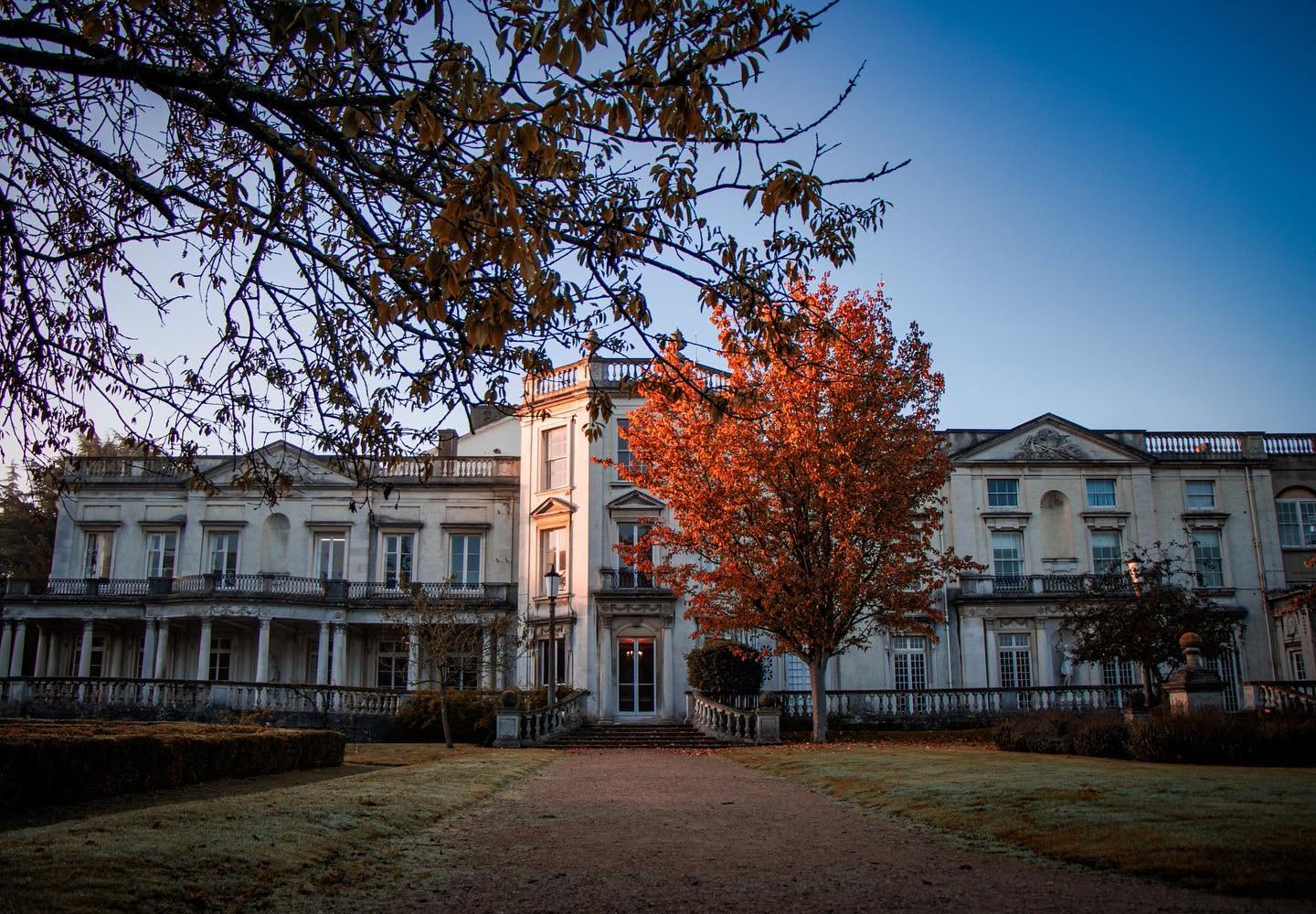
Whitelands occupies a separate 14-acre campus overlooking Richmond Park. The site contains Whitelands College and Parkstead House, a Grade I listed Georgian villa dating from the early 1760s. Parkstead House was built for the 2nd Earl of Bessborough and designed by Sir William Chambers.
The four colleges are not four separate university campuses. They operate within one university and have a different function from the academic schools and faculty.
Students are assigned to one of four colleges:
College membership continues during a student’s period of study. For students living in university accommodation, residence can influence college allocation. Students living elsewhere may be associated with the college linked most closely to the location of their teaching.
The colleges retain their own histories and traditions while providing smaller student communities within the university. Their role can include community activity, pastoral contact, social spaces and other aspects of student life. Academic responsibility, however, belongs to the relevant school, faculty or university academic unit.
A student can consequently belong to one college while studying within an academic school based elsewhere on the university estate. Students studying the same subject can also belong to different colleges.
Roehampton additionally delivers some nursing degrees at Croydon University Centre. Those programmes are taught there by University of Roehampton staff and lead to a University of Roehampton degree. Croydon University Centre is a programme delivery location and is distinct from the two principal Roehampton campuses.
The University Council is Roehampton’s governing body. Its responsibilities cover the management and development of the institution, stewardship of public and private funds, solvency and protection of university assets. Council members also hold legal responsibilities as company directors and charity trustees.
Academic authority rests principally with Senate. Senate is the university’s senior committee for academic standards and the regulation of academic matters. Its membership includes senior academic and professional-service staff together with elected staff and student members, and it reports to Council.
The distinction between these bodies is significant. Council carries governing and corporate responsibilities, while Senate oversees the university’s central academic responsibilities.
Academic quality processes are coordinated through the Academic Office. Roehampton has documented procedures for the development and approval of programmes and modules, amendments to existing curricula, academic monitoring, assessment policy, external examining, and the suspension or closure of programmes.
Changes with greater academic significance pass beyond local academic approval and enter university-level processes. Research degrees and professional doctorates have separate oversight arrangements alongside those used for taught provision.
Collaborative provision also falls within university academic oversight. Roehampton can participate in arrangements under which university awards are connected with external partners or delivery locations, but each collaborative arrangement has its own approved scope. A partnership with the university does not establish that every programme offered by that partner has the same academic or awarding status.
Roehampton’s Registry guidance distinguishes older qualifications according to the period in which study began.
Degrees commenced before 1984 are associated with the University of London as awarding body. Degrees commenced from 1984 to 2004 are associated with the University of Surrey. Degrees commenced from 2005 are identified with Roehampton University.
This history is particularly relevant when older graduates, employers, agencies or other organisations need to establish why the awarding institution shown on an earlier certificate differs from the present university name.
Roehampton’s academic organisation is distinct from the four-college system. Teaching, academic assessment, research activity and research-degree administration operate through academic schools, a faculty and other university units.
The university’s academic areas comprise:
This organisation brings together humanities, social sciences, business, law, computing, engineering, construction and built-environment subjects, education, health and life sciences, psychology, continuing education and research study.
Roehampton supports undergraduate degrees, foundation routes, postgraduate taught study, postgraduate research, higher technical qualifications, apprenticeships, international pathways, short courses and professional development.
The School of Continuing Education has a particular role in routes outside a conventional undergraduate degree structure. Its provision includes foundation study, higher technical education, apprenticeships, international pathways and shorter forms of continuing or professional education.
The Graduate School serves a different purpose. It supports research-degree administration and researcher development across academic disciplines rather than operating as a single subject department. Research students belong to their academic school as well as to the Graduate School.
The university’s programme portfolio should not be treated as identical to its organisational structure. Schools and the faculty describe academic organisation, while individual courses, pathways and professional approvals sit beneath that structure and can change separately.
Roehampton does not use one teaching method across all subjects and qualifications. The form of teaching reflects the academic discipline and type of programme.
Laboratory-based sciences and health subjects make use of specialist practical and simulation spaces. Computing, engineering and built-environment provision uses technical facilities suited to digital design, fabrication, testing and surveying. Research degrees rely on individual supervision alongside doctoral development. Apprenticeships combine university study with employment.
Placement activity is also course-dependent. Vocational, professional or clinical placements form part of many programmes, but this does not mean that every Roehampton course contains a placement or that every student follows the same practical route.
Academic quality processes provide a common institutional structure across these different forms of study. Programme approval, curriculum changes, assessment arrangements, external examining and academic monitoring operate through formal university procedures.
The separation of taught and research-degree regulations is also important. Doctoral study has different academic requirements and oversight from undergraduate or postgraduate taught programmes, while professional programmes can carry additional requirements attached to the relevant occupation or regulator.
The University Library is one of the main shared academic resources on the Roehampton campus. It provides print collections, electronic resources, computer and printing access, bookable rooms, collaborative areas and quieter study spaces.
Library provision also includes specialist advisers and study-skills support. Postgraduate researchers can access research guidance and resources for reference management. Archives and special collections form part of the library’s academic holdings.
Specialist facilities are distributed according to subject requirements rather than being used by every student.
Life and health sciences have access to subject laboratories and clinical simulation facilities. These spaces support forms of practical preparation that cannot be delivered through classroom teaching alone.
Psychology facilities at Whitelands include resources for experimental and neuroscience-related work. They include EEG facilities as well as access to specialist imaging and psychophysiological resources used for relevant research and teaching.
Computing, engineering and built-environment provision uses facilities in the Dorothy Buchanan Building. Academic spaces there support areas such as digital design and modelling, fabrication, structures and materials testing, surveying and related technical work.
The university estate also contains computing facilities, sports provision, chaplaincy spaces, social areas and Students’ Union facilities alongside academic buildings.
Roehampton’s mixture of historic and newer buildings has practical consequences for physical access. Step-free access is available in most university buildings, although some heritage and listed buildings have limitations. Detailed access information is available through AccessAble guides, while the Disability and Dyslexia Service advises students about access requirements and adjustments.
The facilities available to an individual student consequently depend on subject, teaching location and programme. A psychology researcher based at Whitelands, a nursing student using clinical simulation, and an engineering student working with fabrication or testing equipment use different parts of Roehampton’s academic estate.
Research activity is distributed across Roehampton’s academic schools and supported through central university research structures and the Graduate School.
Areas represented in the university’s research activity include creative exchange, health and wellbeing, social justice and inclusivity, faith and society, sustainability and conservation, psychological wellbeing, life and health sciences, education, responsible management, and questions concerning society and social change.
Research and knowledge-exchange centres provide interdisciplinary connections across several of these areas. The institutional role of these centres is distinct from that of the academic schools: schools provide the main disciplinary base, while research centres connect work around shared subjects or research questions.
The Graduate School operates across disciplinary boundaries. Research students remain members of their academic school while also belonging to the Graduate School.
Its responsibilities include administering research-degree applications, supporting researcher development, providing administrative support for research-degree processes and creating opportunities for doctoral researchers from different subjects to engage with one another.
Research-degree admission also differs from admission to a taught programme. The proposed research area and the availability of suitable supervisory expertise form part of the research application process.
Central student administration is divided principally between NEST and Registry.
NEST acts as a first point of contact for a range of practical and administrative matters. Its areas of support include enrolment, timetables, university letters and documents, attendance, assessments and student records.
Registry carries university-level responsibility for enrolment, maintenance of student records, assessment processes and awards. It also has an important role after graduation by supporting formal verification of attendance and qualifications and handling requests connected with replacement academic documents.
Academic support is distributed across several services rather than concentrated within one office. Library advisers assist with academic resources and study skills. The Disability and Dyslexia Service works with students who require access support or adjustments. Wellbeing services provide another specialist point of support.
The college system adds a separate community and pastoral dimension. Students belong to Digby Stuart, Froebel, Southlands or Whitelands while also belonging academically to their school or faculty.
Chaplaincy forms part of the campus support structure, while the Students’ Union provides student representation, societies and organised student activity.
These roles are separate but complementary: Registry manages formal academic records and university processes; NEST handles many day-to-day administrative enquiries; academic and specialist services address study or individual support needs; and the colleges and Students’ Union provide other forms of student participation and community.
Career support is provided through Student Futures. Its services include individual career guidance, workshops, employer-related activities, support with finding work experience, vacancy resources and guidance connected with placement years.
The university’s career provision should be distinguished from guaranteed employment or placement outcomes. Placements depend on the particular course. Vocational, professional and clinical placement activity appears in many areas of study, but it is not an institution-wide component of every programme.
Student Futures can support students in planning and searching for work-related opportunities, while responsibility for formal course placements can also involve the relevant academic school and programme requirements.
Graduate employment or satisfaction claims require a defined survey, cohort and reporting period to be meaningful. Such figures are not necessary to explain the university’s permanent institutional structure, and no general graduate-outcome claim is used here.
Campus accommodation forms part of Roehampton’s wider collegiate structure because residence can influence a student’s college allocation.
Students living in university accommodation can become associated with the college connected to their residence, while students living elsewhere may be allocated according to the location of most of their teaching.
This arrangement means that accommodation and college identity can be connected without making the colleges separate accommodation providers or separate universities. College membership continues alongside membership of the relevant academic school or faculty.
Room types, contracts, availability and accommodation charges operate on academic-cycle arrangements and are not permanent institutional characteristics. The stable feature is the relationship between campus residence, college membership and the university’s two-campus estate.
Roehampton provides dedicated admission support for applicants educated outside the United Kingdom, including country-specific academic guidance, English-language information, international pathways and application support.
There is no single admission threshold that applies to every Roehampton applicant. Academic entry requirements depend on the programme and level of study. International applicants can also face qualification-equivalency and English-language requirements related to their previous education and intended programme.
Application documentation can include academic qualifications and transcripts, evidence of English-language ability, a personal statement and references, with the required combination depending on the applicant and course.
Application routes also differ by level and applicant type. UK undergraduate applications use UCAS, while postgraduate taught applicants generally apply directly to the university. Research-degree applicants use the Graduate School process and must identify a research area for which appropriate supervisory expertise is available.
International applicants can have additional country-specific, English-language and immigration requirements. These operate separately from the university’s general academic structure and should not be treated as one universal set of conditions for every nationality or programme.
International pathway provision also forms part of Roehampton’s academic activity. These routes are intended for students preparing for entry into UK higher education and sit within the university’s broader continuing-education provision.
Professional accreditation creates another distinction for prospective students. Admission to the university and admission to a particular programme do not establish that every qualification carries the same professional recognition. Where external professional approval applies, its scope belongs to the relevant course or route.
Roehampton’s administrative responsibilities continue after a student completes a programme. Registry provides routes through which former students can request replacement academic documents, while third parties such as employers, agencies and embassies can use formal procedures for attendance and award verification.
This function has particular importance because the awarding body shown on historical Roehampton qualifications can vary according to the period of study. A qualification associated with the University of London or University of Surrey may form part of Roehampton’s institutional history even though the present university now awards its own degrees.
The combination of its awarding regulations, Registry records and historical awarding-body information provides continuity across the institution’s changes of name and legal status.
The defining feature of Roehampton is the way several different institutional layers operate together without being interchangeable.
Roehampton University is the legal and degree-awarding institution. University Council is the governing body, while Senate holds senior academic authority. Teaching and research are organised through academic schools, a faculty, Continuing Education and the Graduate School. Digby Stuart, Froebel, Southlands and Whitelands remain constituent college communities with nineteenth-century histories. The physical estate consists principally of a 54-acre main campus and a separate 14-acre Whitelands campus, with some programmes delivered at additional named locations such as Croydon University Centre.
This structure also explains Roehampton’s historical timeline. Its oldest college dates from 1841, its four-college federation dates from 1975, its federation with the University of Surrey began in 2000, and the independent university dates from 2004. The University of Roehampton name has been used for trading purposes since 2011.
Those distinctions are essential to an accurate account of the university because its history, legal identity, academic organisation, colleges and campuses each describe a different part of the same institution.
The University of Roehampton is a higher-education institution in southwest London. Its legal name is Roehampton University, while “University of Roehampton” has been used as its trading name since 2011. The present independent university dates from 2004, although its institutional heritage extends back to the establishment of Whitelands College in 1841.
The university has several important dates in its development. Whitelands College was established in 1841, the four constituent colleges formed the Roehampton Institute of Higher Education in 1975, and the institution became an independent university in 2004. The University of Roehampton trading name was adopted in 2011.
The university is based in Roehampton in southwest London, United Kingdom. Its principal estate consists of a 54-acre main campus and a separate 14-acre Whitelands campus overlooking Richmond Park.
The university has two principal campuses: the main campus and the Whitelands campus. Digby Stuart, Froebel and Southlands Colleges are located on the main campus, while Whitelands College is based on the separate Whitelands campus.
The four constituent colleges are Digby Stuart College, Froebel College, Southlands College and Whitelands College. They have distinct historical identities and provide student communities within the university. They are not four separate universities or four separate campuses.
Academic activity is organised through the School of Arts, Humanities and Social Sciences; Faculty of Business and Law; School of Computing, Engineering and the Built Environment; School of Education; School of Life and Health Sciences; School of Psychology; School of Continuing Education; and the Graduate School.
Yes. Roehampton University confers its own academic awards under its Academic Regulations. Historical qualifications may show the University of London or the University of Surrey as the awarding body depending on when the student began their studies.
The university supports undergraduate, postgraduate taught and postgraduate research study. Its wider provision also includes foundation routes, higher technical education, apprenticeships, international pathways, short courses and continuing or professional education.
Yes. Research-degree study is supported through the Graduate School and the relevant academic schools. Research students remain connected to their academic discipline while also receiving university-level research-degree administration and researcher development support.
University resources include the central library, study and computing spaces, subject laboratories, clinical simulation facilities, psychology research resources, and specialist computing, engineering and built-environment facilities. Access to particular facilities depends on the student’s subject and programme.
Student support includes NEST for day-to-day administrative enquiries, Registry for formal academic records and award processes, library and study support, the Disability and Dyslexia Service, wellbeing services, chaplaincy, college-based community support, the Students’ Union and Student Futures for careers guidance.
Admission requirements depend on the programme, level of study and applicant background. International applicants may also need to meet country-specific academic and English-language requirements. Undergraduate, postgraduate taught and research-degree applications follow different application routes.
