




Teenagers can earn money online through tutoring, writing, graphic design, video editing, and other skill-based work. However, finding a legitimate opportunity involves more than choosing a job. Age restrictions, local employment laws, payment arrangements, and online safety determine whether a particular opportunity is suitable.
Not every remote job accepts applicants under 18. Some freelance platforms require adult account holders, while certain employers have additional eligibility conditions. Even when the work itself is appropriate, the platform or payment arrangement may not be.
For students interested in earning money while continuing their education, the practical starting point is identifying an existing skill and finding a lawful, supervised way to offer it.
This article covers ten types of online work, their skill requirements, realistic limitations, and ways to assess opportunities without relying on unrealistic income promises.
Answer Summary: Legitimate online work options for teenagers include tutoring, freelance writing, proofreading, graphic design, video editing, translation, transcription, basic web design, presentation design, and administrative support. These are possible work categories, not guaranteed vacancies or opportunities open to every age group. Eligibility depends on local laws, employer requirements, and platform policies. Teenagers should prioritize school responsibilities, involve a parent or guardian where appropriate, verify clients, and confirm payment terms before accepting work.
Key Takeaways:
-
Online tutoring, creative services, and basic digital tasks are possible sources of income.
-
Having a skill does not automatically make someone eligible for paid work.
-
Some freelance platforms require an adult-owned account or prohibit users under 18.
-
Work samples can help demonstrate ability without requiring previous paid experience.
-
Earnings depend on completed assignments, agreed fees, and expenses.
-
School responsibilities, privacy, and online safety should take priority over earning money.
What Makes an Online Job Legitimate for Teenagers?
A legitimate online job involves providing an identifiable service to a genuine employer or client under lawful, clear working conditions.
Examples include helping a student understand mathematics, creating an original poster for a business, or editing a video using footage the client is authorized to use.
Before accepting paid work, teenagers should check three conditions:
-
Legal eligibility: The work must comply with applicable minimum-age and child-employment rules.
-
Client legitimacy: The employer or customer should have a verifiable identity and a genuine need for the service.
-
Payment transparency: The responsibilities, compensation, deadlines, and payment method should be agreed upon before work begins.
Online work is not automatically exempt from child-employment laws.
For Nepal-based readers, the International Labour Organization's legal database records Nepal's Child Labour (Prohibition and Regulation) Act, 2000, which establishes restrictions on employing children, including a prohibition on employing children under 14. Other legal requirements may also apply depending on age and work arrangements.
Teenagers and their guardians should verify current local requirements rather than assume that every online activity is permitted as paid employment.
10 Legit Online Jobs for Teenagers
The following are established types of work that teenagers with relevant skills may consider, subject to legal eligibility and appropriate supervision.
1. Online Tutoring
Online tutoring involves helping students understand subjects through video lessons, guided practice, or digital learning materials.
Teenagers who are confident in mathematics, science, English, Nepali, or another school subject may consider providing academic support to younger learners.
Skills needed: Subject knowledge, communication, patience, and lesson preparation.
How to get started: Prepare a short lesson on a subject you understand well. A parent or guardian can help assess suitable opportunities through trusted families or educational contacts.
The U.S. Bureau of Labor Statistics describes tutoring as individual or small-group instruction that supports classroom learning. Formal tutoring positions may require qualifications that school students have not yet obtained.
Limitations: Preparing lessons takes time, and students learn at different speeds. Tutors should explain concepts and support independent learning rather than complete graded assignments for someone else.
2. Freelance Content Writing
Freelance content writing involves creating original written material for clients, including articles, website descriptions, newsletters, and informational content.
Teenagers with strong writing and research skills can develop relevant work samples before looking for eligible assignments.
Skills needed: Grammar, research, fact-checking, clear explanations, and proofreading.
How to get started: Choose a familiar subject and prepare two or three original writing samples. School publications and supervised community projects can provide experience.
The U.S. Bureau of Labor Statistics recognizes freelance writing as an established professional working arrangement, although formal writing positions may require qualifications or experience.
Limitations: Clients may require revisions, strict deadlines, and evidence of previous work. Writers must respect copyright, verify factual claims, and avoid plagiarism or academic dishonesty.
3. Proofreading and Basic Editing
Proofreading involves checking written material for spelling, grammar, punctuation, and formatting errors. Editing may also involve improving clarity and sentence structure.
Teenagers with strong language skills may consider limited proofreading assignments involving non-confidential material.
Skills needed: Grammar, reading comprehension, attention to detail, and document formatting.
How to get started: Practice correcting your own original writing and create a short sample showing the changes made. Suitable assignments may involve newsletters, general website content, or materials shared with permission.
Professional editing requires additional judgment and experience. The U.S. Bureau of Labor Statistics identifies accuracy, readability, and fact-checking among editors' responsibilities.
Limitations: Proofreading is not simply running a spell-checker. Technical documents and specialized subjects may require qualifications beyond a beginner's ability. Avoid completing assessed schoolwork on behalf of others.
4. Graphic Design
Graphic design involves creating visual materials such as posters, invitations, brochures, presentation graphics, and digital announcements.
Teenagers who enjoy art and visual communication may develop skills using appropriate design software.
Skills needed: Typography, layout, color selection, image editing, and understanding design instructions.
How to get started: Create a small portfolio of original posters or presentation graphics. Community organizations or trusted local contacts may have suitable design needs.
According to the U.S. Bureau of Labor Statistics, graphic designers use visual elements and layouts to communicate information.
Limitations: Design work often involves revisions, and professional projects may require technical file preparation. Use original artwork or licensed materials, and clarify who owns the completed design.
5. Video Editing
Video editing involves organizing recorded footage, removing unnecessary sections, adjusting sound, adding permitted graphics, and preparing videos for publication.
This work may suit teenagers who have developed editing skills through school or personal projects.
Skills needed: Video-editing software, timing, audio adjustment, file management, and attention to detail.
How to get started: Prepare a short sample using footage you recorded yourself or have permission to edit. Start with manageable projects and confirm the required format before accepting work.
Professional video editors use specialized software to assemble footage, according to the U.S. Bureau of Labor Statistics.
Limitations: Editing may require capable equipment and substantial time. Copyright restrictions apply to music, video clips, and images. Teenagers should decline projects involving inappropriate content or unsafe requests.
6. Translation
Translation involves converting written information from one language into another while preserving its meaning, context, and tone.
Teenagers who read and write accurately in two languages may consider basic, non-specialized translation assignments.
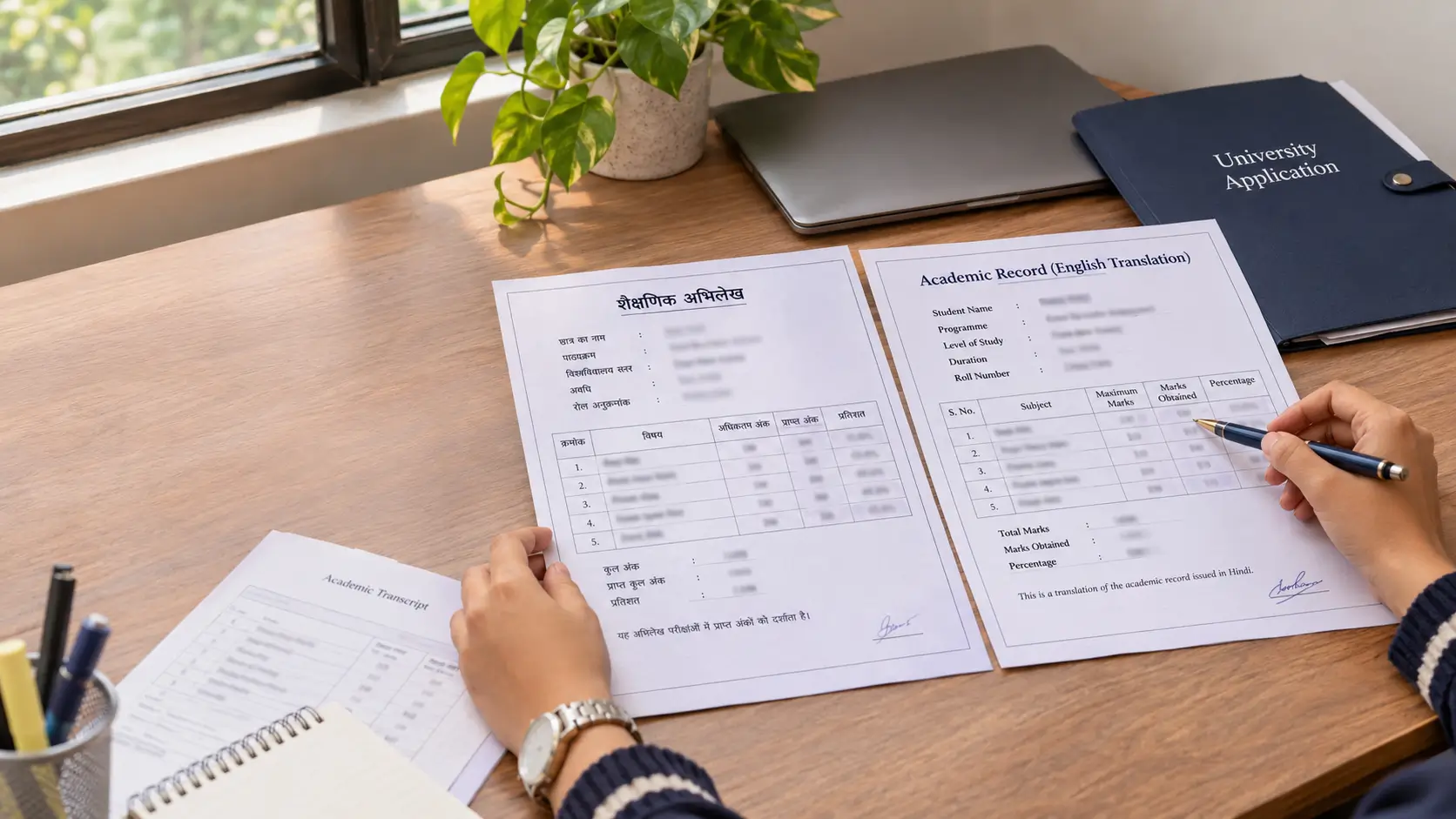
For example, someone proficient in Nepali and English may practice translating general informational material they have permission to use.
Skills needed: Strong language comprehension, grammar, vocabulary, accuracy, and contextual understanding.
How to get started: Prepare a sample translation using your own writing or public-domain material. Compare it with the original to check meaning and terminology.
The U.S. Bureau of Labor Statistics distinguishes written translation from spoken interpretation and emphasizes the importance of accuracy.
Limitations: Legal, medical, academic certification, and other specialized translations may require professional credentials. Bilingual ability alone does not establish professional translation competence.
7. Transcription and Caption Editing
Transcription means converting spoken words into written text. Caption editing involves reviewing captions for accuracy, timing, punctuation, and readability.
Possible tasks include transcribing a permitted recording or correcting captions on an authorized educational video.
Skills needed: Listening comprehension, typing, spelling, concentration, and careful review.
How to get started: Practice with a short recording you own or have permission to use. Check your transcription against the audio and identify areas needing improvement.
Limitations: Background noise, unclear speech, and unfamiliar terminology can make assignments time-consuming. Recordings may contain confidential information.
Teenagers should avoid handling private interviews, sensitive customer records, or confidential recordings without appropriate authorization and adult oversight.
8. Basic Website Design
Basic website design involves creating or updating simple webpages, arranging content, and improving navigation or presentation.
Teenagers interested in technology may learn HTML, CSS, and other introductory web-development skills.
Skills needed: Basic coding, responsive design, testing, problem-solving, and file organization.
How to get started: Build a practice website using original content. Demonstrate working navigation, readable layouts, and mobile-friendly design.
The U.S. Bureau of Labor Statistics identifies website creation, interface design, and testing among web developers' responsibilities.
Limitations: Professional websites can involve security, accessibility, and maintenance requirements. Beginners should not accept responsibilities involving sensitive customer information, payment systems, or complex security arrangements beyond their competence.
9. Presentation and Document Design
Presentation design involves arranging information into readable slides, diagrams, and supporting visuals. Document formatting involves improving the layout of reports, handouts, and other written materials.
These activities can suit teenagers familiar with presentation software and word processors.
Skills needed: Layout, typography, basic visual communication, file formatting, and attention to instructions.
How to get started: Prepare an original presentation on a familiar educational topic. Include consistent headings, readable text, and properly attributed visuals.
A portfolio can show the difference between an unformatted document and a well-organized version using content you are permitted to modify.
Limitations: Clients may request extensive revisions or expect content research beyond formatting. Clarify whether the assignment covers design, editing, or both.
Students should not produce another person's graded coursework or misrepresent authorship.
10. Basic Virtual Administrative Support
Virtual administrative support involves helping with routine organizational tasks remotely.
Possible assignments include formatting spreadsheets, updating non-sensitive records, arranging public information, and organizing digital files.
Skills needed: Spreadsheet basics, accuracy, communication, file management, and organization.
How to get started: Practice creating a task tracker, organizing example files, and formatting simple documents using non-confidential information.
The U.S. Bureau of Labor Statistics identifies document preparation, filing, scheduling, and database maintenance among administrative support duties.
Limitations: Many virtual assistant positions require adult employees, fixed working hours, or access to confidential information. Teenagers should consider only lawful, supervised assignments appropriate to their age and experience.
How to Choose a Suitable Online Job
The most suitable option is one that matches existing skills, legal eligibility, available time, and safe working conditions.
| Interest or Skill | Online Work to Consider | Main Requirement |
|---|---|---|
| Academic subjects | Tutoring | Clear explanations |
| Writing | Content writing | Original research and writing |
| Grammar and language | Proofreading | Accuracy |
| Drawing and visual design | Graphic design | Original portfolio |
| Video production | Video editing | Editing skills and permitted footage |
| Multiple languages | Translation | Language proficiency |
| Listening and typing | Transcription | Accurate transcription |
| Coding | Basic website design | Functional demonstration |
| Slide preparation | Presentation design | Layout and clarity |
| Organization | Administrative support | Accuracy and confidentiality |
A teenager interested in several fields does not need to pursue all of them. Developing one skill and preparing a suitable sample can provide a clearer starting point.
Can Teenagers Use Freelance Websites?
Age restrictions differ across online freelance platforms. Permission from a parent does not override a platform's rules or local employment laws.
According to the platforms' published policies:
-
Upwork: Users must be at least 18 or the age of majority in their country, whichever is older. Independent accounts for younger teenagers are not permitted.
-
Fiverr: Users aged 13–17 may participate only through an account owned by a parent or legal guardian, with permission and supervision, subject to its other requirements.
-
Etsy: Minors aged 13–17 may participate under direct parental or guardian supervision, with the adult owning and managing the account and financial information.
These policies can change. A permitted account arrangement also does not guarantee that a particular service is lawful, safe, or suitable for a minor.
For younger teenagers or students without appropriate platform access, developing skills and creating a private portfolio may be more appropriate than attempting paid freelance work.
How to Start Online Work Safely
Teenagers who are legally eligible for suitable work should begin with a modest, clearly defined service.
Step 1: Develop a Demonstrable Skill
Choose a service you can perform accurately, such as proofreading ordinary text, making original graphics, or preparing a short tutoring lesson.
Practice until you can explain the work you do and evaluate its quality.
Step 2: Prepare a Small Portfolio
Create samples using original material or content you have permission to use.
A portfolio does not need to reveal your full name, school, address, photograph, or other unnecessary personal information.
Step 3: Involve a Trusted Adult
A parent or guardian can help verify a potential employer, review communications, understand payment terms, and assess whether an assignment is appropriate.
Online safety guidance from UNICEF emphasizes protecting personal information and reviewing privacy settings.
Step 4: Agree on the Conditions
Before beginning eligible paid work, establish what will be delivered, when it is due, the agreed payment, and who is responsible for revisions.
The agreement and payment arrangements should be handled in accordance with applicable laws and platform requirements.
How Much Money Can Teenagers Earn Online?
There is no reliable universal income figure for teenage online work.
Earnings depend on the service, experience, completed assignments, client budget, and applicable employment arrangements. Some teenagers may find occasional paid work, while others may spend time developing skills without receiving paid assignments.
Professional salaries reported by organizations such as the U.S. Bureau of Labor Statistics are not appropriate estimates of what teenagers or beginners will earn. Those figures generally describe established occupations and particular labor markets.
For freelance assignments, the agreed fee is also different from the amount retained after legitimate expenses and applicable charges.
Teenagers and their guardians should check payment eligibility, fees, and local obligations before entering a financial arrangement.
How to Recognize Online Job Scams
Fraudulent job advertisements may promise quick earnings for simple tasks without explaining the actual business or work involved.
The U.S. Federal Trade Commission warns about work-from-home fraud and task scams, including offers that require workers to deposit money before accessing supposed earnings.
Warning signs include:
-
Requests to pay money to secure a job or release earnings
-
Claims of unusually high income for minimal work
-
Unsolicited messages offering vague online tasks
-
Pressure to make immediate decisions
-
Requests for bank credentials, passwords, or unnecessary identity documents
-
Offers involving artificial product ratings or paid likes
-
Instructions to transfer money on behalf of an unfamiliar organization
Teenagers should stop communicating with suspicious recruiters and consult a trusted adult.
A legitimate assignment should have a clear purpose, identifiable client, suitable responsibilities, and transparent payment conditions.
Conclusion
Online work can help eligible teenagers gain practical experience and earn money from appropriate assignments. Tutoring, writing, editing, design, translation, and basic digital services provide different ways to apply useful skills.
However, these are potential work categories rather than guaranteed opportunities. Legal age restrictions, employer requirements, online safety, and school commitments determine what is appropriate for each teenager.
A sensible starting point is to develop one useful skill, prepare original work samples, and assess opportunities with appropriate adult support. The aim should be lawful, safe work that does not compromise education or personal wellbeing.
Editorial source note: Occupational references explain established work activities, not confirmed vacancies or employment eligibility for minors. Age, payment, and child-employment rules should be checked against current official requirements in the relevant country before any paid work begins.

Comments 0
No comments yet. Be the first to start the conversation.