




A college's examination pass rate tells you how a defined group of students performed against a particular assessment. It does not tell you everything about the education those students received.
A high pass percentage may be encouraging, especially when students are preparing for demanding university or professional examinations. But choosing a college involves more than finding an institution whose students pass examinations. You also need to know whether the qualification is recognised, how teaching and assessment work, what support students receive, and whether the learning opportunities match your intended programme.
The distinction matters because college performance figures often describe different student groups, assessment systems and academic periods. A college-wide result may not represent the course you intend to study. An examination percentage may also exclude students who withdrew, transferred or did not appear for the assessment.
Educational quality is broader than examination performance. It concerns the standards of teaching and learning, the credibility of qualifications, students' opportunities to develop knowledge and skills, and the institution's ability to review and improve its educational provision.
Answer Summary: To evaluate college quality beyond exam pass rates, examine the exact programme's recognition, curriculum, teaching arrangements, assessment standards, student support, completion data and graduate outcomes. Ask what each published percentage measures, who is included and whether the evidence applies to your intended course and campus. A credible comparison combines official records, programme documents and student experience information, while acknowledging missing data and differences between institutions.
Key Takeaways-
Examination pass rates measure a specific academic result, not overall educational quality.
-
The students, examination type and timeframe behind a pass percentage determine what it means.
-
Official recognition should be verified for the awarding institution and, where required, the specific programme.
-
Teaching quality requires evidence about learning outcomes, assessment, feedback and access to academic staff.
-
Student retention, completion and graduate outcomes provide additional information but need careful interpretation.
-
Comparing equivalent programme-level evidence is more useful than relying on institutional reputation or a single performance figure.
Why Exam Pass Rates Tell Only Part of the Story
Exam pass rates are useful indicators of academic performance when their meaning is clearly explained. Their main limitation is that they capture performance against a particular assessment, not the full educational experience.
The New England Commission of Higher Education (NECHE), a US higher education accreditor, includes examination-related outcomes within a much broader framework for evaluating educational effectiveness.
Its accreditation standards address learning outcomes, progression, retention, graduation, employment, further education and the use of evidence to improve academic programmes. These are standards for institutions within NECHE's scope, not universal requirements for every college worldwide.
What is actually being counted?
A pass rate is generally calculated by dividing the number of successful candidates by the number of candidates included in the assessment population.
The calculation appears straightforward, but its meaning depends on how that population is defined.
Before comparing results, ask five questions:
-
Which examination? Is the result from an external university examination, internal assessment or professional licensing examination?
-
Who was included? Does the percentage cover all eligible students, those who appeared, or first-time candidates?
-
Are repeat attempts counted? Were supplementary examination results combined with initial results?
-
Which programme and period? Does the percentage describe one course, department, campus, academic year or the entire institution?
-
Who is missing? Are students who withdrew, transferred, deferred or did not reach the examination stage excluded?
The answers determine whether two published percentages describe comparable outcomes.
A first-attempt pass rate and a pass rate including repeat attempts should not be treated as identical measures. Similarly, results from examinations with different requirements may not support a fair direct comparison.
What pass rates cannot establish
Passing an examination indicates that a student met the relevant assessment requirements. It does not independently establish the depth of learning, teaching effectiveness or range of abilities developed throughout the programme.
Some assessments measure theoretical knowledge extensively. Others also evaluate practical application, professional competence or independent work.
The breadth of learning represented by a result depends on the assessment's design.
Student preparation also matters. Colleges that admit students with different academic backgrounds may report different examination outcomes even when their teaching arrangements are comparable.
A high pass rate does not establish that assessment standards are weak. A lower rate does not automatically establish poor teaching.
Students should consider examination performance alongside evidence about assessment quality, academic support and learning development.
Check Whether the Qualification and Programme Are Recognised
Before evaluating a college's wider academic qualities, establish whether the intended qualification has the official status required for your educational plans.
Recognition is particularly important when students intend to transfer institutions, pursue postgraduate education, study internationally or enter a regulated profession.
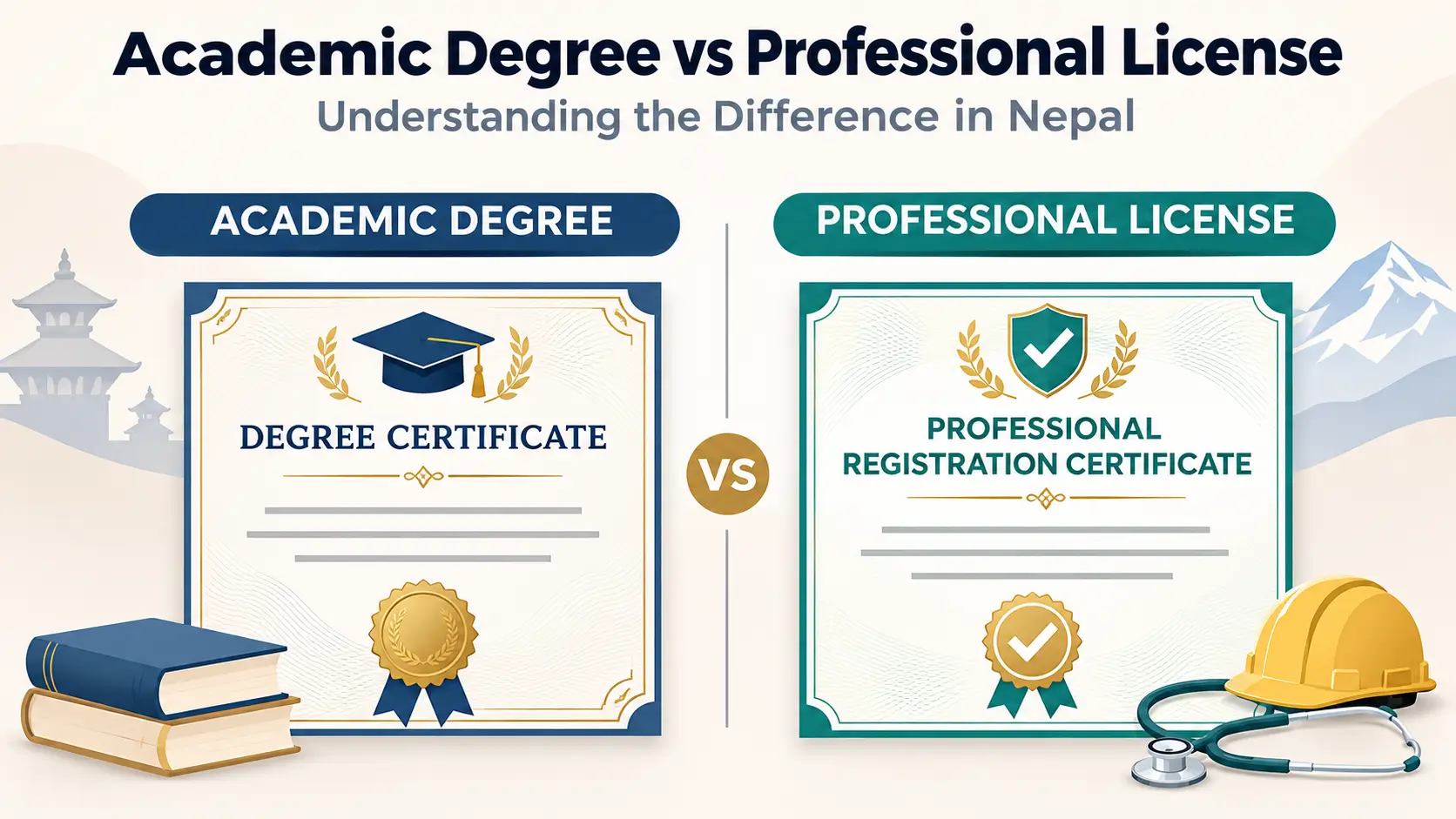
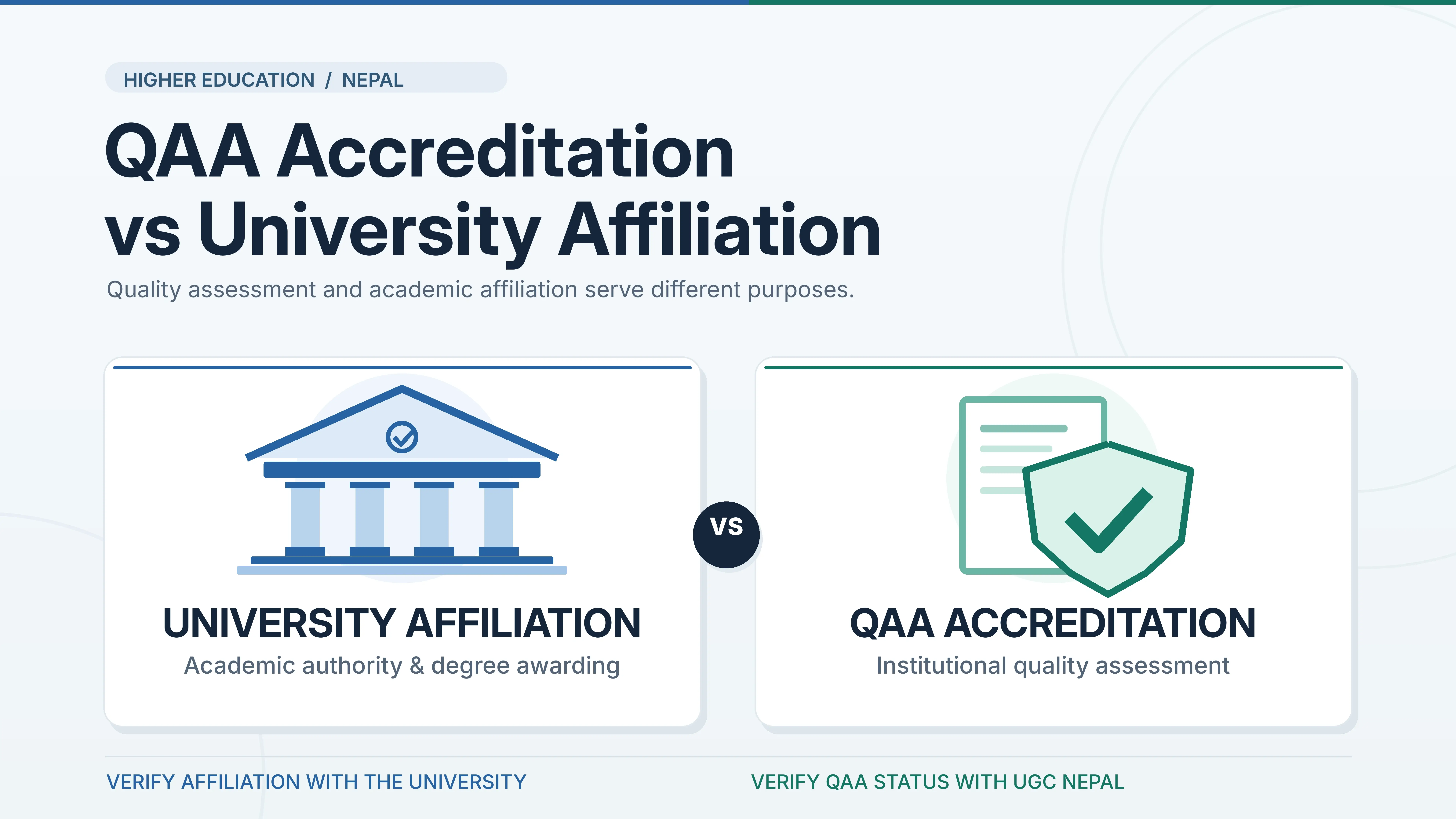
Recognition and accreditation are not interchangeable
The ENIC-NARIC networks distinguish recognition from accreditation.
Recognition generally concerns an institution's official status within a national education system, including its authority to award qualifications. Accreditation concerns an external determination that an institution or programme meets specified quality standards.
National systems use different terminology and procedures. In some systems, institutional status is central; in others, programme-level accreditation also determines whether a qualification is officially recognised.
Students therefore need to establish:
-
Who awards the qualification?
-
Is the awarding institution authorised to issue that qualification?
-
Does the specific programme require separate accreditation or approval?
-
Does the recognition cover the intended campus, study mode and relevant period where these distinctions apply?
-
Will the receiving university, employer or professional regulator accept the qualification for its intended purpose?
The college delivering instruction and the institution awarding the qualification may be different organisations.
International recognition should not be assumed from the awarding university's name alone. The authority assessing the qualification in the destination country may apply additional requirements.
Accreditation is evidence, not a complete quality judgment
External accreditation can provide evidence that specified institutional or programme standards have been evaluated.
It does not establish that every lecturer teaches effectively, every student receives adequate support or every graduate achieves a particular career outcome.
The practical approach is to verify recognition through the responsible authority, establish its scope and then evaluate the actual academic experience separately.
For professional programmes, obtain confirmation from the relevant professional authority where separate approval or registration requirements apply.
Find Evidence of Teaching Quality and Meaningful Learning
Teaching quality is better assessed through what students are expected to learn, how they are taught, how their work is evaluated and what happens when they encounter academic difficulties.
A faculty list or published syllabus can provide useful information, but neither establishes the quality of day-to-day teaching.
Examine curriculum and learning outcomes
A curriculum identifies the content and academic activities included in a programme.
Learning outcomes describe the knowledge, skills or abilities students are expected to demonstrate after completing a course or programme.
When reviewing academic documents, examine whether the curriculum develops knowledge in a logical sequence and whether assessments correspond to the intended learning outcomes.
For example, a programme that expects students to apply technical knowledge should explain how that ability is assessed. Depending on the discipline, assessment may include supervised practical work, projects, laboratory activities or demonstrations.
A programme preparing students for research may place greater emphasis on research methods, critical analysis and independent academic work.
The relevant question is whether the teaching and assessment arrangements support the qualification's stated purpose.
Readers seeking a clearer distinction between these terms can consult Collegenp's explanation of learning objectives and learning outcomes.
Look beyond grades to evidence of learning
The NECHE accreditation standards emphasise using direct and indirect measures to understand student learning.
Direct assessment examines what students can demonstrate through their academic work. Indirect evidence includes students' reported experiences and perceptions.
These forms of evidence answer different questions.
A marked research project may provide direct evidence of a student's ability to conduct and communicate an academic investigation. A student survey may show whether learners believe they receive useful feedback.
Neither measure provides a complete account of educational quality, but together they can reveal more than examination grades alone.
Prospective students can ask to see programme learning outcomes, assessment methods and explanations of how academic work is evaluated.
They can also ask whether the college reviews assessment findings and uses them to identify necessary improvements.
Find out who teaches and how feedback works
Lecturer qualifications matter because subject expertise is necessary for appropriate instruction.
However, academic credentials do not independently establish teaching effectiveness.
A faculty member's published qualifications may indicate relevant expertise without confirming how often that person teaches the intended programme or whether students can access academic guidance.
Students should ask who teaches the core subjects, how classes are organised and whether lecturers are available for questions outside scheduled teaching.
Assessment feedback deserves equal attention.
Feedback should help students understand what they have learned, where their work falls short of expectations and what they need to address.
Ask how students receive feedback on assignments and practical assessments. Also examine whether additional assistance is available when students struggle with particular subjects.
Check practical learning opportunities
Facilities and practical activities matter when they contribute to the learning requirements of a programme.
Relevant opportunities may include laboratory sessions, workshops, supervised placements, research projects, fieldwork or other discipline-specific activities.
Their availability should be verified at course level.
A college may advertise a laboratory, research centre or internship partnership without establishing that every student in the intended programme can access it.
Ask which practical activities are compulsory, how participation is arranged, whether adequate supervision is provided and how students' work is assessed.
The value lies in the educational activity students can undertake, not the existence of a facility or partnership on an institutional brochure.
Examine Student Progress, Support and Learning Experience
College quality also concerns whether students have reasonable opportunities to continue their studies, access suitable support and complete their qualifications.
Examination outcomes capture only part of this picture.
Retention and completion measure different outcomes
Retention generally concerns whether students continue their studies over a defined period.
Completion concerns whether students finish their qualification within a specified timeframe.
These measures differ from examination pass rates because they usually follow an identified group of students through their educational pathway.
The Organisation for Economic Co-operation and Development (OECD), in Education at a Glance 2025, reported that an average of 43% of bachelor's entrants in the covered OECD and partner education systems completed a tertiary qualification within the expected programme duration.
The reported average reached 70% when the measurement period extended three years beyond the expected completion date.
These figures describe the populations and definitions covered by that OECD report. They are not universal completion rates or benchmarks for individual colleges.
The distinction illustrates why completion figures require a stated timeframe.
Students may take longer to graduate, change programmes, transfer institutions or interrupt their studies for different reasons.
An institution's completion rate is informative, but the percentage alone does not identify why students completed or discontinued their programmes.
Student support should be accessible in practice
Academic support can influence how students participate in their studies.
Relevant services may include academic advising, tutorials, learning assistance, library access, accessible learning materials and procedures for handling academic difficulties.
Prospective students should investigate how these services operate.
For example, a college may list academic advising as an available service. The practical question is whether students in the intended programme can access advisers when needed.
The same applies to laboratories, digital resources and other facilities.
Students with accessibility requirements, part-time schedules or different study arrangements should verify that the services they need are available in a usable form.
Support should not be assessed solely through promotional descriptions.
Student experience surveys provide useful but limited evidence
Student surveys can reveal aspects of college life that examination results do not measure.
The National Survey of Student Engagement (NSSE), based at Indiana University in the United States, examines students' participation in educational activities and their interactions with academic staff.
Its engagement indicators cover academic challenge, learning with peers, experiences with faculty and the campus environment.
NSSE explicitly distinguishes these measures from direct assessment of student learning.
A positive student experience survey can therefore support an evaluation of the learning environment without proving that students developed every intended academic competency.
Survey participation also matters.
The UK's Discover Uni guidance advises readers to consider response numbers, response rates, reporting periods and whether data describe the actual course or a broader subject group.
It also explains that surveyed students may differ from future students in their backgrounds, priorities and experiences.
Student feedback is most informative when its coverage is transparent and when it is considered alongside direct evidence of academic learning.
Ask Whether Graduate Outcomes Apply to Your Intended Course
Graduate outcomes provide information about what students do after completing their qualifications.
They may include employment, further education, professional training or other educational and career destinations.
However, outcomes depend on more than the college attended.
Field of study, location, labour-market conditions, individual circumstances and prior experience can influence graduates' opportunities.
Interpret employment figures carefully
An advertised graduate employment percentage needs a clear definition.
Before relying on it, establish:
-
Which graduating group was surveyed?
-
How long after graduation was information collected?
-
How many graduates responded?
-
Does the percentage describe all graduates or only respondents?
-
Does the reported outcome include self-employment or part-time work?
-
Is employment related to the qualification?
-
Are graduates pursuing further education counted separately?
An institution-wide employment figure may combine graduates from programmes with substantially different career pathways.
For a student considering a particular course, programme-specific information is more relevant when reliable data are available.
Career services and outcomes are different
The existence of a career services department does not establish that graduates receive particular employment opportunities.
Students should distinguish between services offered and outcomes achieved.
Relevant services may include career guidance, placement assistance, internship information and opportunities to interact with employers.
Ask how students access these services and whether published graduate destination reports explain their methodology.
A college's employment claims should not be treated as promises of individual career outcomes.
How to Compare Colleges Using Evidence You Can Check
A useful college comparison examines the same categories of evidence for each shortlisted programme.
This reduces the risk of comparing an institution's promotional strengths with another institution's independently reported data.
The National Association for College Admission Counseling (NACAC) recommends examining academic offerings, costs, student services, advising, retention, graduation and career-related opportunities when considering college fit.
Its guidance is primarily directed toward the US admissions context, but the underlying questions can inform comparisons elsewhere.
Use a programme-level evidence checklist
The following checklist focuses on evidence readers can request or verify.
|
What to evaluate |
Evidence to request or verify |
What still needs checking |
|---|---|---|
|
Examination results |
Results by programme, examination type and academic period |
Candidate numbers, first attempts and excluded students |
|
Recognition and accreditation |
Official regulatory or quality-assurance records |
Awarding authority, programme scope and current status |
|
Teaching and assessment |
Programme outline, learning outcomes and assessment methods |
Actual teaching arrangements and feedback practices |
|
Practical learning |
Course requirements, supervision and facility-access arrangements |
Eligibility, participation and relevance to the programme |
|
Student support |
Advising, academic assistance and accessibility information |
Whether intended students can use the services |
|
Student progression |
Retention, transfer and completion reports |
Entry cohort, timeframe and reasons for incomplete data |
|
Graduate outcomes |
Programme-level destination reports |
Survey coverage, definitions and reporting period |
This framework is intended to organise evidence, not produce a numerical ranking.
Assigning arbitrary weights to indicators can create an appearance of precision without establishing that the resulting score measures educational quality.
Verify information through different sources
Not every question can be answered by the same source.
Official authorities are appropriate for verifying recognition, accreditation or programme approval within their jurisdiction.
The college or awarding institution can provide curricula, academic regulations, teaching arrangements and institutional outcome reports.
Current students and graduates can describe their experiences of teaching, feedback and support.
A campus visit may help establish whether advertised facilities are accessible and appropriately maintained.
Each source has limitations. Institutional documents describe policies and reported practices; a visit provides observations at a particular time; individual student experiences may not represent an entire programme.
The strongest evaluation uses these sources together without treating one perspective as conclusive.
What should you ask during a college visit?
Questions are more useful when they request specific information rather than general assurances.
Consider asking:
-
What is the denominator for the advertised examination pass rate, and are repeat attempts included?
-
Does the figure apply to the exact programme and campus I am considering?
-
Where can I review the programme's learning outcomes and assessment requirements?
-
How are students supported when they experience academic difficulties?
-
Who awards the qualification, and where can I verify the relevant recognition?
-
What proportion of the entering student group completes, transfers or remains enrolled within the reported period?
-
What is the response rate and reporting period for graduate employment or student experience figures?
-
What changes have resulted from recent programme reviews or student feedback?
Written responses and identifiable documents are more useful for comparison than unsupported statements.
What if a college does not publish the information?
Missing information creates uncertainty. It does not independently establish poor teaching, weak outcomes or misconduct.
Some institutions may lack the resources or systems needed to publish detailed programme-level statistics. Small programmes may also have limited data suitable for public reporting.
Where information is unavailable, request the relevant definition, policy or document directly.
If the college cannot provide the requested evidence, record the indicator as unverified instead of assuming a positive or negative result.
The importance of the missing information determines what to do next.
Uncertainty about a student satisfaction measure may be manageable when other relevant evidence is available.
Unresolved questions about degree-awarding authority, programme recognition or required professional approval are more consequential. Those questions should be resolved through the responsible authority before committing to the qualification.
Make the Decision Based on Evidence and Your Educational Needs
College quality should be considered alongside the requirements of the intended programme and the student's circumstances.
Begin with the qualification itself. Establish that the awarding arrangement and required recognition are appropriate for the intended educational or professional pathway.
Then compare teaching, curriculum, assessment, academic support and programme-level outcomes using equivalent evidence wherever possible.
Students preparing for research-oriented study may give greater attention to academic mentoring, research methods and scholarly resources.
Students entering practice-oriented programmes may need to examine supervised practical learning, technical facilities and the way professional competencies are assessed.
Location, study schedules, accessibility and the total cost of attendance can also determine whether an otherwise suitable programme is feasible.
These considerations affect personal fit; they are not substitutes for academic quality.
For a broader discussion of personal priorities, Collegenp's article on factors to consider when choosing a college covers additional aspects of the decision.
The soundest comparison combines three principles: examine equivalent information, verify its source and scope, and investigate important gaps before drawing conclusions.
Conclusion
College examination pass rates provide useful evidence about performance against particular assessment requirements. They should remain part of an evaluation, but they cannot independently establish the quality of teaching, learning, support or preparation for further opportunities.
A more reliable assessment begins with the exact programme and qualification. It considers official recognition, curriculum and assessment quality, access to academic staff, student support, progression and relevant graduate outcomes.
The figures used in that assessment must be interpreted according to their populations, definitions and reporting periods.
When evidence is incomplete, students should distinguish unanswered questions from confirmed weaknesses and seek authoritative clarification where the consequences are significant.
College quality is more meaningfully judged through credible, comparable evidence about the education students receive than through a single headline percentage.




Comments 0
No comments yet. Be the first to start the conversation.