



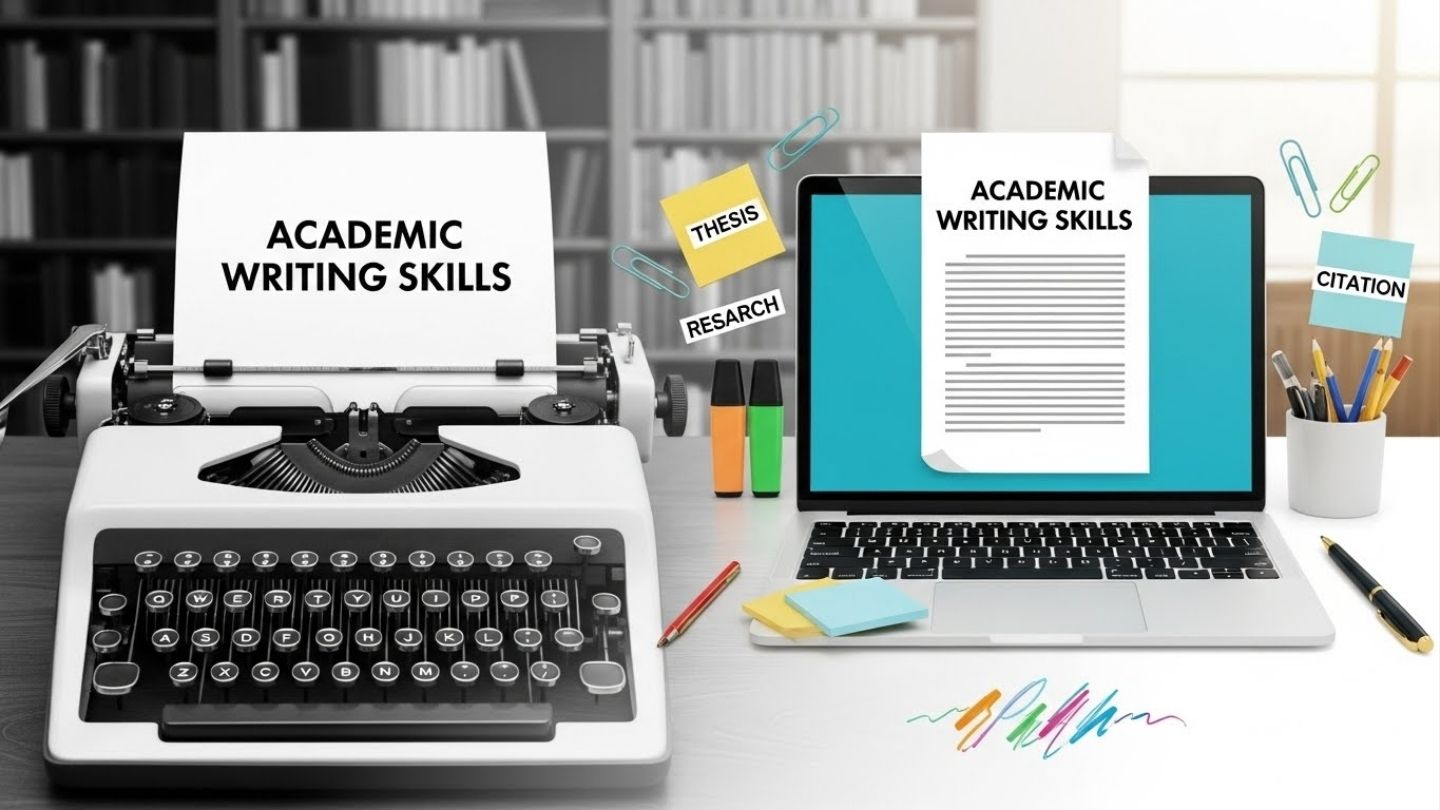
Academic writing is judged on clarity, structure, evidence, and honesty about sources. Small mistakes in any of these areas can make a strong idea look weak, confusing, or unreliable. This guide covers common academic writing mistakes and shows practical ways to fix them with examples you can apply right away.
What readers expect in academic writing
Most instructors, reviewers, and academic readers look for:
-
A clear main claim (thesis) and a logical path to support it
-
Paragraphs that stay on one topic and connect smoothly
-
Evidence that is relevant and cited correctly
-
Careful wording that avoids overstatements when the evidence is limited (a normal academic convention)
Common academic writing mistakes and how to avoid them
1) Weak or unclear thesis statement
A frequent issue is starting with a topic instead of a claim. A topic tells what the paper is about; a thesis tells what you argue or explain.
Signs you have this problem
-
Your introduction feels like background only
-
Your conclusion repeats facts but doesn’t “land” a position
-
Paragraphs feel disconnected because there’s no clear anchor claim
Fix it
-
Write a thesis that is specific and debatable (not a fact that everyone already agrees with).
-
Add a short “map” of how you will support it (2–4 key points).
Example (topic → thesis)
-
Topic: “This paper discusses social media and students.”
-
Thesis: “Regular, late-night social media use is linked to poorer sleep quality among university students, and the relationship appears stronger during exam periods, suggesting sleep-focused interventions may improve academic functioning.”
2) Poor paragraph structure and weak flow
Even good ideas can fail if paragraphs don’t have unity and clear internal logic.
What this looks like
-
Paragraphs are long and cover multiple points
-
Topic sentences are missing or too vague
-
Transitions are rare, so the reader has to “guess” the connection
Fix it
Use this simple paragraph pattern:
-
Topic sentence (what this paragraph proves)
-
Evidence (data, citations, examples)
-
Explanation (why that evidence matters)
-
Link (how it connects to the next point)
Purdue OWL highlights how topic sentences and cohesion help readers follow your argument.
Quick upgrade
After drafting, underline the first sentence of each paragraph. If those sentences don’t form a clear outline, revise the topic sentences first.
3) Unsupported claims and “citation gaps”
A common academic weakness is making confident claims without showing where the information came from.
Common citation gaps
-
Broad claims like “research shows…” without naming any research
-
Statistics without a source
-
Claims based on one study presented as universal truth
-
Using non-scholarly sources for technical or scientific claims
Fix it
-
Support key claims with credible sources (peer-reviewed research, academic books, government publications, recognized institutions).
-
Make sure citations match the claim being made (don’t cite a paper that only partly supports your sentence).
Better claim language
When evidence is limited or mixed, avoid absolute statements. Academic style often uses cautious wording to reduce overstatement.
4) Overquoting instead of synthesizing
Quotations are useful, but too many quotes can make the writing feel like a collage.
Fix it
-
Use quotes for definitions, key wording, or highly specific phrasing.
-
Prefer paraphrase + citation for general ideas, then add your analysis (the “so what?”).
APA’s guidance on paraphrasing emphasizes citing the original author when you restate ideas in your own words.
5) Accidental plagiarism (often from weak paraphrasing)
Plagiarism is not only copying full sentences. It can also happen when wording is too close to the source, even if you change a few words (often called patchwriting). COPE notes plagiarism does not have to be word-for-word.
Fix it (safe paraphrasing method)
-
Read the source section and close it
-
Write the idea from memory in your own structure
-
Reopen the source and check you didn’t copy phrasing
-
Add the citation
-
If the phrasing must stay, use a short quote with citation
6) Grammar and punctuation issues that reduce trust
Small language errors can distract readers and weaken credibility, especially in formal assessment.
Frequent problems
-
Long sentences with multiple clauses and unclear subjects
-
Inconsistent tense (switching between past and present)
-
Comma splices (joining two sentences with a comma)
-
Vague pronouns (“this,” “it,” “they”) with unclear references
Fix it
-
Prefer shorter sentences when explaining complex ideas
-
Read aloud to catch unclear phrasing
-
Do one editing pass only for grammar and punctuation (separate from content revision)
7) Inconsistent formatting and citation style
Many papers lose marks for formatting and referencing problems, even when ideas are good.
Fix it
-
Follow the required style guide consistently (APA, MLA, Chicago, etc.).
-
Use a reference manager (Zotero, Mendeley, EndNote) and still manually check final formatting.
-
For in-text citations, follow guidance from trusted writing resources (Purdue OWL is a reliable starting point).
Mini case studies: common errors and better versions
Case study 1: Overclaiming without evidence
-
Weak: “Online learning improves student performance.”
-
Better: “Several studies report improvements in specific outcomes under online learning conditions, but effects vary by course design, learner support, and assessment method.”
(Notice the second version avoids a universal claim and signals conditions.)
Case study 2: Paragraph without a clear topic sentence
-
Weak start: “There are many reasons students struggle. Technology is one reason. Time is another.”
-
Better start: “Students often struggle with academic writing because they have limited time for drafting and revision, which reduces opportunities to improve clarity and structure.”
Case study 3: Risky paraphrase
-
Risky: Same sentence structure as the source with swapped words
-
Better: Rewritten idea with a new structure + citation, then your explanation
(Use the “read → close → write → check → cite” method above.)
A practical editing workflow (repeatable)
Step 1: Outline after drafting
Write a one-line summary of each paragraph. If the summaries don’t form a logical chain, reorganize.
Step 2: Strengthen topic sentences
Make each topic sentence state the paragraph’s purpose clearly.
Step 3: Check evidence-to-claim match
For each key claim, ask: “What evidence supports this?” If you can’t answer in one sentence, revise or add a source.
Step 4: Add cautious language where needed
Avoid absolute certainty unless the evidence truly supports it.
Step 5: Fix citations and referencing
Confirm every paraphrase and quote has a citation. For paraphrases, APA expects you to cite the original work.
Step 6: Proofread last (not first)
Proofreading early wastes time because sentences will change during revision.
Step 7: Final checklist
-
Thesis is clear and specific
-
Each paragraph has one main idea
-
Claims are supported with credible sources
-
Paraphrases are genuinely rewritten and cited
-
Formatting matches the required style guide
Credible sources you can rely on (for writing support)
-
Purdue OWL (structure, cohesion, thesis, citations)
-
APA Style guidance on paraphrasing and citations
-
COPE guidance on plagiarism and publication ethics
-
University of Manchester Academic Phrasebank and related guidance on cautious language
Conclusion
Better academic writing comes from clear claims, well-shaped paragraphs, careful use of evidence, and correct handling of sources. If you focus on structure first, support your claims with strong references, and paraphrase safely with proper citation, your writing becomes easier to read and easier to trust.




Comments 0
No comments yet. Be the first to start the conversation.