



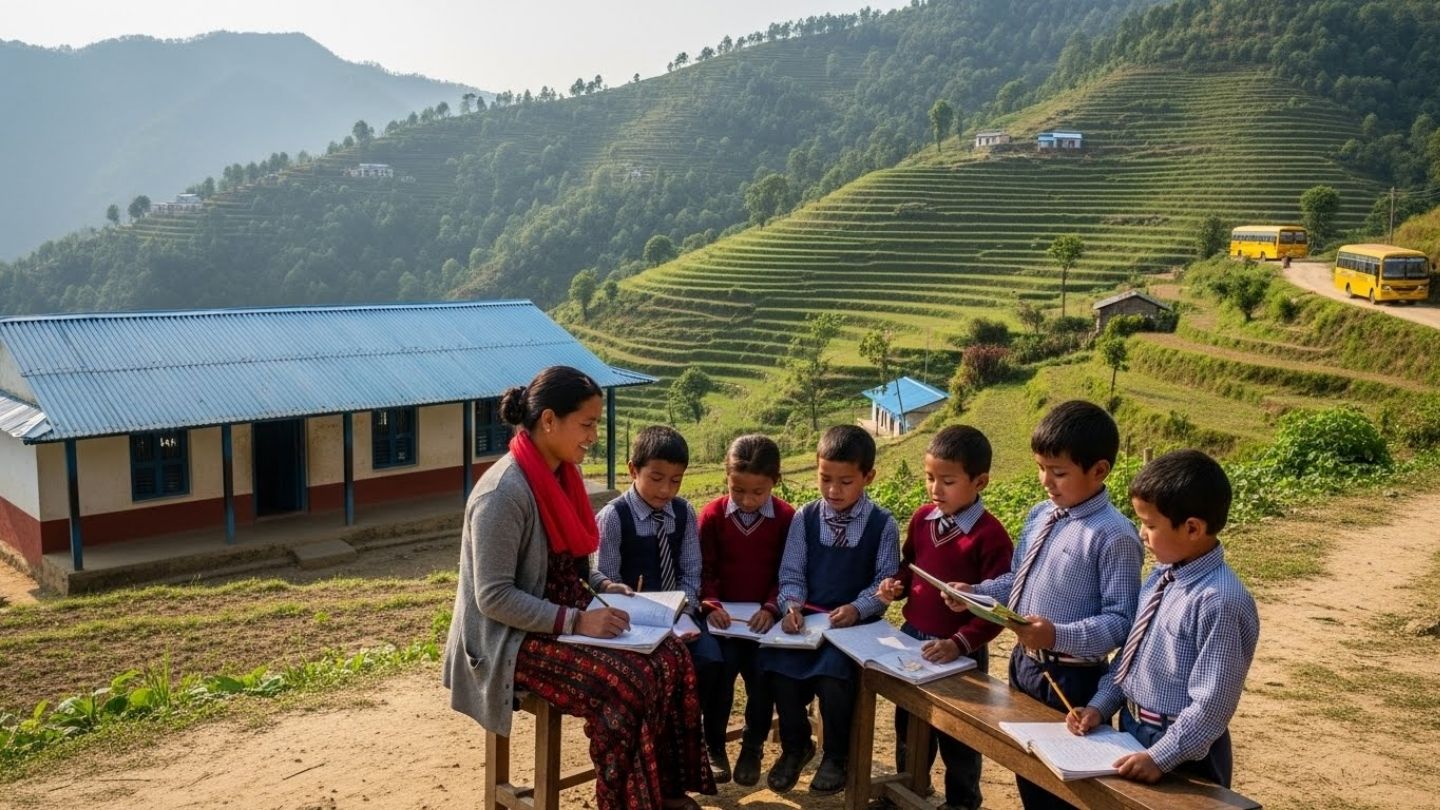
Education, Health, and the State’s Responsibility
Education and health are considered indicators of citizens’ quality of life and a state’s prosperity. Therefore, every welfare-oriented state places education and health under citizens’ fundamental rights and makes necessary plans and management arrangements. A state’s economic and social activities inevitably influence all sectors. Along with the factors that play a major role in urbanization and internal and external migration, the public mindset also contributes to the success or failure of national policies and action plans.
Migration and the Decline of Rural Student Numbers
In recent times, migration has caused student numbers in rural areas to decrease day by day. Especially as the trend of moving from rural areas to urban centers increases, self-reliant and fertile rural spaces are turning into remote forests. This trend has grown across almost all regions and terrains of the country. The Central Bureau of Statistics report shows a negative population growth rate due to young men and women leaving for foreign employment. This has also reduced the number of youths and children in rural areas.
Only senior citizens and people who are unable to migrate elsewhere remain in ancestral rural settlements. As a result, economic and other activities in rural areas have slowed down. In the context of schools, many parents appear increasingly attracted to institutional schools. As families of those engaged in foreign employment also tend to educate their children in institutional schools located in market areas and district headquarters, not only has the number of students in community schools declined, but news has also emerged in many places that student numbers have reached zero.
Teacher Shortage and Emerging Systemic Pressure
On one hand, student numbers in community schools are decreasing. On the other, the pain of not finding teachers has begun to intensify. Even in Kathmandu district, there is an acute shortage of mathematics and science teachers. In districts outside the capital, there is a daily demand for teachers in other subjects as well. Supply has not been able to meet demand.
The growing disinterest of young people in the teaching profession and the wave of going abroad have increased the shortage of teachers in schools. If this trend of leaving the country continues, a major shortage of teachers for both community and institutional schools is likely in the coming days. Even as the unemployment rate rises, not being able to obtain teachers in various subjects will become a serious problem for the state.
The Teacher-Student Imbalance in Community Schools
In the context of community schools, the situation of “students in some places but no teachers, and teachers in other places but no students” has been increasing.
Therefore, in the process of improving the education sector, attention must now be given to the teacher-student ratio and to teacher-student adjustment.
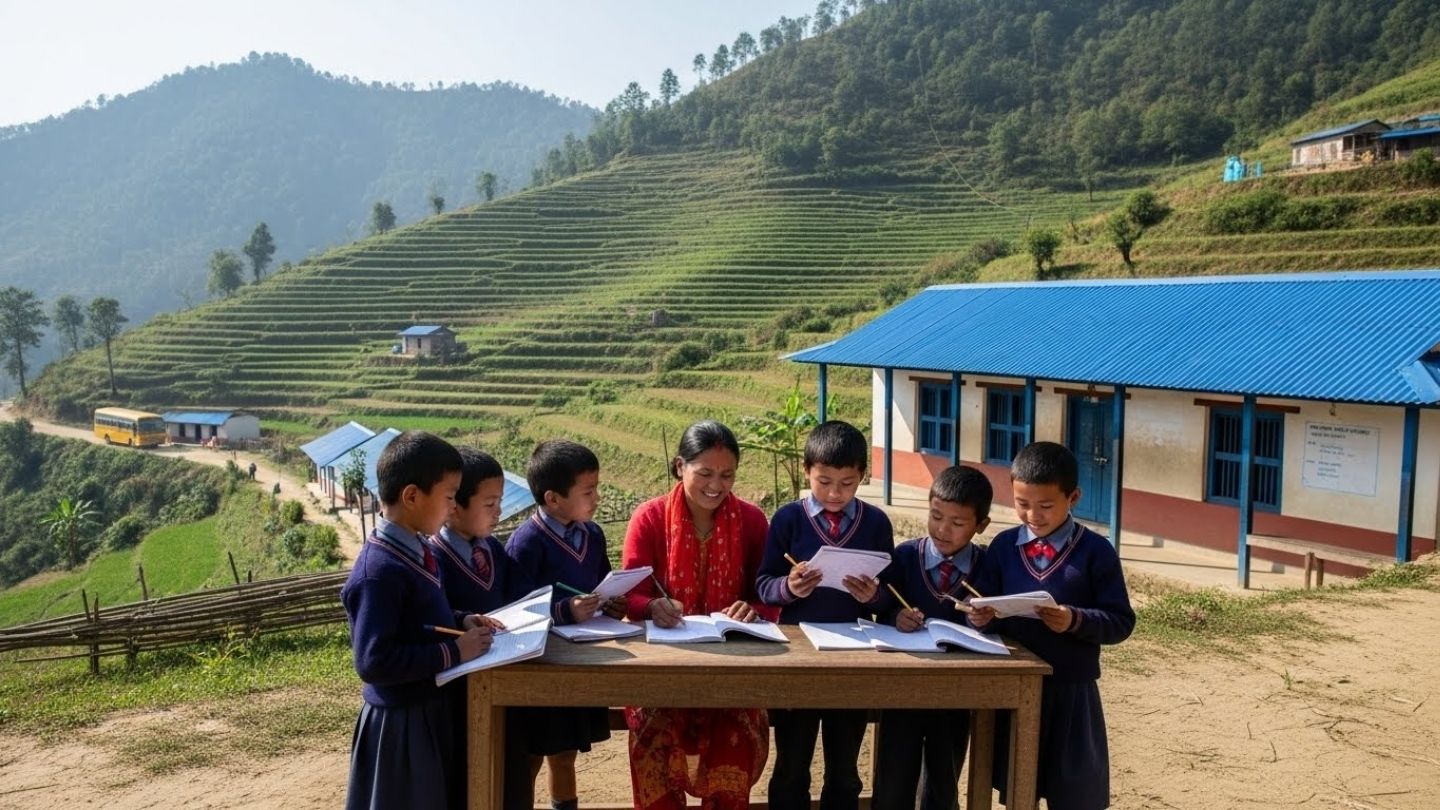
Multigrade Teaching and the Need for Proper Training
Advancing primary schools in the traditional way through subject-based or single-class teaching methods is quite expensive and ineffective, so it is unlikely that schools can continue operating in the same manner.
In places with a small number of students, multigrade teaching can become a useful approach. However, if multigrade teaching is seen only as a way to manage students in the absence of teachers, this method can become counterproductive.
Therefore, such classes become effective only after providing training on the important methods and practices of multigrade teaching and producing qualified human resources. Likewise, in subject-based teaching, students often engage in fragmented learning rather than gaining practical and comprehensive knowledge of any subject matter. This has disrupted learning continuity. To solve the problems seen in the current system, teaching-learning activities based on an integrated curriculum should be implemented.
Integrated Curriculum for Grades 1 to 3
Although the Curriculum Development Centre introduced the concept of an integrated curriculum for grades 1 to 3, it has become ineffective due to a lack of necessary preparation and training. There should be no delay in making the integrated curriculum model effective and in making school teaching-learning activities lively and practical.
If this approach can be implemented effectively, students will get the opportunity to learn in a small school nearby without having to go far from home.
The current need is to manage the distribution of teachers at the pre-primary level and to adopt an integrated teaching approach with limited human resources without merging or closing schools.
Schools offering grades 4 to 8 and grades 9 to 12 should adopt a policy of merging with one another while considering the number of available students and the distance to schools.
Local-Level Merger Practice and National Expansion
For the past few years, various local levels have already practiced lowering levels and merging schools within their jurisdiction based on the principle of necessity. This should be promoted nationally and school merger should be made systematic and effective. Since the dimensions and distribution of the population will not change immediately, school merger policies should not be opposed based on the old notion that opening schools was once considered a matter of prestige.
Keeping teacher positions in schools without students and trying to run them by any means also blocks the supply of teachers to schools that actually have students. Therefore, by adopting the good practices tested by some local levels, policies of school merger and restructuring should be embraced. Depending on geographical conditions, arrangements for school buses can also be made.
Local Governance, Large Schools, and Residential Options
Because local levels are the most effective bodies for managing school-level education, they should study the real conditions of schools and students within their area and adopt merger policies effectively. In hilly and high-hilly regions where students must travel long distances to attend school, if broad schools, or the “large school concept,” and residential schools are arranged, no child is likely to be deprived of the natural right to receive education.
Schools up to grade 3 should be kept as they are, while only teaching methods should be restructured repeatedly. Schools from grades 4 to 8 should be merged based on the principle of necessity and managed according to new standards. Regarding grades 9 to 12, the provision of broad schools, bus arrangements, and additional residential facilities can be applied based on geography.

Budget Constraints and Public Perception
In our country, where a low budget is allocated to the education sector, most of the available budget is spent on salaries and allowances. At the same time, a narrative has developed in our society that school development means the construction of physical infrastructure. Programs must be designed to ensure proper use of available resources and to change public perceptions about school education and community schools.
Without changing attitudes toward community schools, even if substantial funds are allocated to education, school education cannot be transformed in a real sense.
Priority Shift Toward Efficiency and Mapping
To ensure qualified human resources, quality education, and school operations free from political influence, everyone must show active commitment to making the best use of available resources. There was a time when the lack of schools as per need was a major problem. Now, as population dimensions and trends have changed, balancing teacher-student imbalances has become the first priority.
Local levels must show active involvement in school demarcation, mapping, and level-wise management. If result-oriented action plans can be implemented, the existing budget can make school education many times better and more standard than it is today.
Political Will, Frugal Spending, and One-Door Funding
If community schools are to be improved, local levels must demonstrate strong willpower. Without any personal grievances and in the interest of students, school restructuring should be taken positively to create an environment where the national treasury is spent in a frugal and responsible manner.
If this can be achieved, not only will the funds released for school meal programs but also the funds received from other donor agencies be able to reach targeted groups in schools through a one-door system.
Closing Emphasis on Timely Reform
For education reform, there is no alternative to prioritizing the proper use of available resources in policy and theoretical matters, and to giving priority to teacher-student management. If timely attention is not paid to this, the shortage of qualified human resources will not only degrade the quality of schools but may also mean missing a golden opportunity to revive the public trust of parents that is gradually being lost in community schools.
Rather than blaming a lack of budget and aiming only for large sums, the ministry and stakeholders must show concern and make corrective management reforms effective using the available human resources and budget.







Comments 0
No comments yet. Be the first to start the conversation.