




Table of Content
- Destination After SEE: +2 Vs a Technical Diploma
- Plus Two (+2) under the NEB: Structure and Features
- Three-Year Diploma (Diploma / PCL) under CTEVT
- A Detailed Comparative Analysis
- Five Bases for Making the Right Choice
- Possibilities in the Public Service Commission and Civil Service
- Myths and Realities in Nepali Society
- Conclusion
Destination After SEE: +2 Vs a Technical Diploma
The Secondary Education Examination (SEE) is a defining point that plays a foundational role in shaping the academic and professional future of every Nepali student.
Until about a decade ago, once school education was completed, the main question was simply, “Which subject should I study in Plus Two?” But with changes in time, technology, and the labor market, students and parents today have far broader options before them.
As the importance of employability and technical skills continues to rise, the traditional Plus Two (+2) under the National Examinations Board (NEB) is now increasingly competing with the three-year diploma level under the Council for Technical Education and Vocational Training (CTEVT).
It is natural for 15- to 16-year-old adolescents and their parents to face confusion when choosing an educational path. Questions such as “What is the fundamental difference between Plus Two and a diploma?”
“What opportunities does each option open up?” and “Which one helps more for Lok Sewa, or for going abroad for higher education?” should not be answered on the basis of superficial information.
In this article, we present a factual, research-based, and comparative analysis of these two different educational paths. It is intended to help students choose the best option according to their ability, economic background, interests, and future goals.
Plus Two (+2) under the NEB: Structure and Features
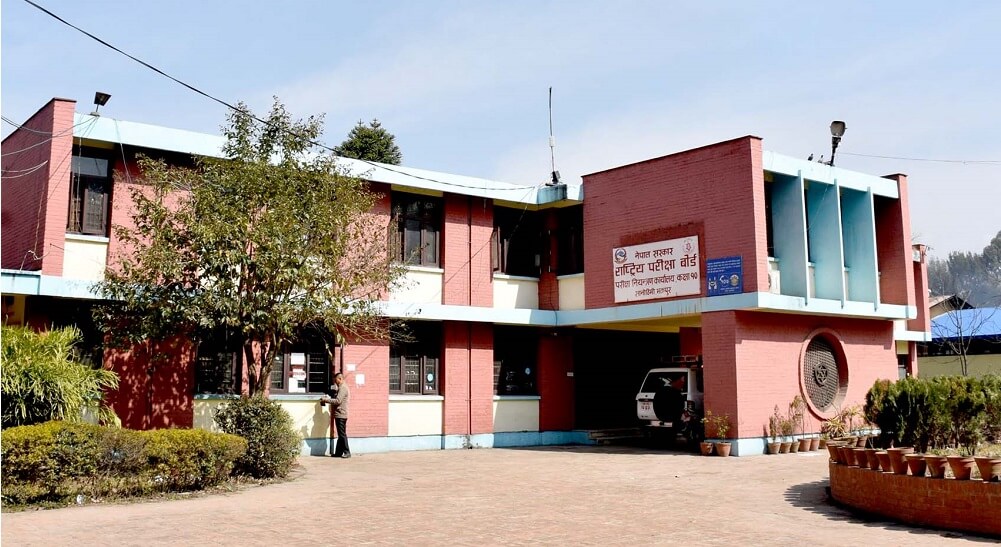
Secondary level education (Grades 11 and 12) is now the final stage of school education under Nepal’s new educational structure. The National Examinations Board regulates it, develops the curriculum, and certifies it.
Earlier, it was common to divide streams strictly by faculty—Science, Management, Humanities, and Education. Now, however, an integrated curriculum based on credit hours has been implemented.
This allows students some freedom to choose mixed subjects according to their interests, such as combining science with sociology. Even so, stream-based identity still remains important for career development.
Major study groups
Science
Physics, Chemistry, Biology, and either Computer Science or Mathematics fall under this stream. Studying these subjects builds the foundation for becoming an engineer, doctor, agricultural scientist, forestry expert, or IT professional in the future. Students from the science stream are also allowed to change disciplines freely at the bachelor’s level.
Management
Economics, Accounting, Finance, and Entrepreneurship fall within this stream. It is the main route for producing human resources for banking, corporate work, business, and administration.
Law
This is a newly emerging and increasingly popular stream at the secondary level. It builds the foundation for advocacy and judicial service.
Humanities and Education
Language and literature, political science, sociology, and teacher education remain important areas under these streams.
Advantages of studying Plus Two
-
Strong academic foundation: In two years, students can build a solid base of theoretical knowledge that prepares them for university-level research and analysis.
-
Flexibility to change subjects: A student who makes a decision at age 16 but feels dissatisfied by age 18 can still change fields at the bachelor’s level, especially in the case of science students.
-
Lower financial burden: Government or community schools charge nominal fees, and even private institutions are generally more affordable than many specialized programs.
Challenges
-
No immediate guarantee of employment: Since the knowledge gained in +2 is mainly theoretical, it is not always immediately marketable. In most cases, students need to wait until the bachelor’s level to become well established in work.
Three-Year Diploma (Diploma / PCL) under CTEVT

The three-year diploma or certificate programs operated under CTEVT produce middle-level technical manpower by focusing on immediate market demand.
Because diploma programs spend more than 60 percent of their time on practical classes and OJT (On the Job Training), their core philosophy is based on “learning by doing.” Students who pass the entrance examination can access many full scholarship opportunities from the Government of Nepal, while others may enroll under full-fee seats.
Major technical fields
Health Sciences: Subjects such as Health Assistant (HA), Staff Nurse (PCL Nursing), Radiography, Pharmacy, Lab Technician, Ophthalmic Science, and Ayurveda allow students to begin clinical work directly in health institutions after study.
Engineering: Civil, Computer, Electrical, Mechanical, and Geomatics Engineering enable students to receive licenses as overseers or sub-engineers. These are the technical workers who lead development and construction work on the ground.
Agriculture and Forestry: Under this sector, often regarded as the backbone of the country, students can study Diploma in Agriculture (Animal Science or Crop Science) and Forestry. It is an effective path for modern farming, veterinary technical work, or progression from JTA-level roles.
Hospitality and Humanities: Hotel Management and Social Work fall under this area.
Advantages of diploma education
-
Immediate employment potential: As soon as they complete the three-year course, young students can begin working in the professional world at the age of 18 or 19 and reach a stage where they can “earn for themselves and study for themselves.”
-
Direct route to Public Service Commission exams: Diploma level provides a direct path into attractive government jobs such as Non-Gazetted First Class technical positions, equivalent to Nayab Subba in status, or Level 5 posts.
-
Licensed professions: Especially in health and engineering, graduates can obtain professional permission from the relevant councils, such as the Nepal Health Professional Council or the Engineering Council, which gives legal protection to their profession.
Challenges
-
Being limited to one path: A student who chooses nursing or pharmacy at age 16 but later wants to study economics or another academic subject at age 18 may face major complications in credit evaluation when trying to switch fields.
-
Time and cost: While Plus Two finishes in two years, this route takes three years, and including OJT and final examinations, it may extend by several more months. In addition, especially in health-related subjects, the cost can rise to several hundred thousand rupees if a scholarship is not obtained.
A Detailed Comparative Analysis
Before making a decision, it is essential to compare both paths using key indicators.
Duration Strategy
In Nepal’s context, a student generally completes Plus Two at around 17 to 18 years of age, whereas a student from the same batch will usually complete a diploma course at at least 18 to 19.
Students who want to complete a four-year bachelor’s degree such as B.Sc. or BBA by the age of 22 or 23 and enter the international market early must analyze this one-year gap very carefully. Plus Two saves that one year, but that two-year route does not immediately provide a practical license that allows you to start earning right away.
University-Level Study: Equivalency and Bachelor’s Options
Both systems open the door to higher education. Students who pass +2 can enter bachelor’s programs suited to their field through entrance examinations at national and international universities.
Likewise, after completing a three-year diploma, major academic institutions in Nepal, including the Government of Nepal and Tribhuvan University, grant equivalency to Plus Two.
However, the difference lies here: a student who studied +2 Science can sit for entrance exams in Civil Engineering, MBBS, or B.Sc. Nursing the next day if eligible. On the other hand, a student who studied Diploma in Civil Engineering can directly pursue a B.E. in that field, but the door to nursing or agriculture is generally almost closed.
Students who are still deciding among broader academic and job-oriented routes may also find it useful to compare management vs technical study options in Nepal.
Higher Education Abroad and Visa Possibilities
“One which is easier for going abroad?” This has become one of the strongest current questions.
Both certificates can be used to apply to reputed universities abroad. Many Western universities readily accept Nepal’s Plus Two as a standard 12 years of schooling credential. Likewise, CTEVT certificates are also accepted after evaluation by credential evaluators such as WES in the United States or Canada, usually as high school diploma equivalency or associate degree equivalency.
However, because some CTEVT programs are three years long, there are occasional complaints that students have faced technical complications during visa processing in Europe and Australia, or have received poor advice from agencies. Therefore, for students whose sole focus is going abroad directly for a bachelor’s degree, the academic path of NEB Plus Two appears to be a safer and less troublesome option.
Economic Analysis: Return on Investment
For Nepali middle-class families, education is a major capital investment. At the government level, Plus Two, especially outside Science, costs relatively little. A student may complete it for NPR 15,000 to 20,000 or even less through a nearby school.
For CTEVT, securing a full or classified scholarship through top performance in the entrance examination and quotas allocated by the federal or provincial government is a strong advantage. Otherwise, in private colleges, engineering may cost around NPR 150,000 to 200,000, while health-related fields such as HA, Nursing, or Pharmacy can cost around NPR 500,000.
Therefore, if the key question is, “If we invest now, how quickly will the return come back?” then CTEVT becomes attractive for middle-class families because students can begin earning as early as age 19. It offers a strong “learn and earn” model.
Five Bases for Making the Right Choice
No path here is absolutely “100 percent best” or “100 percent bad.” The real issue is which option is appropriate for which student, according to that student’s circumstances and needs. Before making a decision, it is advisable to review the following points in a family discussion.
1. What do you want to become in the future?
If your goal is to become an administrator, researcher, software engineer, doctor (MBBS), chartered accountant, or lawyer, and you have the patience and ambition to study continuously up to the bachelor’s and master’s level, then the best option for you is +2 (Grades 11 and 12).
Students specifically considering the science stream after SEE may also benefit from reading Should You Study Science After SEE in Nepal?.
2. Higher education through self-support
If you do not have the interest or possibility of depending on your parents financially until age 22 or 23, and you want to start working directly after three years or open a private business such as contracting, pharmacy, or a clinic, and then gradually pursue B.E., B.Pharm, or BA using your own income, then a technical diploma course is an excellent option.
3. The family’s economic condition
If parents have the ability to invest a few hundred thousand rupees in technical education and expect that investment to become productive quickly, then preparing for diploma entrance is a sound direction. But if the family is in economic difficulty, taking affordable +2 education in a government or community campus while also preparing for future government competition such as Subba or Kharidar can be more beneficial.
4. Learning pattern assessment
Does the student have strong ability in abstract learning, such as understanding theory in the classroom and reasoning through analytical writing? If so, theoretical education through +2 may be more suitable.
Or does the student learn quickly by doing work with their hands or by observing directly? For example, enjoying repairing motorcycles, opening and assembling computers, or working with soil? In that case, vocational training and diploma education may be the best fit.
5. Competitive aptitude and stress
Scholarship quotas in technical courses are very limited. Students benefit only if they pass the entrance examination through strong effort. Therefore, if the entrance exam does not go as planned, it is always wise to keep a Plan B of studying Plus Two.
Possibilities in the Public Service Commission and Civil Service
For many Nepalis, the core dream is still a government job. Both educational streams open different routes into Lok Sewa.
The entry route into Public Service Commission positions is considered especially wide for technical manpower produced through CTEVT. The Government of Nepal often has hundreds of vacant Level 5 assistant-level posts across the country in health institutions, technical posts in ward offices, survey offices, and departments related to roads and buildings. Since the competition is limited to a relatively smaller group of students from technical backgrounds, diploma holders often have a higher success rate in Lok Sewa.
On the other hand, students who complete Plus Two in general subjects can apply in open competition for non-technical Nayab Subba posts. Here, the number of positions may not be small, but the competition becomes unlimited because all +2 graduates and holders of higher degrees from every stream are eligible to apply for the same post.
However, for competing in security-force positions such as Inspector in the police or officer cadet roles such as Second Lieutenant in the army, Class 12 itself, that is, the two-year academic certificate route, is generally considered more helpful.
Myths and Realities in Nepali Society
At this sensitive decision-making stage, it is important to understand some facts so that a student’s career is not derailed by the false ideas commonly heard in villages and neighborhoods.
Myth 1
“A diploma or CTEVT is bigger and harder than Plus Two.”
Reality: These are two different tracks, but the level is the same. In terms of global recognition, both are secondary or higher secondary education. Whether one is hard or easy depends on the student’s interests.
Myth 2
“If the GPA is good, the student should study Science. If the GPA is average, Management or Humanities. Otherwise, they should be sent to learn work through a diploma.”
Reality: This is a deeply rooted and harmful idea in Nepal. If your genuine interest lies in studying history in humanities or creating change in agriculture, then forcing a student into Science or into the path of becoming a doctor just because they earned an excellent GPA can be damaging. Today, many high-achieving students are choosing Law and Chartered Accountancy instead.
Myth 3
“After completing a CTEVT diploma, you cannot study for a bachelor’s degree, or if you can, it is only in government institutions.”
Reality: After completing a technical certificate-level course, the official door is fully open for admission into related faculties in constituent or private campuses under Tribhuvan University, Pokhara University, Kathmandu University, or Purbanchal University, as long as the bachelor’s subject lies in the same allied sector. However, changing tracks does remain challenging.
Conclusion
In short, the decision of whether to study Class 12 Plus Two or a three-year diploma certificate is not merely a choice between two institutions. It is a serious reflection of what kind of lifestyle a 15- or 16-year-old mind wants to live over the next ten years.
Technical education, or a diploma course under CTEVT, is a narrow but very precise trail that sharpens a student’s skills and leads directly and quickly toward a town where there is a stable source of income. For students who both need and prefer to become professionally self-reliant quickly, according to family and time demands, this path can be a milestone.
But if you are not in a hurry to specialize right now, and you want to move on a broader academic highway while exploring multiple fields and keeping the road open toward different universities, then Grades 11 and 12 under Nepal’s National Examinations Board remain a highly reliable choice.







the thing i wanted to ask was diploma students especially in engineering covers already the 1st year course of bachelors cant we be provided with a lateral entry and also what majority difference do u think a plus two graduate and diploma graduate will face