



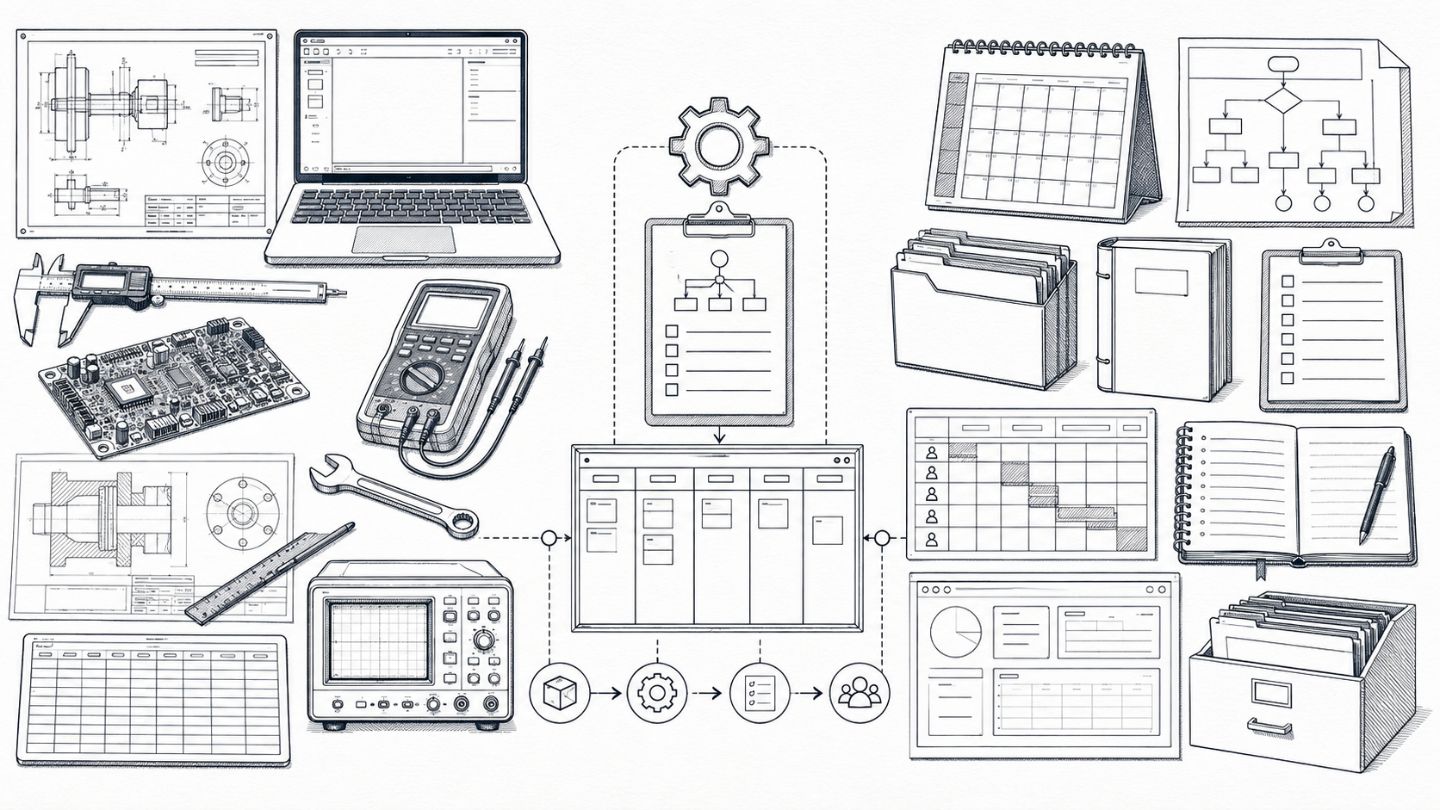
A technical career generally centers on applying specialized knowledge, tools, systems, methods, or practical expertise to produce a defined result. An administrative career generally centers on coordinating processes, policies, records, resources, programs, stakeholders, or organizational operations.
These are working definitions rather than universal occupational categories. International, national, and employer classification systems organize jobs differently. The distinction is mainly about the work performed, not the status or value of the position.
Technical work extends beyond information technology, coding, and engineering. Administrative work extends beyond reception, filing, and routine paperwork. Administrative roles are also not automatically management positions, while senior technical roles may include leadership and supervision.
This article compares daily work, outputs, skills, training routes, career development, hybrid roles, transition options, and technology-related change. It does not assume that either path has a universal advantage in salary, job security, status, or educational requirements.
Answer Summary: Technical careers usually emphasize specialized problem-solving, domain knowledge, tools, systems, and defined technical outputs. Administrative careers usually emphasize processes, records, policies, resources, coordination, and organizational outcomes. Both may require communication, analysis, digital skills, and leadership. The better fit depends on the duties you prefer, the responsibilities you want, the evidence of competence you can build, and the requirements of a specific role in your country and sector.
Table of Content
- Technical vs Administrative Career: Quick Comparison
- What Is a Technical Career?
- What Is an Administrative Career?
- How Does the Daily Work Usually Differ?
- What Skills Does Each Path Require?
- What Education and Training Routes Are Available?
- How Can Each Career Path Develop?
- Which Path Fits Your Work Preferences?
- Do Not Choose by Job Title Alone
- How Can You Test Each Path Before Committing?
- Can You Switch Between Technical and Administrative Work?
- How May AI and Changing Work Affect Each Path?
- Final Decision Checklist
- Final Decision: Compare the Work, Not the Label
Key Takeaways:
-
Compare duties, outputs, and authority rather than titles.
-
Technical work is not limited to computing or engineering.
-
Administrative work is not automatically clerical or managerial.
-
Formal classifications vary by country, sector, and employer.
-
Many positions combine specialist and coordination duties.
-
Qualification, salary, and outlook claims require local evidence.
-
A limited work trial can provide useful decision evidence.
Technical vs Administrative Career: Quick Comparison
The clearest comparison applies the same criteria to both paths. Job titles, prestige, salary assumptions, and personality labels do not reliably show what a person will do each day.
| Criterion | Technical career | Administrative career |
|---|---|---|
| Core output | A specialized solution, analysis, system, test, repair, product, or method | A coordinated process, record, plan, resource flow, policy contribution, service, or program result |
| Knowledge pattern | Often deeper within a domain, system, toolset, or method | Often broader across procedures, stakeholders, records, rules, and organizational needs |
| Common tasks | Design, diagnose, build, test, configure, calculate, inspect, maintain, or investigate | Coordinate, schedule, document, analyze, monitor, allocate, communicate, or apply procedures |
| Tools | Domain software, equipment, standards, testing methods, technical data, or specialized systems | Workflow platforms, records systems, planning tools, office software, policy documents, and reporting systems |
| Stakeholders | May combine focused work with collaboration, review, teaching, or client communication | Often involves coordination across teams, leaders, clients, vendors, regulators, or service users |
| Decision authority | Technical methods, diagnosis, design, quality, safety, or system performance | Priorities, schedules, procedures, records, resources, compliance, or service delivery |
| Career development | Practitioner, specialist, senior specialist, lead, principal, expert, or technical manager | Assistant, coordinator, officer, analyst, manager, program lead, or operations leader |
| Learning pattern | Continued development of domain depth, tools, standards, and methods | Continued learning across processes, regulations, systems, stakeholders, and services |
These are illustrative patterns rather than fixed rules. A systems analyst may spend considerable time coordinating users and vendors, while an operations officer may need advanced knowledge of data, software, or regulatory systems.
What Is a Technical Career?
For this article, a technical career means work in which specialized knowledge, methods, systems, tools, or practical expertise are central to the output.
Technical work appears in fields such as engineering, computing, laboratories, manufacturing, construction, transport, agriculture, energy, design, data, maintenance, and health technology. Its exact meaning depends on the occupation and classification system.
The International Labour Organization’s International Standard Classification of Occupations, or ISCO-08, organizes jobs according to the similarity of their tasks and the skill level and specialization involved. Its major groups separately identify managers, professionals, technicians and associate professionals, and clerical support workers. It does not place every occupation commonly described as technical in one group.
The U.S. Office of Personnel Management classification guide uses a narrower meaning within the U.S. federal General Schedule. In that framework, technical work is generally associated with and supportive of professional or administrative fields and involves practical knowledge, established procedures, technical skill, care, and precision. That definition applies to U.S. federal position classification and should not be treated as a global definition.
Common Technical Outputs
Technical roles commonly produce an identifiable specialist result, such as:
-
a design, model, calculation, or specification;
-
a working system, configuration, component, or repair;
-
a diagnosis, inspection, test result, or quality finding;
-
a technical drawing, dataset, procedure, or analysis;
-
a safe operating method;
-
evidence that a product or process meets defined standards.
The output may be physical, digital, analytical, or service-based. Communication can still be a substantial part of the work because technical professionals may need to document decisions, explain findings, train colleagues, or discuss requirements with users.
What Is an Administrative Career?
For this article, an administrative career means work in which coordination, planning, documentation, policy, compliance, resources, records, programs, or operations are central.
Administrative duties may involve schedules, reports, records, budgets, procurement, procedures, meetings, program information, deadlines, and communication across an organization. Some positions focus on structured support. Others require analysis, discretion, policy interpretation, or responsibility for an organizational service.
In the U.S. federal General Schedule, administrative work is associated with analytical ability, judgment, discretion, and knowledge of administrative or management principles. The framework describes administrative employees as analyzing, evaluating, modifying, or developing programs, policies, and procedures. This is a jurisdiction-specific meaning rather than a universal definition.
Administrative, Clerical, and Management Work Differ
Administrative, clerical, and management work may overlap, but they are not interchangeable.
Clerical work commonly involves structured support activities such as processing transactions, maintaining records, preparing documents, and compiling information under established procedures.
Administrative work may involve greater responsibility for analysis, programs, policies, procedures, resources, or operations. Management usually includes authority over priorities, resources, performance, risk, services, programs, or employees.
An administrator may have no direct reports. A technical manager may supervise people while retaining specialist responsibility. ISCO-08 also treats managers and clerical support workers as separate major occupational groups.
Public-Sector Classifications Require Local Verification
Terms such as technical, administrative, officer, assistant, clerical, professional, and support may have formal meanings within a civil-service system.
Those labels can affect eligibility, examinations, grade structures, duties, and progression. Public-sector applicants should rely on the current official vacancy notice, service rules, occupational classification, and examination authority in their jurisdiction.
An international classification or a definition from another country does not confirm local eligibility.
How Does the Daily Work Usually Differ?
Technical work often revolves around a specialized problem, system, method, or deliverable. Administrative work often revolves around a process, service, program, record, deadline, or group of stakeholders.
A technical worker may spend sustained periods diagnosing a fault, analyzing data, testing a design, inspecting a product, configuring a system, or applying a specialist procedure.
An administrative worker may move between approvals, schedules, records, reports, meetings, resource questions, and coordination across several teams.
Measures of success may also differ:
-
Technical work may be assessed through accuracy, safety, reliability, quality, performance, or compliance with specifications.
-
Administrative work may be assessed through timeliness, procedural compliance, record accuracy, service continuity, coordination, or responsible resource use.
Neither path has a fixed level of stress, independence, interaction, or workload. Those conditions depend on the occupation, employer, sector, seniority, and working environment.
Where Both Paths Overlap
Technical and administrative careers may both require:
-
analytical thinking;
-
written and verbal communication;
-
documentation;
-
digital literacy;
-
stakeholder awareness;
-
teamwork;
-
time management;
-
judgment and accountability;
-
learning from feedback;
-
compliance with standards or procedures.
Senior technical specialists may mentor colleagues, review decisions, influence priorities, and communicate with clients. Administrative professionals may need enough technical knowledge to understand the systems, data, regulations, or services they coordinate.
What Skills Does Each Path Require?
Technical careers often place greater emphasis on depth within a domain. Administrative careers often place greater emphasis on coordinating work across processes, records, rules, and stakeholders.
This is a tendency rather than a fixed rule.
Technical skills may include:
-
subject or domain fundamentals;
-
specialized tool or equipment use;
-
diagnosis and troubleshooting;
-
testing and validation;
-
data interpretation;
-
technical documentation;
-
quality control;
-
safety and standards awareness.
Administrative skills may include:
-
process coordination;
-
document and record control;
-
scheduling;
-
formal writing;
-
reporting;
-
policy interpretation;
-
resource tracking;
-
stakeholder communication;
-
service or program monitoring.
O*NET OnLine provides occupation-level information covering tasks, work activities, knowledge, skills, abilities, work context, interests, and training. Its structure supports comparing actual occupational requirements rather than assigning a person to a career through one personality label. O*NET is a U.S. resource and should be considered alongside local information.
Skills That Transfer Between Paths
Transferable skills can support a transition, but they do not prove competence in the new position.
| Direction | Transferable strengths | Gaps to assess |
|---|---|---|
| Technical to administrative | Domain knowledge, analysis, documentation, quality awareness, risk identification, and project experience | Stakeholder coordination, organizational writing, policy interpretation, budgeting, records, and service processes |
| Administrative to technical | Process knowledge, planning, reporting, communication, user awareness, and operational context | Domain fundamentals, tool proficiency, standards, assessed practice, portfolio evidence, and required credentials |
| Either path to a hybrid role | Communication, data use, planning, problem-solving, and understanding of users or operations | Sufficient depth on both sides and evidence of handling combined duties |
Employers may assess competence through qualifications, work samples, practical tests, portfolios, supervised experience, project records, interviews, or previous responsibilities.
Readers who need to demonstrate transferable or specialist ability can review how to build a portfolio without work experience. The portfolio should support a specific target role rather than become a collection of unrelated activities.
What Education and Training Routes Are Available?
There is no single education route for either career path. Requirements vary by occupation, employer, country, sector, and regulatory status.
Technical entry routes may include:
-
university degrees;
-
technical diplomas;
-
apprenticeships;
-
vocational education;
-
professional certifications;
-
employer training;
-
portfolios;
-
supervised practice.
Administrative routes may include:
-
secondary education;
-
office or vocational training;
-
diplomas or degrees;
-
public-service examinations;
-
sector-specific study;
-
entry-level support experience;
-
prior operational or subject knowledge.
Some occupations require an approved qualification, license, registration, or supervised practice. These conditions must be checked through the relevant authority.
An internship, apprenticeship, and traineeship may provide different forms of workplace exposure and structured learning. Their legal status, payment arrangements, qualification outcomes, and participant protections vary by jurisdiction. Collegenp’s comparison of internships, apprenticeships, and traineeships can help readers identify the questions to ask before selecting a route.
Before choosing a course or credential, check:
-
several current vacancies for the target position;
-
the official occupational or civil-service classification;
-
licensing or professional-body requirements;
-
the curriculum and assessment method;
-
whether the program produces usable evidence of competence;
-
recognition of the qualification in the intended location;
-
the time, cost, access, and practical-training requirements.
How Can Each Career Path Develop?
Both paths can lead to senior responsibility, leadership, and continued learning. People management is not the only form of career progression.
The ladders below are illustrations. Employers may use different titles, omit levels, or combine duties.
Illustrative Technical Specialist Ladder
A technical path may progress through stages such as:
-
trainee or junior practitioner;
-
practitioner or technician;
-
specialist;
-
senior specialist;
-
technical lead;
-
principal specialist;
-
subject expert;
-
technical manager.
Progression may add responsibility for methods, design, review, system ownership, safety, technical standards, mentoring, or quality decisions.
Illustrative Administrative and Operations Ladder
An administrative path may progress through stages such as:
-
assistant;
-
coordinator;
-
officer;
-
analyst;
-
senior officer or analyst;
-
manager;
-
program lead;
-
operations leader.
Progression may add responsibility for policies, budgets, records, services, programs, resources, cross-functional coordination, or organizational risk.
Titles do not confirm authority. An officer may perform professional analysis in one system and structured support in another. A manager may manage people, projects, systems, resources, or a technical function.
Students preparing for either ladder may benefit from treating skills, practical experience, feedback, relationships, and evidence of ability as connected forms of career capital, rather than collecting unrelated qualifications or activities.
Hybrid Roles
Hybrid roles combine specialist knowledge with coordination, operations, or program responsibility.
Possible examples include:
-
technical project coordination;
-
systems and operations analysis;
-
implementation or deployment coordination;
-
laboratory administration;
-
technical program leadership;
-
health-information administration;
-
domain-specific compliance work.
The actual balance depends on the employer. One technical coordinator may focus mainly on schedules and reporting, while another participates in specialist decisions and quality review.
A hybrid title does not remove the need to check the required depth, authority, qualifications, and evidence of competence.
Which Path Fits Your Work Preferences?
A suitable path is one whose recurring tasks, learning demands, outputs, and responsibilities you are willing to practise over time.
Use these eight questions:
-
Which output gives you greater satisfaction?
Compare producing a specialized solution with keeping a process, service, or program working accurately. -
Do you prefer depth or breadth?
Technical roles may require extended study within one domain. Administrative roles may require attention across several processes, rules, and stakeholders. -
Which problems hold your attention?
Compare diagnosis, design, testing, and precision with coordination, procedures, records, resources, and service delivery. -
What type of communication suits the role you want?
Examine the frequency, purpose, audience, and consequences of communication rather than relying on introvert or extrovert labels. -
Which decisions do you want to own?
Compare decisions about technical methods, quality, and safety with decisions about processes, schedules, resources, compliance, or programs. -
How do you prefer to learn?
Some roles demand repeated domain practice. Others require learning across systems, regulations, stakeholders, and organizational needs. -
What evidence can you build?
Determine whether employers expect a qualification, portfolio, practical test, writing sample, project record, license, or previous responsibility. -
What constraints apply?
Consider time, cost, access to training, location, caregiving responsibilities, local opportunities, and available entry routes.
A career-interest assessment may generate questions, but it should not decide the career. Readers who remain stuck after the comparison can follow the practical process in what to do when you cannot decide on a career.
Do Not Choose by Job Title Alone
A job title is a search clue, not reliable proof of the work.
Common Title Traps
-
Administrator may refer to organizational administration or a technical position such as systems administration.
-
Coordinator may focus on schedules and records or require substantial knowledge of a specialist field.
-
Officer may describe analytical, professional, operational, regulatory, or support work.
-
Manager may oversee people, projects, services, resources, systems, or a technical function.
-
Technical officer may involve inspection, fieldwork, laboratory work, system support, regulation, or program duties.
The duties, deliverables, authority, and required evidence provide more reliable information than the title.
Five-Minute Job-Description Audit
Read the vacancy twice. First, mark recurring action verbs. Then identify the outputs, tools, stakeholders, decision authority, and evidence requirements.
| Audit item | What to identify | What it reveals |
|---|---|---|
| Action verbs | Design, test, diagnose, maintain; or coordinate, document, monitor, allocate | The dominant work pattern |
| Deliverables | System, repair, analysis, specification; or plan, report, record, schedule, program result | What the employer will assess |
| Tools and domain | Equipment, software, laboratory methods, standards; or workflow systems, policies, records, reporting tools | Required knowledge and training |
| Stakeholders | Users, teams, clients, vendors, leaders, regulators, or public bodies | Communication demands and work context |
| Decision authority | Method, design, quality, safety; or process, priority, resources, compliance, service | The responsibility attached to the role |
| Required evidence | Qualification, license, portfolio, assessment, experience, or writing sample | The entry barrier you need to meet |
Compare at least two vacancies using the same criteria. A mixed result may indicate a hybrid position.
How Can You Test Each Path Before Committing?
A limited trial can show how you respond to the work before making a major education or employment decision. It cannot guarantee long-term fit, but it can replace assumptions with direct experience.
A 30-Day Career Test
Complete these five activities:
-
One informational interview
Ask a worker what they produce, how their time is divided, which mistakes matter, and what new entrants often misunderstand. -
One permitted observation activity
Observe the workflow through approved job shadowing, a workplace visit, a public demonstration, or supervised project activity. -
One small task from each path
A technical task might involve analyzing data, troubleshooting a simple system, practising a tool, or drafting a specification. An administrative task might involve mapping a process, organizing records, preparing a schedule, or drafting an operational brief. -
One written reflection
Record your attention, difficulty, learning interest, feedback, and response to the recurring duties. -
One role comparison
Compare two vacancies by outputs, tools, stakeholders, authority, qualification requirements, and expected evidence.
Students may use supervised projects, clubs, laboratory activities, volunteering, or short courses. Workers may seek an approved rotation, cross-functional assignment, or observation opportunity.
Permission, privacy, confidentiality, and safety requirements should be respected throughout the test.
Can You Switch Between Technical and Administrative Work?
A transition is possible in some settings, but it is not automatic. It depends on the target role, domain knowledge, credentials, evidence of skill, employer requirements, and available opportunities.
Moving From Technical to Administrative Work
Potential transferable strengths include:
-
subject knowledge;
-
analysis;
-
documentation;
-
quality awareness;
-
project experience;
-
risk identification;
-
familiarity with users and systems.
Possible development gaps include:
-
stakeholder coordination;
-
organizational writing;
-
policy interpretation;
-
budgeting;
-
records and reporting;
-
service processes;
-
program planning.
Moving From Administrative to Technical Work
Potential transferable strengths include:
-
process knowledge;
-
planning;
-
reporting;
-
communication;
-
user awareness;
-
operational context;
-
knowledge of organizational systems.
Possible development gaps include:
-
technical fundamentals;
-
specialized tool use;
-
standards and methods;
-
assessed practice;
-
portfolio evidence;
-
supervised experience;
-
required licensing or certification.
Operational familiarity does not replace technical competence when specialized judgment or regulated practice is required.
A Staged Transition Method
-
Select a specific target role.
-
Compare your current skills with several vacancy descriptions.
-
Identify the most important evidence gaps.
-
Complete a relevant project, course, or assessed activity.
-
Obtain feedback from someone familiar with the work.
-
Document the new evidence.
-
Apply when you can meet the stated requirements.
How May AI and Changing Work Affect Each Path?
No broad career label is protected from technological change. A more useful question is which tasks are exposed, which duties are changing, and which forms of human judgment remain necessary.
The World Economic Forum’s Future of Jobs Report 2025 reflects responses from more than 1,000 employers representing more than 14 million workers across 22 industry groups and 55 economies. It reports employer expectations for 2025–2030 rather than certain outcomes for every occupation or worker.
The report identifies AI and big data, networks and cybersecurity, and technological literacy among the fastest-growing skill areas expected by participating employers. It also identifies analytical thinking, creative thinking, resilience, flexibility, leadership, and social influence as important. These findings describe employer expectations rather than guaranteed employment results.
The ILO’s 2025 refined global index of occupational exposure to generative AI combines task-level information, expert input, survey evidence, and AI-assisted assessment. It reports that clerical occupations continue to have the highest exposure levels and estimates that one in four workers worldwide is in an occupation with some generative-AI exposure. The report states that job transformation is more likely than complete replacement because most occupations still contain tasks requiring human input.
Exposure is not the same as adoption, automation, displacement, or unemployment. Clerical occupations should also not be treated as equivalent to all administrative work.
Administrative roles span records, programs, policy, analysis, coordination, compliance, operations, and management. Technical roles also vary widely in how much of their work can be standardized or assisted.
Readers seeking a more detailed task-level discussion can review how AI is changing entry-level jobs.
Across both paths, useful development areas include:
-
domain or sector knowledge;
-
analytical judgment;
-
communication;
-
digital and data literacy;
-
the ability to review automated output;
-
adaptability supported by continued learning.
Final Decision Checklist
Before selecting a course, applying for a position, or changing paths, confirm that:
-
I can describe the role’s main outputs in plain language.
-
I have reviewed several current job descriptions.
-
I know which duties are technical, administrative, clerical, managerial, or hybrid.
-
I have checked local qualification and licensing rules.
-
I have not assumed a universal salary or security advantage.
-
I understand the recurring tasks and stakeholder demands.
-
I know which decisions the position controls.
-
I have identified the evidence of competence the employer expects.
-
I have tested part of the work or spoken with people who perform it.
-
I understand the time, cost, and access barriers.
-
I know which gaps require study, practice, or supervised experience.
-
I have set a point for reviewing the decision when new evidence appears.
Final Decision: Compare the Work, Not the Label
Technical and administrative careers differ mainly in their center of responsibility.
Technical work generally produces a specialized solution, analysis, service, repair, system, test, or method. Administrative work generally coordinates processes, records, policies, resources, programs, services, and stakeholders.
Both paths can involve analysis, communication, leadership, documentation, and digital systems. Many roles also combine the two patterns.
A practical decision rests on five points:
-
Technical careers generally center on specialized output, while administrative careers generally center on coordinated organizational work.
-
Technical, administrative, clerical, and management work should be distinguished before roles are compared.
-
Duties, outputs, tools, decision authority, and evidence requirements are more reliable than job titles.
-
Salary, outlook, licensing, qualifications, and AI effects require role-specific and jurisdiction-specific evidence.
-
A vacancy audit, worker conversation, permitted observation, and small task can provide useful evidence before committing.
Choose at the level of a real position. Examine what you would do each week, what output you would own, which decisions you would make, what evidence of competence is required, and how the role is classified in the relevant country and sector.







Comments 0
No comments yet. Be the first to start the conversation.