



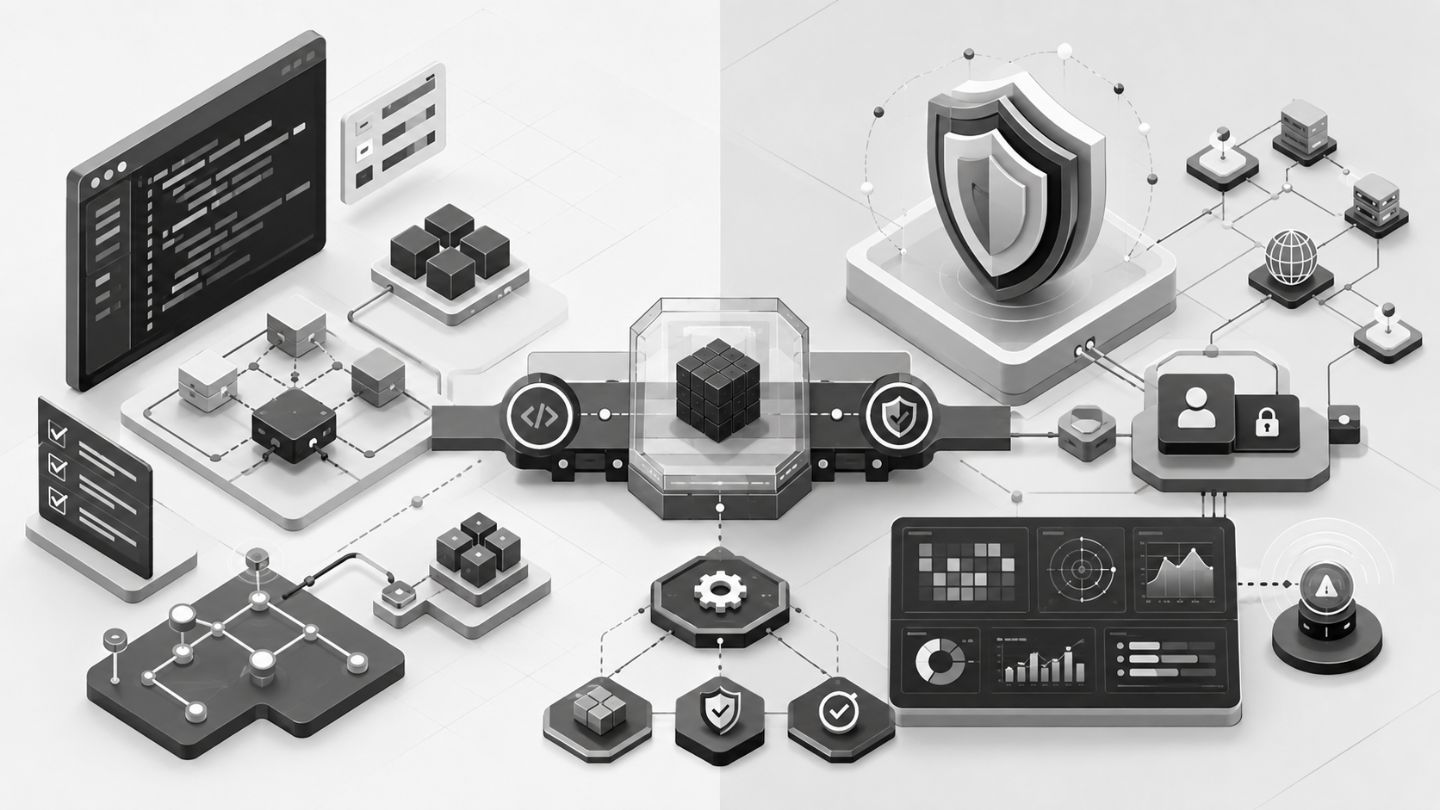
Cybersecurity and software engineering are related technical fields, but they serve different primary goals. Cybersecurity focuses on managing digital risk and protecting systems, applications, networks, identities, and data. Software engineering focuses on designing, developing, testing, operating, and maintaining software.
Neither field is better for everyone. The right choice depends on the problems you want to solve, the type and amount of programming you enjoy, the work pattern you prefer, and the education and employment opportunities available in your country.
It is also more useful to compare career families than individual job titles. Cybersecurity includes operational, engineering, investigative, governance, and risk roles. Software engineering includes application development, testing, architecture, infrastructure, reliability, and technical leadership.
Answer Summary: Choose cybersecurity if you are more interested in protecting systems, investigating unusual activity, managing risk, and improving defensive controls. Choose software engineering if you prefer designing products, developing and reviewing code, testing software, and maintaining systems through repeated development cycles. Consider application security, product security, cloud security engineering, security automation, or DevSecOps if you enjoy both software construction and security.
Table of Content
- Cybersecurity vs Software Engineering at a Glance
- Representative Career Families
- What Cybersecurity Professionals Do
- What Software Engineers Do
- Key Differences Between Cybersecurity and Software Engineering
- Skills and Coding Requirements
- Education and Entry Routes
- Which Field Is Harder?
- Salary and Job Outlook
- Work Environment and Pressure
- Where the Fields Overlap
- Can You Switch Between the Fields?
- How AI May Affect Both Careers
- Reader-Fit Decision Framework
- What to Verify in Your Country
- A Practical Decision Test
- Final Verdict
Key Takeaways:
-
Cybersecurity primarily manages digital risk; software engineering primarily creates and maintains software.
-
Software development roles usually involve more sustained programming.
-
Coding requirements in cybersecurity vary widely by specialization.
-
Cybersecurity is broader than penetration testing or security monitoring.
-
Software engineering includes requirements, design, testing, maintenance, documentation, and collaboration.
-
Salary comparisons require equivalent occupations, locations, sectors, and experience levels.
-
Hybrid careers combine software development ability with security knowledge.
Cybersecurity vs Software Engineering at a Glance
The clearest difference is the purpose of the work. Cybersecurity reduces and manages digital risk, while software engineering creates, operates, and maintains software.
| Comparison area | Cybersecurity | Software engineering |
|---|---|---|
| Main objective | Protect assets and manage digital risk | Create and maintain software systems |
| Typical outputs | Controls, assessments, detections, incident findings, risk decisions | Applications, services, tests, architecture, releases, updates |
| Coding emphasis | Low to high, depending on the role | Usually recurring and central in development roles |
| Core foundations | Networks, operating systems, identity, cloud, risk, security principles | Programming, data structures, databases, testing, design, architecture |
| Common work cycle | Govern, identify, protect, detect, respond, recover | Define, design, build, test, operate, maintain |
| Common pressure | Incidents, vulnerabilities, audits, control failures | Defects, deadlines, reliability problems, changing requirements |
| Entry evidence | Authorized labs, system knowledge, assessments, reports, internships | Projects, source code, tests, documentation, internships |
The NIST Cybersecurity Framework 2.0 organizes cybersecurity outcomes through six functions: Govern, Identify, Protect, Detect, Respond, and Recover. It provides a risk-management structure rather than a list of individual job duties.
Software engineering covers more than programming. It includes requirements, architecture, construction, testing, operations, maintenance, quality, security, and professional practice. The SWEBOK Guide V4.0a presents the current IEEE Computer Society body of knowledge for the discipline.
Representative Career Families
Both fields contain many specializations. Job titles are not standardized, and employers may use the same title for positions with different responsibilities.
| Career area | Cybersecurity examples | Software engineering examples |
|---|---|---|
| Operations | Security operations analyst, incident responder, vulnerability analyst | Application developer, backend developer, mobile developer |
| Engineering | Security engineer, cloud security engineer, detection engineer | Platform engineer, infrastructure engineer, full-stack engineer |
| Architecture | Security architect, identity architect, product security architect | Software architect, systems designer, solutions engineer |
| Testing and assurance | Application security analyst, security assessor, authorized penetration tester | Quality-assurance engineer, test-automation engineer, reliability engineer |
| Governance and coordination | Risk analyst, compliance specialist, security program manager | Engineering manager, technical program lead, delivery lead |
| Specialist work | Digital-forensics analyst, threat analyst, security-tool developer | Embedded-systems engineer, data engineer, performance engineer |
The NICE Framework Components v2.2.0 describe cybersecurity through work-role categories, individual work roles, competency areas, tasks, knowledge, and skills. The April 28, 2026 update added competency areas for DevSecOps and cryptography, along with a cybersecurity supply-chain-risk-management work role.
What Cybersecurity Professionals Do
Cybersecurity professionals help organizations understand, reduce, monitor, and respond to digital risk. Their work may be technical, investigative, operational, managerial, or policy-related.
Defensive Monitoring and Incident Response
Defensive teams monitor systems, examine alerts, investigate possible incidents, document findings, coordinate responses, support recovery, and recommend improvements.
Typical responsibilities may include:
-
Reviewing security alerts and system logs
-
Investigating unusual account or network activity
-
Documenting evidence and response actions
-
Helping contain and recover from incidents
-
Improving detection rules and response procedures
-
Communicating findings to technical and nontechnical teams
These responsibilities describe only part of cybersecurity. Not every role involves continuous monitoring or incident response.
Security Engineering and Architecture
Security engineers design, implement, and maintain technical controls. Depending on the role, they may work with identity systems, network protection, cloud environments, endpoint security, logging, secure configuration, automation, or application controls.
Security architects examine how systems, users, applications, data, and controls interact. They may assess proposed designs, identify risk, recommend safeguards, and help teams make security decisions before deployment.
Testing, Investigation, and Assurance
Testing and assurance roles evaluate whether systems and controls work as intended. Their responsibilities may include vulnerability assessment, configuration review, secure-code review, digital forensics, control testing, or authorized security testing.
Security testing must take place with clear permission and an agreed scope. Students should use supervised coursework, isolated laboratories, or purpose-built training systems rather than testing real accounts, devices, or networks without authorization.
Readers who need a beginner-level foundation can review cybersecurity basics for students and young professionals.
Governance, Risk, and Compliance
Not all cybersecurity work centers on operations or engineering. Governance, risk, and compliance professionals may:
-
Develop or assess policies
-
Maintain risk records
-
Coordinate audits
-
Review third-party risk
-
Interpret organizational requirements
-
Support security awareness
-
Explain security concerns to decision-makers
These positions benefit from technical understanding but may involve less programming than application security, detection engineering, or security-tool development.
What Software Engineers Do
Software engineers apply structured methods to the creation, testing, operation, maintenance, and improvement of software systems.
Product and Application Development
Software development commonly involves analyzing requirements, designing system behavior, developing or modifying software, testing changes, documenting decisions, and supporting maintenance.
Typical responsibilities may include:
-
Clarifying user and system requirements
-
Designing application components
-
Writing and reviewing source code
-
Connecting software to databases and services
-
Testing functionality and reliability
-
Fixing defects
-
Documenting technical decisions
-
Supporting deployment and maintenance
Software engineering is therefore not limited to typing code. Engineers also compare design choices, review changes, estimate work, communicate constraints, and work with other teams.
Testing, Reliability, and Maintenance
Software engineering continues after the first release. Engineers may correct defects, update dependencies, improve performance, strengthen tests, support users, and change systems as requirements evolve.
Maintenance often involves existing systems and constraints. Professional software work is not always the construction of a new application from the beginning.
Architecture and Systems Design
Architecture concerns how components interact, how information moves through a system, and how design decisions affect reliability, security, performance, maintainability, and future modification.
Architectural responsibilities may be held by senior engineers, dedicated architects, or collaborative teams, depending on the organization.
Technical Leadership and Delivery
Experienced engineers may guide reviews, define technical standards, mentor colleagues, coordinate releases, manage technical risk, and help teams divide complex work.
Software development is generally collaborative. Engineers may work with product managers, designers, testers, operations staff, cybersecurity teams, data specialists, and business representatives.
Students comparing academic subjects and career outcomes can review the Collegenp overview of a software engineering course.
Key Differences Between Cybersecurity and Software Engineering
The main differences concern the goal of the work, the problems being solved, the purpose of programming, and the rhythm of daily responsibilities.
Creating Systems Versus Managing Their Risk
Software engineering mainly asks how useful, reliable, and maintainable software should be designed and built.
Cybersecurity mainly asks what could go wrong, what requires protection, how suspicious activity could be detected, and how risk should be reduced or managed.
The distinction is not absolute. Software engineers share responsibility for secure development, while many cybersecurity professionals create automation, detection logic, security tools, or complete security products.
Types of Problems Solved
Cybersecurity problems often include:
-
Which systems, identities, or data face the greatest risk?
-
What evidence suggests suspicious activity?
-
Which controls are appropriate for the identified risk?
-
How should an organization prepare for or respond to an incident?
-
How should findings be explained to technical and nontechnical audiences?
Software engineering problems often include:
-
What should the software do?
-
How should components be organized?
-
How should data be stored and exchanged?
-
How can behavior be tested?
-
How can the system remain maintainable?
-
How can changes be released without breaking existing behavior?
Both fields require structured reasoning. The difference lies in the primary objective and the evidence used to judge success.
Coding Depth and Purpose
Software engineers use programming to create, modify, integrate, test, and maintain software. Their responsibilities also include design, documentation, analysis, review, and collaboration.
Cybersecurity professionals may use programming to automate work, analyze data, create detection logic, assess software, develop tools, or integrate controls. Coding demand differs substantially between roles.
A governance specialist may use little code. An application security engineer, detection engineer, DevSecOps specialist, or security-tool developer may need strong software development skills.
Systems and Infrastructure
Cybersecurity often places substantial emphasis on operating systems, networks, identity, access control, logs, cloud configuration, and infrastructure behavior.
Software engineers also work in these areas, especially in backend, embedded, platform, cloud, infrastructure, and reliability roles. Application-development positions may place greater emphasis on software design, interfaces, databases, testing, and product behavior.
Documentation and Communication
Both careers require technical communication.
Cybersecurity documents may include incident reports, risk assessments, control findings, security standards, policies, and technical recommendations.
Software engineering documents may include requirements, design decisions, interface descriptions, test plans, defect reports, release notes, and operational instructions.
Skills and Coding Requirements
Both fields rely on problem-solving, technical communication, systems thinking, testing, and continued learning.
| Shared foundation | Cybersecurity emphasis | Software engineering emphasis |
|---|---|---|
| Problem-solving | Threats, controls, evidence, risk | Software behavior, design, defects |
| Programming | Automation, analysis, security tooling | Applications, services, platforms, maintenance |
| Operating systems | Hardening, permissions, logs, response | Runtime behavior, deployment, debugging |
| Testing | Security controls, misuse cases, vulnerabilities | Functionality, integration, performance, reliability |
| Communication | Risk, incidents, controls, findings | Requirements, designs, defects, trade-offs |
| Systems thinking | Dependencies, attack paths, resilience | Architecture, interfaces, component interaction |
Which Field Requires More Coding?
Software engineering usually involves more sustained programming because software creation and modification are recurring parts of development work.
Cybersecurity cannot accurately be described as a field with either “no coding” or “more coding” in every role. Programming demand ranges from limited scripting to advanced product development.
Students who lack basic digital foundations may benefit from first reviewing the essential computer skills every student should learn. These foundations support later study in programming, systems, networking, research, and account security.
Education and Entry Routes
There is no universal education route for either field. Requirements differ by country, institution, employer, occupation, and professional system.
Degree Pathways
Relevant degrees may include:
-
Cybersecurity
-
Software engineering
-
Computer science
-
Information technology
-
Information systems
-
Computer engineering
-
Network engineering
-
Other related computing disciplines
A software engineering program may emphasize requirements, design, construction, testing, architecture, maintenance, and quality.
A cybersecurity program may emphasize networks, operating systems, identity, digital risk, security controls, incident response, secure systems, and governance.
Program names do not guarantee curriculum quality. Students should compare the actual subjects, assessed projects, institutional recognition, teaching resources, internship opportunities, and progression routes.
Certificates and Professional Certifications
The terms “certificate” and “certification” are not used consistently by every provider.
A course certificate may document completion of a learning activity. A professional certification may involve an examination, experience requirements, renewal conditions, or continuing education.
Before paying, check:
-
The issuing organization
-
Entry requirements
-
Assessment method
-
Renewal requirements
-
Total cost
-
Recognition in the intended labor market
-
Relevance to the target occupation
Neither a degree nor a certification should be treated as automatic proof of job readiness.
Projects, Labs, Internships, and Portfolios
Software engineering learners may demonstrate ability through applications, source code, tests, documentation, version-control history, deployment work, and collaborative projects.
Cybersecurity learners may demonstrate ability through authorized labs, defensive configurations, security assessments, incident-analysis reports, detection logic, risk documentation, or secure-development projects.
The work should show reasoning rather than completion alone. A reviewer should be able to understand the problem, approach, tests, limitations, and lessons learned.
Self-Study and Career-Change Routes
Self-study can support either path, but learners should guard against gaps in core knowledge.
A software engineering learner may begin with programming, version control, testing, data structures, databases, and maintained projects.
A cybersecurity learner may begin with computing fundamentals, networking, operating systems, identity, basic programming, security principles, and defensive laboratory work.
A structured cybersecurity course comparison can help learners distinguish introductory coverage from deeper technical or professional preparation.
Career changers should map their existing experience to the target role. Software development, system administration, networking, technical support, auditing, data analysis, risk work, and project coordination can transfer in different ways.
Which Field Is Harder?
Neither field is universally harder. They involve different forms of difficulty.
Software engineering may be difficult for learners who struggle with sustained programming, abstraction, debugging, testing, changing requirements, or large codebases.
Cybersecurity may be difficult for learners who struggle with broad systems knowledge, incomplete evidence, adversarial reasoning, risk judgment, networks, operating systems, or changing threat conditions.
Difficulty also varies within each field. Security governance differs greatly from reverse engineering, just as frontend development differs from distributed-systems engineering.
Which Field Is Harder to Enter?
There is no reliable global answer because entry conditions depend on the local labor market and target role.
Software engineering may provide a relatively visible portfolio route because learners can build applications, publish code, add tests, and explain design decisions.
Cybersecurity entry may be less direct when an employer expects prior experience in technical support, networking, systems administration, software development, or cloud operations.
This does not prove that software engineering is easy to enter or that cybersecurity lacks beginner positions. Applicants should study actual job descriptions rather than broad claims about either field.
Salary and Job Outlook
There is no globally valid answer to the question, “Which field pays more?”
A responsible salary comparison must account for:
-
Country and city
-
Occupation and actual responsibilities
-
Experience level
-
Industry and sector
-
Employer type
-
Specialization
-
Currency and cost of living
-
Base salary versus total compensation
-
Data year and research method
“Cybersecurity professional” includes analysts, engineers, architects, investigators, auditors, managers, and other roles. “Software engineer” also includes many specializations and levels of seniority.
Comparing a senior security architect with a junior software developer—or the reverse—does not establish which broad field pays more.
A Clearly Labeled U.S. Outlook Example
The U.S. Bureau of Labor Statistics technology employment projections indicate continued projected employment growth for software developers and information security analysts over the 2024–2034 period. These are U.S. projections rather than worldwide forecasts.
Readers in other countries should consult official national statistics, local vacancy data, and clearly defined occupational categories.
Work Environment and Pressure
Work conditions depend more on the specific role and organization than on the field name.
Planned and Reactive Work
Software engineering often follows planned cycles involving requirements, design, implementation, review, testing, release, and maintenance. Unexpected defects and production failures can still create urgent work.
Cybersecurity includes planned governance, engineering, assessment, and improvement activities. Monitoring and incident-response roles may also face unexpected incidents, newly disclosed vulnerabilities, or control failures.
On-Call Responsibilities
Some cybersecurity roles include on-call duties, especially those involving security operations, incident response, infrastructure, or cloud systems.
Software engineering roles may also involve urgent production support, particularly in platform, infrastructure, reliability, and operational teams.
Applicants should confirm schedules, after-hours responsibilities, and incident expectations directly with employers.
Remote, Hybrid, and On-Site Work
Neither career guarantees remote work.
Availability depends on the employer, location, security requirements, data sensitivity, physical infrastructure, collaboration practices, and contractual obligations.
Readers examining wider workplace changes can consult Collegenp’s discussion of the future of work for students and professionals.
Where the Fields Overlap
Cybersecurity and software engineering overlap most strongly when organizations build and protect software throughout its life cycle.
Application Security
Application security examines how software handles authentication, authorization, data, inputs, dependencies, configuration, and misuse cases.
The work may include threat modeling, secure-design review, code review, security testing, vulnerability analysis, and guidance for development teams.
Product Security
Product security treats security as part of product design, development, release, operation, maintenance, and retirement rather than as a final inspection.
Product-security professionals often work directly with developers, architects, operations teams, product managers, and security specialists.
Secure Software Development
The NIST Secure Software Development Framework Version 1.1 provides high-level security practices that can be integrated into different software development life cycles.
NIST states that the framework is intended to help reduce vulnerabilities in released software, mitigate the effects of vulnerabilities that remain undetected, and address their root causes.
DevSecOps
DevSecOps integrates development, operations, and security activities within software-delivery workflows.
Work may include:
-
Automated security checks
-
Dependency review
-
Secret management
-
Infrastructure controls
-
Policy checks
-
Monitoring
-
Rapid feedback to developers
DevSecOps does not mean that one tool or team becomes solely responsible for security. It aims to include security considerations throughout delivery and operations.
Security Automation and Tool Development
Security automation specialists create scripts, integrations, detections, and internal tools. Security-product developers build software that supports protection, analysis, monitoring, testing, or response.
These roles may require substantial software engineering ability alongside cybersecurity knowledge.
Cloud Security Engineering
Cloud security engineering can involve identity, networking, monitoring, configuration, infrastructure automation, data protection, and architecture.
It often overlaps with platform engineering, infrastructure engineering, operations, software delivery, and security governance.
Can You Switch Between the Fields?
Switching is possible because the fields share programming, testing, systems knowledge, cloud concepts, documentation, problem-solving, and technical communication.
Moving From Software Engineering to Cybersecurity
A software engineer may need to strengthen:
-
Networking
-
Operating systems
-
Identity and access management
-
Threat modeling
-
Secure design
-
Vulnerability management
-
Incident-response concepts
-
Risk communication
Application security, product security, DevSecOps, security automation, and security-tool development are closely connected to software engineering experience.
Moving From Cybersecurity to Software Engineering
A cybersecurity professional may need stronger evidence in:
-
Sustained product development
-
Data structures and algorithms
-
Application architecture
-
Testing and debugging
-
Version control
-
Databases and interfaces
-
Maintaining software over time
Isolated scripts may not demonstrate readiness for a software development role. A relevant portfolio should show the ability to design, build, test, document, and maintain working software.
A transition is possible, but candidates still need evidence that matches the target position.
How AI May Affect Both Careers
Artificial intelligence is changing tools and task distribution in both fields, but available evidence does not support a simple prediction that either career will disappear.
AI-assisted systems may support:
-
Code suggestions
-
Test generation
-
Documentation
-
Alert triage
-
Investigation support
-
Data analysis
-
Secure-code review
Their output still requires evaluation within the relevant technical and organizational context. Generated code may contain defects, insecure patterns, or unsuitable design choices. Security analysis may produce false positives, miss important evidence, or lack operational context.
Students should build durable foundations:
-
Programming and software design
-
Networks and operating systems
-
Testing and verification
-
Security and privacy principles
-
Technical communication
-
Critical evaluation of automated output
Reader-Fit Decision Framework
A useful decision separates preferred problems from preferred working conditions.
| Preferred problems | Preferred working conditions | Direction to examine |
|---|---|---|
| Build and improve applications | Development cycles, programming, testing, releases | Software engineering |
| Protect systems and investigate anomalies | Monitoring, assessment, response, risk reduction | Cybersecurity |
| Build secure products | Cross-team development, security review, automation | Hybrid path |
| Work with controls and organizational risk | Documentation, assessment, stakeholder communication | Cybersecurity governance or risk |
| Design large technical systems | Architecture, trade-offs, long-term maintenance | Either field, depending on purpose |
Interest and Employability Are Different Questions
Enjoying a subject does not prove that suitable local jobs, degrees, internships, or entry routes are available.
A sound decision should consider:
-
Personal interest
-
Learning tolerance
-
Program quality
-
Local entry-level vacancies
-
Internship access
-
Employer expectations
-
Cost and time
-
Language and location requirements
-
Opportunities to change specialization later
A learner may prefer one field but choose a broader computing foundation when local specialist programs are weak or unavailable.
What to Verify in Your Country
Before making a financial or educational commitment, verify:
-
Whether the institution and qualification are officially recognized.
-
What the curriculum teaches beyond the program title.
-
Whether practical projects, laboratories, or internships are included.
-
Which entry-level roles local employers advertise.
-
Whether licensing, registration, or accreditation applies.
-
Which certifications employers request, if any.
-
Current salary and employment data from local sources.
-
Whether work is commonly remote, hybrid, or location-restricted.
-
The full cost, duration, assessment method, and renewal requirements of credentials.
-
Whether the program provides a foundation for related computing careers.
Program titles, recognition systems, professional requirements, and labor-market conditions differ by country.
A Practical Decision Test
A short comparison exercise can provide more useful evidence than a personality quiz.
-
Build a small software project that solves a limited problem.
-
Add tests, documentation, and an explanation of the design.
-
Complete a beginner defensive-security exercise in an authorized sandbox.
-
Write a short report explaining the risk, evidence, and mitigation.
-
Record which tasks remained interesting after the first difficulty appeared.
-
Compare your tolerance for debugging, incomplete evidence, documentation, and urgent problems.
-
Review local degrees, internships, and junior job descriptions.
-
Choose a technical foundation that leaves room to specialize.
Do not test security methods on systems, networks, devices, or accounts without clear authorization.
Final Verdict
Choose cybersecurity if you are more interested in protection, investigation, risk, system behavior, defensive engineering, monitoring, or response.
Choose software engineering if you are more interested in product creation, programming, design, testing, architecture, and improving software through repeated development cycles.
Consider a hybrid path if your strongest interest is building software that remains secure throughout its life cycle.
Do not choose solely on the basis of salary figures, employment projections, or assumptions about remote work. Compare the actual work, your learning preferences, program quality, local entry routes, and labor-market conditions.
For many beginners, a strong computing foundation combined with practical exposure to both fields offers more flexibility than specializing early on the basis of a job title.







Comments 0
No comments yet. Be the first to start the conversation.