Budhanilkantha Campus is a community institution located in Narayansthan, Budhanilkantha, Kathmandu. Established in 2008 AD (2065 BS), it offers undergraduate study under the affiliation of Tribhuvan University (TU). The campus serves students from Kathmandu Valley and beyond with programs in Education, Management, and Humanities, while keeping a community-focused approach to access, affordability, and academic standards.
As a TU-affiliated campus, academic policies and curricula follow TU frameworks. This alignment helps maintain academic quality and ensures degrees hold national recognition for employment or further study.
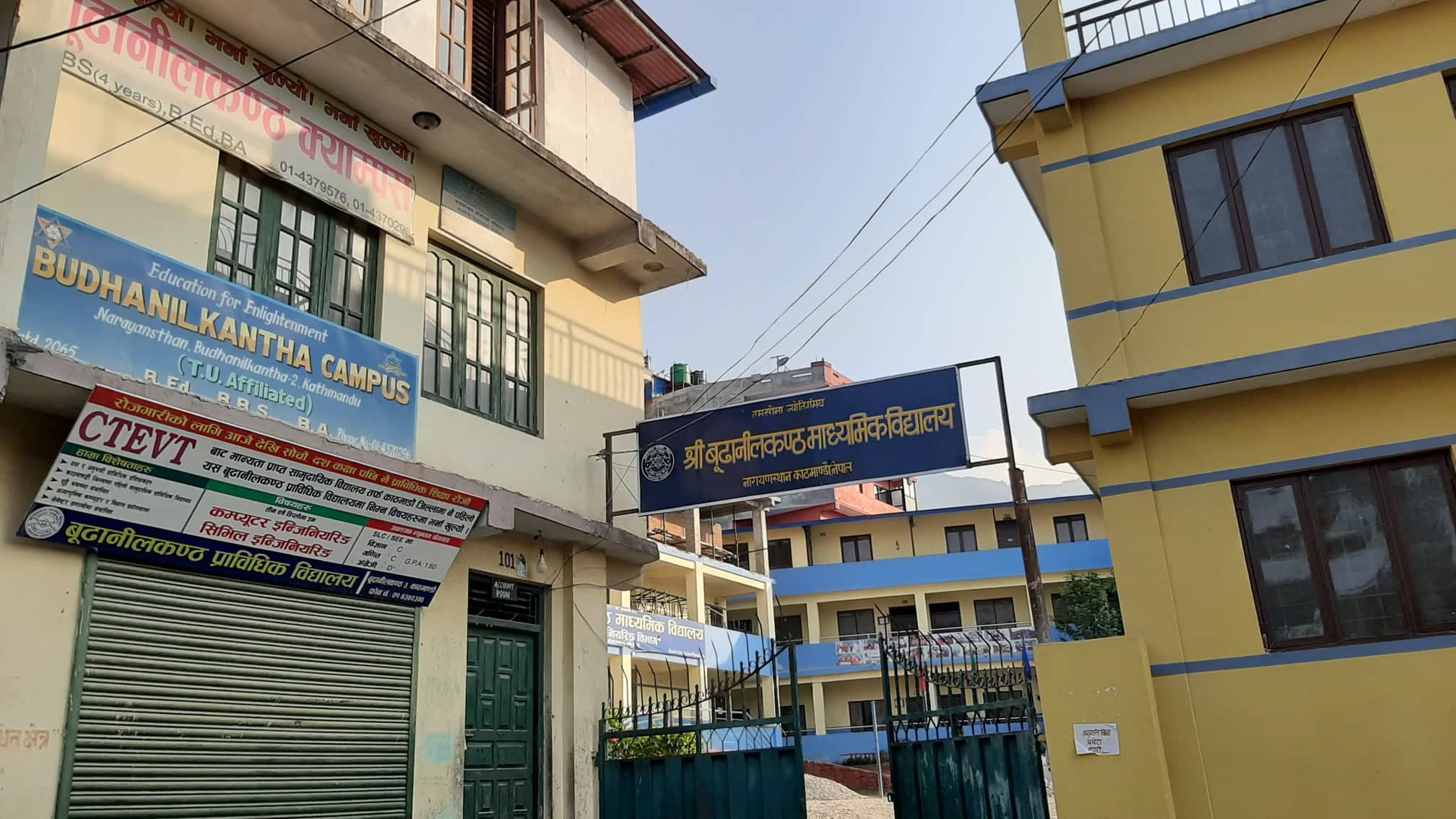
Location: Narayansthan, Budhanilkantha, Kathmandu
Year of Establishment: 2008 AD (2065 BS)
Affiliation: Tribhuvan University (TU)
Nature: Community campus with a student-support ethos
Programs: B.Ed. (English, Nepali, Health), BBS, BA (English, Sociology)
Facilities: Classrooms, library, computer labs, and essential learning resources
Learning Approach: Interactive lectures, group work, practical sessions, case studies, research, field visits/industry exposure
Scholarships: Merit-based, need-based, indigenous/tribal, sports, and special categories
The campus aims to provide accessible, quality education to the community while encouraging critical thinking, creativity, and social responsibility. Its long-term vision is to contribute to society through education, research engagement, and graduates who carry a sense of civic duty.
The B.Ed. program focuses on foundations of pedagogy and classroom practice. Students study educational psychology, curriculum, teaching methods, and classroom management, with school-based practice and internships to build real-world confidence. Specializations include English, Nepali, and Health.
BBS builds a solid base in accounting, finance, marketing, organizational behavior, and entrepreneurship. Learning involves projects and problem-solving tasks that help students link theory to practical business decision-making.
BA offers breadth across the humanities and social sciences—English, Nepali, Sociology, Psychology, Economics, Political Science—helping learners develop critical reading, writing, and research skills for careers in areas such as education, media, public service, and social development.
Program structure and assessments follow TU standards, helping standardize learning outcomes and maintain academic integrity across departments.
Budhanilkantha Campus follows Tribhuvan University rules for bachelor-level admission. Use this short guide from first inquiry to orientation.
Choose your program - Select B.Ed., BBS, or BA and decide on your subject stream. If you’re unsure, visit the department office or review the TU syllabus.
Submit the form - Complete the application and file it before the campus deadline. Keep a copy (photo or PDF) for your records.
Attach documents - Add the papers listed in the checklist below. Check that your name, dates, and grades match across all documents.
Screening (if announced) - Some intakes include an interview or document verification. Bring originals when asked.
Follow official notices - Watch for the merit list, scholarship updates, fee deadlines, and orientation dates on the campus notice board or website.
SEE/SLC marksheet or gradesheet (copy)
SEE/SLC provisional and character certificates (copy)
+2 transcript, provisional, and character certificates (copy)
+2 migration certificate (original)
Passport-size photographs as specified by the campus
Equivalence letter for foreign boards (if applicable)
Teaching emphasizes active learning and consistent feedback. Classroom work is supported by:
Interactive lectures that invite discussion and questions
Group discussions to build peer learning
Practical sessions and lab work where relevant
Case studies and field contexts to connect theory with practice
Student research projects supervised by faculty
Field visits and industry exposure, depending on subject needs
This mix develops academic habits—reading, analysis, writing, and presentation—while giving students exposure to real settings.
The campus maintains classrooms, a library, computer labs, and other learning resources needed for undergraduate study. The Budhanilkantha setting offers a calm environment that supports study, group work, and co-curricular activity.
Student life balances academics with co-curricular activity. Workshops, seminars, and campus events help students practice communication, teamwork, and leadership while connecting with peers and teachers.
Campus events and student groups foster interest in reading circles, debate, volunteering, and sports. ECA is not limited to one discipline; students from Education, Management, and Humanities collaborate on projects, cultural events, and outreach. Activity-based learning supports confidence and community ties.
The campus provides multiple scholarship categories to widen access:
Merit-based: For strong academic performance at entry or during study
Need-based: For students with financial constraints (with evidence)
Indigenous/Tribal: For underrepresented groups
Sports: For students with notable sports records
Special Categories: May include support for students with disabilities, women, or marginalized communities
Selection involves reviewing academic records and relevant criteria for each category. Applicants submit supporting documents as per the scholarship notice.
2008 AD (2065 BS): Campus established as a community institution at Narayansthan, Budhanilkantha.
Affiliation with Tribhuvan University, aligning curricula and assessments with national standards.
Expansion of undergraduate options in Education, Management, and Humanities—B.Ed. (English, Nepali, Health), BBS, BA (English, Sociology).
TU affiliation ensures academic alignment with national standards recognized by employers and graduate schools.
Calm Kathmandu foothill setting that supports study and group work.
Range of programs across teaching, management, and humanities with subject-focused tracks.
Active learning and field exposure help students apply classroom knowledge.
Scholarship routes that support access for a diverse student body.
Budhanilkantha Campus offers bachelor-level study under TU with a steady emphasis on learning quality, community access, and student development. With its program range, teaching approach, facilities, and scholarship options, the campus serves learners seeking grounded undergraduate study in Kathmandu’s northern corridor.
1) Where is Budhanilkantha Campus located?
Narayansthan, Budhanilkantha, Kathmandu.
2) Which degrees are available?
B.Ed. with specializations in English, Nepali, and Health; BBS; BA with English and Sociology.
3) Is the campus affiliated with Tribhuvan University?
Yes. The campus follows TU standards for curricula and assessment.
4) What learning approaches are used?
Interactive lectures, group discussions, practical sessions, case studies, student research, and field/industry exposure.
5) Are scholarships available?
Yes—merit-based, need-based, indigenous/tribal, sports, and special category scholarships. Selection is based on set criteria and supporting documents.
6) What documents do I need for application?
Copies of SEE/SLC and +2 credentials, migration (original), photos, and an equivalence letter for foreign boards. Follow the campus notice for exact counts and formats.
7) What facilities are available?
Classrooms, library, computer labs, and other study resources on campus.
Contact Budhanilkantha Campus's administrative office for detailed information on the course, admissions, location, fees, scholarships, facilities, counseling or eligibility.
Budhanilkantha Campus
Email Address: budhanilkanthacampus65@gmail.com
Phone Number: +977-1-4379576, +977-1-4370296
Location: Narayansthan, Budhanilkantha, Kathmandu