Human Resource Development and Research Institute (HURDRI), established in 1996, and located in the central area of Babarmal, Kathmandu. With nearly three decades of dedicated service, HURDRI has earned recognition as a trusted institution in Nepal’s technical education and health training sector.
HURDRI affiliated with the Council for Technical Education and Vocational Training (CTEVT), the institute focuses on developing skilled health workers through practical, career-oriented education.
HURDRI is led by experienced educators and public health professionals with a long-standing record of designing and managing academic programs across various institutions in Nepal. Their collective expertise helps ensure that students receive training that is both relevant and responsive to national needs.
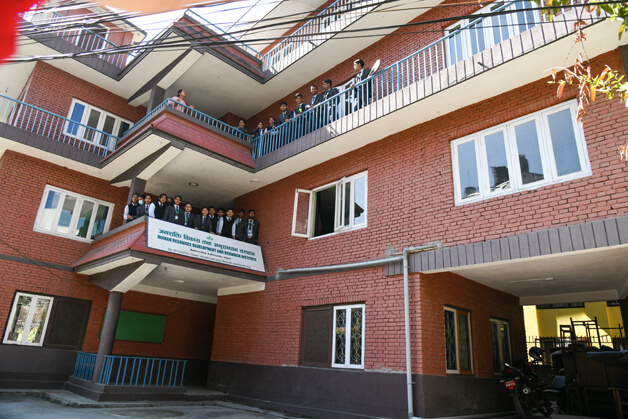
HURDRI aims to nurture capable and committed health professionals through skill-based learning and high standards of academic discipline. The goal is to produce graduates who are not only qualified but are also ready to serve with purpose and integrity.
The institute is dedicated to becoming a premier center for education, training, research, and professional services in the field of public health. Every initiative at HURDRI is focused on making meaningful contributions to healthcare services in Nepal.
Provide foundation-level training for Laboratory Assistants
Run PCL-level programs in General Medicine, Nursing, and Medical Laboratory Technology
Organize short-term professional training and workshops
Conduct applied health research to support Nepal’s healthcare delivery system
Promote public health through community-based health and development programs
Develop and distribute educational materials such as manuals, posters, and health booklets
Placement and Counseling Cell: Establish a unit to support students in career guidance and job placement
Academic Quality Assurance: Implement a regular monitoring system to maintain the standard of teaching and learning activities
Digital Integration: Introduce a Comprehensive Academic Management System (CAMS) to manage academic and administrative work digitally
Upgrading Infrastructure: Ensure timely replacement of lab instruments, office tools, books, and other learning resources.
Campus Expansion: Acquire land to expand academic facilities
Construction Projects: Prepare for the design and construction of new academic buildings to meet growing demand
HURDRI consistently works to improve the quality of its academic programs and healthcare training services. The institution continues to support students with structured plans, a focus on practical skills, and a vision aligned with Nepal’s healthcare development priorities.
HURDRI offers a range of accredited health science programs designed to build skilled middle-level and assistant-level health professionals. Each course combines classroom learning with hands-on training to prepare students for real-world healthcare environments.
This three-year program trains students to perform clinical laboratory procedures necessary for disease diagnosis and health monitoring. Graduates are equipped to work in hospitals, diagnostic labs, and research facilities under the regulation of the Nepal Health Professional Council (NHPC).
Designed to produce competent Health Assistants, this program focuses on clinical diagnosis, primary treatment, and community health care delivery. Graduates are qualified to serve at health posts, primary health centers, hospitals, and NGOs/INGOs.
This program trains students in physiotherapeutic techniques used in rehabilitation, pain management, and physical recovery. It combines anatomy, biomechanics, and hands-on practice to prepare students for roles in hospitals, rehab centers, and private clinics.
A foundational program aimed at training Lab Assistants with essential knowledge and practical skills for entry-level roles in medical labs. It serves as a stepping stone to higher studies or direct employment in basic diagnostic settings.
HURDRI provides need-based and inclusive scholarship opportunities to support students from different social backgrounds. Scholarships are offered under two major categories:
This category is open to Nepali citizens who have completed their SEE from a government or community school. It supports students from public education backgrounds who seek further training in the health field.
This category is designed to increase access for students from communities that have historically faced barriers in education. Eligible applicants include those from the following backgrounds:
Women
Adivasi Janajati
Madhesi
Dalit
Persons with disabilities
Students from remote or underdeveloped regions
Individuals or families affected by the People's Movement, Madhesh Movement, armed conflict, or those categorized as martyrs’ families
Muslims
Former Kamaiya or Haliya families
Students from economically or socially marginalized groups
HURDRI believes that education should be accessible to all. It's learning environment promotes equity, encourages diversity, and supports each student’s unique potential. The institute's admission and scholarship policies are structured to ensure equal opportunities for capable and motivated individuals, regardless of their background.
For more information regarding the Lab Assistant program, admission procedures, fee structure, eligibility criteria, scholarship application, or to consult with our academic and placement counselors, please contact:
Human Resource Development and Research Institute (HURDRI)
Babarmal, Kathmandu