IIMS College Kathmandu, formally known as the Institute of International Management Science (IIMS), is a higher-education institution located in Naxal, Bhagwatibahal, Kathmandu, Nepal. Established in 2010, the college offers programmes in business, computer science, hospitality management, and management at the postgraduate level through its academic relationship with Taylor's University, Malaysia.
The Kathmandu campus combines classroom teaching with presentations, case studies, project work, workshops, industry visits, internships, and guest lectures. These activities give students different ways to engage with their subjects through discussion, assignments, group work, professional interaction, and workplace exposure.
Campus life also includes extracurricular and co-curricular activities, social events, industry projects, and career-development support. A student code of conduct emphasises mutual respect and integrity, while the Career Development Cell supports professional preparation through skill development, résumé preparation, and links with potential employers.
| Area | Details |
|---|---|
| Institution | Institute of International Management Science (IIMS) |
| Common name | IIMS College |
| Established | 2010 |
| Location | Naxal, Bhagwatibahal, Kathmandu, Nepal |
| Academic relationship | Taylor's University, Malaysia |
| Main academic areas | Business, Computer Science, Hospitality Management |
| Study levels | Bachelor's and Master's |
| Learning activities | Presentations, case studies, projects, workshops, industry visits, internships, and guest lectures |
| Student support | Career Development Cell and campus-based academic activities |
The Naxal campus is where IIMS students attend classes, complete assignments, work on projects, join academic activities, and access college support services. Teaching is not limited to scheduled lectures. Students also take part in tasks that require discussion, presentation, teamwork, analysis, and interaction with professionals.
Presentations are one part of the academic routine. They require students to organise information, explain a topic clearly, and respond to questions. This form of coursework gives students direct experience in presenting academic ideas to classmates and faculty members.
Case studies introduce specific situations for examination and discussion. Depending on the subject, students may work with business decisions, management situations, hospitality operations, or technology-related problems. The purpose is to connect course concepts with defined issues rather than treating every topic only as theory.
Project work has a similar role. Individual and group projects require students to plan tasks, work through problems, coordinate responsibilities, and produce completed academic work. In computer science, business, and hospitality studies, such assignments can help students connect separate subjects through a longer piece of work.
Workshops add focused sessions alongside regular classes. They can provide additional opportunities to discuss specific academic or professional topics and interact with people who have experience related to the subject being studied.
Industry visits move part of the learning process outside the campus. Students can observe organisations and workplace practices connected with their field. These visits differ from classroom discussion because they allow students to see professional operations directly.
Internships provide a longer form of workplace exposure. Students can experience professional routines, organisational responsibilities, communication practices, and the relationship between academic learning and day-to-day work.
Guest lectures bring professionals and subject specialists to the college. Their participation gives students opportunities to hear perspectives based on professional experience and to discuss issues that may not be covered in the same way during regular lectures.
Together, these activities make academic participation a significant part of the IIMS campus experience.
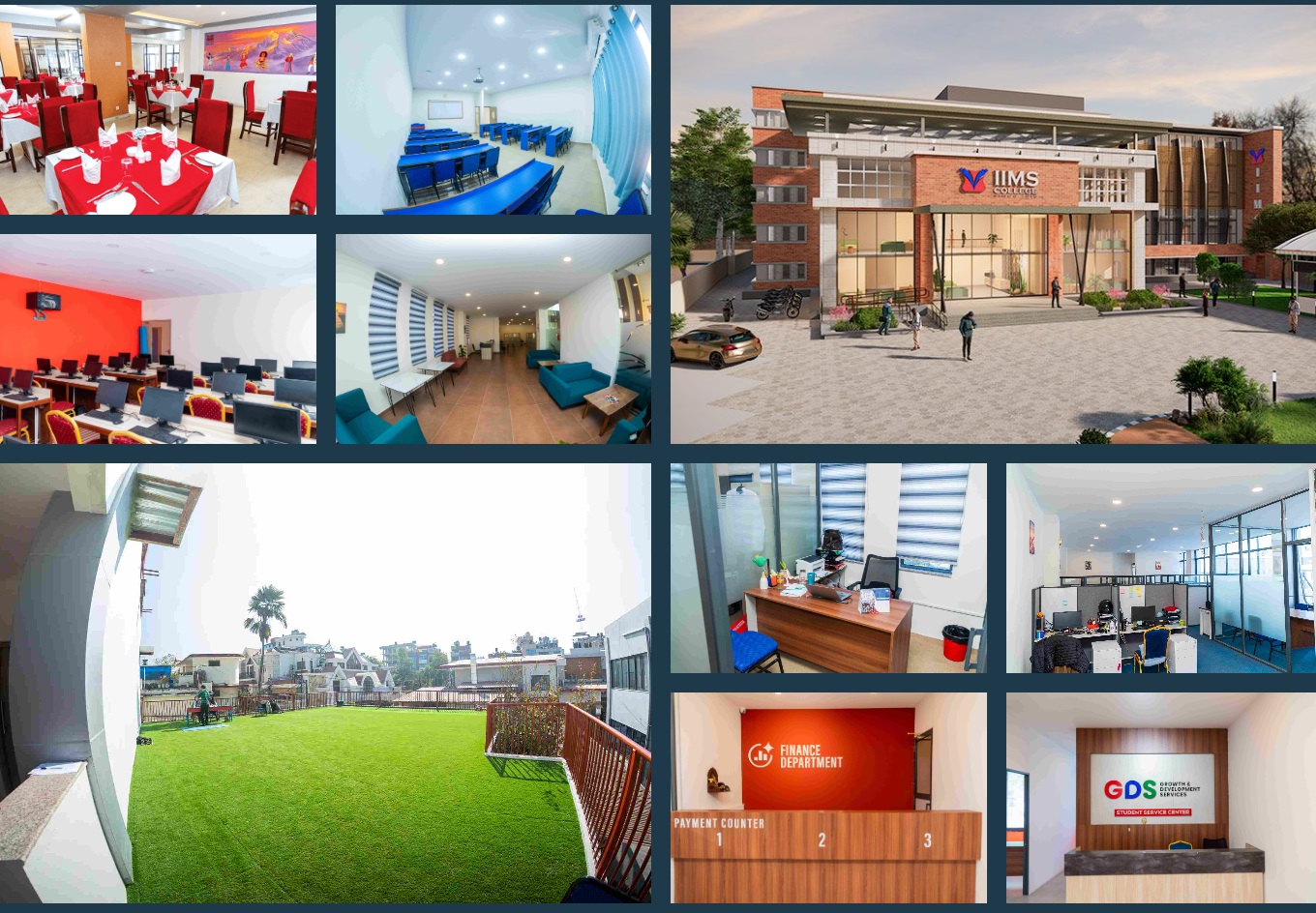
Students may encounter several forms of academic participation during their studies:
Presentations that require students to organise and communicate academic work.
Case studies based on defined problems or situations.
Individual and group projects connected with course subjects.
Workshops centred on particular academic or professional topics.
Industry visits that introduce students to organisations and work practices.
Internships that provide workplace exposure.
Guest lectures involving professionals and subject specialists.
Group activities that require discussion and shared responsibility.
These learning methods suit the main disciplines taught at IIMS.
Business students work with subjects related to organisations, markets, management, operations, and commercial decision-making. Case studies and presentations can therefore support classroom learning by giving students situations to examine and discuss.
Computer science students study a field where projects and technical problem solving are important parts of academic work. Project-based assignments provide opportunities to organise technical tasks and demonstrate what has been learned through completed work.
Hospitality management students study an area closely connected with service operations and professional practice. Industry visits and internships are therefore particularly relevant to the relationship between study and workplace experience.
The exact learning activity differs by programme, but the campus model gives students more than one way to engage with their course.
Student life at IIMS extends beyond classes and assignments. The college provides social events, extracurricular activities, co-curricular activities, campus discussions, and opportunities for students from different academic backgrounds to interact.
Students come from different cultural and geographic backgrounds. Within the college, they meet through classes, projects, presentations, events, and shared campus activities.
Group assignments are one of the clearest points of interaction. Students working together need to discuss ideas, distribute responsibilities, meet deadlines, and combine individual work into a finished project. This makes cooperation part of the academic experience as well as part of campus life.
Extracurricular and co-curricular activities provide another setting for participation. These activities give students opportunities to become involved outside their scheduled lectures and interact with students beyond their immediate classroom groups.
Campus discussions also form part of the student experience. Students may hear from experts, present information, and discuss corporate, public, and socio-economic issues. Such sessions can bring wider topics into college life and allow students to consider viewpoints outside a single academic subject.
The student code of conduct places emphasis on mutual respect and integrity. These principles apply across classroom participation, group work, events, discussions, professional interaction, and other college activities.
IIMS College has an academic relationship with Taylor's University, Malaysia. This relationship is connected with the programmes offered at the Kathmandu campus in business, computer science, international hospitality management, and management.
IIMS serves as the Kathmandu-based college where students attend classes and take part in day-to-day academic and campus activities. Teaching, student support, projects, workshops, industry interaction, and other local academic operations take place through IIMS.
The relationship with Taylor's University is also important when identifying programme titles. Degree names should be used in their formal form rather than replaced with more familiar labels used for similar courses elsewhere.
For example, the undergraduate business degree is formally titled Bachelor of Business (Honours). Using the official title helps distinguish it from other undergraduate business degrees that may have different names or structures.
The same applies to Bachelor of Computer Science (Honours) and Bachelor of International Hospitality Management (Honours). Accurate programme naming is important when students compare courses, review academic documents, or research their study options.
IIMS College offers programmes across business, computer science, hospitality management, and postgraduate management.
| Programme | Level | Course page |
|---|---|---|
| Bachelor of Business (Honours) | Bachelor's | Bachelor of Business (Hons) |
| Master of Business Administration (MBA) | Master's | Master of Business Administration (MBA) |
| Bachelor of International Hospitality Management (Honours) | Bachelor's | Bachelor of International Hospitality Management (Hons) |
| Bachelor of Computer Science (Honours) | Bachelor's | Bachelor of Computer Science (Hons) |
The programmes cover distinct disciplines, but students share the same wider campus approach of classes, assignments, projects, presentations, student activities, and professional exposure.
The Bachelor of Business (Honours) represents the college's undergraduate business offering. Students studying business encounter subjects connected with organisations, markets, management, operations, and commercial activity.
The learning methods used at IIMS are suited to this field. Business case studies allow students to examine particular organisational or management situations. Presentations require them to organise information and explain their analysis. Projects may involve individual responsibilities as well as teamwork.
Workshops and guest lectures add opportunities to hear from people with professional knowledge or experience. Industry visits can expose students to organisations outside the college and allow classroom subjects to be considered alongside actual business operations.
IIMS also offers the Master of Business Administration at the postgraduate level. The MBA extends the institution's academic offering in business and management beyond bachelor's-level study.
Detailed curriculum, eligibility, and course structure information belongs on the individual programme pages, while the college profile remains focused on the wider campus and institutional experience.
The Bachelor of Computer Science (Honours) represents the computing discipline at IIMS.
Computer science requires both conceptual study and applied work. Within the IIMS learning model, project assignments provide a way for students to work through technical tasks and produce completed academic work rather than dealing only with separate classroom topics.
Students may also present their work, participate in workshops, attend guest lectures, and take part in other college activities connected with professional exposure.
Group projects can require students to divide technical responsibilities and coordinate their work with classmates. Individual assignments, meanwhile, give students responsibility for solving and presenting their own work.
The computing programme therefore sits naturally within a campus approach that uses projects, discussion, presentation, and practical academic tasks alongside formal teaching.
The Bachelor of International Hospitality Management (Honours) represents the hospitality discipline at IIMS.
Hospitality management combines academic study with a field that is closely tied to service operations and workplace practice. This makes internships and industry exposure particularly relevant to students in the programme.
Industry visits can help students observe professional settings and understand how hospitality organisations operate. Internships offer longer workplace exposure and allow students to experience organisational routines, service responsibilities, communication, and professional expectations.
Classroom study remains part of the degree, while presentations, projects, workshops, and other academic activities provide additional ways to engage with hospitality-related subjects.
The hospitality programme also adds another academic discipline to campus life. Hospitality students study different subjects from business and computer science students, but they share the same college setting and take part in wider IIMS activities.
The Career Development Cell is one of the student-support functions at IIMS. Its activities include helping students develop professional skills, prepare résumés, and connect with potential employers.
This support operates alongside other parts of campus life that give students professional exposure.
Industry projects can introduce students to tasks connected with actual organisations or professional issues. These projects differ from purely theoretical assignments because students may need to consider practical requirements while completing their work.
Guest lectures allow students to interact with professionals and hear about workplace practices and industry issues. Such sessions can add professional viewpoints to academic subjects studied in class.
Industry visits provide direct observation of workplaces and organisational processes. Students can see how professional settings operate and relate those observations to their studies.
Internships provide more extended exposure. They place students in professional settings where they can observe responsibilities, workplace communication, organisational practices, and day-to-day routines.
The Career Development Cell complements these activities by giving students a campus-based point for professional preparation while they continue their studies.
IIMS also provides opportunities for students to hear from experts and discuss corporate, public, and socio-economic issues.
These discussions differ from ordinary course lectures because they can involve subjects that cross academic disciplines. A single issue may involve business, technology, employment, management, public concerns, or social questions.
Students who participate in these sessions may need to listen to different viewpoints, organise their own thoughts, present information, and respond to discussion.
This can be particularly useful on a campus with students from different programmes. Computer science, business, hospitality, and MBA students may approach the same topic from different academic perspectives.
Shared discussions therefore give students opportunities to interact outside the boundaries of an individual course while remaining connected with academic and professional topics.
IIMS includes extracurricular and co-curricular activities as part of campus life.
Co-curricular activities can remain connected with academic or professional development, while extracurricular activities give students additional opportunities for social interaction and participation outside regular classes.
These activities can bring students from different programmes together. A campus serving several academic disciplines naturally contains groups with different subjects, schedules, and interests. Shared events create occasions for students to interact beyond their individual classrooms.
Participation in activities also becomes part of how students manage college responsibilities. Classes, assignments, projects, presentations, workshops, internships, and events may all take place at different stages of the academic year.
The college experience therefore involves both formal study and wider student participation.
The IIMS student code of conduct emphasises mutual respect and integrity.
These expectations are relevant across many parts of college life. Group assignments depend on students completing their responsibilities. Classroom discussions require participants to listen to other viewpoints. Presentations require preparation and appropriate interaction with classmates and faculty members.
Professional activities create similar responsibilities. Industry visits, guest lectures, internships, and other external interactions place students in situations where their conduct reflects both individual responsibility and their role as students.
A shared code of conduct gives these activities a common behavioural basis across the campus.
IIMS also uses management review within its institutional operations, covering academic programmes, faculty, and facilities. This connects academic delivery with the day-to-day operation of the college.
Practical academic work appears repeatedly across the IIMS student experience through presentations, projects, case studies, workshops, industry visits, internships, and professional interaction.
Each activity serves a different purpose.
A presentation asks students to organise and communicate information. A case study requires them to examine a particular situation. A project involves planning, completing, and presenting a larger academic task. A workshop concentrates participation around a particular subject.
Industry visits allow observation of organisations and working practices, while internships provide longer exposure to professional routines and responsibilities.
The exact form of these activities changes according to the programme. A computer science project differs from a hospitality internship or a business case study. What connects them is the expectation that students participate actively in their academic work.
This makes the campus an important part of the overall study experience. It is where students attend classes, work with classmates, complete projects, meet professionals, join events, and access student support.
Since its establishment in 2010, IIMS has maintained an academic focus on management, technical education, hospitality, and professional preparation.
At the Kathmandu campus, this is reflected through degree study supported by assignments, projects, presentations, workshops, professional interaction, industry exposure, and student activities.
The Career Development Cell adds a professional-support component, while extracurricular and co-curricular activities broaden student participation beyond scheduled classes.
The result is a campus where academic study remains central but is accompanied by activities that require students to communicate, collaborate, complete projects, and interact with professional settings.
IIMS College is located in Naxal, Bhagwatibahal, Kathmandu and has operated since 2010. It has an academic relationship with Taylor's University, Malaysia, and offers programmes in business, computer science, international hospitality management, and postgraduate management.
Campus learning includes lectures alongside presentations, case studies, projects, workshops, industry visits, internships, and guest lectures. Students can also participate in extracurricular activities, co-curricular activities, discussions, social events, and industry-related projects.
The Career Development Cell supports professional preparation through skill development, résumé preparation, and links with potential employers. Mutual respect and integrity form part of the student code of conduct that applies across academic and wider campus participation.
For students researching IIMS College Kathmandu, the campus is centred on formal degree study combined with project work, discussion, industry exposure, student participation, and career-development activities.
IIMS College, formally known as the Institute of International Management Science (IIMS), is a higher-education institution in Kathmandu, Nepal. Established in 2010, it offers programmes in business, computer science, hospitality management, and postgraduate management.
IIMS College is located in Naxal, Bhagwatibahal, Kathmandu, Nepal.
IIMS College has an academic relationship with Taylor's University, Malaysia. This relationship is connected with the programmes offered through the Kathmandu campus.
IIMS College offers the Bachelor of Business (Honours), Bachelor of Computer Science (Honours), Bachelor of International Hospitality Management (Honours), and Master of Business Administration (MBA).
Learning activities at IIMS include classroom teaching, presentations, case studies, project work, workshops, industry visits, internships, guest lectures, and group activities.
Yes. IIMS has a Career Development Cell that supports professional preparation through skill development, résumé preparation, and links with potential employers. Students may also gain professional exposure through industry projects, internships, guest lectures, and industry visits.
Student life includes academic activities as well as social events, extracurricular activities, co-curricular activities, campus discussions, projects, and interaction among students from different academic areas.
Yes. Industry exposure forms part of the campus learning approach through industry visits, internships, industry projects, workshops, and interaction with professionals.
The student code of conduct emphasises mutual respect and integrity. These expectations apply to classroom participation, group work, campus activities, and professional interactions.
Yes. Practical academic work is included through projects, case studies, presentations, workshops, internships, industry visits, and other participation-based activities connected with students' areas of study.