Apollo International College (AIC) is located in Mid-Baneshwor, Kathmandu, Nepal. Established in 2010 AD, the college operates under the KMC Educational Network and offers undergraduate and graduate programs affiliated with Pokhara University.
Its academic programs cover business administration, finance, hotel management, computer systems and information technology, and graduate-level management. AIC offers Bachelor of Business Administration (BBA), Bachelor of Business Administration (Finance), Bachelor of Hotel Management (BHM), Bachelor of Computer System and Information Technology (BCSIT), and Master of Business Administration (MBA).
The Bachelor of Business Administration (Finance) was previously known as Bachelor of Business Administration in Banking and Insurance (BBA-BI). The current Pokhara University curriculum uses the BBA (Finance) title.
Academic work at AIC combines classroom study with project assignments, presentations, group discussions, practical activities, field exposure, internships, and other course-specific learning components. The college also has computer and hospitality laboratories, multimedia-equipped classrooms, a research and placement cell, career-development activities, industrial visits, and facilities for hospitality practical work.
| Field | Details |
|---|---|
| College | Apollo International College (AIC) |
| Established | 2010 AD |
| Location | Mid-Baneshwor, Kathmandu, Nepal |
| Affiliation | Pokhara University |
| Educational network | KMC Educational Network |
| Academic levels | Undergraduate and Graduate |
| Undergraduate programs | BBA, BBA (Finance), BHM, BCSIT |
| Graduate program | MBA |
Apollo International College has four undergraduate programs and one graduate program. The available seat allocation is as follows:
| Program | Academic structure | Seats |
|---|---|---|
| Bachelor of Business Administration (BBA) | 8 semesters | 96 |
| BBA-Finance / BBA (Finance) | 4 years, 8 semesters | 48 |
| Bachelor of Hotel Management (BHM) | 4 years, 8 semesters | 48 |
| Bachelor of Computer System and Information Technology (BCSIT) | 4 years, 8 semesters | 48 |
| Master of Business Administration (MBA) | 2 years, 6 trimesters | 33 |
The Bachelor of Business Administration follows Pokhara University's semester-based curriculum. It provides a broad academic foundation in business and management before students progress to advanced management subjects, concentration courses, electives, projects, and internship work.
The first semester includes English, Basic Mathematics, IT for Business, Behavioral Science, Principles of Management, and Software Skills Practicum. The second semester covers Business Communication, Business Mathematics, Introduction to Microeconomics, Fundamentals of Organizational Behavior, Financial Accounting, and Soft Skills Practicum.
Later semesters introduce subjects such as:
Business Statistics
Introduction to Macroeconomics
Cost and Management Accounting
Essentials of Finance
Principles of Marketing
Data Analysis and Modeling
Business and Society
Business Research Methods
Human Resource Management
Introduction to Financial Management
Entrepreneurship and Innovation
Fundamentals of Operations Management
Management Information System
Project Management
International Business
Strategic Management
Business Law
Business Environment
The curriculum also contains practical and project-based components. Digital Marketing Practicum, Fintech Practicum, Academic Writing, Project Work, Business Development Project, Community Engagement Project, concentration courses, electives, and internship form part of the program structure.
At AIC, BBA learning also includes classroom participation, group discussions, project work, presentations, and practical exposure. These activities complement the management subjects covered throughout the eight-semester program.
The Bachelor of Business Administration (Finance), previously named Bachelor of Business Administration in Banking and Insurance, is a four-year, eight-semester program. Students complete 120 credit hours of coursework, project work, and internship requirements.
The program combines general business education with focused study in finance-related areas. Its academic coverage includes corporate financial management, banking, insurance, investment, and capital markets while retaining a broader foundation in management.
The curriculum is organized around several components:
Foundation courses
Management core courses
Concentration courses
Elective courses
Project work and internship
Practicum courses
Foundation and management subjects cover communication, economics, mathematics, statistics, information technology, the legal environment of business, and functional areas of management. The finance component develops more specialized academic exposure to financial activities and related business functions.
Practicum courses address areas such as academic writing, technological skills, software training, and soft-skills development. Classroom learning may also involve case studies, group discussions, assignments, field visits, and presentations.
Students complete project work and an internship of six to eight weeks as part of the program. The combination of general management study and specialized finance subjects distinguishes BBA (Finance) from the general BBA program.
BCSIT combines computer systems, information technology, information management, and business studies. The program was previously known as Bachelor of Computer Information System (BCIS).
It is structured across four years and eight semesters and requires 127 credit hours of coursework, project work, and internship. The curriculum includes foundation courses, management core courses, computer information system core courses, concentration courses, project work, and internship.
The program covers areas related to computer systems, programming, software, information technology, databases, networks, data, and information systems while also incorporating management and business subjects.
Technical study is supported by practical and project-based coursework. The second semester, for example, includes:
Business Communication
Mathematics II
Digital Systems
Object-Oriented Language (Java)
Data Structure and Algorithm
Project I
Digital Systems combines theoretical and practical work in areas such as number systems, Boolean algebra, logic gates, combinational circuits, sequential circuits, and digital components.
BCSIT also includes an independent capstone project involving fieldwork and analysis, followed by the preparation of a project report. Students are also required to complete an internship of six to eight weeks.
At AIC, the program is supported by computer laboratory facilities and a teaching approach that includes project work, class participation, presentations, and practical activities.
The Bachelor of Hotel Management combines business and management education with hospitality operations. It is a four-year, eight-semester program requiring 120 credit hours.
The curriculum is divided into:
Foundation courses
Management core courses
Hotel management core courses
Elective courses
Specialization courses
Project work
Internship
Hospitality-related study includes operational areas such as food production, food and beverage service, room division, accommodation operations, front desk work, and other hotel-management functions.
Practical activity is a substantial part of the curriculum. Teaching may involve demonstrations, field visits, case studies, presentations, group discussions, project assignments, and practical sessions alongside regular classroom learning.
Students undertake a sixth-semester project as a capstone component. The project may involve preparing a business plan connected with a hotel, resort, bakery, restaurant, coffee shop, or theme park, or completing research in an area related to tourism and hospitality. The work includes a presentation before an academic or industry-related panel.
The seventh and eighth semesters contain 48 weeks of industrial exposure. Students may work in hospitality settings such as fine-dining restaurants and three- to five-star hotels or resorts. Areas of exposure can include food production, food and beverage service, accommodation operations, front desk, bakery, events, and related departments.
Students maintain structured records during the internship period and complete internship reporting as part of the academic requirement.
At AIC, BHM practical learning is supported by a BHM laboratory and the college's own hotel facility for practical activities.
The Master of Business Administration is AIC's graduate-level management program. It follows Pokhara University's MBA curriculum and is designed for completion over two years through six trimesters.
The MBA carries 60 credit hours. Its academic structure brings together:
Foundation courses
Analytical tool courses
Core and functional-area courses
Integrative courses
Concentration courses
Electives
Practicum modules
Consultancy project
Internship
Students can follow either an industry-practice track or a research track within the curriculum structure.
The program addresses integrated management knowledge together with analysis, decision-making, implementation, leadership, and communication. Learning methods include classroom discussions, presentations, group work, case analysis, guest lectures, simulations, project work, and online instruction.
For students who have already completed undergraduate study, the MBA provides a graduate-level route focused on advanced management education and applied managerial work.
Apollo International College uses several learning methods across its academic programs rather than relying solely on classroom lectures.
Its teaching and learning activities include:
Group discussions
Course-related project work
Class presentations
Active classroom participation
Practical activities
Field visits and excursions
Internship experience
Interaction with invited speakers
Program-specific laboratory work
Group discussions give students opportunities to examine different viewpoints within a subject. Project assignments require students to organize work, meet academic requirements, prepare findings, and present their work.
Practical learning differs by program. BBA and BBA (Finance) include project, practicum, research, and internship components. BCSIT combines technical subjects with computing practice, projects, and internship. BHM includes laboratory work and extended industrial exposure, while MBA uses cases, projects, group activities, consultancy-oriented work, and internship requirements.
This program-specific approach allows practical work to follow the structure of each Pokhara University curriculum.
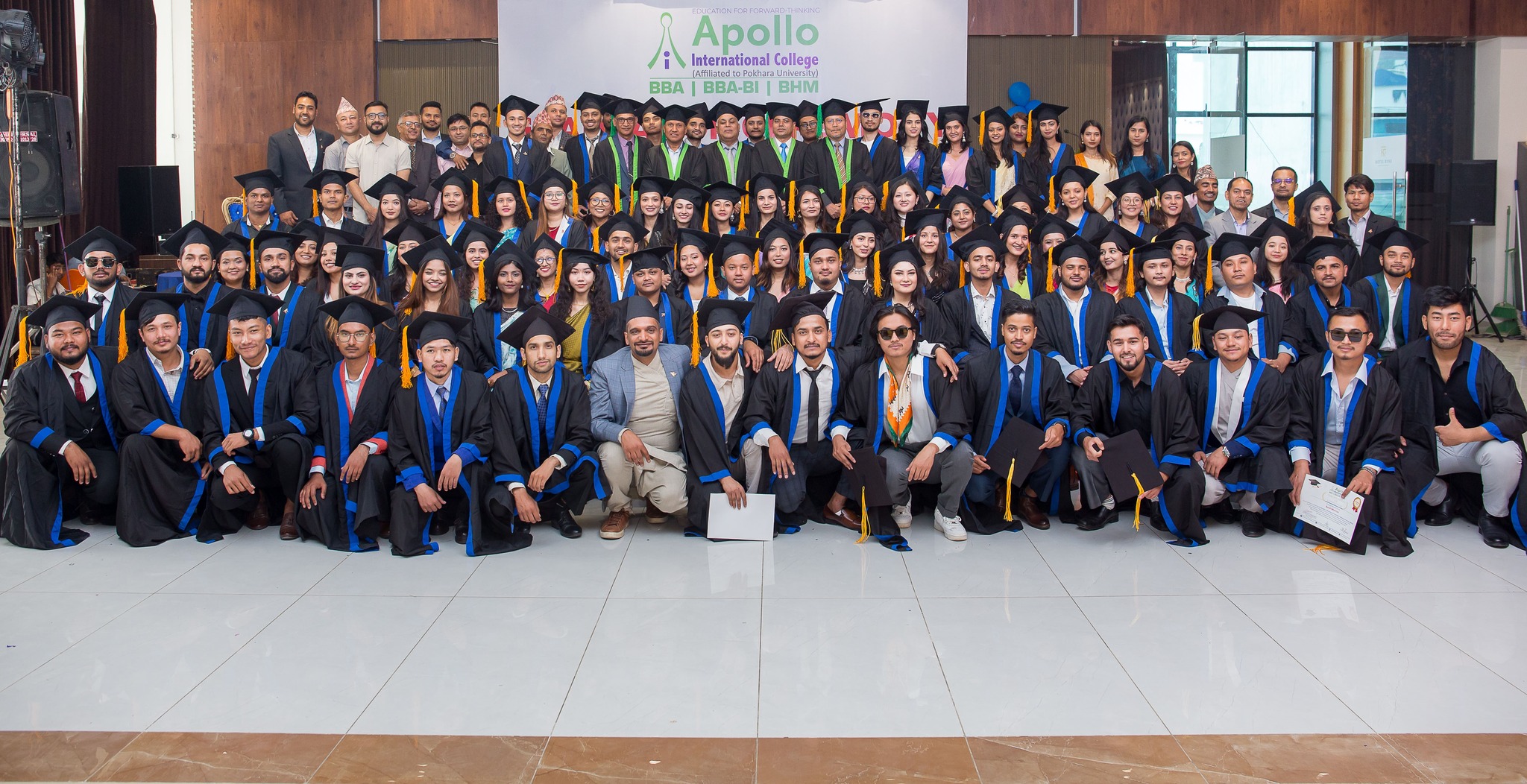
AIC has facilities intended for regular classroom teaching as well as practical and extracurricular activities.
Facilities and support areas include:
Classrooms with multimedia access
Computer laboratory
BHM laboratory
Hotel facility for BHM practical work
Research and placement cell
Career-development training
Industrial visit facility
Space for sports activities
Green and study-oriented environment
Own land and building
Scholarships for deserving students
Extracurricular activities
The computer laboratory supports technology-related coursework, particularly within BCSIT. Hospitality students have access to BHM practical facilities, while research, project, career-development, and industrial-visit activities extend academic engagement beyond routine classroom sessions.
Admission requirements differ by program and academic level.
| Program | Academic eligibility | Admission requirement |
|---|---|---|
| BBA | 10+2 or equivalent recognized by Pokhara University | AIC entrance test |
| BBA (Finance) | Intermediate, Higher Secondary/10+2, Grade 12, PCL, or equivalent recognized by Pokhara University | Entrance test conducted by the college |
| BHM | 10+2/PCL or equivalent; minimum CGPA 1.80 with at least D in each subject, or 45%/second division | Entrance test; interview may also be used |
| BCSIT | Intermediate, Higher Secondary/10+2 or PCL with second division, or equivalent recognized by Pokhara University | Entrance test; interview may also be used |
| MBA | Minimum 15 years of formal education and at least CGPA 2.0 or 45% at bachelor's level | Admission test and interview |
Application procedures include submission of a completed application form and official transcripts from previously attended academic institutions. Copies of academic certificates are submitted with proper attestation, and enrollment is completed after the required admission formalities.
For the semester-based undergraduate programs, course registration and regular attendance form part of the academic process. An 80 percent minimum attendance requirement applies to the relevant semester-based programs covered in the academic regulations.
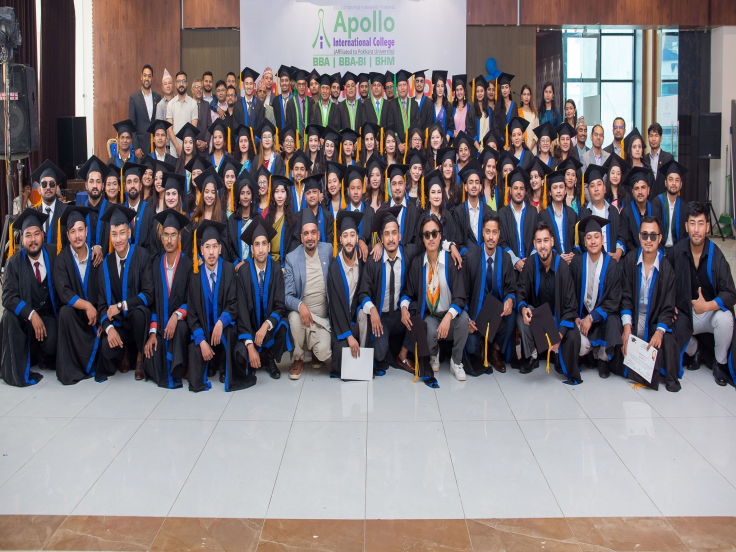
The five programs at AIC follow different academic directions.
BBA provides broad study across business and management. BBA (Finance) retains that management foundation while placing greater attention on finance, banking, insurance, investment, and capital markets.
BCSIT combines computing, information technology, information systems, and management. BHM focuses on hospitality operations and management, with extensive practical and industrial components. MBA extends management study to the graduate level through a trimester-based curriculum.
Across these programs, classroom learning is supported by projects, practicums, field activities, internships, laboratories, presentations, and other applied academic requirements. The form of practical learning differs according to the curriculum and subject area of each program.
Apollo International College (AIC) is located in Mid-Baneshwor, Kathmandu, Nepal.
Apollo International College was established in 2010 AD.
Apollo International College is affiliated with Pokhara University.
The college offers five programs:
Bachelor of Business Administration (BBA)
Bachelor of Business Administration (Finance)
Bachelor of Hotel Management (BHM)
Bachelor of Computer System and Information Technology (BCSIT)
Master of Business Administration (MBA)
Yes. The Bachelor of Business Administration (Finance) was previously known as the Bachelor of Business Administration in Banking and Insurance (BBA-BI). The current Pokhara University curriculum uses the BBA (Finance) title.
The seat allocation is:
| Program | Seats |
|---|---|
| BBA | 96 |
| BBA (Finance) | 48 |
| BHM | 48 |
| BCSIT | 48 |
| MBA | 33 |
BBA (Finance), BHM, and BCSIT are four-year programs organized into eight semesters. The BBA curriculum is also structured across eight semesters.
The MBA program is designed for completion over two years through six trimesters and carries 60 credit hours.
Yes. Depending on the program, practical learning includes project work, internships, practicums, laboratory activities, field visits, presentations, group work, hospitality training, consultancy-oriented work, and industrial exposure.
Undergraduate eligibility varies by program. BBA applicants require 10+2 or an equivalent qualification recognized by Pokhara University. BBA (Finance), BHM, and BCSIT also have program-specific academic eligibility requirements, and applicants must complete the applicable entrance process.
MBA applicants must have a minimum of 15 years of formal education and at least a CGPA of 2.0 or 45 percent at the bachelor's level. Admission is based on the admission test and interview.
Facilities and academic support areas include:
Multimedia-equipped classrooms
Computer laboratory
BHM laboratory
Hotel facility for BHM practical work
Research and placement cell
Career-development training
Industrial visit facility
Sports space
Scholarships for deserving students
Extracurricular activities