Kamala Multiple Campus (कमला बहुमुखी क्याम्पस, दुधाैली, सिन्धुली) is a community-based higher education institution in Dudhauli Municipality-9, Dudhauli, Sindhuli, Bagmati Province, Nepal. Established in 2007 (2064 BS), the campus operates with affiliation to Tribhuvan University and recognition from the University Grants Commission Nepal. It offers full-time higher education in the Faculties of Education and Humanities and Social Sciences, with programs running from bachelor’s to postgraduate level.
The campus grew through public initiative, local donations, and institutional support, and it has developed its own physical premises over time. With more than 500 students and a team of 21 teachers and staff members, the institution serves students from Sindhuli and nearby areas.
Its academic environment combines TU-linked academic structures, community participation, scholarship support, and a campus setting built to support both classroom learning and student activities.
Established: 2007 (2064 BS)
Institution Type: Community-based campus
Location: Dudhauli Municipality-9, Dudhauli, Sindhuli, Bagmati Province, Nepal
Affiliation: Tribhuvan University
Recognition: University Grants Commission Nepal
Programs Offered: BA, B.Ed., M.Ed.
Academic Level: Bachelor’s and postgraduate
Student Population: Over 500 students
Teachers and Staff: 21
Study Mode: Full-time
Contact: +977-9807772143, +977-9801645990, +977-9814736146, +977-9844019970
Email: kamalamultiplecampusdudhauli@gmail.com
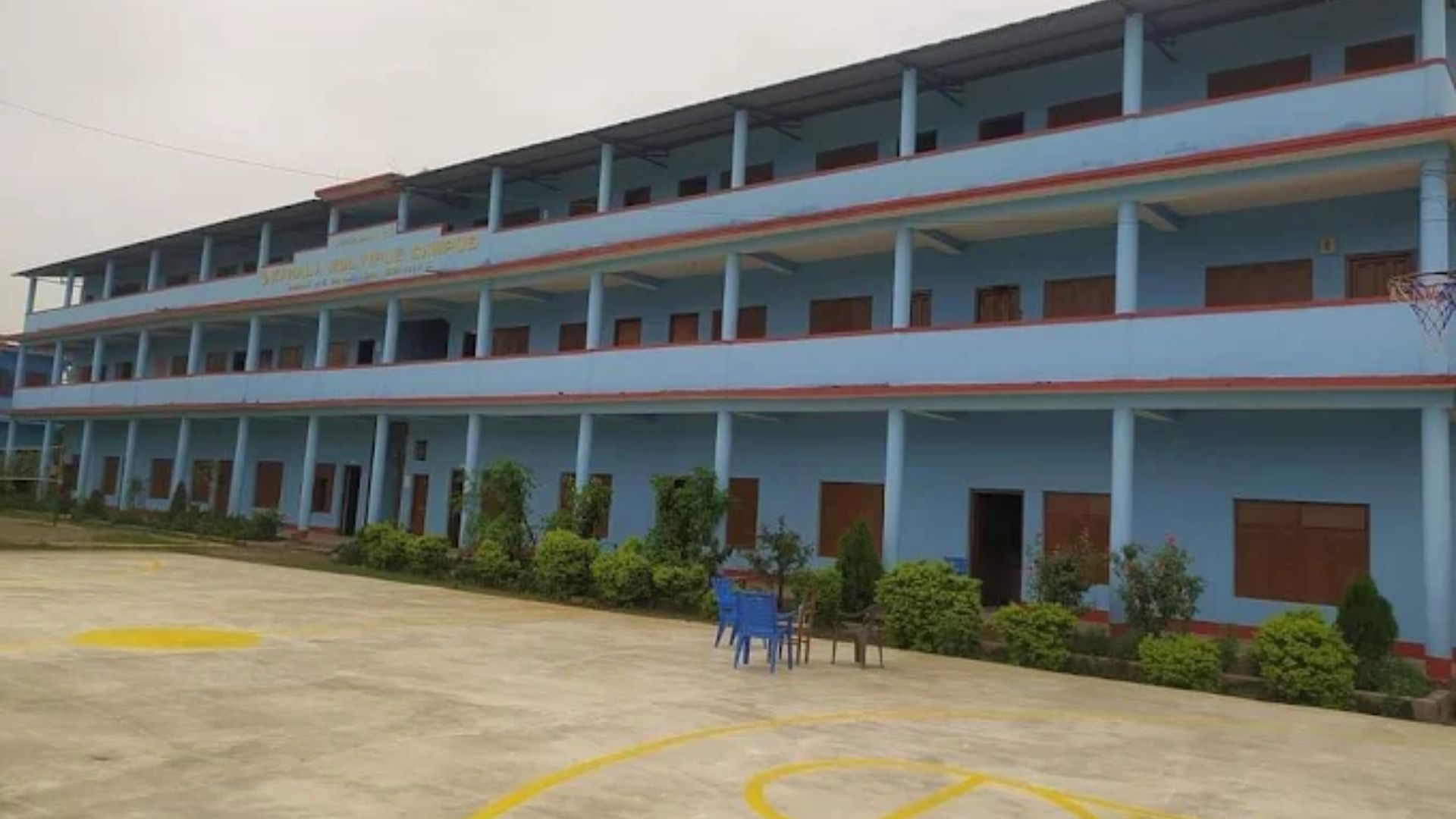
Kamala Multiple Campus was established through community initiative in 2007 (2064 BS). In its early phase, classes were run in the building of Shree Secondary School Ladabhir outside regular school hours. The institution was formed with public participation and financial support collected from local people, organizations, traders, businesspersons, and students. This community-driven foundation remains one of the defining features of the campus.
A major stage in its physical development came in 2008/09 (2065 BS), when an 18-room building was constructed on donated land near Dudhauli Bazaar with support from the University Grants Commission and the campus’s internal resources. Since 2012 (2069 BS), the campus has been operating in its own building. Over time, its role expanded from a locally initiated campus into an established institution offering bachelor’s and postgraduate education.
The campus also receives financial support and aid from Dudhauli Municipality, the University Grants Commission, the Ministry of Social Development of Bagmati Province, and local citizens of Dudhauli and Sindhuli district. This mix of local and institutional support has helped the campus continue its academic and administrative work while improving its physical facilities and student services.
Kamala Multiple Campus offers full-time higher education programs under Tribhuvan University in the following areas:
Bachelor of Arts (BA) – 4 years, annual system, Faculty of Humanities and Social Sciences
Bachelor of Education (B.Ed.) – 4 years, annual system, Faculty of Education
Master of Education (M.Ed.) – 2 years, 4 semesters, semester system, Faculty of Education
The BA program follows the four-year TU structure under the Faculty of Humanities and Social Sciences. Within the wider TU framework, the program includes compulsory subjects and allows students to study major and elective areas within the humanities and social sciences stream. The course structure is designed as a full-time bachelor’s program under the annual system.
The B.Ed. program is a four-year annual-system teacher education program under the TU Faculty of Education. The wider TU structure includes communication skills, professional core courses, specialization major and minor areas, and teaching internship or practicum. This gives the program both academic and professional value for students preparing for education-related study and work.
The M.Ed. program is offered under the semester system. It runs for two years across four semesters under the TU Faculty of Education. In the broader TU semester structure, the program includes advanced coursework, teaching practice or practicum in the later stage of the program, and research work that includes proposal writing and thesis-related academic work.
Admission at Kamala Multiple Campus follows the relevant rules of Tribhuvan University, the concerned faculty, and campus procedures.
For bachelor-level admission, the general process includes:
Publication of an admission notice by the campus
Submission of the prescribed application form by eligible applicants
Submission of required academic documents
Entrance examination or merit-based selection if required by the program or campus policy
Payment of the prescribed admission fee by selected applicants
Completion of academic registration and enrollment under TU rules and the academic calendar
Program-specific admission points include:
Admission to the four-year B.Ed. program is open to students who have completed Grade 12, Higher Secondary, or an equivalent qualification.
For the BA program under the TU four-year framework, students should have secured at least D+ in all subjects in Grade 11 and Grade 12, or have completed intermediate, Proficiency Certificate, or 10+2 level from Tribhuvan University or another university or board recognized by TU.
For the M.Ed. program, applicants must have completed B.Ed. or PGDE from TU or a TU-recognized university in the relevant specialization area and must pass the Faculty of Education entrance examination.
For master’s level admission, the general process includes:
Publication of an admission notice by the campus or concerned authority
Submission of the prescribed application form
Entrance examination if required
Publication of a merit list or selection result where applicable
Submission of required documents and payment of the prescribed admission fee
Final enrollment according to TU rules and the academic schedule
For TU bachelor-level admission, the standard document set includes:
Academic Transcript or Grade Sheet of Class 12 / +2 or equivalent
Character Certificate from the previous institution
Migration Certificate if the previous board or university is different
Transfer Certificate (TC) from the previous school or college
Citizenship Certificate or Birth Certificate copy
Passport-size photographs
Entrance Examination Scorecard if required
Completed campus admission or application form
Admission fee payment receipt
Equivalence Certificate if the qualification is from a foreign board or university
For TU master’s level admission, the standard document set includes:
Bachelor’s Degree Transcript or Marksheet
Bachelor’s Degree Certificate or Provisional Certificate
Character Certificate from the bachelor-level institution
Migration Certificate if the bachelor’s degree is from another university
Transfer Certificate (TC) from the previous campus or college
Citizenship Certificate or Birth Certificate copy
Passport-size photographs
Entrance Examination Scorecard if required
Completed admission or application form
Admission fee payment receipt
Equivalence Certificate if the bachelor’s degree is from a foreign university
The campus operates with 21 teachers and staff members. The available faculty and staff profile shows subject involvement in Nepali, English, Mathematics, Economics, Population, Curriculum, Curriculum Evaluation, Education Planning and Management, and Psychology. This reflects an academic base connected to the programs currently running on the campus.
Teaching and learning at Kamala Multiple Campus are shaped by the structure of the programs under Tribhuvan University. The BA and B.Ed. programs run under the annual system, while the M.Ed. program follows the semester system. This means students study within the academic and examination framework of TU, with annual final examinations for bachelor-level annual-system programs and semester-end examinations for semester-based master’s study.
The wider TU course structures linked to these programs also indicate a mix of classroom teaching, academic assignments, internal assessment in some courses, and practicum-based components in education programs. In this setting, the campus supports regular academic delivery through its teaching team, departmental work, and basic student-support rooms such as the girls’ welfare room, Free Student Union room, first-aid room, and Teachers’ Association unit room.
The campus has developed a broad physical base for academic and student use. Available facilities include:
Academic building with 16 rooms in a two-storey structure
Two dining hall rooms
Administrative building with 6 large rooms
Management committee room
Guest room
Library building with a ground-floor hall equal to four rooms and a first-floor library
Three toilet buildings with a total of 13 rooms
Girl-friendly facilities
Disability-friendly facilities
Program stage building
Girls’ welfare room
Free Student Union room
First-aid room
Teachers’ Association unit room
Basketball court
Volleyball court
Table tennis court
Large sports ground in the outer premises
Saraswati temple
Well
Two hand pumps
Compound wall and gate
Student life at Kamala Multiple Campus is closely linked with its community setting. The campus serves a mixed social environment that includes Brahmin, Chhetri, Tamang, Sunuwar, Dalit, Madhesi, Rai, Danuwar, and other caste and ethnic groups. The institution developed through public initiative, and that background still shapes campus life and local engagement.
The campus has more than 500 students, and the number of female students has increased considerably. It also functions as a place where education, local participation, and social connection meet. Examination centers are operated there, and the campus hall is used for the annual programs of different organizations. Social welfare cooperatives, financial institutions, political and social service organizations, semi-governmental institutions, and non-governmental organizations also hold activities on campus. This has created a strong connection between the institution and the surrounding community.
Because the campus is built on its own land and supported by local participation, student experience is tied not only to formal study but also to a broader culture of public ownership and community involvement.
Basketball
Volleyball
Table tennis
Football competitions held on the outer sports ground
Annual programs of different organizations held on campus
Social and community activities connected to local institutions and organizations
Participation in events hosted in the campus hall
Sports-related student engagement through available courts and open grounds
Scholarships for Dalit students
Scholarships for girls
Scholarships for Indigenous communities
Scholarships for persons with disabilities
Scholarships for martyrs’ families
Scholarships for students with extremely weak economic conditions
Financial support from Dudhauli Municipality
Financial support from the University Grants Commission
Financial support from the Ministry of Social Development, Bagmati Province
Support from local citizens of Dudhauli and Sindhuli district
Established in 2007 (2064 BS) through public initiative
Began operation in the building of Shree Secondary School Ladabhir
Constructed an 18-room building on donated land in 2008/09 (2065 BS)
Operating in its own building since 2012 (2069 BS)
Expanded to bachelor’s and postgraduate teaching
Built a physical campus with academic, administrative, library, sanitation, and sports facilities
Reached a student population of over 500
Maintained support from local community bodies and government-related institutions
Continued regular support from the University Grants Commission
Developed a Campus Assembly with more than 852 members
Community-based institution with local public support
TU-affiliated higher education in Sindhuli
Offers BA, B.Ed., and M.Ed. in full-time mode
Serves both bachelor’s and postgraduate students
Own campus premises and developed physical infrastructure
Scholarships for socially and economically targeted groups
Over 500 students and a functioning teaching and staff base
Sports courts, library space, student-support rooms, and administrative facilities
Located in Dudhauli for students seeking higher education within the region
The message from the Campus Chief centers on academic seriousness, inclusive campus culture, and student development. It presents Kamala Multiple Campus as a community campus committed to education in the faculties of Education and Humanities. It also gives importance to extracurricular activities as part of student growth and highlights the aim of maintaining a supportive environment where diversity is respected and students can continue their studies with purpose.
Kamala Multiple Campus stands as a community-supported institution that has grown from a locally initiated campus into a TU-affiliated center for bachelor’s and postgraduate education in Sindhuli. Its development reflects public participation, donated land, support from government and local bodies, and steady investment in physical infrastructure.
The campus offers a focused academic profile through BA, B.Ed., and M.Ed. programs, supported by a team of teachers and staff, scholarship access for several student groups, and facilities that include academic buildings, library space, sports areas, and student-support rooms. For students in Dudhauli and nearby areas, it represents an established local option for higher education within the Tribhuvan University framework.
Contact Kamala Multiple Campus's administrative office for detailed information on the course, admissions, location, fees, scholarships, facilities, counseling, or eligibility.
Kamala Multiple Campus
Location: Dudhauli Municipality-9, Dudhauli, Sindhuli, Bagmati Province, Nepal
Phone Number: +977-9807772143, +977-9801645990, +977-9814736146, +977-9844019970
Email: kamalamultiplecampusdudhauli@gmail.com
Kamala Multiple Campus was established in 2007 (2064 BS).
The campus is located in Dudhauli Municipality-9, Dudhauli, Sindhuli, Bagmati Province, Nepal.
The campus is affiliated with Tribhuvan University and recognized by the University Grants Commission Nepal.
The campus offers Bachelor of Arts (BA), Bachelor of Education (B.Ed.), and Master of Education (M.Ed.) programs.
The BA and B.Ed. programs are four-year programs under the annual system.
The M.Ed. program runs for two years across four semesters.
Students who have completed Grade 12, Higher Secondary, or an equivalent qualification can apply for the four-year B.Ed. program.
Applicants must have completed B.Ed. or PGDE from TU or a TU-recognized university in the relevant specialization area and must pass the Faculty of Education entrance examination.
Yes. Scholarships are available for Dalit students, girls, Indigenous communities, persons with disabilities, martyrs’ families, and students with extremely weak economic conditions.
Students can contact the campus at +977-9807772143, +977-9801645990, +977-9814736146, or +977-9844019970, or by email at kamalamultiplecampusdudhauli@gmail.com.