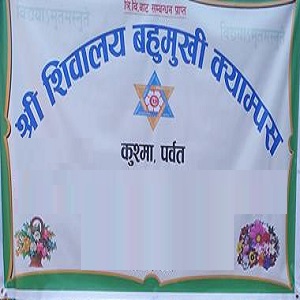
Kushma Multiple Campus (कुश्मा बहुमुखी क्याम्पस) is a community-based campus in Kushma, Parbat, Gandaki Province, Nepal. The present institution was formed in 2081 BS (2025 AD) through the merger of Gupteshwor Multiple Campus and Shivalaya Multiple Campus.
It is affiliated with Tribhuvan University for higher education programs and linked with the National Examinations Board for +2 streams. The campus profile also notes support from the University Grants Commission (UGC). Spread across 27 ropanis, the campus runs academic and administrative activities through four buildings with 36 rooms, along with library, examination, and office facilities.
Community-based campus in Kushma, Parbat
Formed in 2081 BS (2025 AD) through the merger of Gupteshwor Multiple Campus and Shivalaya Multiple Campus
Affiliated with Tribhuvan University and connected to NEB streams
Supported by the University Grants Commission (UGC)
Campus area of 27 ropanis
Four buildings with 36 rooms
Academic areas include Management, Education, and Humanities and Social Sciences
Bachelor-level focus in Arts, Commerce, and Education
Library, computer lab, seminar hall, main hall, internet, sports courts, and campus bus
Scholarships mentioned for poor, talented, and rural students
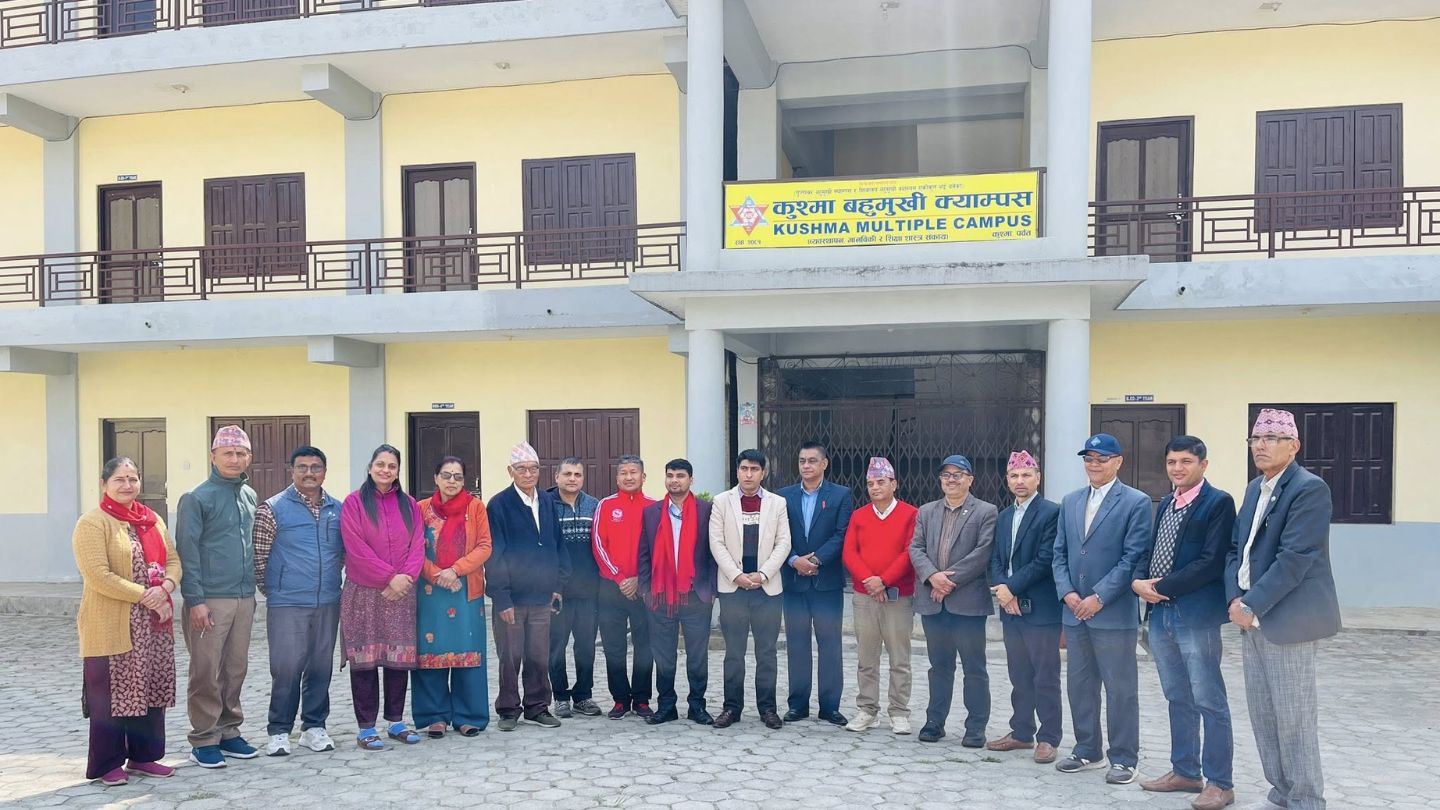
Kushma Multiple Campus emerged from a community initiative rooted in Kushma Bazaar and nearby areas. The background attached to the campus links its development with the participation of local residents and public support. Public donation is identified as a major source in its institutional journey, and the campus is presented as a non-political community effort involving different sections of society.
A central institutional milestone is the merger of two campuses operating in Kushma Bazaar: Gupteshwor Multiple Campus and Shivalaya Multiple Campus. After this merger in 2025 AD, the integrated institution began operating as Kushma Multiple Campus. The campus background ties this consolidation to academic continuity, local access to education, and the need to respond to changing student enrollment patterns.
The institutional mission and objectives focus on access to education, study and teaching up to postgraduate level, research activity, community participation, and organized extracurricular work. The campus also places emphasis on effective management, transparency, participatory planning, and mobilization of local resources.
Kushma Multiple Campus organizes its academic offerings under Management, Education, and Humanities and Social Sciences.
At bachelor level, the campus profile identifies Arts, Commerce, and Education as the main active academic focus.
The MBS program is identified as a semester-based program running for 2 years in 4 semesters, and CMAT is required for admission.
The +2 structure is associated with NEB. The campus material also identifies a bachelor-level emphasis in Arts, Commerce, and Education.
Admission to TU bachelor programs generally begins after the campus publishes its admission notice.
Eligible applicants submit the prescribed application form with required academic documents.
Depending on the program and campus procedure, admission may involve an entrance examination, merit-based selection, or both.
Selected applicants complete admission through document submission and fee payment.
For BA, BEd, and BBS, applicants who have passed PCL, +2, or an equivalent examination with minimum 40 percent marks or 2 CGPA, with not less than D+ in a single subject, are eligible for admission.
For MBS, applicants must have completed BBS or a bachelor’s degree in any discipline from TU or a university recognized by TU, and admission is CMAT-based.
For +2 streams, admission generally begins after SEE results.
For +2 Management, Humanities, and Education, the stated minimum eligibility is SEE or equivalent with GPA 1.6.
Academic registration, examinations, and results follow TU or NEB rules according to the level and program structure.
Academic Transcript (Grade Sheet) of Class 12 / +2 or equivalent
Character Certificate from the previous institution
Migration Certificate, if the previous board or university is different
Transfer Certificate (TC) from the previous school or college
Citizenship Certificate or Birth Certificate copy
Passport-size photographs
Entrance Examination Scorecard, if required
Completed campus admission/application form
Admission fee payment receipt
Equivalence Certificate, if the qualification is from a foreign board or university
Bachelor’s Degree Transcript / Marksheet
Bachelor’s Degree Certificate or Provisional Certificate
Character Certificate from the bachelor-level institution
Migration Certificate, if the bachelor’s degree is from another university
Transfer Certificate (TC) from the previous campus or college
Citizenship Certificate or Birth Certificate copy
Passport-size photographs
Entrance Examination Scorecard, if required
Completed admission/application form
Admission fee payment receipt
Equivalence Certificate, if the bachelor’s degree is from a foreign university
SEE Marksheet (Grade Sheet)
SEE Character Certificate / School Leaving Certificate
Transfer Certificate (TC) from the previous school
Migration Certificate, if applicable
Citizenship Certificate or Birth Certificate copy
Passport-size photographs
NEB Class 11 Registration / Subject Registration Form
The campus presents its academic environment as student-centered and community-supported. Teaching and learning are linked with regular classroom instruction, project work, and internal evaluation. The profile also refers to technology-friendly teaching methods and mentions periodic examinations as part of the academic process.
Interaction between the campus governing committee, parents, professors, and students is part of the campus working culture. The campus background also mentions experienced and skilled professors, morning classes, and a learning setup supported by library, internet access, and project-based academic work.
Campus spread across 27 ropanis
Four buildings with 36 rooms
Classrooms
Administrative rooms and accounts section
Library with books
Examination-related rooms and procedures managed on campus
Computer lab
Seminar hall
Main hall
Free internet facility
Campus bus
Sports facilities including volleyball, basketball, and table tennis courts
The campus operates in the district headquarters of Parbat and places academic activity within a community setting. The institutional profile connects campus life with morning classes, regular interaction among stakeholders, internal evaluation, and access-oriented educational practice. Students are placed in a setting that combines classroom learning with project work and campus-based support facilities.
Student experience is also linked with transportation support through a campus bus and participation in sports and extracurricular activities. The campus background places importance on a peaceful environment, community participation, and continued educational access for students from different local and rural backgrounds.
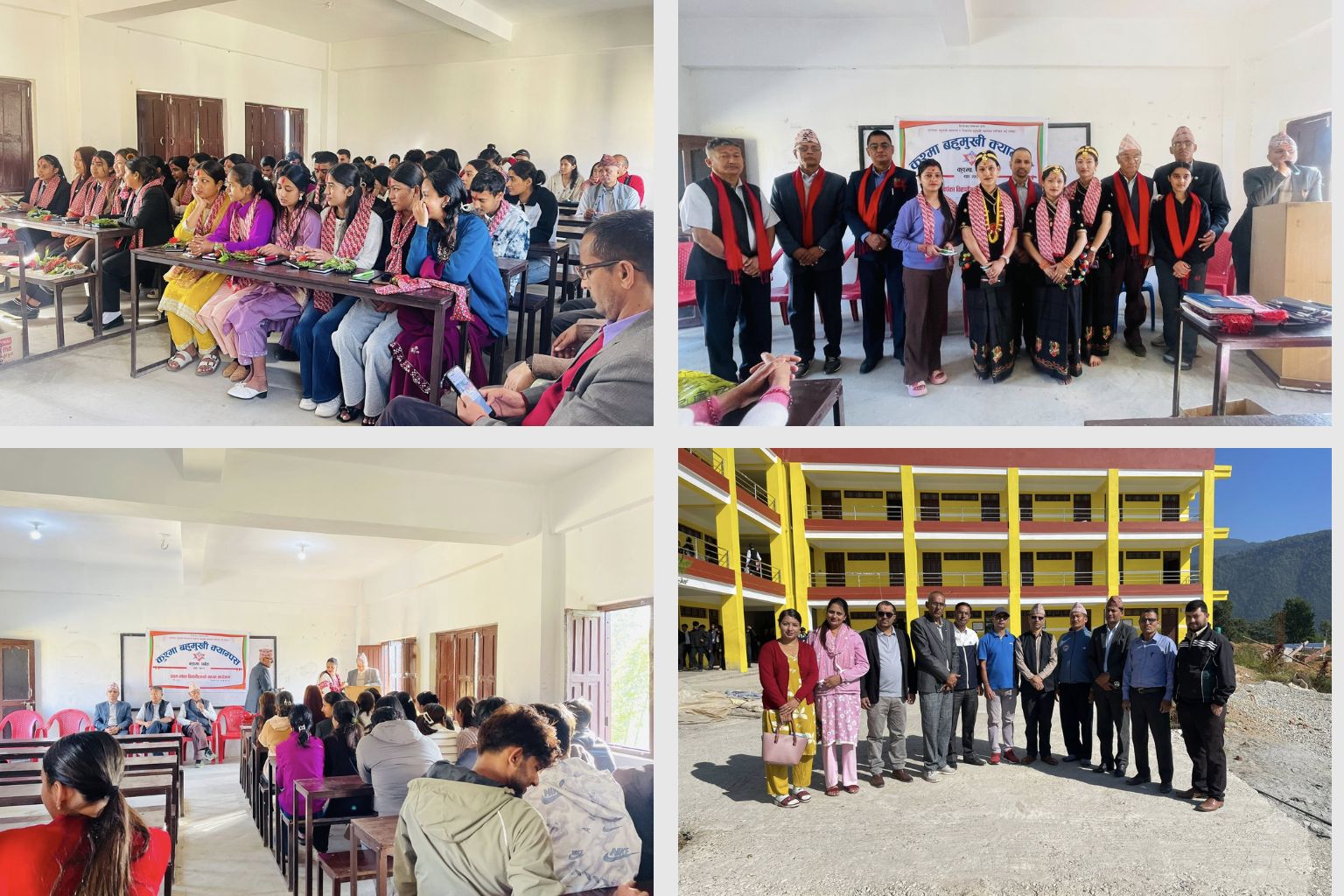
Sports activities
Volleyball
Basketball
Table tennis
Creative and extracurricular activities
Project work based on thematic needs
Educational tours are included in future academic planning
Scholarships for poor students
Scholarships for talented students
Scholarships for rural students
Formation of Kushma Multiple Campus through the merger of Gupteshwor Multiple Campus and Shivalaya Multiple Campus
Operation as a community-based campus in Kushma, Parbat
Academic and administrative operation across four buildings with 36 rooms
Expansion of the institutional profile to bachelor and postgraduate study, including MBS
Kushma Multiple Campus represents an integrated community-campus model built through merger, local participation, and multi-level academic planning. Its identifiable strengths lie in its local academic reach, land and building base, organized program structure across major faculties, and a working setup that includes library, internet, sports, and campus transport. For students seeking higher education options in Kushma and nearby areas, the campus brings together bachelor-level study, postgraduate management study, and a broader educational role within the district.
College Name: Kushma Multiple Campus
Location: Kushma, Parbat, Gandaki Province, Nepal
Affiliation: Tribhuvan University; National Examinations Board
Phone: 067-420145, 067-421124
Email: kushmamultiplecampus@gmail.com
Kushma Multiple Campus is located in Kushma, Parbat, in Gandaki Province, Nepal.
The present campus was formed in 2081 BS (2025 AD) through the merger of Gupteshwor Multiple Campus and Shivalaya Multiple Campus.
The campus is affiliated with Tribhuvan University for higher education programs, and its +2 streams are linked with the National Examinations Board.
The campus offers BA, BBS, BEd, MBS, and +2 streams in Education, Humanities, and Management.
Yes. MBS is offered as a semester-based program of 2 years and 4 semesters, and CMAT is required for admission.
Applicants must have passed PCL, +2, or an equivalent examination with a minimum of 40 percent marks or 2 CGPA, with not less than D+ in a single subject.
The stated eligibility for +2 Management, Humanities, and Education is SEE or equivalent with GPA 1.6.
The campus includes classrooms, administrative rooms, a library, computer lab, seminar hall, main hall, internet facility, sports courts, and a campus bus.