Mahendra Ratna Multiple Campus (MRMC), Ilam is a Tribhuvan University (TU) constituent campus located in Ilam Municipality, Ward No. 7. The campus lies close to the historic tea garden area of Ilam and is known locally for a calm academic setting that supports regular study routines and field-linked learning where relevant.
MRMC began on 21 Ashad 2017 BS (1960 A.D.) as Mahendra Ratna Mahavidyalaya with an initial enrollment of 26 students. The campus records identify the start with the Intermediate of Arts (I.A.) program under the Founder Principal, Mr. Khagendra Nath Sharma. Over time, MRMC expanded its TU-approved academic work to additional levels and disciplines.
This Official profile of Mahendra Ratna Multiple Campus (MRMC), Ilam under Tribhuvan University, covering approved programs, admission requirements, facilities, QAA status, student life, and scholarships.
TU status: Constituent campus
Autonomy: TU-approved autonomous campus status recorded as 2066 BS (1 February 2010)
QAA: Campus records state QAA obtained on 24 Bhadra 2072 BS through the UGC Nepal process
Location: Ilam Municipality, Ward No. 7; near the tea garden zone
Students: Around 2,353–2,400+ reported across faculties (figures vary by reporting year in campus records)
Human resources: Around 80–85 teaching staff and around 32–35 administrative/non-teaching staff reported
Academic areas: Humanities and Social Sciences, Education, Management, Horticulture Management
Library: Automated library with study rooms and e-resource access stated
Practical facilities: Biology, Chemistry, and Horticulture labs stated for horticulture-related study
Student support: Students’ Welfare Section, sports facilities, counseling and mentoring stated
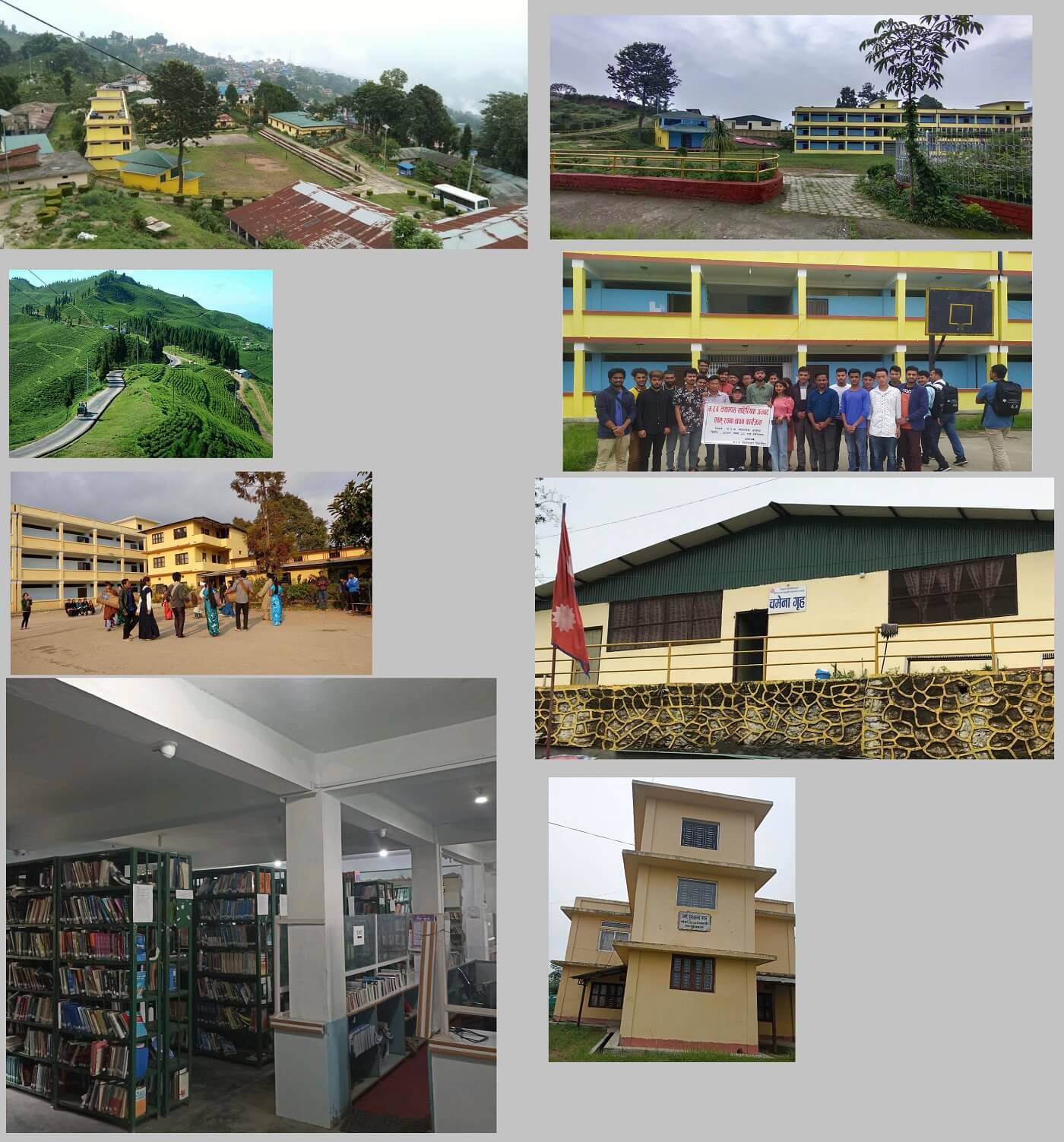
MRMC serves students from Ilam district and nearby districts such as Jhapa, Panchthar, and Taplejung. Campus records also note enrollment from other parts of Nepal, including in horticulture-related study. The campus setting is described as moderate in climate and nature-rich, which is relevant for students who prefer a quieter place for study and for programs that require practical and field exposure.
Campus records indicate that many learners come from lower-middle and middle-income families. Access and cost sensitivity are noted as common reasons for student enrollment, along with the availability of TU programs within the district.
MRMC is described in campus records as having produced graduates active in public service, education, social development, financial institutions, NGOs/INGOs, corporations, and private sector work. The records do not provide quantified alumni outcome data, so this profile does not publish numerical employment claims.
MRMC operates under TU’s constituent campus structure. Academic programs, examinations, and degree processes follow TU’s official framework. For students and verification bodies, academic validity depends on TU approval and current program operation as published in the official notice for the relevant academic year.
Approved programs are those authorized by TU under its faculty and curriculum system.
Validity for admission and study depends on current operation and the published notice for the academic session.
Intake, admission steps, and program operation are time-sensitive and should be checked in the latest official notice.
Campus records state that TU approved MRMC to run autonomously in 2066 BS (1 February 2010). Autonomy is recorded as supporting campus-level decision-making in academic management, finance, infrastructure planning, and administration within TU rules and formal agreements.
Autonomy is linked with how the campus plans academic operations and manages internal services. Curriculum, program approval, examination rules, and degree systems remain under TU. Students should verify admissions, program schedules, and program operation through the official notice for the target year.
Campus records state that MRMC obtained Quality Assurance and Accreditation (QAA) on 24 Bhadra 2072 BS through the University Grants Commission (UGC) Nepal process. QAA is a structured institutional evaluation based on evidence, self-study reporting, and peer review.
Campus records describe committee-based quality work, including preparation of a Self-Study Report (SSR), stakeholder consultations inside and outside the campus, and role assignments through Terms of Reference (ToRs). These processes are relevant because they document institutional performance and feedback for improvement planning.
QAA standing and renewal cycles can change based on official timelines and review outcomes. Readers who need the latest confirmation should verify through UGC QAA records and the campus administration at the time of use.
The campus states a vision of being a higher education center known for strong teaching, learning, and research.
The campus states a mission of developing competent human resources through scientific and applied education.
Improve existing academic programs through better management and timely academic review under TU rules
Strengthen physical infrastructure, including classrooms, library, labs, and equipment
Build subject-wise professional competence among staff
Strengthen research culture and publication work
Strengthen financial stability through appropriate use of internal and external resources
Extend student welfare activities and internal campus services
MRMC’s academic programs are recorded across Humanities and Social Sciences, Education, Management, and Horticulture Management. The campus records note use of annual and semester systems depending on the TU program structure.
Master of Arts (MA) in Rural Development
Master of Arts (MA) in Nepali
Master of Arts (MA) in Sociology
M.Ed in English Language Education
M.Ed in Education Planning and Management
Bachelor of Arts (BA)
BA in Geography
BA in Sociology
BA in Rural Development
Bachelor of Education (B.Ed)
B.Ed in Geography
B.Ed in Population
B.Ed in Health
B.Ed in English
One-Year B.Ed
One-Year B.Ed in Mathematics
Bachelor of Business Studies (BBS)
B.Sc. in Horticulture & Floriculture Management
FoHSS is described as supporting humanities and social science study areas, including interdisciplinary subjects and research-related components.
English
Nepali
Rural Development
Sociology and Anthropology
Geography
Economics
Political Science
History
Culture (NeCHA)
Mathematics (included in the interdisciplinary list)
Research methodology courses (noted in campus records)
Campus records mention departmental ToRs and note that some departments publish journals and maintain small library corners. Course structures follow TU curriculum and departmental arrangements.
Campus records state that MRMC offers one-year and four-year B.Ed programs and runs subject areas such as Economics, English, Political Science, Mathematics, EPM, and Geography within TU rules.
Management education is described as supporting learning for business, industry, and public-sector needs. Campus records state that BBS and BBA were introduced under the TU semester system in 2079 BS.
Campus records highlight horticulture as a major academic area. The campus states that TU launched a four-year B.Sc. in Horticulture & Floriculture Management at MRMC in 2012 A.D. (2069 BS), with an intake of 30 students in its first academic year.
Biology lab
Chemistry lab
Horticulture lab
Sheds and houses used for practical work
Rainwater harvesting tank and related support facilities
Campus records note that students in horticulture-related study come from different parts of Nepal.
Admission is notice-based. Each academic year, the campus publishes official admission notices that state application dates, eligibility, selection method, required documents, fee timelines, and program availability.
Students should confirm the following from the official notice and the relevant department office:
Program availability for the target academic year
Application start and end dates
Eligibility requirements for each program
Selection method stated for that year
Document submission rules and deadlines
Fee payment timeline and account clearance requirements
Bachelor-level eligibility follows TU entry requirements (commonly Grade 12 or equivalent), subject to the notice.
Master-level eligibility follows TU entry requirements (commonly a relevant bachelor-level qualification), subject to the notice.
Semester-based programs and Education programs may have subject conditions that must match the notice.
Students should prepare documents as required by the notice, such as:
Academic certificates and transcripts
Citizenship certificate or accepted ID document
Photographs
TU and campus application forms
Program-specific documents if required
Campus records emphasize affordability, but fee amounts are not specified in the supplied public information summary used here. Fee amounts should be published only from an official fee notice or an officially issued public fee section.
Campus records report around 80–85 teaching staff and around 32–35 administrative/non-teaching staff. References to higher academic qualifications among faculty are also recorded.
Teaching follows TU curricula and the assessment structure of each program (annual or semester). Departmental responsibility structures through ToRs are also noted in campus records.
Campus records describe mentoring and counseling as part of student support, including:
Academic adjustment and study planning
Choice of major and career direction
Internship and employment preparation support where applicable
Graduate and professional study planning
Campus records state that MRMC provides mini-research grants to teaching faculty through a Research Unit and supports publication through an annual research journal.
Campus records mention land of about 200 ropanis and describe a nature-rich setting. Extension of classroom buildings and spacious classrooms are also noted.
The campus states that it has an automated library with study rooms and services for morning and day shifts. E-library services and e-resource sites are also noted. Students should verify opening hours and access procedures through the library.
For horticulture-related programs, campus records mention Biology, Chemistry, and Horticulture labs and supporting practice facilities. Lab schedules and access rules should be verified at the department.
Campus records list internet access and CCTV cameras and mention departments with computer and internet access. Students should verify lab hours, equipment availability, and access conditions.
Campus records describe a canteen accessible to students and staff during break times on weekdays, with hygiene-focused preparation and subsidized pricing noted.
Campus records list hostels (boys’ and girls’), health care centers, boundary wall, staff residence, transportation service, and public support services. Students should verify availability, capacity, rules, and fees through the administration office.
Campus records describe the Students’ Welfare Section as coordinating student engagement and supporting sports and activity facilities.
Campus records mention activities such as:
Creative writing
Quiz contests
Debates
Spelling competitions
Cultural programs
Regular student events, including farewell programs
Campus records note that the campus organizes long and short excursions annually for academic programs, presented as learning opportunities related to landscape, culture, and local realities.
Campus records describe a code of conduct to maintain discipline and a respectful learning environment. Key points include:
Students are expected to carry the campus identity card.
Punctuality and attendance expectations are stated.
Unauthorized leave and property damage are subject to action as stated in campus rules.
Clearance of dues is linked with exam-related documents and certificates as stated.
Substance use and weapons are described as not acceptable under campus rules.
Basketball court
Volleyball court
Campus records link student participation with broader student development and campus engagement. Event schedules and facility-use rules should be verified through the Students’ Welfare Section.
Campus records mention scholarship categories described as Full/50%. Scholarship rules are applied through the official notice and the campus policy for the academic year.
Scholarship categories and eligibility criteria
Quota and selection method
Required documents and deadlines
Continuation rules for ongoing scholarship support, if stated
21 Ashad 2017 BS (1960 A.D.): Campus began as Mahendra Ratna Mahavidyalaya with 26 students and I.A. classes
2041 BS: Expansion to certificate and bachelor-level programs with TU approval stated
2066 BS (1 February 2010): Autonomous status approval by TU stated
24 Magh 2066 BS: MoU with UGC Nepal stated in campus records
24 Bhadra 2072 BS: QAA obtained stated
2069 BS / 2012 A.D.: Start of B.Sc. Horticulture & Floriculture Management with TU approval stated
2079 BS: Introduction of BBS and BBA under TU semester system stated
Campus records describe committee and working-group formation for SSR preparation, stakeholder consultation, and data collection/reporting work related to QAA.
This section supports decision-making using neutral, verification-focused points.
MRMC offers multiple TU programs within Ilam district, which can reduce relocation needs for local students and families, subject to program availability in the official notice.
The horticulture program and its labs and practice facilities are a central academic feature recorded in campus materials for students planning agriculture and horticulture-linked study.
Affordability is noted in campus records as a reason for enrollment. Final cost decisions should be made using the official fee and scholarship notices.
The campus setting, library services, welfare activities, and counseling support are recorded as parts of the student experience. Students should verify how services operate in the current academic year.
A current message from the Campus Chief/Principal/Chairperson is not included in the public summary information used here. If an official leadership message is available, it should be added exactly as issued.
Mahendra Ratna Multiple Campus (MRMC), Ilam is a TU constituent campus with institutional history beginning in 2017 BS (1960 A.D.). Campus records state autonomous status approval in 2066 BS and QAA obtained in 2072 BS. The campus records also list academic programs across Humanities and Social Sciences, Education, Management, and Horticulture & Floriculture Management, supported by library services, laboratories for horticulture-linked study, student welfare activities, counseling support, and listed campus facilities.
For admissions and verification, students and guardians should confirm intake-sensitive details—eligibility, documents, deadlines, fees, scholarship criteria, and program operation—through the latest official notice issued by MRMC and the TU rules that apply to the selected program.
Campus records identify MRMC as a TU constituent campus. For formal verification, rely on TU records and the campus’s official notices.
Validity depends on TU approval and current operation for the academic year. Students should verify program running status and intake details through the official admission notice.
Autonomy relates to campus-level decision-making in academic and administrative management within TU rules. Curriculum, program approval, and degree systems still follow TU.
Campus records state QAA was obtained on 24 Bhadra 2072 BS through the UGC Nepal process. Current standing should be verified through UGC QAA records and the campus administration when needed.
Use the most recent official admission notice issued by MRMC and confirm with the relevant department office. Requirements and deadlines are notice-based.
Campus records mention Full/50% scholarship categories. Criteria and quotas should be verified through the official admission notice and campus scholarship guidelines for the target year.
For detailed information on the course, admissions, location, fees, scholarships, facilities, counseling, or eligibility, contact Mahendra Ratna Multiple Campus's administrative office.