Nagarjuna College of Information Technology (NCIT - Nagarjuna College of IT) is a Tribhuvan University-affiliated institution located at Shankhamul-09, near Shankha Park, Lalitpur. The college operates under the Nagarjuna Group of Institutions and offers undergraduate programs (BSc CSIT, BCA, BITM, BBM, and BBS) in information technology and management. With a mix of computing and business degrees, Nagarjuna College of IT serves students who want a TU-recognized qualification that connects academic learning with practical classroom and lab-based exposure.
For many students in Nepal, choosing a TU-affiliated IT or management college is a decision tied to affordability, recognition, and long-term academic mobility.
A TU degree can open routes to public and private sector jobs and can support further study inside Nepal and abroad. Within this context, Nagarjuna college positions itself as a college that pays attention to both subject knowledge and applied skills through lab work, presentations, project assignments, workshops, and internship-related preparation across relevant programs.

College Name: Nagarjuna College of Information Technology (NCIT)
Affiliation: Tribhuvan University
Location: Shankhamul-09, near Shankha Park, Lalitpur, Nepal
Major Undergraduate Programs: BSc CSIT, BCA, BITM, BBM, and BBS.
Academic Learning Modes Mentioned by the College: Theory classes, lab sessions, group work, presentations, seminars, workshops, project tasks, and industry visits.
Core Facilities Mentioned: Computer labs, library with 5000+ books, Wi-Fi/internet access, sports courts and playground
Student Support Areas Mentioned: Scholarships tied to merit, need, and performance and Internship and placement-related support.
NCIT offers five undergraduate programs affiliated with Tribhuvan University. The program mix indicates a dual focus on computing and business education. This structure can suit students who want a clear IT pathway, a management pathway, or a combined academic identity.
B.Sc. CSIT is a four-year, eight-semester program under the Institute of Science and Technology, TU. The program integrates core computer science foundations with information technology applications. Students typically begin with fundamental subjects such as introductory IT, programming, digital logic, mathematics, and basic science components. As they progress, the course structure covers areas like data structures, object-oriented concepts, computer architecture, operating systems, database management systems, software engineering, computer networks, web technology, cryptography, and elective options.
The program also includes project and internship-oriented components in the later stages. This structure helps students move from classroom concepts to applied problem-solving. For students aiming at a technology career, B.Sc. CSIT can provide a strong academic base for roles in:
Software and application development
Database support and administration
Network and system support
Web and enterprise solution development
Quality testing and technical documentation
Information security and IT operations
It can also support postgraduate pathways in computing, information systems, and related research fields.
Bachelor in Computer Application (BCA) is a four-year, eight-semester TU program focused on computer application and software-oriented learning. The program’s academic path emphasizes programming, system development, database handling, web and mobile application building, and applied computing concepts.
Students study foundational computing topics early and move into advanced subjects such as system analysis, object-oriented programming, database administration, web technology, scripting, mobile programming, distributed systems, and emerging application areas covered by the TU syllabus. Projects and internship elements help students connect knowledge with real use cases and workplace expectations.
BCA can suit students who want a direct focus on practical computing and application development within a TU framework. The program can support entry-level roles in:
Software development
Web application development
Mobile application support
System support and documentation
Junior analyst and technical assistant roles
Bachelor of Information Technology Management (BITM) at NCIT represents an integrated pathway where information technology and business management subjects are studied side by side. This type of program is generally suitable for students who want technical fluency along with knowledge of organizational systems, business operations, and information handling.
The academic approach connects programming, databases, networking, web systems, information security, and related IT fields with management subjects such as accounting, economics, organizational behavior, business research, finance, and strategic thinking. Students also engage with courses that link technology to business contexts such as information systems, digital business environments, and analytics-oriented learning as covered within the university framework.
BITM can help students plan careers in roles that sit between IT teams and management functions, such as:
Information systems support
IT project coordination
Business-IT liaison roles
MIS-related roles in banks, enterprises, and service sectors
IT-enabled operations and planning roles
For postgraduate study, BITM can also serve as a base for MBA, MIS, and related management or information systems degrees, depending on eligibility and university rules.
Bachelor of Business Management (BBM) is a TU Faculty of Management program that follows a four-year, eight-semester structure. BBM focuses on developing managerial understanding of organizations, markets, finance, leadership, business communication, research, and entrepreneurship.
At NCIT, BBM sits alongside IT-focused programs, which can be an advantage for students who want management education with exposure to technology-aware business courses included in the university structure. The course cycle includes core management foundations, functional business areas, research methods, and electives or focus areas in later semesters.
BBM can be relevant for students seeking careers in:
Business operations
Banking and financial services
Marketing and sales management
Human resource support roles
Entrepreneurship and small enterprise planning
Administrative and project coordination roles
Bachelor in Business Studies (BBS) at NCIT follows TU’s annual system. The program is widely chosen across Nepal for its academic recognition, flexible career routes, and affordability. The course structure covers business English, economics, statistics, accounting, management principles, business law, marketing, taxation, entrepreneurship, research methods, and specialization areas based on TU regulations.
NCIT also presents a practical orientation within the program through exposure to tools and learning areas such as SPSS, Tally, and tax-related applications referenced by the college. This type of applied focus can help students connect theoretical subjects with workplace requirements in finance, administration, and business reporting.
BBS can support career routes in:
Accounting and finance support
Banking and cooperative sectors
Business administration
Marketing and sales support
Public and private sector clerical and officer-level preparation
Entrepreneurial ventures at small and medium levels
It also provides a pathway to higher studies such as MBS, MBA, MBM, and other related qualifications.
Admission at NCIT follows Tribhuvan University eligibility requirements and program-specific entrance systems where applicable. Students should prepare for both academic documentation and entrance-based merit evaluation depending on the program.
A general admission flow commonly followed for TU-affiliated programs includes:
Collection of application forms and submission of required academic documents
Verification of eligibility based on TU rules for each faculty and program
Participation in entrance examinations for programs that require them
Merit-based selection and enrollment
Orientation on academic calendar, rules, assessments, and student services
Program-related entrance references important for students include:
B.Sc. CSIT: Entrance exam under TU IOST
BCA: Entrance exam under TU
BBM and BITM: CMAT under TU Faculty of Management according to university provisions
Since TU entrance schedules and modalities can change across academic years, students should confirm the current year’s notices and enrollment steps directly with the college.
NCIT states that it engages faculty members from academic and professional backgrounds, including professors, lecturers, scholars, and IT practitioners. This mix can be important for semester-based IT programs where both theoretical clarity and lab guidance shape student outcomes.
The teaching and learning methods referenced by the college include:
Classroom lectures supported by course outlines and scheduled lesson plans
Practical lab sessions for computing and application subjects
Group discussions and case-based learning where relevant
Individual and team projects
Student presentations and seminars
Workshops and skill-oriented sessions
Industry exposure through visits and interaction aligned with program needs
This approach can help students strengthen technical confidence, communication skills, and teamwork. It also supports TU’s assessment model that values internal evaluation, practical tasks, and final examinations.
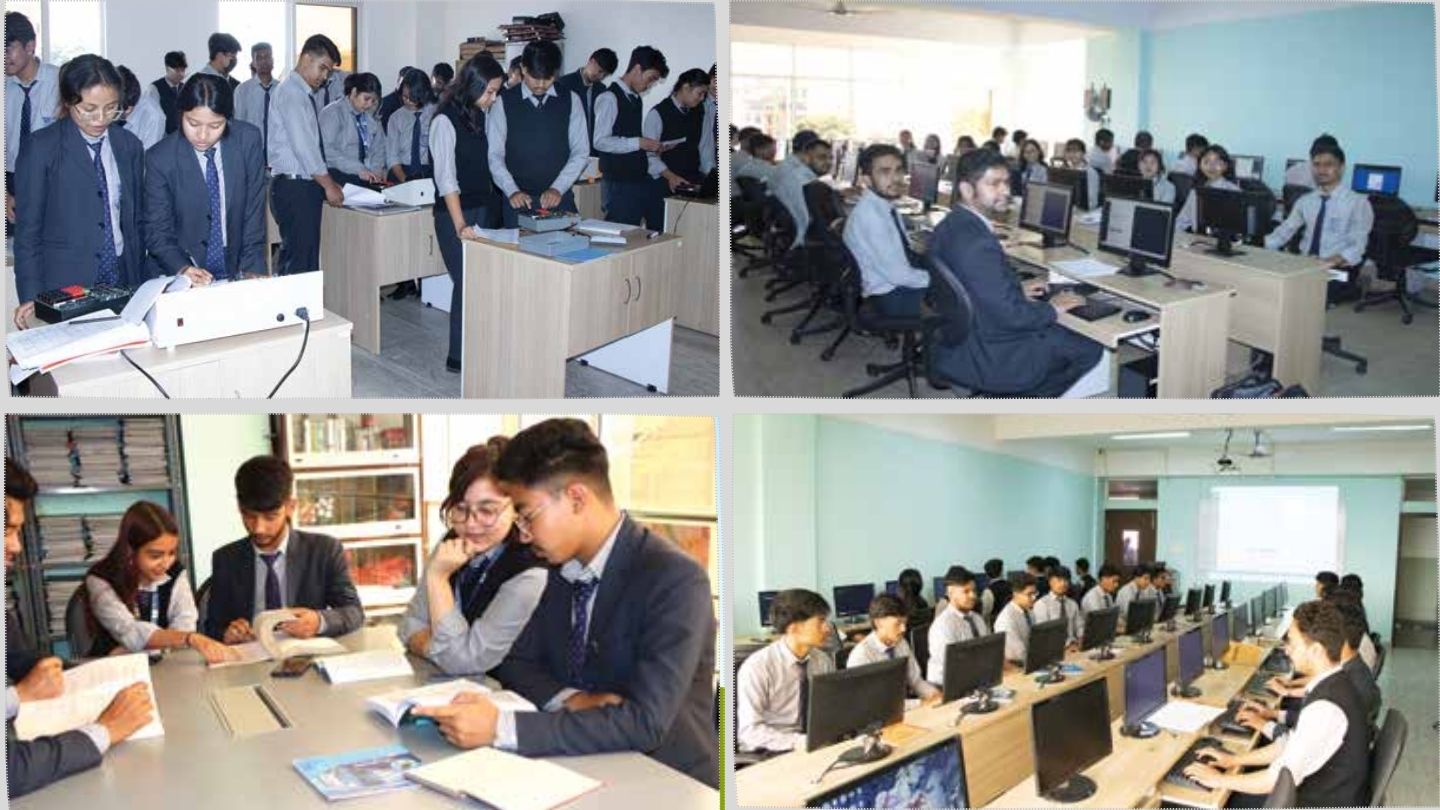
Studying IT or management is demanding, so the campus setup matters every single day. Students need a quiet place to read, a reliable lab to practice, and surroundings that support long hours of study. At NCIT, the main facilities are arranged around those simple but important needs.
NCIT runs computer labs where students attend regular practical classes. During these sessions, each student works on an individual computer, which makes it easier to follow demonstrations and complete lab exercises on time. The campus also has Wi-Fi and internet access, so students can look up references, download materials, or work on online tools when required.
For students in B.Sc. CSIT, BCA, and BITM, this setup supports routine lab work, coding practice, and semester projects that need focused, hands-on time with guidance from instructors.
The college library holds more than 5000 textbooks and reference books. Alongside these, students have access to newspapers and magazines related to IT and management. NCIT also allows students to borrow books each semester, which helps those who prefer to keep key texts with them while preparing for exams.
In everyday use, this means students can revise for tests, look for clearer explanations when topics feel difficult, and gather reading material for reports, assignments, and project work.
NCIT provides a playground and courts for futsal, basketball, and badminton. These spaces give students a change of pace from screens and classrooms. Short games after class or on weekends can help them relax, meet friends from other programs, and keep a basic level of physical activity during busy semesters.
Life at NCIT is shaped by more than lectures and exams. Alongside formal classes, students take part in activities that encourage discussion, presentation, and practical application of what they study. This is especially important in IT and management, where explaining ideas clearly and working in teams are everyday expectations in the workplace.
Students at NCIT typically experience:
Internal assessments and lab-based evaluation
Group coursework and project submissions
Class presentations that build clarity and speaking confidence
Academic recognition activities linked to performance
Guest talks and training sessions related to their field
For students who travel from outside Lalitpur, manage part-time work, or share family responsibilities, this kind of structured routine can make it easier to stay on track. Regular assessments, group work, and scheduled events help keep study momentum steady across the semester instead of everything piling up at the end.
The college indicates involvement in activities beyond regular classes. The areas referenced include sports, workshops, academic events, and public speaking-related sessions. In the TU context, ECA participation can add value in two ways:
It supports personal growth in teamwork and leadership.
It strengthens communication and confidence needed for internships and job interviews.
Students who want to build a balanced academic record often look for institutions that allow space for both study and structured co-curricular participation.
NCIT mentions scholarship schemes intended for talented, needy, and deserving students. These are presented as tuition-waiver-based opportunities linked to academic performance and extracurricular achievement. The college also references performance-related recognition such as awards for semester toppers and support for high achievers in university examinations.
Scholarship highlights mentioned by the institution include:
Support for needy and meritorious students
Recognition for semester-level academic excellence
A free laptop scheme linked to TU toppers as stated by the college
Students interested in scholarships should confirm the current year’s criteria, documentation requirements, and award schedules through the administration office.
NCIT references student achievement recognition within TU examinations and highlights academic awards tied to performance. The college also indicates a structured placement division that supports industrial attachment across programs such as B.Sc. CSIT, BCA, BITM, BBM, and BBS.
In a TU-affiliated setting, institutional milestones are often reflected in:
Consistency of exam results
Student participation in workshops and training
Effective management of internships and final-year projects
Alumni engagement and early-career placement patterns
NCIT references industrial attachment and internship as key components in programs that require real-world engagement in final semesters. The college also notes coordination with IT-related organizations for internship placement and training.
Training areas mentioned by the institution include:
Android application development
System administration
Networking
Web development
When students compare TU-affiliated colleges, they usually ask two simple questions: “Is the degree recognized?” and “Will I actually learn something useful for my future?” NCIT speaks to both points through its mix of programs and day-to-day academic practices.
Students who choose NCIT often look for:
TU-affiliated IT and management programs in one place - NCIT offers both technology-focused and management-focused courses under Tribhuvan University. This helps students who want to stay within the TU system but still keep different career options open.
Multiple academic pathways - With B.Sc. CSIT, BCA, BITM, BBM, and BBS in the same campus, students can select a path that fits their strengths—deep coding and systems work, a blend of IT and management, or business-focused study.
Teaching that combines theory and practice - Classes are supported by lab work, presentations, seminars, workshops, and project tasks. This gives students repeated chances to apply what they learn, not only write it in exams.
Regular access to library and labs - Library resources and computer labs are part of routine coursework, which matters when you need quiet study time, reference books, or a lab environment to complete assignments and projects on schedule.
Scholarships linked to performance and need - NCIT offers scholarships and fee support that consider both academic results and financial need. This can ease pressure for students who are capable but have limited resources.
Internship and industrial attachment support - Final-stage programs include industrial attachment or internship components. The college supports students in finding placements that match their course requirements, so they gain exposure to real work environments before graduation.
Location inside the Kathmandu Valley - Being in Shankhamul, Lalitpur, NCIT is reachable from many parts of Kathmandu Valley, which is helpful for students who commute daily.
Nagarjuna College of Information Technology (NCIT) is a Tribhuvan University-affiliated college based in Shankhamul, Lalitpur. It offers a set of undergraduate programs that link computing and management under one institution.
Yes. Nagarjuna College of Information Technology (NCIT) is affiliated with Tribhuvan University.
NCIT offers the following undergraduate programs: B.Sc. CSIT, BCA, BITM, BBM, and BBS.
NCIT is located at Shankhamul-09, near Shankha Park, Lalitpur, Nepal.
Yes. The college mentions industrial attachment and internship-related support in relevant programs, in line with Tribhuvan University requirements.
NCIT mentions computer labs, Wi-Fi/internet access, and a library with a large collection of textbooks and reference materials useful for IT and management studies.
Yes. The college refers to scholarship and award schemes based on merit, financial need, and academic performance, including recognition at program and university levels.
For detailed information on the course, admissions, location, fees, scholarships, facilities, counseling, or eligibility, contact Nagarjuna College of Information Technology's administrative office.
Nagarjuna College of Information Technology
Email Address: ncitcollege@hotmail.com
Phone Number: +977-1-5268890, +977-1-5268894, +977-9851073795
Website: https://nagarjunacollege.edu.np
Location: Shankhamul- 9 , Lalitpur, Nepal (next to Sankha park)