Best college for quality education
very good college




NIMS College (Nepal Institute of Management and Science - NIMS) is a Tribhuvan University (TU) affiliated higher education institution located in Kumaripati, Lalitpur, Nepal. Established in 2007, the institution began with a focus on affordable access to higher education.
NIMS College offers bachelor’s (BCA, BSW, BA, BBS) and master’s (MBS, MA Sociology) level programs across management, information technology, and social sciences. A management change was recorded in November 2018, with a stated focus on improving teaching and learning systems toward international quality standards.
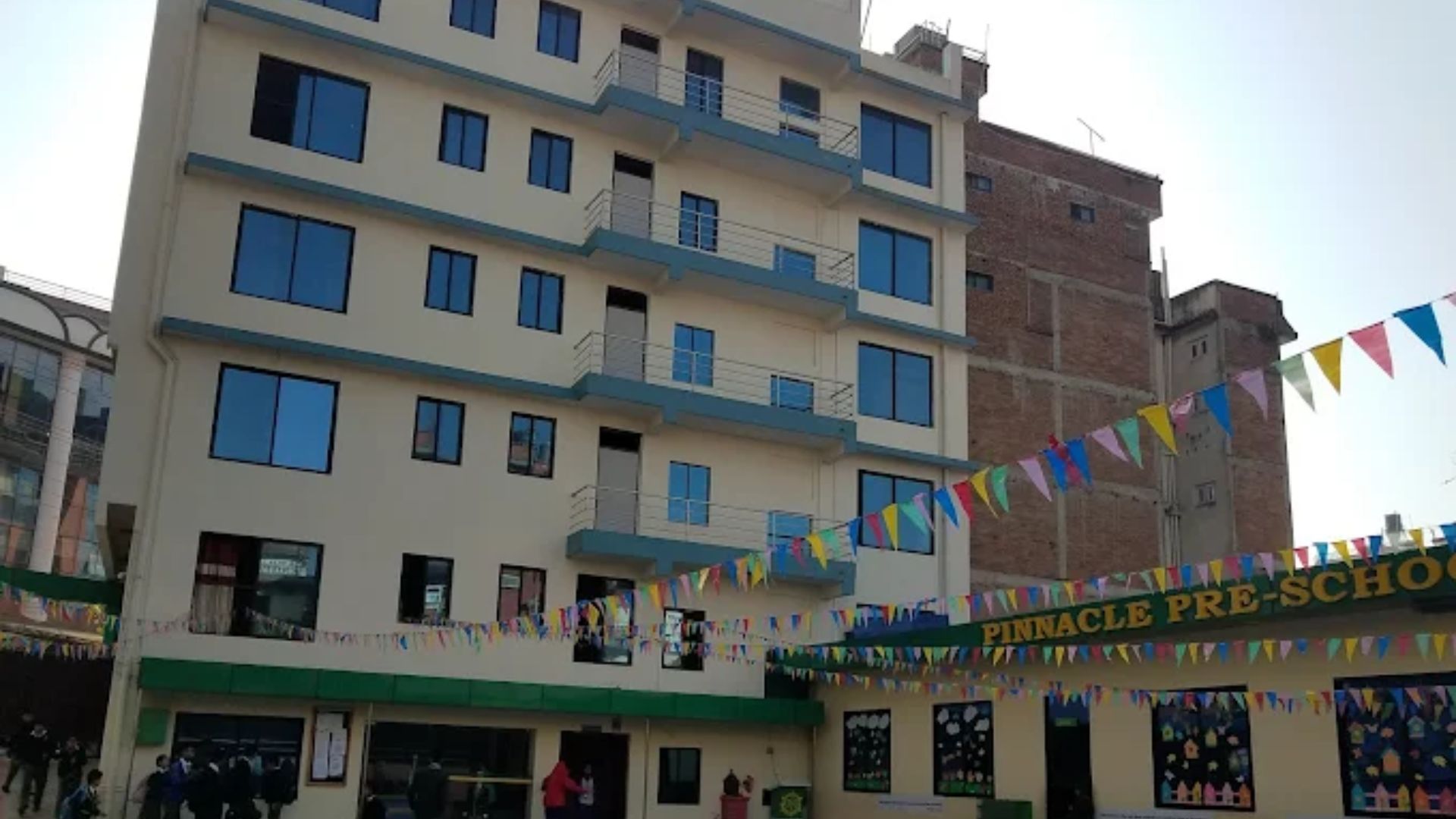
College name: NIMS College (Nepal Institute of Management and Science -NIMS)
Location: Kumaripati, Lalitpur, Nepal
Established: 2007
Affiliation: Tribhuvan University (TU)
Programs offered: BCA, BBS, BSW, BA, MBS, MA Sociology
Management update: Since November 2018
Student support areas: career counselling and placement support
Leadership contacts: Chairperson, Principal, Vice-Principal
Sister organization: Nirvana School & College
NIMS College sits within Nepal’s TU affiliation framework and provides study options at undergraduate and postgraduate levels. The institution identifies management, IT, and social sciences as its main academic areas, with programs that match these streams.
A dated institutional milestone is the management change in November 2018. The institution connects this change with a plan to improve teaching and learning systems to meet international quality standards.
NIMS College offers the following TU-affiliated programs:
Bachelor of Computer Application (BCA)
Bachelor of Business Studies (BBS)
Bachelor of Arts in Social Work (BSW)
Bachelor of Arts (BA)
Master of Business Studies (MBS)
Master of Arts in Sociology (MA Sociology)
BCA is presented as a four-year program affiliated with Tribhuvan University. The course structure covers foundational computing and mathematics early, then moves into core areas such as programming, databases, operating systems, networks, and application development.
Key academic areas reflected in the semester structure include:
Fundamentals, society and technology, and mathematics
Programming and software foundations (C programming, OOP in Java, scripting)
Systems and infrastructure (microprocessor and computer architecture, operating system, computer networking)
Data and applications (DBMS, web technology, mobile programming)
For students comparing BCA colleges in Lalitpur, the practical question is not only “what subjects are taught” but also “how practice is supported.” For BCA, lab and software support are included as part of the learning facilities, alongside project and internship exposure, and regular academic events such as seminars and workshops.
BBS is a four-year undergraduate program under TU’s management stream. Its year-wise structure covers management, accounting, economics, communication, law, research methods, and a final project.
The year-wise subject areas include:
Business English, statistics, microeconomics, accounting, and principles of management
Business communication, macroeconomics, cost and management accounting, marketing, and HRM
Business law, financial management, business environment and strategy, taxation and auditing, organizational behavior
Concentrations, entrepreneurship and enterprise development, research methods, and a final project
For students, the final-year combination of concentrations, research methods, and a project matters because it shifts learning from only classroom tests to applied work and writing.
BSW is positioned as a program that prepares students for social service and community development. It is described as a TU annual program, and the course outline provided spans multiple years with practical components.
The course structure includes:
Foundations (introduction to social work, basic sociology for social work)
Practice and psychology (basic psychology for social work, social case work practice, group work)
Community and development practice (community organization practical, development and social work practical, social policy and welfare)
Research and Nepal-focused practice (research method and academic writing, indigenous social work practice of Nepal practical)
A clarity note for applicants: the BSW section contains both an annual-system reference and a multi-year outline. Before applying, students should confirm the current TU structure and duration through the college administration and the relevant TU unit.
BA is presented as an interdisciplinary program in humanities, social sciences, and languages. It covers subject areas such as psychology, sociology, political science, economics, history, literature, and languages.
For many students in Nepal, BA becomes a practical choice when they want:
A broad academic base that keeps multiple study routes open
Strong reading, writing, and analysis skills useful for public service preparation and further study
Pathways into education, communication work, community development roles, or research support work
Since BA pathways depend heavily on subject choices and university requirements, students should ask about available subject combinations and the campus teaching plan at the time of intake.
MBS is offered as a postgraduate management program. For many candidates, the core decision is whether the program supports management knowledge growth and the habit of applied problem-solving through study and academic writing.
Admission requirements include:
Minimum CGPA of 2.0 (or 45% in the annual system) in a bachelor’s degree in management
TU CMAT (Central Management Admission Test)
Students planning for careers in banking, finance, administration, or business operations usually evaluate MBS through course demands, study schedule, and how research and assignments are handled during the program.
MA Sociology is offered as a TU-affiliated master’s program focused on sociological concepts and analysis of social problems, with an emphasis on research direction.
Admission requirements include:
Bachelor’s degree in any discipline with at least Second Division (45%) or CGPA of 2.0
TU Faculty of Humanities & Social Sciences entrance exam
For students and researchers, MA Sociology is often assessed through research opportunities, field engagement possibilities, and the quality of supervision for academic writing.
Admission requirements are program-specific and tied to TU eligibility rules and entrance exams. A clear application pathway looks like this:
Choose the program that matches your academic background and career direction.
Confirm eligibility (marks/grades/CGPA and subject requirements).
Prepare for the relevant entrance exam when required.
Submit application materials and complete intake steps as per campus procedures.
BCA
10+2 or equivalent from a board recognized by Tribhuvan University
Minimum second division (45%) or Grade C / CGPA requirement at +2 level
TU BCA Entrance Exam (computer-based test covering English, Math, and General Knowledge)
BBS
10+2 in business/commerce or equivalent, with an alternative route through mathematics or economics as a full paper at +2
English as a full paper at +2 level
Additional entry criteria can be set by the faculty board or campus
BA
Intermediate / Proficiency Certificate / 10+2 level in humanities, science, or management from TU or another board recognized by TU
Minimum D grade requirement at +2 level is noted for many programs
BSW
+2 from any stream with at least second division (45%) or CGPA 1.8
TU Social Work Entrance Exam (general awareness, social issues, basic aptitude)
MBS
Minimum CGPA 2.0 (or 45% in annual system) in a management bachelor’s degree
TU CMAT
MA Sociology
Bachelor’s degree in any discipline with Second Division (45%) or CGPA 2.0
TU Faculty of Humanities & Social Sciences entrance exam
A management update is recorded from November 2018, with international academic experience referenced across the UK, Australia, the USA, and parts of Europe. The same institutional information links this period with changes to teaching and learning systems.
Students usually experience “learning approach” through daily academic routines, not statements. A practical way to evaluate teaching and learning quality during admission inquiry is to ask about:
How internal assessment and attendance are handled
How practical assignments are checked and returned
How project supervision works (especially for BCA and BBS)
How research writing support is provided at master level
The institution also connects student development with career and professional development trainings and structured student activities.
A full facility inventory (library capacity, lab count, classroom size) is not provided in the available institutional information, so this section stays limited to stated learning supports.
For BCA, IT infrastructure with labs and required software is part of the program learning environment. The BCA academic environment also includes seminars, workshops, and hackathons as recurring learning activities.
For students choosing a TU-affiliated college in Lalitpur, facility questions that are useful to ask directly at admission time include:
Lab access hours, internet policy, and software availability for BCA
Library access and reading space
Exam preparation support and academic counseling process
Guidance structure for internship and final projects
Student life is shaped by academic schedule, peer culture, and the activities that run alongside coursework. NIMS College connects student development with structured activities such as sports clubs, leadership hubs, innovation labs, and community camps.
Students often benefit from these activities in three practical ways:
Communication and teamwork skills through group tasks and event participation
Exposure to leadership roles, planning, and responsibility through student hubs
Community engagement through camps and field-related activities
Extracurricular activities matter when they add skills that classroom time may not fully cover. The institution’s activity set includes sports and leadership-focused engagement, along with innovation labs and community camps.
For students in different programs, extracurricular engagement can align with study needs:
BCA students often gain from tech-focused events, peer learning, and project showcases
BBS and MBS students often gain from leadership tasks, communication practice, and career training
BSW and MA Sociology students often gain from community engagement and field-facing activities
Affordability is part of the institution’s founding purpose. NIMS College provides scholarship facilities and Financial support to the deserving and needy students as per the policy of the college.
Milestones that can be stated clearly include:
Establishment in 2007
Management change from November 2018
Academic activity connected to research publication is also referenced through faculty and postgraduate student journal and paper publication.
For researchers, planners, and accreditation-related review, the strongest institutional milestone evidence usually comes from dated records such as:
TU affiliation letters and program approval records
Annual academic calendars, exam records, and graduation counts
Research publication lists with titles and publication venues
Activity reports (trainings, seminars, community camps) with dates and participant numbers
These items improve transparency for audits and help external stakeholders evaluate institutional performance using concrete measures.
Students usually decide based on a few grounded factors: TU affiliation, program fit, admissions clarity, learning supports, and student services that reduce academic risk.
NIMS College offers multiple TU programs across management, IT, and social sciences, which supports students with different academic interests. The institution also links its academic direction to improvements in teaching and learning systems from the 2018 management period.
Other practical reasons connected to student experience include:
Career counselling and placement support
Academic events for BCA such as seminars, workshops, and hackathons
Student activities connected to leadership and community engagement
Chairperson: Bidhya Shrestha, 01-5438017
Principal: Dr. Mani Ram Banjade, +977 985-1259666
Vice-Principal: Buddhi Ram Banjade, +977 985-1208645
Nirvana School & College is identified as a sister organization. Programs offered there include Ten Plus Two (+2) Law, Hotel Management, Management, Science, Education, and Bachelor of Business Studies (BBS).
NIMS College, Kumaripati, Lalitpur provides TU-affiliated programs at bachelor and master levels, including BCA, BBS, BSW, BA, MBS, and MA Sociology. For students, the most reliable next step is to match a program to academic background and career goals, then verify entry requirements, entrance exams, class schedules, and fee policies through official channels.
NIMS College is located in Kumaripati, Lalitpur, Nepal.
NIMS College is affiliated with Tribhuvan University (TU), Nepal.
Programs include BCA, BBS, BSW, BA, MBS, and MA Sociology.
Yes. BCA admission requires passing the TU BCA Entrance Exam (computer-based test covering English, Math, and General Knowledge).
Yes. MBS admission requires passing the TU CMAT (Central Management Admission Test).
A bachelor’s degree in any discipline with at least Second Division (45%) or CGPA 2.0 is required, along with the TU Faculty of Humanities & Social Sciences entrance exam.
Yes. Nirvana School & College is identified as a sister organization and offers multiple +2 programs and BBS.
Contact NIMS College's administrative office for detailed information on the course, admissions, location, fees, scholarships, facilities, counseling, or eligibility.
Location: Kumaripati, Lalitpur, Nepal
Phone: +977-1-5538017, +977-1-5550102
Email: nimscollege75@gmail.com, info@nims.edu.np
Website: www.nimscollege.edu.np
very good college