Pokhara College of Management (PCM) is a bachelor's-level college located in Nadipur, Pokhara, Kaski, Gandaki Province, Nepal. Established in 2002, the college is affiliated with Pokhara University and offers undergraduate education in management, finance, and information technology.
PCM currently runs three bachelor's programs: Bachelor of Business Administration (BBA), Bachelor of Business Administration (Finance), and Bachelor of Computer System and Information Technology (BCSIT). The intake is 96 seats for BBA, 48 seats for BBA Finance, and 48 seats for BCSIT.
Alongside regular classroom study, the college incorporates presentations, workshops, guest lectures, projects, practical work, internships, and student-led activities into its academic environment. The three programs serve different areas of interest while remaining connected through business, management, technology, and organizational studies.
| Particular | Details |
|---|---|
| College | Pokhara College of Management (PCM) |
| Established | 2002 |
| Location | Nadipur, Pokhara, Kaski, Gandaki Province, Nepal |
| Academic Level | Bachelor's degree |
| Affiliation | Pokhara University |
| BBA Intake | 96 seats |
| BBA Finance Intake | 48 seats |
| BCSIT Intake | 48 seats |
| Academic Areas | Management, Finance, Information Technology |
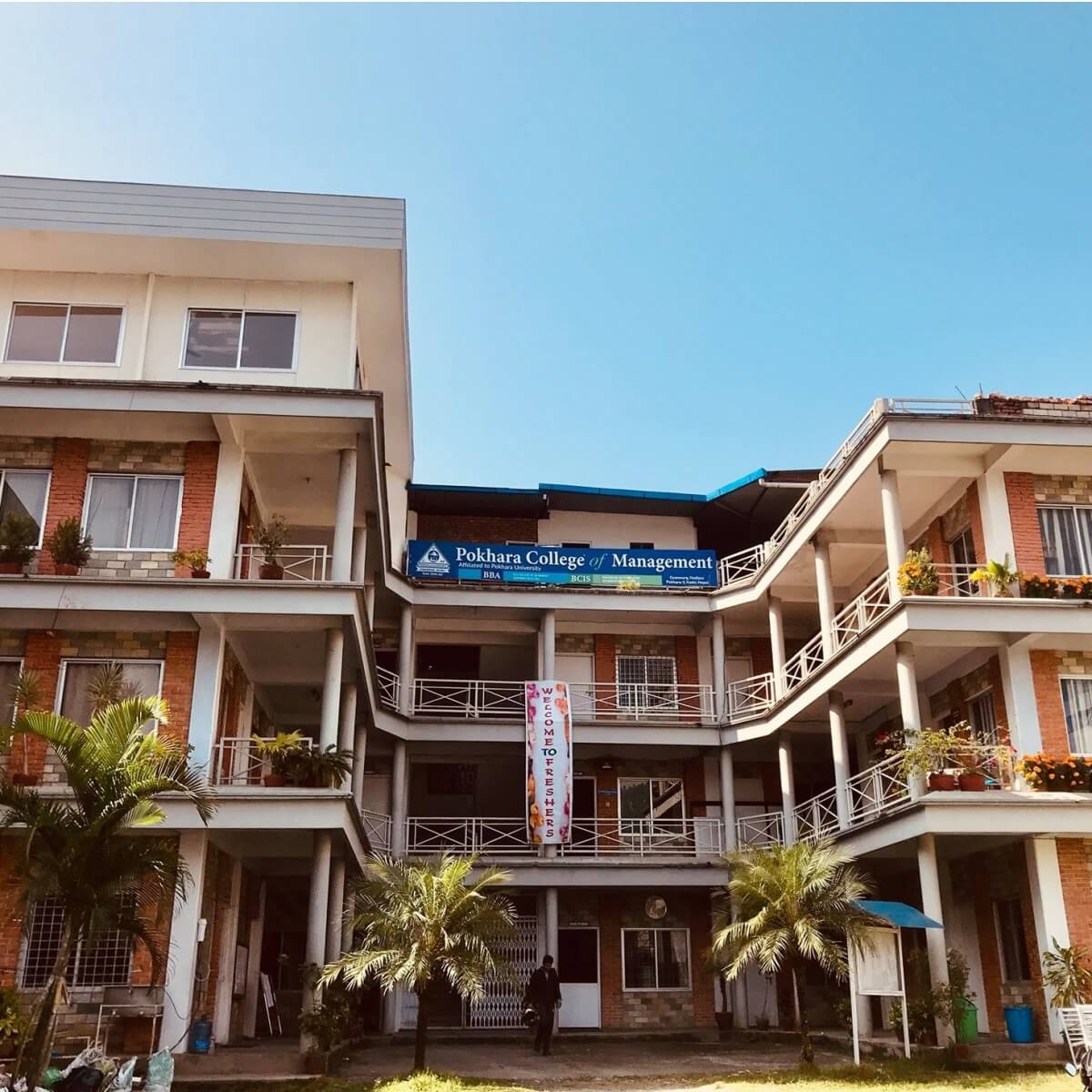
Pokhara College of Management began in 2002 with a focus on undergraduate management education. Its academic scope now covers general business administration, finance, and computer systems and information technology.
The college gives attention to both theoretical understanding and practical application. Academic work is supported by presentations, projects, workshops, guest sessions, practical courses, internships, and other activities linked to the formal programs.
PCM identifies discipline, sincerity, hard work, innovation, and achievement among its individual values. Its organizational values include respect for diverse opinions, professionalism, fairness, transparency, and team spirit.
Its academic objectives emphasize professionally oriented management education supported by conceptual, analytical, and quantitative techniques used in decision-making.
PCM is situated in Nadipur, Pokhara, within Kaski District of Gandaki Province. Its location places the college within Pokhara's urban education setting.
Students looking at colleges and educational institutions across the city may also explore information related to Pokhara Metropolitan City.
Pokhara College of Management is affiliated with Pokhara University. The college's bachelor's programs follow the academic structures, credit requirements, semester arrangements, and program regulations prescribed for the respective Pokhara University degrees.
The three programs have distinct academic orientations. BBA provides broad management education. BBA Finance gives greater attention to finance, banking, insurance, investment, and capital markets. BCSIT combines computing and information technology with business and management studies.
| Program | Seats | Affiliation |
|---|---|---|
| Bachelor of Business Administration (BBA) | 96 | Pokhara University |
| Bachelor of Business Administration (Finance) | 48 | Pokhara University |
| Bachelor of Computer System and Information Technology (BCSIT) | 48 | Pokhara University |
The BBA program provides a broad undergraduate foundation in business and management. Its semester structure begins with subjects in communication, mathematics, behavioral studies, information technology, and management before progressing into accounting, economics, finance, marketing, research, human resource management, operations, project management, international business, strategy, business law, and the business environment.
Practical courses are included throughout the curriculum. These include Software Skills Practicum, Soft Skills Practicum, Digital Marketing Practicum, Fintech Practicum, and Academic Writing.
In the later semesters, students take concentration and elective courses along with Project Work, Business Development Project, Community Engagement Project, and internship.
The curriculum is structured across eight semesters and totals 120 credit hours. A six-credit internship is included in the eighth semester.
This broad subject mix gives BBA a general management orientation. Students study several functional areas of business before moving into concentration and elective components in the later stages of the program.
PCM has 96 seats in BBA.
The Bachelor of Business Administration (Finance), or BBA (Finance), is a four-year program organized into eight semesters. Students are required to complete 120 credit hours of coursework, project work, and internship.
The program was previously known as Bachelor of Business Administration in Banking and Insurance (BBA-BI). Its academic focus includes corporate financial management, banking, insurance, investment, and capital markets while retaining a broader management foundation.
Its curriculum is organized into several academic components:
Foundation courses in areas such as communication, economics, behavioral science, statistics, mathematics, information technology, and the legal environment of business
Management core courses covering principles and functional areas of management
Concentration courses for focused study
Elective courses
Project work and internship
Practicum courses related to academic writing, technology, software skills, and professional competencies
Teaching methods include lectures, case studies, group discussions, project assignments, field visits, and class presentations.
Project work involves field-based activities and analysis, followed by preparation of the required reports. Internship is also part of the program and involves six to eight weeks of work in a business organization.
English is the medium of instruction and examination.
PCM has 48 seats in BBA Finance.
BCSIT is the current Pokhara University program title for the degree previously known as Bachelor of Computer Information System (BCIS).
The program runs for four years across eight semesters and requires 127 credit hours of coursework, project work, and internship. Its structure combines computing, information technology, information systems, and management subjects.
The academic scope includes computer systems, hardware, software, programming, information technology, database management, networking, cybersecurity, information systems, data handling, and management concepts.
The program is intended to develop students' understanding and skills in areas such as:
computer systems, hardware, software, and information technology;
technical problem analysis and solution development;
software application design and development;
databases, networking, information systems, and cybersecurity;
collection, processing, and analysis of data;
technical communication;
business and management principles; and
the use of information technology in organizational settings.
The curriculum includes foundation courses, management core courses, CIS core courses, concentration courses, project work, and internship.
Technical and project-based study begins early in the program. Semester II, for example, includes Digital Systems, Object-Oriented Language (Java), Data Structure and Algorithm, Project I, Business Communication, and Mathematics II.
Digital Systems combines theory and practical work in areas including number systems, Boolean algebra, logic gates, combinational circuits, sequential circuits, and related digital components.
BCSIT also includes an independent capstone project involving fieldwork and analysis. Internship provides six to eight weeks of experience in an organizational setting.
English is the medium of instruction and examination.
PCM has 48 seats in BCSIT.
The three programs share a connection with business and organizational studies, but their academic focus differs.
BBA covers a wide range of management functions. Students study accounting, finance, marketing, human resources, operations, information systems, research, entrepreneurship, project management, law, international business, and strategy.
BBA Finance retains the management foundation but places greater emphasis on financial subjects. Banking, insurance, investment, capital markets, and financial management are central areas within the degree.
BCSIT takes a technology-oriented route. Computing, software, computer systems, information management, databases, networking, cybersecurity, data analysis, and related technical subjects form a major part of the program, together with management studies.
Students can therefore distinguish the programs by their main academic direction: general management in BBA, finance-oriented management in BBA Finance, and computing with management in BCSIT.
PCM's academic activities extend beyond conventional lectures. Presentations, practical courses, projects, workshops, guest lectures, internships, and group activities form part of the broader learning environment.
Faculty members work across management and information technology subjects. With three programs covering business, finance, computing, and information systems, teaching responsibilities span several academic areas.
Guest lectures involving people from business and IT fields are included among PCM's academic activities. Workshops provide another setting for students to engage with practical topics and subject-specific skills.
These activities supplement the regular curriculum and classroom teaching.
Practical learning is built into the university curricula.
BBA includes practicums, project work, community engagement, business development work, and internship. BBA Finance includes practicum courses, field-based project work, and internship. BCSIT combines computing theory with practical work, projects, a capstone requirement, and internship.
Practical components therefore form part of the formal academic structure rather than being limited to extracurricular activities.
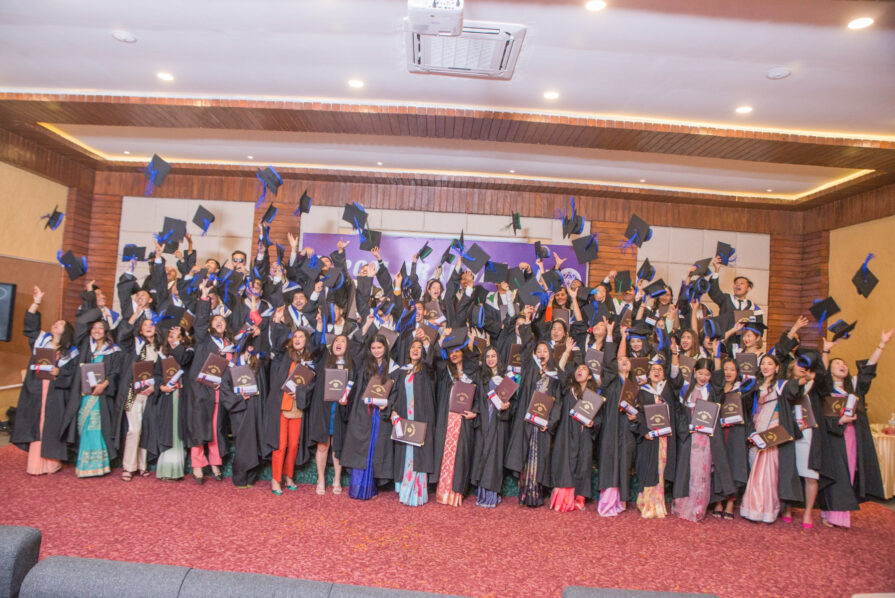
Technology appears across PCM's academic scope, although its role differs by program.
BCSIT has the strongest technical focus, with study areas that include computer systems, software, data, information systems, networking, and cybersecurity.
Technology-related subjects also appear in BBA. The curriculum includes IT for Business, Software Skills Practicum, Digital Marketing Practicum, Fintech Practicum, Management Information System, and Essentials of e-Business.
PCM's wider academic activities also include areas such as data analytics, cybersecurity, artificial intelligence, and machine learning.
PCM encourages student clubs to organize activities beyond regular classes. These include:
sports;
entertainment programs;
art and literature activities;
idea-pitching events; and
other student-led activities.
Such activities provide opportunities for students to participate in teamwork, event organization, communication, and creative work outside the formal classroom setting.
The college's stated values of respect for diverse opinions and team spirit also align with group-based and club activities.
PCM maintains connections with organizations for internships, practical exposure, and placement support.
Internship is an academic requirement within the university programs. BBA includes a six-credit internship in the eighth semester. BBA Finance requires six to eight weeks of internship, while BCSIT also includes six to eight weeks of organizational internship experience.
Guest lectures and workshops involving people from business and IT fields provide an additional form of interaction with professional practice.
Placement support is separate from the academic internship requirement and does not represent a guarantee of employment.
Admission requirements differ by program, so applicants should consider the criteria for the specific degree they plan to join.
For BBA, eligible applicants may come from Intermediate or Higher Secondary Level (10+2), Proficiency Certificate Level (PCL), or an equivalent qualification from a recognized institution.
The applicable management eligibility criteria include at least D+ in each subject in 10+2 or 45% marks in aggregate, stated as 1.8 CGPA on a 4.0 scale. Applicants must also pass the applicable entrance test.
BBA Finance applicants must have completed Intermediate or Higher Secondary Level (10+2), Grade 12, PCL, or an equivalent qualification recognized by Pokhara University.
Applicants must also pass the entrance test conducted by the concerned college.
Entry to BCSIT requires Intermediate or Higher Secondary Level (10+2) or PCL with second division, or an equivalent qualification recognized by Pokhara University.
Applicants must also pass the entrance test conducted by the concerned college. An interview may form part of final selection.
The programs operate under a semester system, with continuous evaluation forming part of academic assessment.
For BBA Finance, one credit represents one lecture or contact hour per week during a semester. A one-credit course carries 16 contact hours, while a three-credit course carries 48 contact hours.
BCSIT follows the same general credit-hour principle, with a three-credit course carrying 48 class hours.
Attendance is also part of the BCSIT academic requirements. Students are expected to attend lectures, tutorials, seminars, and practical classes, with a minimum attendance requirement of 80 percent of classes actually held.
Semester study therefore includes regular attendance, coursework, practical activities, projects, presentations, and other assessed academic components in addition to examinations.
PCM identifies discipline, sincerity, hard work, innovation, and achievement as individual values. At the organizational level, it emphasizes respect for diverse opinions, professionalism, fairness, transparency, and team spirit.
Its mission focuses on identifying and developing the potential of future business leaders who can understand their roles, responsibilities, and boundaries in changing professional settings.
The three programs extend this academic direction in different ways. BBA concentrates on general management, BBA Finance develops specialized financial knowledge, and BCSIT brings computer systems and information technology into a management-oriented academic setting.
Although the subject mix differs, several academic elements appear across PCM's programs:
communication and presentation activities;
quantitative and analytical study;
management subjects;
technology-related learning;
individual and group projects;
practical components;
internship experience; and
workshops, guest lectures, and student activities.
The balance depends on the chosen degree. BBA gives broader exposure to business functions. BBA Finance provides greater concentration in financial subjects. BCSIT places considerably more emphasis on computing and information systems while retaining management and organizational study.
The college's administrative office handles inquiries related to courses, admission, eligibility, fees, scholarships, facilities, counseling, and location.
The three programs currently have the following intake:
BBA: 96 seats
BBA Finance: 48 seats
BCSIT: 48 seats
Together, these programs provide undergraduate study options in general management, finance, and computer systems and information technology under Pokhara University affiliation.
Pokhara College of Management has operated in Pokhara since 2002 and offers bachelor's education under Pokhara University affiliation.
Its academic portfolio consists of BBA, BBA Finance, and BCSIT. BBA provides broad management education, BBA Finance gives greater attention to finance and related areas, and BCSIT combines computing and information systems with management study.
Practicums, projects, presentations, internships, technical learning, workshops, guest lectures, student clubs, and co-curricular activities form part of the wider academic environment. The three programs differ in subject concentration but share a semester-based undergraduate structure under Pokhara University.
Pokhara College of Management is located in Nadipur, Pokhara, Kaski, Gandaki Province, Nepal.
Pokhara College of Management was established in 2002.
Pokhara College of Management is affiliated with Pokhara University.
The college offers Bachelor of Business Administration (BBA), Bachelor of Business Administration (Finance), and Bachelor of Computer System and Information Technology (BCSIT).
The BBA program has an intake of 96 seats.
The BBA Finance program has an intake of 48 seats.
The BCSIT program has an intake of 48 seats.
BBA provides broad management education across major business functions. BBA Finance places greater emphasis on finance, banking, insurance, investment, and capital markets. BCSIT combines computing and information technology with business and management studies.
Depending on the program, students take part in practicums, projects, presentations, field-based work, internships, workshops, and other practical academic activities.
Yes. Internship forms part of the academic structure of BBA, BBA Finance, and BCSIT.
Both BBA Finance and BCSIT are four-year programs structured across eight semesters.
BBA and BBA Finance each require 120 credit hours. BCSIT requires 127 credit hours.
Applicants must have completed Intermediate or Higher Secondary Level (10+2), Grade 12, PCL, or an equivalent qualification recognized by Pokhara University. They must also pass the entrance test conducted by the concerned college.
Applicants must have completed Intermediate or Higher Secondary Level (10+2) or PCL with second division, or an equivalent qualification recognized by Pokhara University. They must also pass the entrance test conducted by the concerned college.
Yes. Student-led activities include sports, entertainment programs, art and literature activities, idea-pitching events, and other club-based activities.