The Westminster College (TWC), located in Kupondole, Lalitpur, is a higher education institution that offers UK university degrees and professional qualifications in Nepal through an academic partnership with the University of Westminster, London. Bachelor’s degrees in Computer Science and Cyber Security and Forensics, along with the ACCA professional route, give Nepali learners direct access to British higher education standards while studying in Kathmandu Valley.
The college was established in 2022 with a focus on affordable tuition, strong academic support, and clear progression routes to employment or further study. Its mission combines academic depth, practical learning, and social responsibility, guided by principles such as student success, equity, diversity, inclusion, and continuous improvement.
A growing network of industry partners, scholarship schemes, and student support units (including wellbeing, professional development, and international placement services) positions the college as a practical option for students who want globally relevant qualifications while remaining rooted in Nepal’s context.
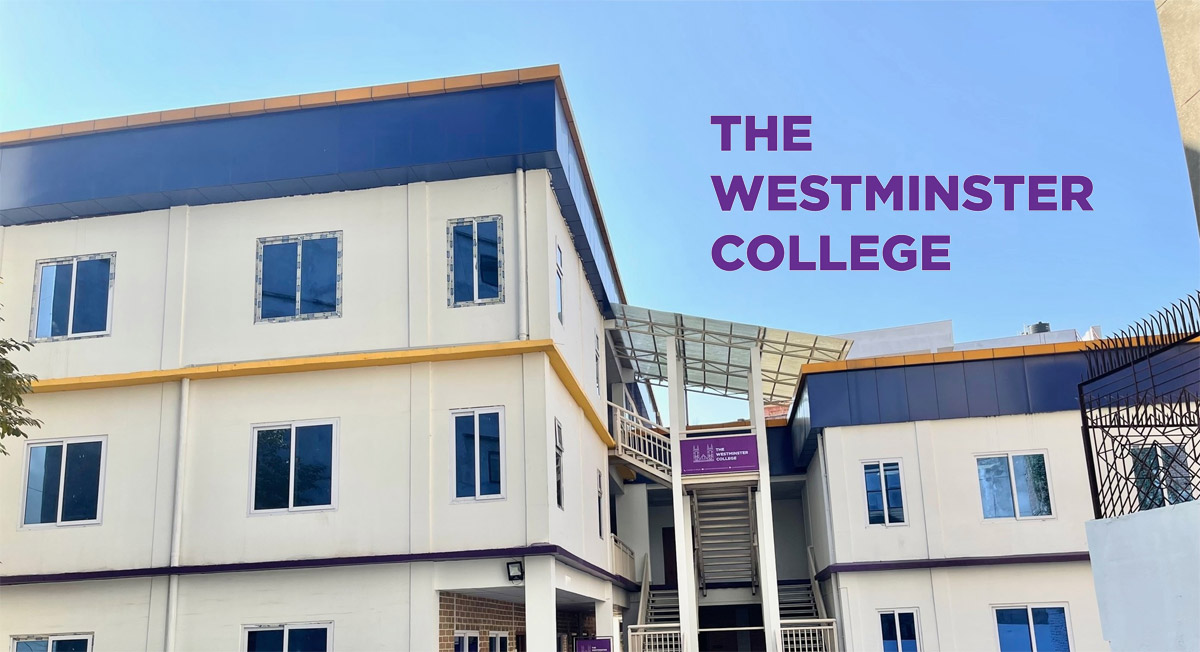
Location: TWC is located in Kupondole, Lalitpur.
Year of establishment: TWC started its academic journey in 2022 A.D.
Academic partnership: TWC delivers selected programmes of the University of Westminster, London (UK).
Academic Programmes:
BSc (Hons) Computer Science (4 years, 480 credits).
BSc (Hons) Cyber Security and Forensics (4 years, 480 credits).
ACCA (Association of Chartered Certified Accountants).
Student strength: The TWC currently has around 447 students, with representation from all seven provinces of Nepal.
Industry partners: TWC works with around 35 organisations, including IT companies, small and medium enterprises, and corporate houses.
Special facilities: Key support units and facilities include the Professional Development Centre, Student Services Department, wellbeing and health club agreements, an English Language Level Test centre, and access to University of Westminster e-resources and the Blackboard learning platform.
The BSc (Hons) Computer Science at The Westminster College follows the curriculum and academic standards of the University of Westminster. It is a four-year honours degree with 480 credits, including a foundation year that helps students adjust to degree-level study.
The course introduces students to key areas of computing and then moves towards more specialised topics. Core themes include:
data science and analytics
mobile and web application development
artificial intelligence and machine learning
Internet of Things (IoT)
software engineering and database systems
In the first year, students work on academic skills, mathematics for computing, basic programming, computer systems, and information systems. In later years, they study object-oriented programming, client–server systems, web technologies, data-focused modules, and specialist options in areas such as artificial intelligence, cryptography, and mobile or web computing.
Towards the final stage of the course, students choose modules that allow them to focus either on mobile and web engineering or on data science. This choice also guides their final-year project.
Teaching and learning take place through lectures, lab sessions, group work, and independent study. Students use computer labs with updated software, long opening hours, and online tools such as Blackboard for notes, discussions, and assignment submission.
Graduates can move into roles such as software developer, data analyst, database administrator, machine learning practitioner, or cloud engineer, depending on the modules they select and the projects they complete.
The BSc (Hons) Cyber Security and Forensics focuses on protecting information, understanding digital evidence, and managing security risks. It is a four-year honours degree with 480 credits, delivered under the academic regulations of the University of Westminster.
Students study topics such as:
fundamentals of cyber security and computer networks
applied cryptography
digital forensics and incident response
network and wireless security
web application security
malware analysis and defensive programming
legal and governance aspects of information security
In the early years, students combine programming, applied mathematics, computing platforms, and introductory cyber security subjects. At intermediate levels they work with databases, operating systems, networks, and security technologies. In the final year, modules focus on incident response, threat analysis, wireless security, and options that may include artificial intelligence, security counter-measures, and defensive coding.
Assessment methods include written assignments, lab-based tasks, security investigations, group projects, and examinations. Many tasks are built around realistic situations, for example analysing system logs, testing for vulnerabilities in a controlled setting, or drafting security response plans.
Graduates may work as cyber security analysts, network security engineers, penetration testers, digital forensics investigators, or incident response specialists in sectors such as banking, telecommunications, government, and technology companies.
The Westminster College offers tuition for the ACCA qualification, a professional credential in accounting and finance that is recognised in many countries.
The ACCA syllabus consists of 13 examinations arranged across the Applied Knowledge, Applied Skills, and Strategic Professional levels. Along with passing these exams, learners complete 36 months of relevant work experience and an online Ethics and Professional Skills Module.
At The Westminster College, ACCA students can:
attend evening classes and extended study sessions that suit both full-time students and working learners
learn from teachers with experience in ACCA teaching and industry practice
access internship and job placement support through agreements with employers
use the college library and online resources throughout the week
explore related routes such as the Oxford Brookes University BSc in Applied Accounting and the University of London MSc in Professional Accountancy, subject to current ACCA rules and timelines
The length of study depends on each student’s background, exemptions, and exam pace. Many learners complete the qualification in about three to four years.
For the BSc (Hons) Computer Science and BSc (Hons) Cyber Security and Forensics:
Higher Secondary Education Board (HSEB) / NEB 10+2 / CBSE or equivalent with at least 55% or GPA 2.4
For A-Levels, normally a minimum of 3.5 credits with three full credit subjects
Other qualifications may be considered subject to approval by the Course Leader and University partner regulations
For ACCA:
10+2 or equivalent with a similar minimum performance benchmark (55% / GPA 2.4)
A-Level candidates and degree holders may receive subject-wise exemptions following ACCA global policies
1. Initial Enquiry and Counselling
Prospective students meet the admissions or Student Services team to discuss programme options, eligibility, fee structure, and scholarship schemes.
2. Application Form and Document Submission
Submission of application form with academic transcripts, character certificates, citizenship/passport copy, and recent photographs.
3. Screening and Offer
The college screens academic eligibility, English language readiness, and programme fit. Candidates may receive a conditional or unconditional offer depending on pending results or documentation.
4. Enrollment and Orientation
After fee payment and registration, students join orientation and induction events conducted by the Student Services Department, where they receive information on academic policies, Blackboard access, student ID, and support units.
Transfer students from other institutions or from international pathways can apply for credit transfer subject to University of Westminster approval and credit mapping.
The teaching team at The Westminster College is approved by the University of Westminster and includes academics with master’s degrees and doctoral qualifications, many with international study or work exposure. Several members are active in IT industries or professional practice, so classroom discussion often reflects current workplace realities.
Teaching methods combine:
Lectures to introduce key concepts and frameworks
Tutorials and workshops for problem-solving and discussion
Lab sessions for programming, networking, security simulations, and data-oriented exercises
Group projects that mirror software development or security operations teams
Individual projects, particularly in the final year, where students conduct extended work on a selected topic
Blackboard, the University of Westminster’s virtual learning environment, plays a central role in academic delivery. Each module has its own online space for outlines, lecture slides, reading lists, announcements, discussion boards, quizzes, and electronic assignment submission. Students can access Blackboard via laptop, phone, or desktop, and can use university e-resources such as journals and databases for coursework and research.
Assessment is varied: essays, technical reports, code artefacts, lab portfolios, timed tests, presentations, and examinations. Many assessments involve real-world or industry-aligned tasks, such as interpreting business requirements, building software prototypes, investigating security breaches, or designing security policies for fictitious organisations.
The college also supports continuous staff development through training on teaching practice, emerging technologies, and research methods, with plans for higher education teaching qualifications and further research activities for faculty members.
Computer labs are among the most active learning spaces at TWC. The college maintains laboratories with high-specification computers that can handle data science, cyber security, and general computing coursework. Labs usually open from 7:00 am to 5:00 pm, so students can work on assignments, projects, and research beyond scheduled classes. Students who bring their own laptops can connect easily, with reliable internet and power backup in place.
Most modules include regular lab sessions, often twice a week. During these sessions, instructors guide students through hands-on tasks, coding exercises, or security practice. The systems are loaded with required university software and additional tools for programming, security, and data analysis, so learners can work in conditions similar to many professional settings.
The library opens from morning to late afternoon and offers a quiet space for reading and study. Students can find textbooks, reference materials, and course-related reading to support their modules.
Along with print resources, learners can access a wide range of digital materials from the University of Westminster. This includes online journals and databases prepared for South Asia partner institutions, which students use for assignments, projects, and independent reading. Classrooms are set up with laptop charging points, and the campus maintains continuous power supply to keep teaching and study activities running smoothly.
The college does not operate its own hostel. Instead, it works with partner hostels located near Kupondole. These hostels are chosen to provide safe and reasonably priced accommodation with access to public transport routes that link Lalitpur and Kathmandu. Students can discuss options with college staff and select a place that fits their daily travel and budget needs.
TWC has agreements with an external wellbeing centre and a nearby health club. Through these arrangements, students can receive counselling, mental health support, and guidance on managing stress.
They can also use gym facilities and fitness classes to maintain physical health. Special privilege cards make it easier to access these services under agreed terms between the college and partner organisations.
Since January 2024, TWC has run an English Language Level Test centre on campus. Students can sit online English language tests at the college, which is helpful for visa applications, credit transfer, or plans to study abroad. Having the test centre in the same location as their regular classes saves time and makes the process more straightforward for learners.
Student life at The Westminster College grows around steady academic guidance and a supportive campus environment. The Student Services Department works as the main contact point where learners get updates on the academic calendar, rules and regulations, attendance, examinations, and college events.
Key aspects of student life include:
regular communication through notice boards, emails, SMS, and scheduled briefings
a central system for managing attendance, academic records, and student files
help with student ID cards, recommendation letters, and other official documents
support with accommodation queries, contact with partner hostels, and basic local information for new students
The college encourages students to share their views through feedback forms, meetings, and surveys. Class representatives and student groups are involved when activities are planned, so learners can contribute to decisions that affect their campus experience.
When needed, staff also invite parents or guardians for meetings, especially for students in the early years of study or those who have come from outside the Kathmandu Valley.
Co-curricular and extracurricular activities run throughout the academic year. The Student Services Department and teaching units collectively organise:
Orientation programmes and welcome events
Sports competitions, including support for scholarship-holding athletes
Clubs and short projects linked to IT, business, or soft skills
Guest lectures from industry professionals and alumni
Summer school options in Nepal and in the UK for interested students

TWC treats fee support and scholarships as an important part of making higher education accessible. Several categories of support are available for eligible students.
Offered to students with strong results in their previous examinations. These scholarships recognise academic achievement and are usually continued when students maintain good performance and discipline during their studies.
Intended for students who face financial difficulty. Learners from remote districts, disadvantaged communities, or low-income households are often given priority so that financial constraints do not prevent them from continuing their studies.
Provided to students who are active in sports and represent the college in inter-college or regional events. These scholarships support student athletes as they balance training, competitions, and academic work.
A dedicated scholarship that links academic merit with inclusion goals. It supports students from remote areas and marginalised groups who meet the college’s entry and performance standards.
TWC has been in operation since 2022, and within this period, it has added several important developments to its institutional record. These points help show how the college is building its academic, industry, and student support structures.
Key milestones include:
Establishment as a delivery centre for University of Westminster programmes in Nepal, allowing students to study towards a UK honours degree while based in Kupondole.
Enrolment of around 447 students from all seven provinces of Nepal, reflecting a mix of regional backgrounds in the student body.
Development of a network of about 35 industry partners that support student placements, internships, guest sessions, and collaborative activities.
Recognition as an official centre for the Oxford Global ELLT (English Language Level Test), giving students access to a recognised English language assessment on campus.
Launch of the Professional Development Centre (TWC-PDC), which runs executive training, student skill-building activities, English language courses, and preparation classes for exams such as IELTS.
Prospective students may consider The Westminster College for several academic and practical reasons:
UK Degree Pathway in Nepal - Students can pursue University of Westminster degrees in Computer Science and Cyber Security while studying in Kathmandu Valley, with progression routes and credit structures identical or closely aligned to the London campus frameworks.
Strong IT and Professional Focus - The programme mix of BSc degrees, ACCA, short security courses, and pathway programmes caters both to technology-oriented learners and those targeting professional accounting careers.
Industry and Career Orientation - Links with IT companies, corporates, and SMEs support internships, project collaborations, and sometimes placements. Coursework often uses real-life scenarios, which helps students relate theory to workplace practice.
Structured Student Support - Student Services, wellbeing agreements, career guidance, and international placement assistance help learners navigate academic challenges, mental health concerns, and long-term planning.
Accessible Location and Inclusion Focus - Kupondole provides central access from both Kathmandu and Lalitpur. Scholarship schemes for merit, need, sports, and remote-area students combine with moderate class sizes and personal tutoring to support a wide cross-section of learners.
Platform for Global Exposure - Students may attend UK summer school, use University of Westminster e-resources, sit English language tests on campus, or seek credit transfer after the University Pathway Programme with guidance from the International Placement Services.
Chairman – Mr. Rajen Kandel
The Chairman’s message highlights an ambition to make international-standard higher education accessible within Nepal. His vision focuses on quality teaching, practical learning experiences, and a student-first approach that shapes graduates who are academically capable, resilient, creative, and socially aware. The message underlines the belief that education can change life trajectories and that TWC should act as a platform where Nepali youth gain the confidence to compete and contribute locally and abroad.
CEO – Mr. Mahendra Raj Kandel
The CEO stresses relevance to a developing-country context. His note emphasises that students need knowledge and skills that allow them to compete in national and international job markets, not only in theory but also in practice. The college, under his leadership, focuses on affordability, international academic benchmarks, and holistic student development through classroom instruction, labs, and professional exposure.
Head of College – Mr. Arun Lal Joshi
The Head of College speaks about student-centred teaching and an environment where learners receive both academic and practical exposure. His message refers to long-standing experience in delivering programmes linked to employers’ expectations, strong facilities, and a campus culture that values feedback, participation, and an active college life. He underlines the belief that higher education should help students grow as well-rounded individuals, not only degree holders.
The Westminster College in Kupondole, Lalitpur offers British degree routes and professional qualifications within Nepal through its partnership with the University of Westminster. Students who choose programmes in Computer Science, Cyber Security or ACCA follow a UK-linked syllabus while staying close to home, family and familiar surroundings.
Teaching in classrooms and labs is supported by language help, scholarships, counselling and career guidance. Many graduates move into work in IT, security, business or accounting, while others use their degree as a step towards further study in Nepal or abroad.

You can study BSc (Hons) Computer Science, BSc (Hons) Cyber Security and Forensics, ACCA, a one-year University Pathway Programme and a short course in Cyber Security.
Yes. The college runs selected programmes in academic partnership with the University of Westminster, a public university based in London, United Kingdom.
Most applicants need 10+2 / NEB / CBSE or equivalent with at least 55% or GPA 2.4, or A-Levels with three full subjects; other qualifications are reviewed individually.
The college does not operate its own hostel. It works with nearby hostels and helps students choose accommodation within daily travel distance of the campus.
Scholarship options include merit scholarships, need-based support and fee waivers, sports scholarships, and a Westminster College scholarship for students from remote or disadvantaged backgrounds.
Through partner organisations and the Professional Development Centre, students receive guidance and openings for internships, part-time roles and entry-level positions, mainly in IT and related areas.
Students who complete the required stage of study or the University Pathway Programme may apply for transfer abroad; decisions depend on academic results, English language level and the policies of the receiving university.