Pre-Diploma in Veterinary Science, commonly known as Veterinary JTA, is offered by Aarati Technical Institute in Sharada Municipality-02, Shreenagar, Salyan. The institute conducts the program under its affiliation with the Council for Technical Education and Vocational Training (CTEVT).
The official course title is Technical School Leaving Certificate in Veterinary Science. It prepares Veterinary Junior Technical Assistants to support animal healthcare, livestock production, veterinary extension, disease control, and basic clinical services. Theory and practical instruction are combined with on-the-job training in a relevant working environment.
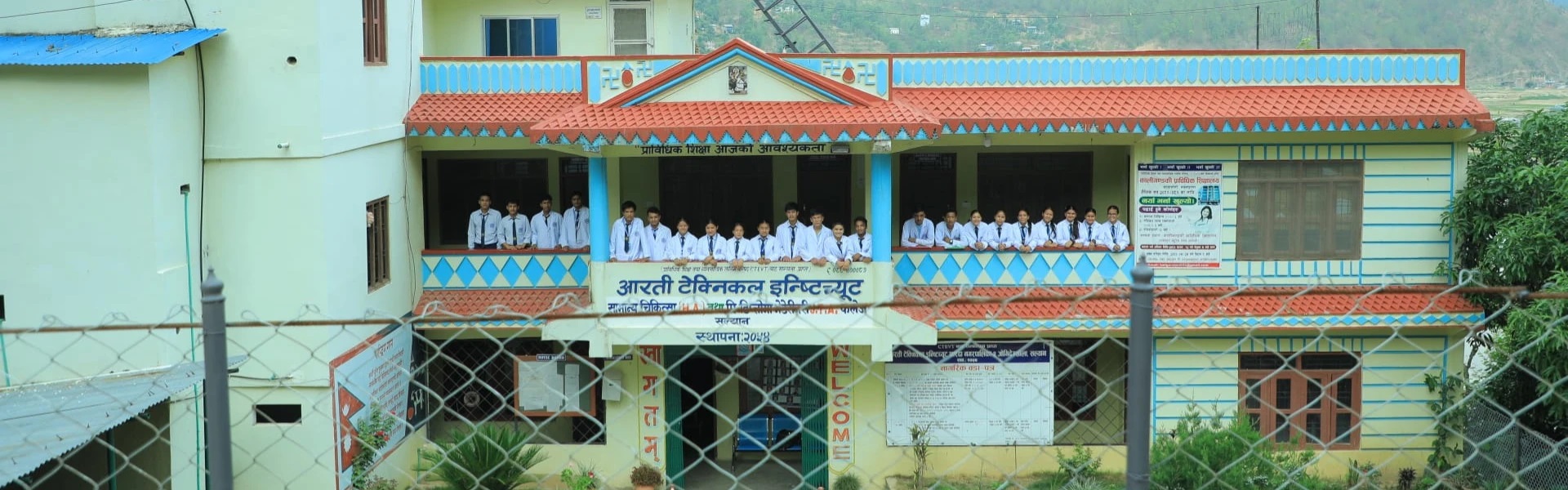
Official Course Title: TSLC in Veterinary Science
Common Name: Veterinary JTA
Institution: Aarati Technical Institute
Affiliation: CTEVT
Duration: 18 months
On-the-Job Training: Six months
Location: Sharada Municipality-02, Shreenagar, Salyan
Medium of Instruction: English and/or Nepali
Required Attendance: Minimum 90%
Maximum Group Size: 40 students
Applicants who completed SLC under the grading system introduced in 2072 BS are eligible with any grade and GPA. Those who appeared in the SLC examination before 2072 BS may also apply.
Candidates must pass the entrance examination administered by CTEVT.
The program covers animal healthcare, livestock management, public health, communication, laboratory practice, and basic veterinary procedures. Its major subjects are:
Veterinary Extension and Communication
Veterinary Anatomy and Physiology
Animal Nutrition and Fodder Production
Veterinary Epidemiology and Public Health
Animal Husbandry and Entrepreneurship Development
Veterinary Medicine
Veterinary Laboratory Technology
General Veterinary Pharmacology
Theriogenology and Basic Surgery
Veterinary medicine receives the largest share of instructional time. Students study common livestock and poultry diseases, preventive medicine, poisoning, clinical procedures, professional ethics, and case management.
Animal husbandry covers cattle, buffalo, sheep, goats, pigs, poultry, pets, bees, wildlife, aquaculture, animal breeding, dairy technology, and livestock-product management. Veterinary epidemiology introduces zoonotic diseases, environmental hygiene, public health, meat inspection, and precautions related to disease transmission.
Practical instruction includes demonstrations, observation, simulation, role play, guided practice, and independent practice. Students develop basic skills in animal examination, livestock management, laboratory work, medicine handling, farmer communication, and simple veterinary procedures.
The six-month on-the-job training carries 500 marks and places students in a working environment connected with veterinary or livestock services. OJT performance is evaluated by the institute, the host organization, and the CTEVT Office of the Controller of Examinations.
Each subject includes three internal assessments and one final examination. Internal and final examinations each carry 50% of the theory and practical evaluation. The minimum pass mark is 40% in theory and 60% in practical work. Students must also obtain at least 60% in OJT.
CTEVT awards the Technical School Leaving Certificate in Veterinary Science after successful completion of all course requirements. Graduates are eligible for positions equivalent to Non-Gazetted Second Class or Level 4 technical staff as Veterinary Junior Technical Assistants, subject to Public Service Commission provisions.