



The Bachelor of Technical Education in Information Technology and BIT (B Tech Ed IT) at South City College of Science & Technology, Birgunj, is built around the Bachelor of Technical Education in Information Technology offered under Kathmandu University School of Education (KUSOED).
The four-year, eight-semester undergraduate program combines information technology with education, instructional practice, research, projects, and workplace learning.
SCCST also presents an optional pathway through which B Tech Ed IT students can pursue an additional Bachelor of Information Technology (BIT). The B Tech Ed IT curriculum carries 136 credit hours, with substantial practical study alongside theory.
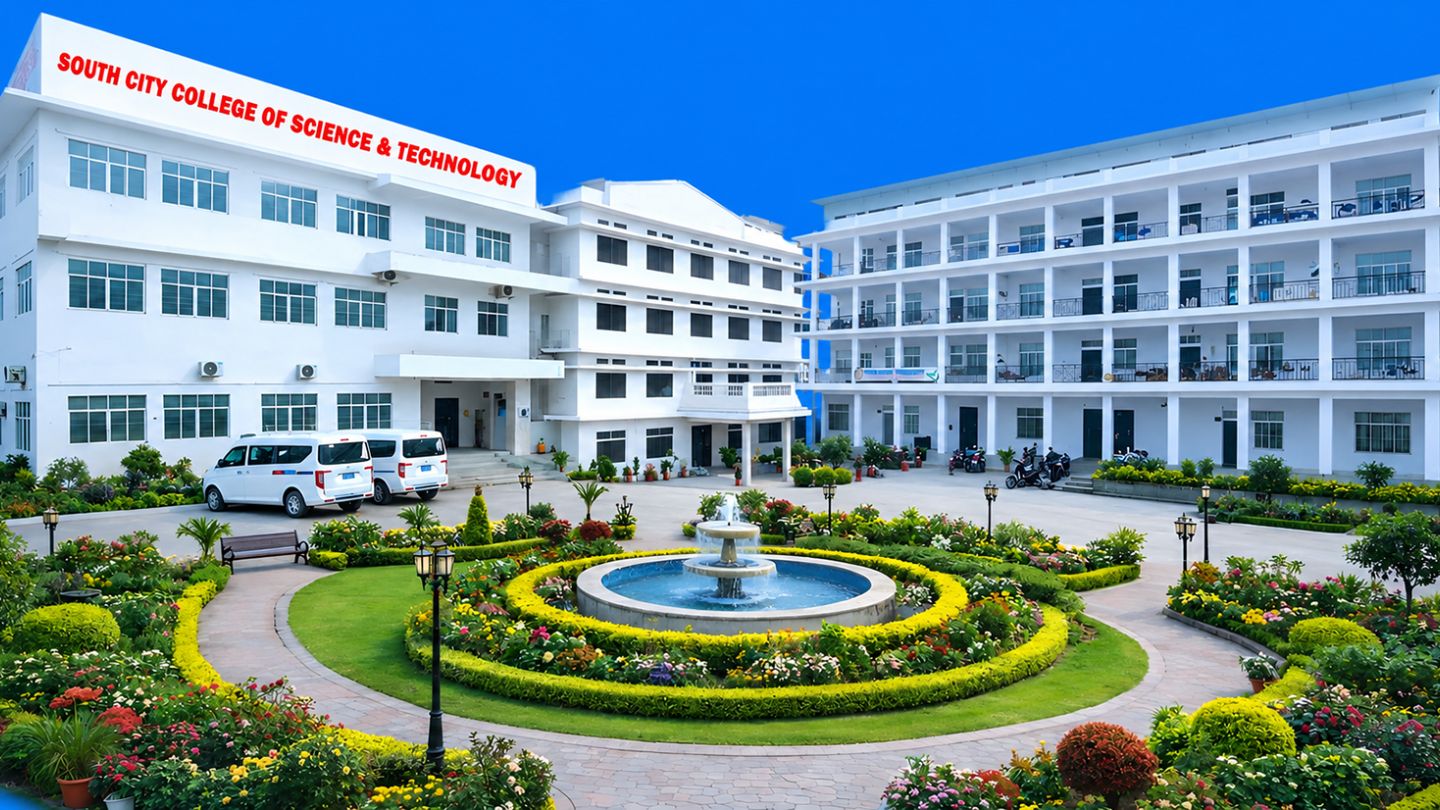
| Particular | Details |
|---|---|
| Program | Bachelor of Technical Education in Information Technology (B Tech Ed IT) |
| Level | Undergraduate |
| College | South City College of Science & Technology |
| Location | Vishwa, Birgunj, Parsa, Madhesh Province, Nepal |
| University | Kathmandu University |
| Academic Unit | Kathmandu University School of Education |
| Department | Department of STEAM Education |
| Duration | 4 Years / 8 Semesters |
| Seats at SCCST | 30 |
| Total Credits | 136 Credit Hours |
| Additional Pathway | Optional pathway to an additional BIT |
B Tech Ed IT brings computing and education into the same undergraduate curriculum. Its technology component covers programming, databases, computer architecture, data structures, web technology, software engineering, networks, artificial intelligence, operating systems, cybersecurity, cloud computing, machine learning, learning analytics, and related areas.
The education component includes educational psychology, curriculum development, measurement and evaluation, communication, instructional system design, instructional skills, and other areas connected with teaching and training. Research, projects, teaching and training internship, and work-based learning are included within the academic structure.
This combination gives the course a different academic orientation from a computing-only degree. Students study how technology systems work while also examining how learning, curriculum, instruction, assessment, and technical training are designed and delivered.
The revised Kathmandu University curriculum carries 136 credit hours, divided between theory and practical study. It contains 80 theory credits and 56 practical credits.
| Curriculum Area | Credit Hours |
|---|---|
| Information Technology | 91 |
| IT Mathematics | 12 |
| Education Core | 18 |
| Vocational Courses | 6 |
| Research and Internship | 9 |
| Total | 136 |
The IT component forms the largest part of the curriculum. Education and vocational courses provide the pedagogical and instructional dimension, while research and internship courses connect academic study with practical investigation, teaching or training, and workplace experience.
The curriculum develops from foundational courses into more advanced technical and educational work.
Early study includes Computer Programming Using C, Foundation of Information Technology, Digital Logic, Fundamental Mathematics for Computing, communication, teaching-related study, Object Oriented Programming using Java, Database Management System, Discrete Mathematics and IT Project I.
Middle stages include Curriculum Development, Probability and Statistical Modeling, Microprocessor and Computer Architecture, Data Structure and Algorithm, Web Technology, Research Methods for Educational Technology, Instructional Skills, Calculus, Software Engineering, Computer Network, Artificial Intelligence and IT Project II.
Later technical study extends into areas such as Advanced Web Technology, Operating System, Computer Graphics and Multimedia, Machine Learning, Cybersecurity, System Network Administration, Management Information System, Human Computer Interaction, Cloud Computing, Learning Analytics, Data Mining and Data Warehousing, electives and IT Project III.
Practical work runs through the program rather than being confined to a single final activity. The curriculum includes IT Project I, IT Project II and IT Project III, followed by research and internship components.
The research and internship section carries nine practical credits:
ITEX 440 Research Project – 3 credits
ITEX 450 Internship-Teaching & Training – 3 credits
ITEX 460 Internship-Work Based Learning – 3 credits
These components connect technical study with research, instructional practice and workplace learning.
At SCCST, this work is supported by computer laboratories, project studios, a library and resource center, seminar facilities, academic mentoring and project-review arrangements.
Eligibility: Eligibility follows the applicable rules and regulations of Kathmandu University.
Admission: Admission procedures are governed by the applicable Kathmandu University requirements.
Entrance: Entrance and selection requirements also follow the rules established for the program by Kathmandu University.
This treatment is consistent with SCCST's academic arrangement under KUSOED, where university rules govern admission, curriculum, assessment and other academic requirements.
Examinations: Examination, assessment and academic progression requirements follow Kathmandu University rules and regulations.
Individual courses within the revised curriculum include both in-semester and end-semester assessment, with assignments, written examinations, presentations, case studies, reports, projects or practical activities appearing according to the nature of the course.
Degree Award: The B Tech Ed IT degree is awarded according to Kathmandu University's academic requirements and degree-award provisions.
SCCST also identifies an optional pathway through which B Tech Ed IT students can pursue an additional Bachelor of Information Technology degree. This is an additional degree pathway rather than a replacement for the four-year B Tech Ed IT program.
Students comparing the technical-education route with a computing-focused degree can also review the separate Bachelor of Information Technology (BIT) at South City College of Science & Technology.
The curriculum supports study across both IT and education-related fields. Its technical courses relate to programming, software systems, networks, databases, web technologies, cybersecurity, cloud computing and data technologies, while the education courses cover curriculum, instructional design, teaching skills, assessment and educational research.
Graduates may consider roles associated with educational technology, technical and vocational instruction, curriculum and learning-resource development, IT training, computing and related technology work. Individual opportunities depend on the requirements of employers, institutions, further study and the skills developed by each graduate.
It is a four-year undergraduate Bachelor of Technical Education in Information Technology program offered at SCCST under Kathmandu University School of Education through the Department of STEAM Education.
The program has a duration of four years and is organized across eight semesters.
SCCST has 30 seats for the program.
The curriculum carries 136 credit hours, including information technology, IT mathematics, education core, vocational courses, research and internship.
Yes. The curriculum includes three IT projects, a Research Project, Internship-Teaching & Training and Internship-Work Based Learning.
SCCST presents an optional pathway through which students in B Tech Ed IT can pursue an additional Bachelor of Information Technology degree.
Eligibility, admission, entrance, examinations, academic requirements and degree-award provisions follow the applicable rules and regulations of Kathmandu University.






