The Bachelor of Business Studies (BBS) at Birendra Bidhya Mandir Campus is a four-year undergraduate management program affiliated with Tribhuvan University. The course operates under the annual examination system through the Faculty of Management.
The program combines business communication, economics, accounting, statistics, management, finance, marketing, taxation, entrepreneurship, research, and concentration courses. Students complete foundation and core subjects during the first three years before selecting a concentration area and preparing a final project in the fourth year.
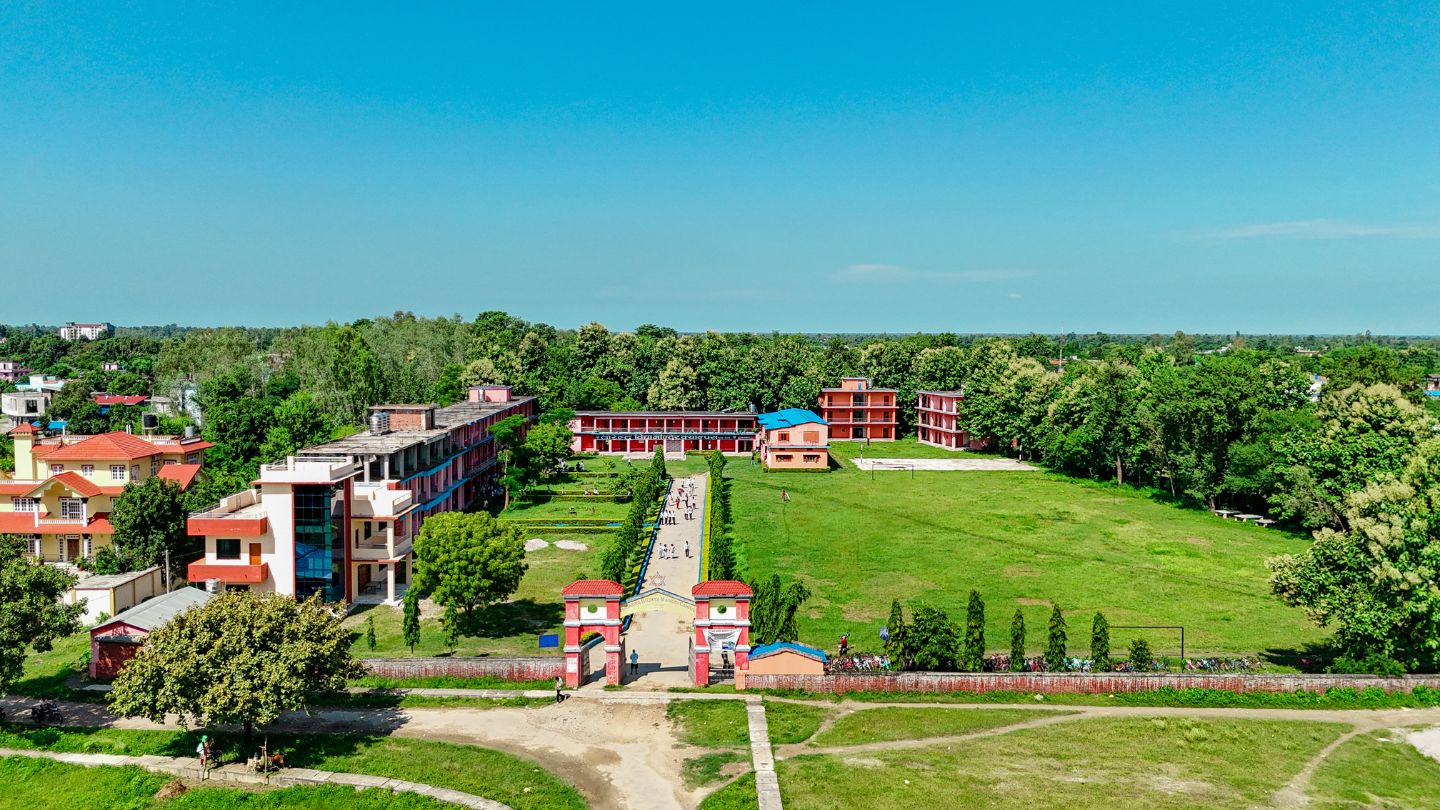
Course Name: Bachelor of Business Studies (BBS)
Level: Bachelor’s degree
Duration: Four academic years
Academic System: Annual examination system
Faculty: Faculty of Management
Affiliation: Tribhuvan University
Institution: Birendra Bidhya Mandir Campus
Location: Tikapur Municipality-1, Block “D,” Kailali, Sudurpashchim Province, Nepal
Eligibility: Completion of 10+2 in business, commerce, or an equivalent qualification recognized by Tribhuvan University, with at least a D+ grade or 33 percent aggregate for admission at the campus
Admission: Entrance examination, with an interview when required
Final Requirement: Business Research Methods and final project work
The BBS program is structured to provide students with conceptual knowledge of business and administration together with practical and analytical skills related to organizational management.
The curriculum introduces students to the operation of business, industry, public institutions, and other organized activities. It also provides a foundation for entrepreneurship and advanced study in management.
The program aims to:
develop a general understanding of business and administration;
strengthen managerial, analytical, and communication abilities;
build practical knowledge related to accounting, finance, marketing, and management;
encourage an understanding of entrepreneurship and organizational development; and
prepare students for further study, research, teaching, or consultancy after completing the required higher qualifications.
The curriculum is organized into four main components:
Foundation and compulsory courses in communication, economics, statistics, and business law
Core management courses covering major functional areas of business
Concentration courses in a selected management field
Business research and final project work
Each academic year carries 500 marks, making a total of 2,000 marks across the four-year program. The fourth year includes 450 marks of coursework and a 50-mark final project.
| Year | Course Code | Subject | Marks |
|---|---|---|---|
| First Year | MGT 201 | Business English | 100 |
| First Year | MGT 202 | Business Statistics | 100 |
| First Year | MGT 207 | Microeconomics for Business | 100 |
| First Year | MGT 211 | Financial Accounting and Analysis | 100 |
| First Year | MGT 213 | Principles of Management | 100 |
| Second Year | MGT 205 | Business Communication | 100 |
| Second Year | MGT 209 | Macroeconomics for Business | 100 |
| Second Year | MGT 212 | Cost and Management Accounting | 100 |
| Second Year | MGT 223 | Organizational Behavior and Human Resource Management | 100 |
| Second Year | MGT 215 | Fundamentals of Financial Management | 100 |
| Third Year | MGT 204 | Business Law | 100 |
| Third Year | MGT 226 | Foundation of Financial Systems | 100 |
| Third Year | MGT 217 | Business Environment and Strategy | 100 |
| Third Year | MGT 224 | Taxation in Nepal | 100 |
| Third Year | MGT 214 | Fundamentals of Marketing | 100 |
| Fourth Year | MGT 225 | Entrepreneurship | 100 |
| Fourth Year | — | Concentration Course I | 100 |
| Fourth Year | — | Concentration Course II | 100 |
| Fourth Year | — | Concentration Course III | 100 |
| Fourth Year | MGT 221 | Business Research Methods | 50 |
| Fourth Year | MGT 401 | Final Project | 50 |
The first year develops a foundation in English, statistics, economics, accounting, and management. The second year introduces communication, macroeconomics, cost accounting, organizational behaviour, human resource management, and financial management.
The third year focuses on business law, financial systems, strategy, taxation, and marketing. The fourth year combines entrepreneurship, concentration subjects, research methods, and project work.
Students select three concentration courses from one functional area during the fourth year.
Accounting courses may include:
Accounting for Banking
Accounting for Business
Advanced Financial Accounting
Auditing
Advanced Cost and Management Accounting
Finance courses may include:
Fundamentals of Corporate Finance
Commercial Bank Management
Management of Financial Institutions
Fundamentals of Investment
Insurance and Risk Management
Marketing courses may include:
Fundamentals of Selling
Customer Relationship Management
Foreign Trade and Export Management in Nepal
Fundamentals of Advertising
Fundamentals of Services Marketing
Management courses may include:
International Business
Small and Medium Enterprises
Event Management
Project Management
Technology and Information Management
Students complete three subjects from their selected concentration area.
Applicants must have completed 10+2 in business, commerce, or an equivalent course recognized by Tribhuvan University.
For admission to the BBS program at Birendra Bidhya Mandir Campus, students are required to have at least a D+ grade or 33 percent aggregate at the 10+2 level.
Birendra Bidhya Mandir Campus conducts an entrance examination for BBS admission. An interview may also be taken when required.
Admission is completed through the campus administration after applicants meet the academic eligibility and entrance requirements.
The BBS curriculum supports a combination of teaching approaches, including:
classroom lectures;
group discussions;
problem-solving exercises;
guest lectures;
practical assignments;
case-based study;
fieldwork; and
project work.
These methods are intended to connect business concepts with organizational and management situations.
At Birendra Bidhya Mandir Campus, academic support also includes internal examinations, evaluation and feedback, orientation, counselling, remedial classes, audio-visual learning support, and access to a computer laboratory.
The final evaluation is conducted through annual examinations under Tribhuvan University.
Students must maintain at least 70 percent attendance in classes actually conducted to qualify for the annual examination. A student is not allowed to appear in the second-year final examination without first appearing in the first-year final examination.
The annual examination grading divisions are:
Third Division: 35 percent
Second Division: 45 percent
First Division: 60 percent
Distinction: 75 percent
Final project work is a compulsory academic requirement in the fourth year. Students carry out field-based or organizational study related to their concentration area and prepare a written project report.
The project process may involve selecting a topic, reviewing relevant literature, collecting information, analysing data, preparing a report, and presenting the work for evaluation.
Students must pass theoretical, practical, and project components separately where these components apply.
To complete the BBS degree, students must:
successfully complete 19 courses carrying 1,950 marks;
submit and pass the 50-mark final project;
pass theoretical and practical components separately where applicable; and
complete the program within the time limit prescribed by Tribhuvan University.
Through its combination of business, accounting, economics, research, and management subjects, the program may help students develop:
business communication and report-writing skills;
numerical and statistical analysis;
financial and accounting understanding;
organizational and human resource awareness;
marketing and customer-related knowledge;
research and information-analysis skills;
business planning and decision-making ability; and
introductory entrepreneurial and project-management skills.
The level of skill developed depends on academic participation, practical application, project work, and individual effort.
BBS students at Birendra Bidhya Mandir Campus have access to a library, computer laboratory, free Wi-Fi, audio-visual learning support, internal examinations, academic counselling, professional training, educational tours, and internship assistance.
The campus also operates the Competent and Applied Scholar of Honours Programme, known as CASH-P, with a particular focus on BBS and MBS students. Activities include training, orientation, quizzes, and project work.
Training areas include accounting software, banking, cooperative management and accounting, meeting management, minute writing, office management, correspondence, proposal writing, organizational development, filing, and life skills.
BBS graduates may explore opportunities related to accounting, banking, finance, marketing, administration, human resource support, business operations, sales, cooperatives, entrepreneurship, and organizational management.
Employment outcomes depend on practical skills, academic performance, experience, location, available opportunities, and employer requirements.
The degree also provides a foundation for postgraduate management study. Birendra Bidhya Mandir Campus offers the Master of Business Studies program under Tribhuvan University, allowing eligible graduates to continue management education at the same institution.
The course may suit students who are interested in:
business and organizational management;
accounting and financial analysis;
marketing and customer management;
entrepreneurship and small business;
banking and financial institutions;
administrative and office-related work;
research and project preparation; and
further study in management.
Students should consider their academic background, interest in business subjects, ability to work with numerical and theoretical content, and willingness to complete a four-year annual-system program.
The Bachelor of Business Studies is a four-year undergraduate program.
The BBS program at Birendra Bidhya Mandir Campus is affiliated with Tribhuvan University.
The program follows the annual examination system.
Applicants must have completed 10+2 in business, commerce, or an equivalent qualification recognized by Tribhuvan University. Birendra Bidhya Mandir Campus requires at least a D+ grade or 33 percent aggregate.
Yes. The campus conducts an entrance examination for BBS admission and may conduct an interview when required.
Yes. Students select three concentration courses from accounting, finance, marketing, or management during the fourth year.
Yes. Students must complete Business Research Methods and submit a final project in the fourth year.
Students have access to a library, computer laboratory, Wi-Fi, academic counselling, internal examinations, remedial classes, professional training, educational tours, internship assistance, and the CASH-P program.
Institution: Birendra Bidhya Mandir Campus
Address: Tikapur Municipality-1, Block “D,” Tikapur, Kailali, Sudurpashchim Province, Nepal
Phone: 091-560949
Email: bmc.tkp@gmail.com
Website: www.birendracampus.edu.np