Birendra Bidhya Mandir Campus (BMC), known in Nepali as वीरेन्द्र विद्या मन्दिर क्याम्पस, is a community-based, non-profit higher education institution located in Tikapur, Kailali. Affiliated with Tribhuvan University, the campus offers bachelor’s and master’s programs under the Faculty of Education and the Faculty of Management. It is also identified as a Quality Assurance and Accreditation-certified campus.
The campus operates as the higher education wing of Birendra Vidhya Mandir Public Educational Trust. It was established to expand access to university education for students from Tikapur and surrounding districts. Its academic activities include regular classroom teaching, internal assessment, practical work, teaching practice, research-related activities, professional training, educational tours, and extracurricular programs.
| Field | Details |
|---|---|
| Institution Name | Birendra Bidhya Mandir Campus |
| Nepali Name | वीरेन्द्र विद्या मन्दिर क्याम्पस |
| Abbreviation | BMC |
| Institution Type | Community-based, non-profit campus |
| Affiliation | Tribhuvan University, Kathmandu, Nepal |
| Mother Institution | Birendra Vidhya Mandir Public Educational Trust |
| Established | 2063-05-19 B.S. / September 4, 2006 |
| Academic Faculties | Faculty of Education and Faculty of Management |
| Academic Levels | Bachelor’s and master’s levels (BBS, B.Ed., MBS and M.Ed.) |
| Address | Tikapur Municipality-1, Block “D,” Kailali, Sudurpashchim Province, Nepal |
Birendra Bidhya Mandir Campus was established in 2063 B.S. as a higher education initiative of Birendra Vidhya Mandir Public Educational Trust. The educational foundation of the trust dates to 2031 B.S., when Tikapur Aawasiya High School was established. The campus was later developed as a separate unit to provide university-level education.
The institution was established through the involvement of local intellectuals, academics, education professionals, businesspeople, political representatives, social workers, guardians, and other members of the community. This local participation shaped its community-based and non-profit structure.
Birendra Bidhya Mandir Campus and Birendra Vidhya Mandir Secondary School operate as separate academic wings of Birendra Vidhya Mandir Public Educational Trust. Although both institutions function under the same mother organization, they maintain separate academic, administrative, and financial arrangements.
The campus is governed through a Campus Management Committee. Its organizational structure includes academic departments, program units, administrative sections, an account department, a library department, a teaching practice unit, a research sub-committee, and an Education Management Information System.
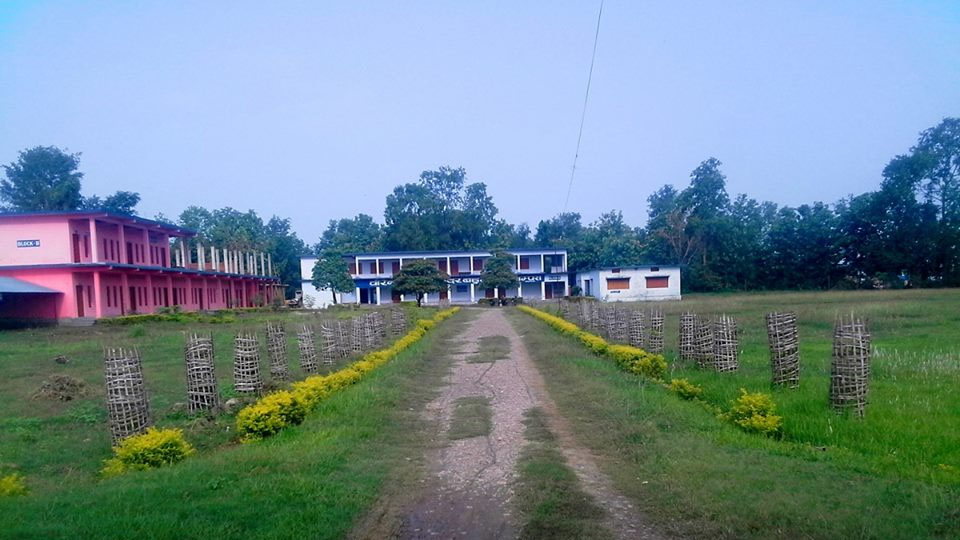
The campus is located in the central area of Tikapur city. It is approximately 14 kilometres south of the Mahendra Highway at Lamki and about 14 kilometres north of the Nepal–India border crossing at Khakraula.
Its location provides access to students from Tikapur and other parts of western Nepal. The main catchment area includes Kailali, Bardiya, Doti, Bajura, Bajhang, Surkhet, Dailekh, Kalikot, Jumla, and Darchula districts.
The campus serves students from the Tarai, hill, and mountain regions. Its community-based structure is connected with the need for accessible higher education among students who may prefer to study within Tikapur rather than relocate to another city.
Birendra Bidhya Mandir Campus envisions an academic platform focused on education, training, institutional partnership, and comprehensive learning. Its vision connects higher education with ethical, social, cultural, economic, and educational development.
The mission of the campus is to provide higher education within an academic environment that supports learning, personal development, and opportunities for individuals from the community and the wider region.
The campus aims to develop cultured, responsible, creative, innovative, qualified, and competitive human resources through academic activities connected with technology, research, social needs, and equitable access to higher education.
The main objectives of Birendra Bidhya Mandir Campus are to:
provide quality and value-based education;
strengthen academic culture within the community;
contribute to society through research and the application of research findings;
support the development of a responsible and value-based society; and
develop human resources needed by society and the country.
Birendra Bidhya Mandir Campus offers four Tribhuvan University programs at the bachelor’s and master’s levels.
| Faculty | Program | Academic System |
|---|---|---|
| Faculty of Education | Bachelor of Education (B.Ed.) | Annual system |
| Faculty of Education | Master of Education (M.Ed.) | Semester system |
| Faculty of Management | Bachelor of Business Studies (BBS) | Annual system |
| Faculty of Management | Master of Business Studies (MBS) | Semester system |
The Bachelor of Education is a four-year program offered under the Faculty of Education, Tribhuvan University. It follows the annual examination system and combines communication courses, professional education subjects, specialization areas, and teaching practice.
The program is structured to prepare students for teaching and other education-related responsibilities. Its curriculum includes educational psychology, curriculum and evaluation, foundations of education, instructional technology, specialization subjects, and practical teaching experience.
Students study a major and a minor specialization as part of the four-year structure. Specialization areas available at the campus include English Education, Nepali Education, Health Education, and Population Education.
Teaching practice is an important component of the program. It allows students to apply educational theories, subject knowledge, lesson planning, classroom communication, and assessment methods in a practical setting.
The campus offers the four-year B.Ed. program and does not operate a one-year B.Ed. program.
The Master of Education is a postgraduate program offered under the Faculty of Education. It follows the semester system and includes professional education courses, specialization studies, teaching practice, research, and thesis work.
The Tribhuvan University M.Ed. curriculum is structured as a two-year, four-semester program carrying 69 credit hours. It includes core professional courses, specialization courses, teaching practice, and thesis writing.
Birendra Bidhya Mandir Campus offers M.Ed. study in English Education, Nepali Education, and Educational Planning and Management. Students study advanced educational concepts related to their selected specialization alongside professional and research-oriented courses.
The program includes academic activities such as assignments, seminars, case studies, field studies, project work, classroom presentations, teaching practice, and thesis writing. Student performance is evaluated through semester-based internal activities and semester-end examinations.
The M.Ed. program supports advanced preparation in teaching, educational planning, administration, management, research, and related areas of education.
The Bachelor of Business Studies is a four-year annual-system program offered under the Faculty of Management, Tribhuvan University. It combines foundation courses, core management subjects, concentration courses, research methods, and final project work.
The curriculum covers business English, business communication, statistics, economics, accounting, business law, organizational behaviour, human resource management, financial management, marketing, taxation, entrepreneurship, research methods, and the business environment.
The first years of the program focus on foundation and core business subjects. In the fourth year, students study concentration courses and complete business research and final project work.
Concentration areas under the BBS curriculum include accounting, finance, management, and marketing. These areas allow students to study selected functional subjects in greater depth while maintaining a broader understanding of business and administration.
The final project requires students to connect academic learning with organizational or field-based study. The project process includes field exposure, report preparation, evaluation, and presentation or viva-voce requirements.
The Master of Business Studies is a postgraduate management program operating under the semester system. Birendra Bidhya Mandir Campus began running the MBS program in September 2021.
The program includes advanced study in marketing management, managerial economics, statistical methods, organizational behaviour, managerial communication, finance, accounting, research, and general management.
Course delivery may include lectures, case analysis, assignments, presentations, discussions, and research-related academic activities. The program is intended to strengthen students’ understanding of management theories, analytical tools, organizational behaviour, communication, decision-making, and research.
Its semester structure supports continuous academic participation through internal evaluation and semester-end examinations.
The campus operates annual and semester systems according to the requirements of the respective Tribhuvan University programs. B.Ed. and BBS follow the annual examination system, while M.Ed. and MBS follow the semester system.
Academic activities include regular classroom instruction, internal examinations, assignments, practical work, presentations, teaching practice, project work, research activities, and thesis preparation where required.
The campus conducts academic orientation and counselling sessions before regular classes begin. These sessions help students understand program requirements, academic procedures, classroom expectations, and available institutional support.
Additional or remedial classes may be arranged when faculty members identify a need for further support. Internal examinations, evaluation, and feedback are used to monitor student progress before final or semester-end examinations.
Audio-visual tools and the computer laboratory support presentations, orientations, seminars, training programs, and other teaching-learning activities.
Birendra Bidhya Mandir Campus conducts professional and career-related training alongside its regular academic programs. Training areas include accounting software, banking, cooperative management and accounting, meeting management, minute writing, organizational development, official correspondence, proposal writing, filing, office management, and life skills.
The Competent and Applied Scholar of Honours Programme, known as CASH-P, is associated particularly with BBS and MBS students. It combines training, orientation, quizzes, and project-based activities that connect academic study with practical administrative and management skills.
The campus also supports students who are interested in internships. Assistance may include recommendations and support in identifying organizations where students can gain practical exposure.
Educational tours, workshops, competitions, professional training sessions, orientations, and other activities allow students to participate in learning beyond regular classroom instruction.
The campus maintains a library for students, teachers, and academic staff. The library department supports access to books and other learning materials used in the programs offered by the campus.
A computer laboratory is available for academic and training purposes. It is used for computer-related learning, seminars, workshops, presentations, professional training, and orientation activities.
Free Wi-Fi internet access is available to students, teachers, and staff within the campus. This service supports academic communication, research, online study, and access to digital resources.
The campus uses the Paathshala software system to manage academic and administrative records. The system covers student information, library services, examinations, results, certificates, identity cards, physical assets, accounts, and billing.
An e-library project is included in the campus infrastructure plan. A Detailed Project Report has been prepared with financial and technical support from Tikapur Municipality.
Birendra Bidhya Mandir Campus has four two-storey buildings containing 36 rooms. Its land ownership is recorded as 1 bigha and 18 kattha, equivalent to approximately 12,950 square metres. The mother institution also holds additional land under its ownership.
The buildings contain classrooms, academic units, administrative sections, a library, and other spaces required for campus operations.
The campus has separate grounds for volleyball, football, and badminton. Sports programs and competitions are included in its annual activities.
A water purification system with a cooling facility provides drinking water for students and staff. An inverter system supports essential electrical equipment during power interruptions.
Separate sanitation facilities are available for male and female students, along with facilities for staff. Sanitation infrastructure has also received support through the Small City Drinking Water and Sanitation Project in Tikapur.
Facilities and services available at the campus include:
library services;
computer laboratory;
free Wi-Fi internet;
audio-visual learning support;
canteen;
bicycle stand;
purified drinking water;
electricity backup;
separate sanitation facilities;
sports grounds and sports materials;
internal examinations and feedback;
academic orientation and counselling;
professional training;
educational tours;
extracurricular activities; and
internship assistance.
The campus also conducts competitions, workshops, ceremonies, academic programs, and community-related activities through its faculties and departments.
Birendra Bidhya Mandir Campus operates under Birendra Vidhya Mandir Public Educational Trust and is governed through a Campus Management Committee.
The management structure identifies Navraj Rawal as Chairman and Harka Bahadur Bhandari as Campus Chief.
Academic and administrative responsibilities are distributed across the Faculty of Management, Faculty of Education, Teaching Practice Department, M.Ed. Programme, MBS Programme, BBS Programme, B.Ed. Programme, Research Sub-Committee, Education Management Information System, Administration Department, Account Department, Library Department, and Internal Test Examination Sub-Committee.
This departmental structure supports program coordination, teaching practice, internal assessment, research, administration, accounting, library management, and institutional recordkeeping.
The campus conducts entrance examinations for admission to B.Ed., BBS, M.Ed., and MBS. Interviews may also be conducted when required.
Admission to master’s-level programs is based on academic eligibility and entrance performance. Enrollment is limited to applicants who meet the applicable academic and selection requirements.
Program-specific eligibility varies according to the degree, specialization, and Tribhuvan University curriculum. Applicants to the B.Ed. program may also need to meet subject-related requirements for their intended specialization.
Student life at Birendra Bidhya Mandir Campus includes classroom study, academic orientation, extracurricular activities, annual sports events, competitions, professional training, workshops, educational tours, and community-related programs.
These activities create opportunities for students to interact with teachers, administrative staff, classmates, and local stakeholders. They also support practical learning, communication, teamwork, and participation outside formal classroom sessions.
As a community campus, BMC remains connected with the educational needs of Tikapur and the wider western region. Its institutional objectives emphasize academic development, research, social responsibility, value-based education, and access to higher education.
Address: Tikapur Municipality-1, Block “D,” Tikapur, Kailali, Sudurpashchim Province, Nepal
Phone: 091-560949
Fax: 091-560949
Email: bmc.tkp@gmail.com
Website: www.birendracampus.edu.np
Birendra Bidhya Mandir Campus is a community-based, non-profit institution operating under Birendra Vidhya Mandir Public Educational Trust. It is governed through a Campus Management Committee.
Yes. The B.Ed., M.Ed., BBS, and MBS programs offered by the campus are affiliated with Tribhuvan University.
The campus offers Bachelor of Education, Master of Education, Bachelor of Business Studies, and Master of Business Studies.
B.Ed. and BBS follow the annual examination system. M.Ed. and MBS operate under the semester system.
No. The campus offers the four-year B.Ed. program.
Available facilities include a library, computer laboratory, Wi-Fi, canteen, bicycle stand, purified drinking water, electricity backup, sanitation facilities, sports grounds, academic counselling, professional training, educational tours, and extracurricular activities.
The campus assists students seeking internships and conducts practical training in areas such as accounting software, banking, cooperative management, office management, correspondence, proposal writing, and life skills.