



B.Sc. Forestry at the College of Natural Resource Management, Katari, Udayapur (CNRM Katari) is an undergraduate program under the Faculty of Forestry of Agriculture and Forestry University. The course combines biological and environmental sciences with forestry subjects, practical work, and field-based study.
Its curriculum covers areas such as silviculture, wildlife, agroforestry, watershed management, community forestry, forest products, wood science, and technical communication. Field training connects academic study with forestry programs and activities in Nepal.
| Area | Details |
|---|---|
| Course | B.Sc. Forestry |
| Level | Bachelor's degree |
| College | College of Natural Resource Management, Katari |
| Faculty | Faculty of Forestry |
| University | Agriculture and Forestry University |
| Location | Katari, Udayapur, Koshi Province, Nepal |
| Annual Intake | 54 students |
| Study Format | Semester-based academic, practical, and field study |
CNRM Katari offers B.Sc. Forestry as its undergraduate academic program. The college is a constituent college of the Faculty of Forestry under Agriculture and Forestry University (AFU).
The course is closely connected with the academic areas represented at the college. Faculty expertise includes General Forestry, Silviculture, Watershed Management, and Wildlife and Protected Area Management. Laboratory and field support personnel are also part of the college's academic setting.
The first cohort of CNRM Katari completed the program in 2080 BS. A student from the college was the Faculty of Forestry topper in the same year.
Applicants for the undergraduate entrance examination must have passed SEE/SLC or an equivalent qualification and meet the prescribed requirement at the higher secondary or equivalent level.
| Academic Background | Minimum Requirement | Required Subjects |
|---|---|---|
| 10+2 Science; 10+2 Agriculture/Veterinary/Animal Science/Forestry; I.Sc.; Diploma in Agriculture/Veterinary/Animal Science/Forestry/Health Science; A Level; or equivalent | 40% or C Grade (2.00 CGPA) | English, Physics, Chemistry, and Biology of at least 100 full marks each |
Where a subject has separate Theory and Practical components, a combined minimum C Grade is required.
Applicants need the following records for the application process:
Nepali citizenship certificate
National Identity Card or birth registration certificate for Nepali citizens without a citizenship certificate
SEE/SLC or equivalent grade sheet and certificate
Certificate Level/10+2 transcript or equivalent grade sheet and certificate
Equivalence certificate for qualifications obtained from foreign educational institutions
Relevant certificate or recommendation letter for quota applications
Recent passport-size photograph
Applicant's signature
CNRM Katari has an annual B.Sc. Forestry intake of 54 students.
| Admission Category | Seats |
|---|---|
| Merit | 21 |
| Province / Backward Area | – / 1 |
| Female | 2 |
| Indigenous Nationalities | 1 |
| Madhesi | 1 |
| Dalit | 1 |
| Persons with Disabilities | 1 |
| Conflict-Affected Family | 1 |
| Martyr Family | 1 |
| Staff Quota — Concessional Fee | 1 |
| Staff Quota — Full Fee | 1 |
| Full Fee — UDF/CDF | 18 |
| Local Quota — Full Fee | 2 |
| Government of Nepal — Full Fee | 2 |
| FDF | — |
| Foreign Student Quota | — |
| Total | 54 |
The AFU B.Sc. Forestry curriculum is organized by semester and combines foundational sciences with forestry-specific subjects. Early coursework includes Principles of Cytology, Genetics and Plant Breeding, Communicational and Technical English, and Elementary Economics. Plant Biochemistry and Plant Biotechnology also form part of the curriculum.
Forestry-focused study extends across several academic areas, including:
Silviculture
Wildlife Biology
Agroforestry Systems and Management
Wood Products Utilization
Wood Science and Technology
Watershed Management
Community Forestry and Governance
Silviculture of Important Trees
Entrepreneurship Development and Communication Skill
The practical components vary by subject. Agroforestry, for example, includes field visits and work related to agroforestry systems, while Community Forestry and Governance includes visits to community forest user groups, rapid rural appraisal and participatory rural appraisal activities, vegetation assessment, and review of forest constitutions and operational plans.
Field training is a defined part of the forestry curriculum. One field training course carries 2 (0+2) credit hours and focuses on forestry-based programs, forest industries, wildlife, and soil conservation activities. The training is planned for about seven days of field practice in Nepal.
A later field training component also carries 2 (0+2) credit hours and includes exposure to forestry operations, national park management, and watershed management practices. It is planned for a maximum of seven days.
This combination of classroom, practical, laboratory, and field work gives the course a strong applied component alongside its scientific and technical subjects.
Students study B.Sc. Forestry in Katari, Udayapur, within a college focused specifically on forestry education. The academic team includes faculty members in General Forestry, Silviculture, Watershed Management, and Wildlife and Protected Area Management.
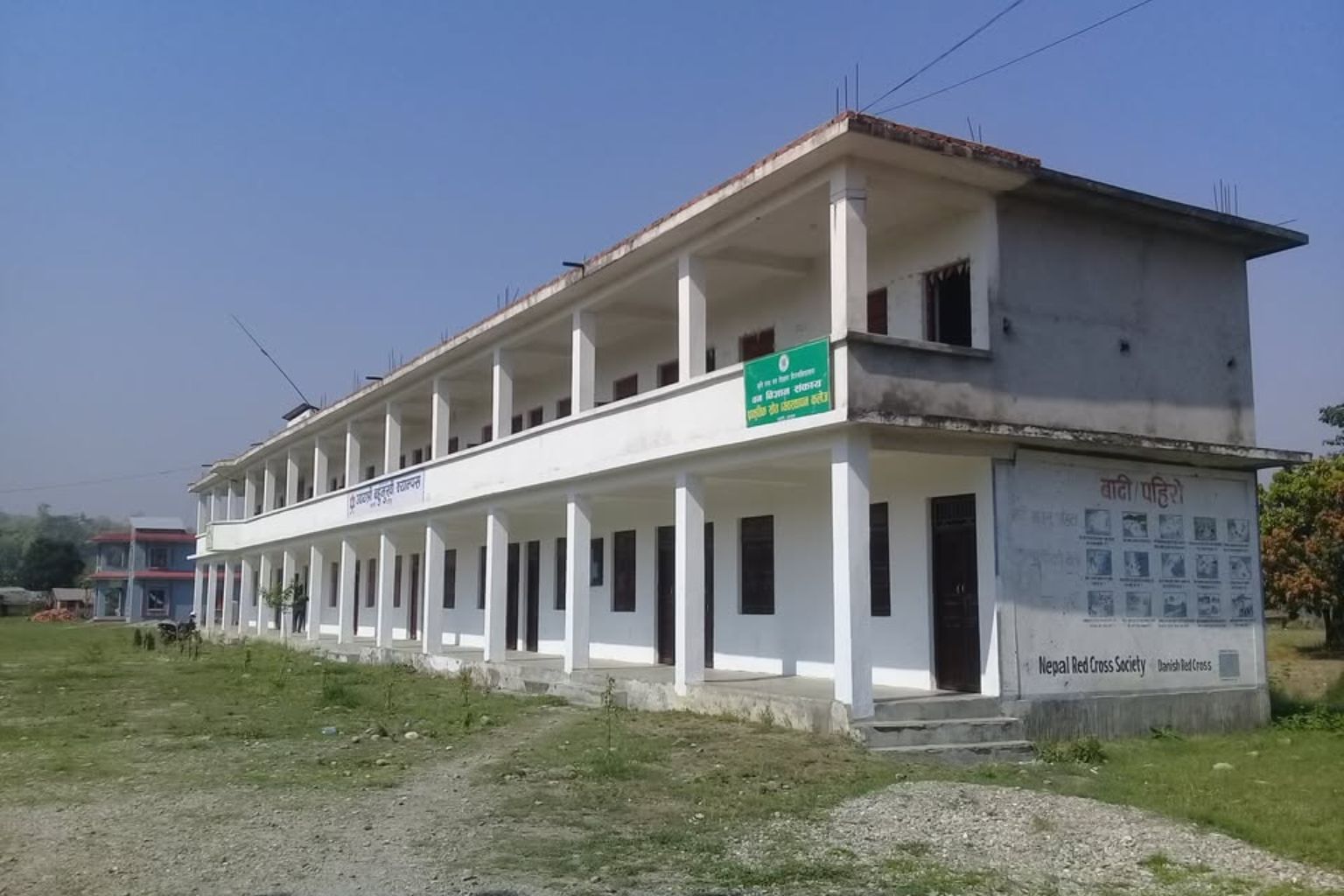
The college also has laboratory, field, academic, administrative, and library-related support staff. A dedicated college building has been completed approximately 4 km east of central Katari along the Madan Bhandari Highway toward Dharan.
CNRM Katari offers the Bachelor of Science (B.Sc.) in Forestry.
The program is under the Faculty of Forestry of Agriculture and Forestry University.
The annual intake is 54 students across merit, quota, staff, local, full-fee, and other admission categories.
Applicants need one of the specified 10+2, I.Sc., diploma, A Level, or equivalent qualifications with at least 40% or C Grade (2.00 CGPA), along with the prescribed study of English, Physics, Chemistry, and Biology.
Yes. Many courses combine theory and practical work, including subjects related to agroforestry, community forestry, wood science, and other forestry areas.
Yes. Field training forms part of the curriculum and includes exposure to forestry practices, forest industries, wildlife, soil conservation, forestry operations, national park management, and watershed management.






