Kushadevi Campus in Panauti Municipality-2, Kushadevi, Kavrepalanchok, Bagmati Province, Nepal, offers the four-year Bachelor of Education (B.Ed.) under the TU annual system. The campus is a TU-affiliated community campus and runs the programme within its Education faculty area. At this campus, the B.Ed. programme follows TU rules, curriculum, annual examinations, and result processes.
The course is designed as a professional and academic bachelor’s degree for secondary-level teaching, with communication skills, professional core areas, specialization major and minor study, and teaching practice/practicum. Students also study in a campus environment supported by library services, computer lab access, multimedia support, counseling, scholarships, and academic halls.
Course: Bachelor of Education (B.Ed.)
College: Kushadevi Campus
Location: Panauti Municipality-2, Kushadevi, Kavrepalanchok, Bagmati Province, Nepal
Affiliation: Tribhuvan University (TU)
Academic System: Four-year annual system
Duration: Four academic years
Course Type: Professional and academic bachelor’s programme
Eligibility: HSE/Grade 12 pass, PCL, or equivalent qualification; subject-specific requirements apply according to the chosen specialization
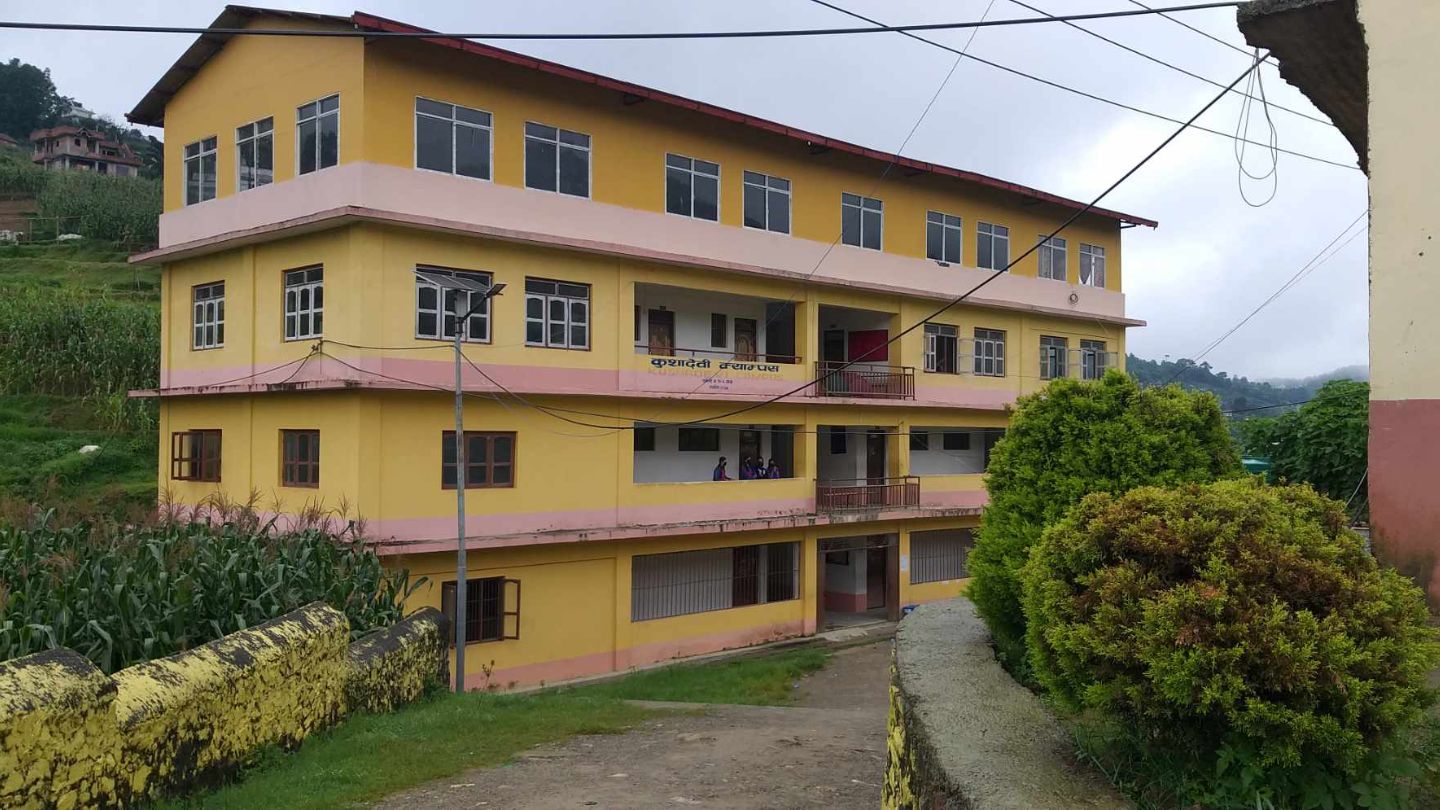
The B.Ed. programme at Kushadevi Campus is part of the campus’s long-running bachelor-level provision in Education. The campus began with the B.Ed. programme and continues to offer it within the TU annual framework.
Under Tribhuvan University, the four-year B.Ed. is structured to prepare teachers who can teach two subjects at the secondary level. The programme combines compulsory communication courses, education-focused core subjects, specialization study, and teaching practice.
The four-year B.Ed. requires successful completion of 22 courses carrying 2200 marks. The structure is divided into five groups:
Communication Skills: 2 courses, 200 marks
Professional Core Areas: 4 courses, 400 marks
Specialization Major: 10 courses, 1000 marks
Specialization Minor: 5 courses, 500 marks
Teaching Internship/Practicum: 1 course, 100 marks
The year-wise distribution is 600 marks in the first year, 600 marks in the second year, 500 marks in the third year, and 500 marks in the fourth year.
The compulsory and core parts of the programme include:
General Nepali
General English
Philosophical and Sociological Foundations of Education
Educational Psychology
Curriculum and Evaluation
One elective in the final phase from Instructional Technology, ICT in Education, or ICT in Specialized Subject
Teaching Practice/Practicum
Students study one specialization as a major subject area and another as a minor subject area. The major specialization areas include:
Nepali Language Education
English Language Education
Math Education
Science Education
Health and Physical Education
Population Education
Geography Education
Economics Education
History Education
Political Science Education
Minor specialization study is taken in a subject area different from the major. The listed minor areas include Nepali Language Education, English Language Education, Math Education, Science Education, Health Education, Physical Education, Population Education, Geography Education, Economics Education, History Education, and Political Science Education.
The programme follows a staged annual structure.
The first year includes communication and foundation study such as General Nepali, General English, and Philosophical and Sociological Foundations of Education, along with selected major and minor specialization courses.
The second year continues specialization study and includes Educational Psychology as the core subject.
The third year includes Curriculum and Evaluation together with continued major and minor specialization courses.
The fourth year includes Teaching Practice, one elective from the instructional technology or ICT group, and the remaining major and minor specialization courses.
Students with Higher Secondary Education Examination pass status, Grade 12 pass, PCL, or an equivalent qualification are eligible for admission to the B.Ed. programme. Subject-specific requirements apply according to the selected major specialization area.
At Kushadevi Campus, admission, course curriculum, annual examinations, and results follow TU rules, guidelines, and the TU annual calendar.
B.Ed. students at Kushadevi Campus study within the broader academic environment of the campus. Available facilities and support include:
library services
sports facilities
computer lab
multimedia support
classrooms
conference hall
assembly hall
mini seminar hall
counseling support
scholarships
journal-related academic support
educational tours
extracurricular activities
Scholarship support is available for economically weak and meritorious students, and municipal scholarship support is also noted.
College: Kushadevi Campus
Location: Panauti Municipality-2, Kushadevi, Kavrepalanchok, Bagmati Province, Nepal
Email: school.kushadevi@gmail.com
Phone: +977-11-405130, +977-11-405062, +977-9851181285, +977-9849750295
Campus Chief: Shashi Kumar Bolakhe
Yes. Kushadevi Campus offers the four-year Bachelor of Education (B.Ed.) under the TU annual system.
Yes. The B.Ed. programme is offered under Tribhuvan University.
The B.Ed. programme runs for four academic years.
Applicants must have passed HSE, Grade 12, PCL, or an equivalent qualification. Subject-specific requirements apply according to the selected specialization.
The programme includes 22 courses carrying 2200 marks. It is divided into communication skills, professional core areas, specialization major courses, specialization minor courses, and teaching practice/practicum.
Students study one major specialization and one minor specialization in different subject areas. The programme includes options such as Nepali, English, Math, Science, Health and Physical Education, Population Education, Geography, Economics, History, and Political Science Education.
B.Ed. students have access to the library, sports facilities, computer lab, multimedia support, counseling, scholarships, classrooms, academic halls, educational tours, and extracurricular activities.